Donate to Links
Click on Links masthead to clear previous query from search box
review
Review: Paul Le Blanc and Kunal Chattopadhyay’s Trotsky selection ‘a missed opportunity’
Review by Michael Fisher
Leon Trotsky: Writings in Exile
By Kunal Chattopadhyay and Paul Le Blanc (eds.)
London: Pluto Press, 2012
March 28, 2013 – Links International Journal of Socialist Renewal -- Few figures in the history of socialist politics have attracted as much praise and contempt as Leon Trotsky. Liberals and social democrats loathed him for his unwavering defence of the October revolution and his uncompromising opposition to the politics of reformism. Communists reviled him for opposing Stalin and Stalinism, for declaring the degeneration of the Soviet regime and pouring scorn on the notion of socialism in one country.
Exclusive excerpt: 'One Day in December: Celia Sánchez and the Cuban Revolution'

The following is an excerpt from Nancy Stout's new book, One Day in December: Celia Sánchez and the Cuban Revolution, published by Monthly Review Press. It is posted with the kind permission of Monthly Review Press. Readers of Links international Journal of Socialist Renewal are urged to order a copy HERE.
You can download the excerpt HERE (PDF), or read it on screen below. Alice Walker’s foreword is available at http://monthlyreview.org/2013/
02/01/celia-sanchez-and-the- cuban-revolution
'Latin America’s Turbulent Transitions': compelling contribution to our understanding of the 'pink tide'

Latin America’s Turbulent Transitions: The Future of Twenty-First-Century Socialism
By Roger Burbach, Michael Fox and Federico Fuentes
Fernwood Publishing and Zed Books, 2013. Order Here
Review by Richard Fidler
March 11, 2013 -- Climate & Capitalism, posted at Links International Journal of Socialist Renewal with permission -- Latin America was the first region targeted by the neoliberal phase of capitalism, and it suffered some of its worst consequences. But it is in Latin America that neoliberalism has been most contested in recent years by new social movements of landless peasants, Indigenous communities and urban unemployed.
In a number of countries, this powerful democratic ferment has led to the election of anti-neoliberal, anti-imperialist governments — a process that started with the initial electoral victory of Hugo Chávez Frias in the late 1990s.
Christopher Hitchens: The guilty bastard

Unhitched: The Trial of Christopher Hitchens
By Richard Seymour
New York: Verso Books, 2012
134 pages
Review by Doug Enaa Greene
January 19, 2013 -- Links International Journal of Socialist Renewal -- First impressions do matter. Now it is said that first impressions can be unfair, not giving us a chance to understand a person’s complexity. In the case of Christopher Hitchens, my first impression of him was that of a witty tool for the George W. Bush administration’s wars. In 2005, I first saw Hitchens while randomly flipping through television channels and finding a debate between him and George Galloway on the Iraq War.
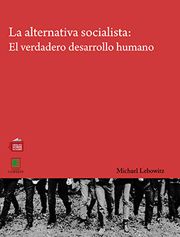
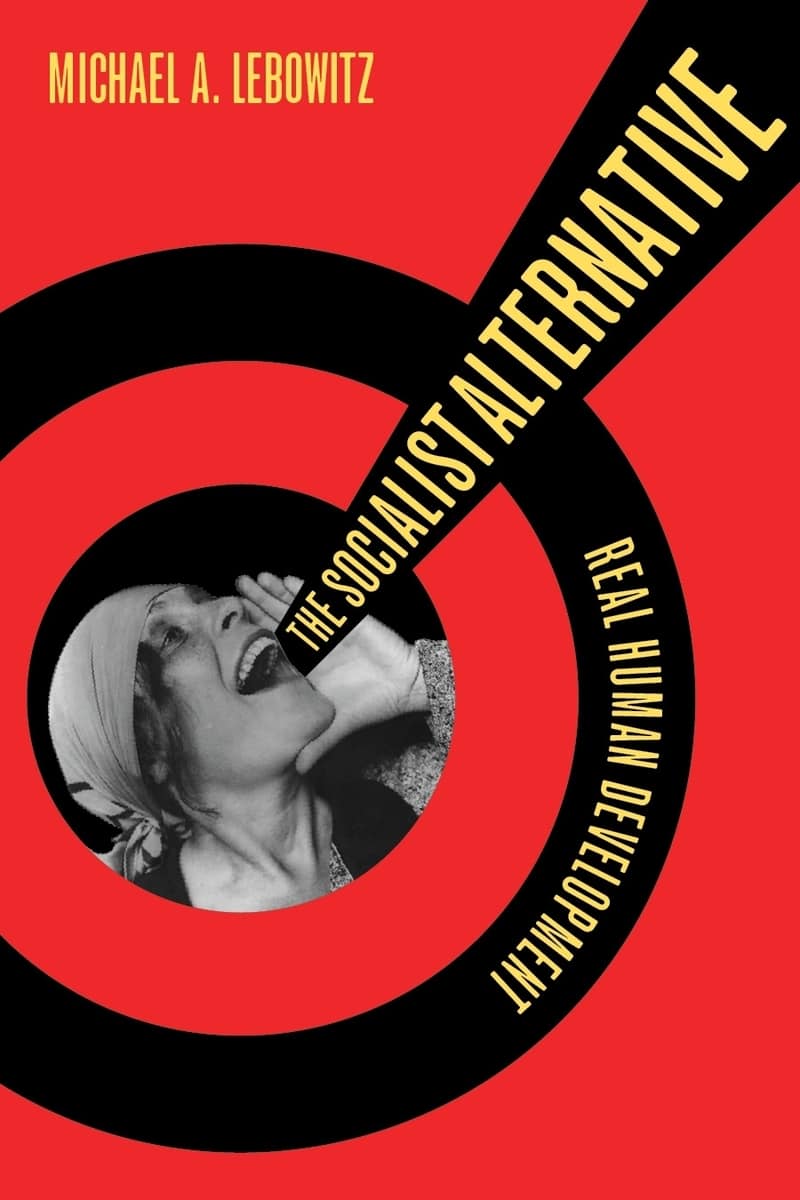
How real was 'real socialism'? Michael Lebowitz's 'Contradictions of Real Socialism'

[For more articles by or about Michael Lebowitz, click HERE. For a free excerpt from The Contradictions of "Real" Socialism: the conductor and the conducted, click HERE.]
Review by Doug Enaa Greene
The Contradictions of Real Socialism: the Conductor and the Conducted
By Michael A. Lebowitz
New York: Monthly Review Press, 2012.
221 pagesFor Asia-Pacific readers it is also be available from Resistance Books.
January 8, 2013 – Links International Journal of Socialist Renewal -- Even though the dominant capitalist system is experiencing its worst crisis in decades, those in search of Marxist alternatives are often scared off by this regular refrain from the system's defenders: “Well, what about the USSR? Things didn't work out quite so well there.”
China's 'bureaucratic capitalism'

Photo: Alex Mahan/Flickr.
November 7, 2012 -- Socialist Resistance -- Terry Conway interviews Au Loong Yu,author of the forthcoming book, China’s Rise: Strength and Fragility (Resistance Books, IIRE, Merlin Press).
* * *
Can you explain why you have developed the term bureaucratic capitalism to describe China today and what you mean by that term?
I did not invent the term. It was first used, ironically, by the Chinese Communist Party (CCP) during the 1940s to depict the kind of capitalism that the Guomindang (Koumintang] had created under its rule.
Maurice Meisner defines bureaucratic capitalism in his book The Deng Xiaoping Era – An Inquiry into the Fate of Chinese Socialism 1978-1994 as a term to refer to the use of political power for private pecuniary gain through capitalistic or quasi-capitalist methods of economic activity. He adds that although this is not new in history, the form of this in China today is more prominent than the others.
Review: Tommy Sheridan bio 'essential reading'

Tommy Sheridan: From Hero To Zero? A Political Biography
By Gregor Gall
Welsh Academic Press, 2011, 360 pages
Review by Alex Miller
October 23, 2012 – Links International Journal of Socialist Renewal -- In this book, Gregor Gall seeks to provide the “definitive and authoritative” political biography of Tommy Sheridan, former national convenor of the Scottish Socialist Party (SSP).
Like Alan McCombes’ Downfall: The Tommy Sheridan Story (see review at http://links.org.au/node/2521), Gall’s biography goes into great detail on the split within the SSP in 2006, Sheridan’s successful defamation case against News of the World, and his subsequent trial and conviction for perjury in 2010.
The 'Marx party' -- Karl Marx's revolutionary household

Love & Capital: Karl & Jenny Marx & the Birth of a Revolution
By Mary Gabriel,
Little, Brown & Company 2011
707 pages, $39.99
Review by Barry Healy
October 19, 2012 -- Green Left Weekly -- The spectre of Karl Marx still haunts the capitalist world. Only 11 people attended his funeral in 1883 and the corporate press still loves to dance on his grave, constantly declaring that his ideas are irrelevant. Yet with every economic crisis all eyes return to Marx's masterpiece, Capital, to understand what is really going on in our economic system.
How did this extraordinary work get produced? What circumstances fed the creative process?
Through Mary Gabriel’s intimate biography we see that hardship ― unrelenting, heartbreaking miserable poverty ― was the physical context. But in greater measure, love and unstinting generosity of the spirit nurtured the flame of creativity and rebellion.
Nature’s matrix: Linking agriculture, conservation and food sovereignty

Nature's Matrix: Linking Agriculture, Conservation and Food Sovereignty
By Ivette Perfecto, John Vandermeer, and Angus Wright
Earthscan, 2009
Review by Ian Angus
October 17, 2012 -- Climate and Capitalism, posted at Links International Journal of Socialist Renewal with permission -- In any discussion of biodiversity and species extinction, someone usually insists that overpopulation is the problem. More people equals more farms equals less wilderness equals more extinctions. Life is a zero-sum game: you can have people and farming OR wildlife and biodiversity, but not both.
Abdullah Ocalan, the PKK and the Kurdish struggle

Prison writings: The PKK and the Kurdish Question in the 21st Century
By Abdullah Ocalan, translated and edited by Klaus Heppel; preliminary notes by Cemil Bayik
Transmedia Publishing, London, 2011 [Order here.]
Reviewed by Chris Slee
September 6, 2012 – Links International Journal of Socialist Renewal -- Abdullah Ocalan is (or was -- it is uncertain if he is still alive) the leader of the Kurdistan Workers Party (PKK), a group fighting for the rights of the oppressed Kurdish minority within Turkey and in the Middle East more broadly. Ocalan has been held in a Turkish prison on the island of Imrali since being kidnapped from Kenya by Western intelligence agencies and handed to Turkey in 1999.
This book was written in prison, as part of an appeal to the European Court of Human Rights. It was later adopted as a manifesto by the PKK at its 2002 congress.
Communist International's Fourth Congress: revolutionary fulcrum of the modern world
Toward the United Front, Proceedings of the Fourth Congress of the Communist International, 1922
Edited and translated by John Riddell
Brill, 2011 (hard back), 1310 pages, 200 euros
Haymarket Books, 2012 (paper back), US$55Haymarket Books is now taking pre-publication orders of Toward the United Front: Proceedings of the Fourth Congress of the Communist International, at US$50, a 10% reduction. It is due to be released in November 2012.
To take advantage of Haymarket’s offer, go to Toward the United Front, order the book, go to “check-out” and enter RIDDELL2012 in the “coupon code” field.
To recommend the Brill hardcover edition to your favourite library, go to Brill Academic Publishers and click on “recommend”.
Toward the United Front will also be available from Resistance Books in November.
Review by Barry Healy
New book on the history of the Tamil people's struggle for self-determination
Tamil Nation in Sri Lanka
By Ron Ridenour
New Century Book House
Chennai, India
(available from Resistance Books)
Review by Chris Slee
August 9, 2012 -- Links International Journal of Socialist Renewal -- Ron Ridenour‘s latest book is a very informative history of the struggle for self-determination by the Tamil people on the island of Sri Lanka. Ridenour explains the reasons why many Tamils took up arms to fight for an independent Tamil state. He shows the history of racism in Sri Lanka and the violent repression carried out by successive governments against peaceful Tamil protests. He denounces the history of mass murder of Tamils, both through government-instigated pogroms and through the bombardment of civilians by the Sri Lankan armed forces. He acknowledges that the Tamil independence fighters have also committed atrocities.
The debate about the nature of the former Soviet Union: Who was right?

Moscow 2008.
[For more discussion on the nature of the Soviet Union click HERE. See also the related discussion on Stalinism HERE.]
By Chris Slee
July 30, 2012 – Links International Journal of Socialist Renewal -- The nature of the former Soviet Union was an issue which divided the left for many decades. Now that the Soviet Union no longer exists, differing analyses of its class nature should no longer be a reason for maintaining separate socialist organisations.
Nevertheless, this historical debate has relevance to current politics, since the theories developed to explain the nature of the Soviet Union were subsequently applied to other countries, including Cuba. In particular, the theory of state capitalism, of which British Socialist Workers Party leader Tony Cliff was a leading exponent, is applied to Cuba by many groups today, including Solidarity and Socialist Alternative in Australia.
Paul Le Blanc: Occupy, insurgencies and human nature: Paul Mason and/or Karl Marx

[Click HERE for more articles by Paul Le Blanc; For more discussion on the Occupy movement, click HERE.]
By Paul Le Blanc
July 25, 2012 – ESSF, posted at Links International Journal of Socialist Renewal with Paul Le Blanc’s permission -- Paul Mason is one of the best journalists covering the global economy today. His book, Live Working, Die Fighting: How the Working Class Went Global, is an essential resource for anyone concerned about the workers’ struggle against oppression and for liberation in the past, present and future. I met him while I was in thick of Pittsburgh’s G20 protests, which he was covering for the British Broadcasting Corporation (BBC). I had already read his splendid book (which I was using in one of my courses) – and his front-line television reportage of the protests and the realities generating them was outstanding.[1]
Tony Cliff: biography of a devoted and enthusiastic socialist

Tony Cliff: A Marxist for His Time
by Ian Birchall
London: Bookmarks, 2011, 664 pp.
Review by Barry Healy
July 12, 2012 – Links International Journal of Socialist Renewal -- Tony Cliff was one of the most significant English-speaking Marxist activists of the late 20th century. When he died in 2000, after half a century of unceasing activism, his monument was Britain’s Socialist Workers Party, which, having evolved from the earlier Socialist Review and International Socialism groups, is the largest far-left organisation in that country.
As depicted in Ian Birchall’s biography of Cliff, through the words of a large number of interviewees, not all of whom agreed with him, he refused to tolerate any hint of hero worship or personal cultism. Never a drinker, never a smoker and dying with no wealth to his name, his lived a life of energetic movement and party building combined with literary effort.
John Riddell on the US SWP: Part 2, causes of a socialist collapse (1976–83)

The Party, The Socialist Workers Party 1960-1988, Volume I: The Sixties, a Political Memoir by Barry Sheppard, Resistance Books (Sydney), 2005, 354 pages.
The Party, The Socialist Workers Party 1960-1988, Volume II: Interregnum, Decline and Collapse, 1973-1988, a Political Memoir by Barry Sheppard, Resistance Books (London), 2012, 345 pages.
[For more discussion of the US SWP, click HERE.]
By John Riddell
Part 2 of a two-part article. Part 1 is available here.
John Riddell on the US SWP: Part 1, SWP attempts an outward turn (1976–83)

The Party, The Socialist Workers Party 1960-1988, Volume I: The Sixties, a Political Memoir by Barry Sheppard, Resistance Books (Sydney), 2005, 354 pages.
The Party, The Socialist Workers Party 1960-1988, Volume II: Interregnum, Decline and Collapse, 1973-1988, a Political Memoir by Barry Sheppard, Resistance Books (London), 2012, 345 pages.
[For more discussion of the US SWP, click HERE.]
By John Riddell
Part 1 of a two-part article. Part 2 is available here.
Cuba: `Our task is to oppose imperialist threats, to create the best conditions for socialist democracy', reply to Samuel Farber
In an invasion approved by US President John F. Kennedy, on April 17, 1961, 1300 Cuban counter-revolutionaries, armed with US weapons, landed at the Bahia de Cochinos (Bay of Pigs). They hoped to cross the island to Havana with the help of the local population. However it became apparent within the first hour that it would fail.
[For more discussion on Cuba, click HERE.]
By Chris Slee
July 4, 2012 -- Links International Jornal of Socialist Renewal -- In his reply to my critical review of his book, Cuba since the revolution of 1959: a critical assessment, Samuel Farber says: "The driving idea behind Chris Slee's critical review of my recent book ... is that the undemocratic pratices of the Cuban revolutionary regime have been largely a response to the over 50 year old imperialist siege ... and not a defining characteristic of the island's political system... But the Cuban leadership did not adopt the USSR repressive model because Washington 'forced' them to go in that direction. That presumes that the Cuban revolutionary leaders did not have a political ideology of their own".
Debate: Cuba has a state bureaucratic *system* – a response to Chris Slee

This article is a reply to "System or siege? Samuel Farber misses the main cause of Cuba's problems", Chris Slee's review of Samuel Farber's Cuba Since The Revolution of 1959: A Critical Assessment (Haymarket Books 2011).
[For more discussion on Cuba, click HERE.]
By Samuel Farber
June 26, 2012 – Links International Journal of Socialist Renewal -- The driving idea behind Chris Slee’s critical review of my recent book, Cuba Since The Revolution of 1959: A Critical Assessment (Haymarket Books 2011) is that the undemocratic practices of the Cuban revolutionary regime have been largely a response to the more than 50-year-old imperialist siege by the United States government and not a defining characteristic of the island’s political system.
John Riddell: Lars Lih and Ben Lewis reveal Zinoviev at his best
Zinoviev and Martov: Head to Head in Halle
Edited by Ben Lewis and Lars T. Lih,
London: November Publications, 2011, pp. 229 [1]
Review by John Riddell
June 22, 2012 -- Johnriddell.wordpress.com/Weekly Worker, posted at Links International Journal of Socialist Renewal with the author's permission -- The Thrilla in Halle! A ringside seat, just for you, as Gregory Zinoviev (in the red trunks) and Julius Martov (his are pale pink) duke it out before delegates of the 700,000-member Independent Social-Democratic Party of Germany (USPD). The stakes: should the USPD join the Communist International (Comintern)? Here at last, after 92 years, the full text of their historic speeches to the October 1920 USPD congress in Halle, Germany, translated and edited by Ben Lewis and Lars Lih.


Recent comments
5 days 6 hours ago
1 week 2 days ago
1 week 4 days ago
1 week 4 days ago
2 weeks 2 days ago
2 weeks 6 days ago
3 weeks 9 hours ago
3 weeks 2 days ago
3 weeks 2 days ago
3 weeks 3 days ago