Links needs your support! Donate what you can!
Click on Links masthead to clear previous query from search box
war on terror
Australia: How governments and the capitalist media marginalise the Muslim community

By Helen Patterson
December 15, 2009 -- The antipathy of mainstream Australian society toward Muslims is not a new development. As early as 1912, Australians were being cautioned about the danger of Australia falling under Islamic control. The adoption of camel transport had brought Muslim men from Afghanistan to Australia in increasing numbers from 1860 until they controlled the camel transport business. Despite their valuable contribution to the expeditions carried out by the European “explorers” and their vital role in establishing a transport system in the harsh outback conditions, the early Muslim immigrants were considered inferior to the dominant, white, Christian Europeans and marginalised in a similar way to the detribalised Aboriginal community.[1]
Paquistão: o que fazer em relação ao Fundamentalismo Religioso?

por Farooq Tariq, porta voz do Labour Party Pakistan, tradução: Mariana Riscali
“Vamos negociar com a ISI [Agencia de Inteligência Paquistanesa] e os Militares paquistaneses e vamos recrutar estes mujahideen. Aqui há um debate muito forte que é… não foi um mau negócio acabar com a União Soviética, mas sejamos cuidadosos com o que nós semeamos, porque iremos colher depois.” -- Hillary Clinton (23 de Abril de 2009)
Mais uma vez o Paquistão tornou-se foco de atenção mundial. Todos os dias há notícias sobre o último ataque suicida ou sobre operações militares, com mortos, feridos e comunidades desalojadas. Recentemente escolas foram ordenadas a fecharem suas portas por mais de uma semana. Até mesmo crianças falam sobre mortes e ataques suicidas.
Pakistan: What to do about religious fundamentalism?
By Farooq Tariq
“Let’s deal with the ISI and the Pakistan military and let’s go recruit these mujahideen. Here is a very strong argument which is… it wasn’t a bad investment to end the Soviet Union but let’s be careful with what we sow… because we will harvest.” – US Secretary of State Hillary Clinton, April 23, 2009.
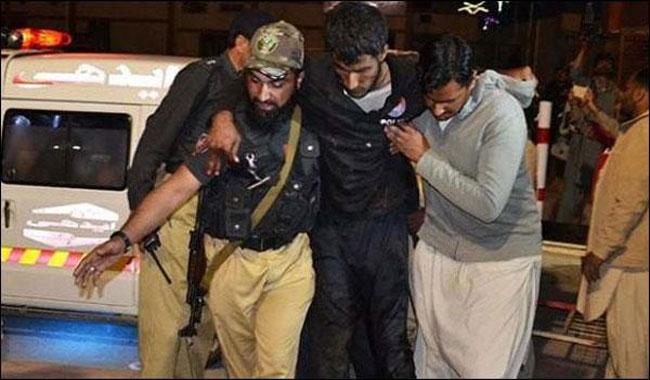
October 28, 2009 -- Once again Pakistan has become the focus of world attention. Every day there is news of the latest suicide attack or military operation, with killings, injuries and the displacing of communities. Recently schools were ordered closed for more than a week. Even children talk about death and suicide attacks.
With more than 125
police checkpoints in Islamabad, it has become a fortress city. Lahore and
other large cities are suffering the same fate: there are police road blockades
everywhere. After each terrorist attack authorities issue another security high
alert and set up additional barriers. How ironic that, until recently,
officials and the media described these “terrorists” as Mujahideen fighting for
an Islamic world.
Afghanistan: Interview with Malalai Joya -- The occupation is `a war on the Afghan people'
Sydney protest against the Afghanistan war, October 8, 2009, organised by the Stop the War Coalition. See Malalai Joya's message to the protesters below the interview.
Malalai Joya interviewed by Steven Littlewood
October 9, 2009 -- Malalai Joya has been described as “the bravest woman in Afghanistan”. A long-term opponent of the North Atlantic Treaty Organization (NATO) presence in her country, Malalai Joya first rose to prominence through a heartfelt and controversial speech in 2003 that was an indictment of the powerful positions gifted to Afghan warlords by the US-led coalition. She was elected to the Afghan parliament in 2005 and continued her campaign against war criminals and fundamentalists there until being suspended in 2007 for criticising fellow MPs. Activists Noam Chomsky and Naomi Klein are amongst those who have called for her reinstatement.
Audio: Attorney Leonard Weinglass on the Cuban Five

Muntadar al-Zaidi released from jail -- Celebrate with `Sock and Awe'
September 15, 2009 -- BBC -- The Iraqi man who threw his shoes at former US President George W Bush, has been released from jail in Baghdad, his brother has told the BBC.
Muntadar al-Zaidi's act of protest made him a hero in large parts of the Arab world and beyond.
Hypocrisy over Cuba’s `political prisoners'

By Tim Anderson
September 13, 2009 -- Political prisoners and Cuba can be a confusing mix, in our times of mass propaganda. Three groups have attracted international attention, over the past decade.
The first group, 70 or so (the ``dissidents''), were arrested in March 2003 by the Cuban government and charged with taking money from a US program which aims to overthrow the Cuban constitution. Amnesty International and many European states, along with the US government, immediately declared them ``prisoners of conscience''. A number have since been released.
The second group of several hundred (``enemy combatants'') were collected by the US government in Afghanistan and Pakistan over 2001-2002 and held for many years in concentration camps at a US military base carved out of the island of Cuba. International protest built up more slowly, and eight years on many are still held without charge or trial.
The third group of five men (``the Cuban Five'’) were arrested in the US in 1998 and accused of being spies, for passing on information about groups in south Florida that were preparing terrorist attacks on Cuba. The US courts have rubber-stamped their convictions. On September 12, 2009, they completed 11 years in US jails.
How US warmongers exploited the 9/11 terrorist attacks

By Norm Dixon
[This article was first published on September 11, 2002, on the first anniversary of the September 11, 2001, terrorist attacks in New York and Washington. Its observations remain relevant to this day.]
* * *
In the week before the first anniversary of the devastating September 11, 2001, terrorist attacks in New York and Washington, TV networks aired a seemingly never-ending string of ``special events'' featuring ``exclusive'' or ``never before seen'' footage of the collapse of the twin towers of the World Trade Center (WTC) and its aftermath. People around the world again experienced the horror, anger and tragedy of that terrible day, when almost 3000 working people were murdered.
Culminating on the anniversary of the day itself, thousands of journalists and TV presenters from across the globe will converge at ``ground zero'' in New York for ``remembrance and reflection''. Solemn ceremonies will be telecast and patriotic speeches by top US politicians broadcast, restating Washington's determination to pursue its ``war on terrorism''.
Pakistan: Appeal -- Help oppose the Taliban and government military operations
May 21, 2009 -- This is a formal appeal by the Labor Relief Campaign to help in the fight against the Taliban and the Pakistan government's military operations. The purpose is to provide immediate help to some of the more than 1.5 million internally displaced people from the Malakand Division of the North West Frontier Province (NWFP) in Pakistan. This displacement has resulted from the fight between the Taliban and the Pakistani government. We also aim to publish Mazdoor Jeddojuhd in the Pushto language more frequently. At present it is published weekly in Urdu and monthly in Pushto. We want to counter the ideas both of religious fanatics and state repression. We aim to aid the labour and social movements in the province by publishing their activities and views, bringing them together to form new networks.
The situation
The Taliban have taken over parts of Pakistan. They have threatened to occupy other parts as well. To pacify them, the government went into an accord with the Taliban this April 2009, imposing a so-called Nizam Adl (system of justice) in Malakanad. The Taliban then imposed medieval laws in the areas under their control, targeting women and minorities. This accord also provided the Taliban with the opportunity to move into other areas.
Why Pakistan's military helped Talibanise Swat

By Farooq Sulehria
May 17, 2009 -- The mass exodus from Swat is making headlines globally. Over a million have been displaced. This is the worst humanitarian crisis since the Rwanda tragedy in 1990s. The explanation offered is that this is necessary to flush the Taliban out of Swat's lush, green valley in Pakistan's north. This military operation, launched in order to stabilise the US occupation of Afghanistan and its so-called "war on terror", is hardly mentioned in the corporate media. On the contrary, major US newspapers have been invoking the fear that Pakistan's nuclear weapons might fall into the hands of the Taliban. Is this a story planted by the CIA?
This is the fourth time in less than three years that the Swat area has been subjected to a military operation. However the latest offensive is of a different character.
Beards, Cuban and Pakistani
By Farooq Sulehria
March 30, 2009 -- Fidel Castro finds beards a practical advantage: “You don't have to shave every day. If you multiply the fifteen minutes you spend shaving every day by the number of days in a year, you'll see that you devote almost 5500 minutes to shaving. An eight-hour workday consists of 480 minutes, so if you don't shave you gain about ten days a year that you can devote to work, to reading, to sports or to whatever you like.”
But having a beard is more than saving time. Cuban revolutionaries let their beards grow out also as a symbol of the Cuban Revolution. Castro describes how it happened: “We didn't have any razor blades, or straight razors. When we found ourselves in the middle of the wilderness, up in the Sierra, everybody just let their beards and hair grow, and that turned into a kind of badge of identity. For the campesinos and everybody else, for the press, for the reporters we were ‘los barbudos’ – ‘the bearded ones.’ The positive side was that in order for a spy to infiltrate us, he had to start preparing months ahead -- he'd have to have a six-month's beard growth, you see. So the beards served as a badge of identification, and as protection, until it finally became a symbol of the guerilla fighter. Later, with the triumph of the Revolution, we kept our beards to preserve the symbolism.”
Can Washington `save Darfur’?

By Kevin Funk and Steven Fake
Few humanitarian crises have occasioned as much media and activist attention in the US as the conflict in the Darfur region of western Sudan.
* * *
Click HERE for an exclusive free excerpt from Kevin Funk and Steven Fake's latest book, Scramble for Africa.
* * *
Major politicians routinely pay homage to suffering Darfurians in their speeches, well-heeled Darfur advocacy groups take out full-page ads in the New York Times, and commentators regularly fill op-ed ledgers around the country with righteous, indignant calls for the West to act to end the suffering. Yet for all the rhetorical attention and concern afforded to Darfur in the US, what is actually understood about the US role in addressing the conflict? Further, what do we know about the historical and current nature of Washington’s relations with Sudan, and how does this relate to our understanding of the Darfur crisis, and what we can do to address it?
Pakistan: Joint left demonstration against India-Pakistan war drive
December 20, 2008 -- While the danger of war between India and Pakistan is accelerates, a peace demonstration in Lahore on December 20 demanded no war between the two countries. More than 100 activists of the Labour Party Pakistan and the Communist Mazdoor Kissan Party (CMKP) demanded an end of war fanaticism.
The demonstrators chanted the slogans: "We want peace", "Peace not war, bread not bombs, jobs not bombs", "No to imperialism and no the religious fundamentalism", "Long live the friendship of peoples of Pakistan and India", "Labour against war, people against war". They were holding banners and posters.
Lockerbie, 20 years on: Behind the frame up of Abdelbaset Ali Mohmed al Megrahi
To mark the 20th anniversary of the Lockerbie air disaster, Links International Journal of Socialist Renewal is republishing these important articles. Since their first publication, important new evidence has cast even more doubt on the unjust conviction of Abdelbaset Ali Mohmed al Megrahi.
[Read Abdelbaset Ali Mohmed al Megrahi's legal defence documents HERE.]
By Norm Dixon
February 14, 2001 -- The eminent barrister Horace Rumpole has often noted that the “golden thread running through the history of British justice” is that a defendant is innocent until proven guilty by the prosecution “beyond a reasonable doubt”. Of course, Rumpole is a fictional character created by writer John Mortimer. As the verdict handed down in the Lockerbie bombing trial proves, the “golden thread” is just as fictional.
On January 31, 2001, the three Scottish lords sitting in judgement on the charges against two Libyans accused of planting the bomb that felled Pan Am flight 103 over Scotland on December 21, 1988, found Abdelbaset Ali Mohmed al Megrahi guilty of the murders of the 270 people killed in the disaster. Al Amin Khalifa Fhimah was found not guilty.
* * *
Play Sock and Awe, inspired by Muntadar al-Zaidi
Join the growing international call for the release of Muntadar al-Zaidi! Click here to sign a petition: http://www.iraqsnuclearmirage.com/articles/Zaydi.html
Click HERE for more on Muntadar al-Zaidi.
Release Muntadar al-Zaidi!
By now, you've all seen the footage of the Iraqi journalist hurling his shoes at George W. Bush during a press conference in Baghdad on December 14, 2008. See below.
What has not been so widely reported are the words Muntadar al-Zaidi, a correspondent for Cairo-based al-Baghdadiya TV, shouted. As the first shoe was thrown at Bush, he said: "This is a goodbye kiss from the Iraqi people, you dog." And with his second shoe, which the president also dodged, al-Zaidi said: "This is for the widows and orphans and all those killed in Iraq."
India must not succumb to the US strategy of proliferation of terror
By Dipankar Bhattacharya
December 15, 2008 -- The recent siege of Mumbai for nearly three days by a small band of well-trained terrorists has almost universally come to be described as ``India’s 9/11’’. In terms of sheer audacity of planning and execution, the places targeted and the scale and range of people killed and injured, the Mumbai terror siege can surely be bracketed with the original 9/11, and in terms of the duration of the skirmish it can also claim to have left the original way behind.
The analogy between
Pakistanis protest US attacks on tribal areas
Civil society, trade unions, political parties and students marched on November 1 in Karachi to protest at the US bombing of Pakistan's Federally Administered Tribal Areas (FATA). US missile strikes hours apart killed at least 27 people on October 31 near the border with Afghanistan, only days after Pakistan demanded that the United States halt an intensifying campaign of using Predator drones to bomb tribal areas in Pakistan.
Will Obama end Bush's `war on terror'?

By Simon Butler
October 31, 2008 -- In the aftermath of the September 11, 2001, bombings of the World Trade Center and Pentagon, US President George Bush declared an open-ended, apparently indefinite “war on terror”.
Using the terrorist attacks as an excuse, the “war on terror” has meant a war drive to extend US global domination. The threats were free flowing — at one point as many as seven nations were part of the “axis of evil” and therefore potential military targets as Bush threatened “pre-emptive strikes” against US “enemies”.
The war drive began with the 2001 invasion and occupation of Afghanistan. In 2003, in the face of massive global protests, the US launched its invasion of oil-rich Iraq.
Facing sustained resistance from the Iraqi people, and increasingly unpopular at home, the failure of the Iraqi occupation has contributed to making the Bush presidency one of the least popular in history.
Campaigning for the White House, Democratic Party candidate Barack Obama has made much of his initial vote against the war in 2003.
Exclusive book excerpt: A manifesto for principled Darfur activism -- and beyond
Below Links International Journal of Socialist Renewal publishes -- with the authors' permission -- an exclusive excerpt from Kevin Funk and Steven Fake's just published book, Scramble for Africa: Darfur Intervention and the USA (Black Rose Books).
In Scramble for Africa Kevin Funk and Steven Fake provide a forensic and astute examination of the Bush administration's politically cynical and opportunist exploitation of the people of Darfur's terrible plight, using them as pawns to regain access to Sudan's oil riches and to promote the self-serving imperialist concept of ``humanitarian intervention''. Funk and Fake reveal the hypocrisy of Washington, which can in the same breathe declare the Sudan regime's slaughter of hundreds of thousands of Darfuris ``genocide'' while -- out of the general public's earshot -- praise and collaborate with the very same butchers as allies in its ``war on terror''. The mainstream ``Save Darfur'' movement's leadership also comes in for a similar investigation for its willingness to allow the interests of the people of Darfur to play second fiddle to Washington's foreign policy double standards.


Recent comments
9 hours 38 min ago
9 hours 42 min ago
10 hours 9 min ago
2 days 4 hours ago
2 days 10 hours ago
3 days 8 hours ago
3 days 13 hours ago
3 days 17 hours ago
4 days 2 hours ago
4 days 9 hours ago