India: When democracy erases its own citizens
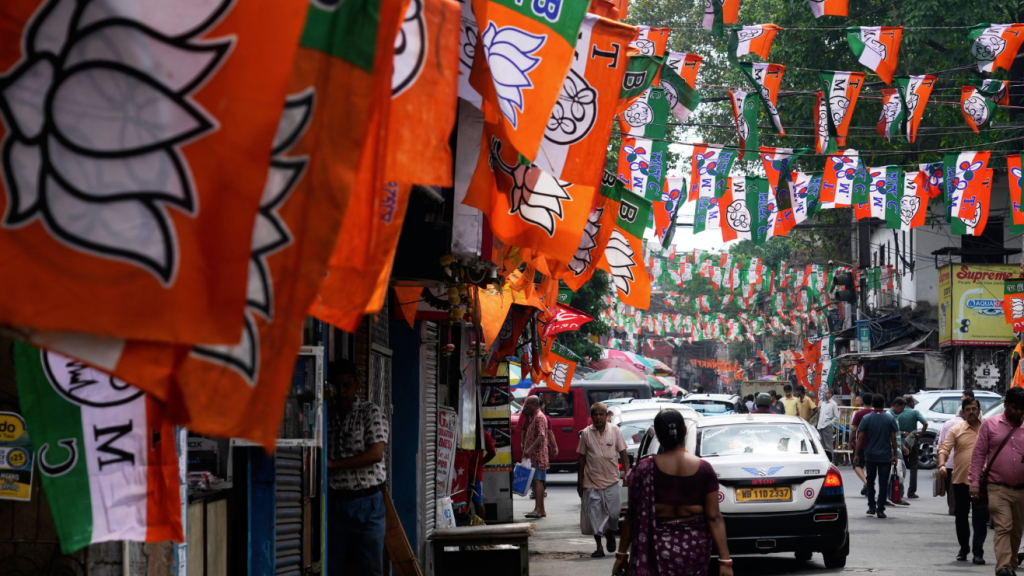
There is a particular kind of violence that leaves no bruises; it does not announce itself at your doorstep, it does not come with riot shields or batons. It arrives instead as a printed list, or rather, as your absence from one.
Sk. Rabiul Islam (54) has been actively participating in every Indian election — national, state or local panchayet — for the past three decades. After the list published by the Election Commission of India (ECI), he finds himself off the voters’ list in his state of West Bengal. The reason was so heartbreaking in its mundanity; he went by “Rabiul Islam”, his name, on his voter card, and Sk. Rabiul Islam on other government documents, including his Aadhar biometric card and ration cards. A lifetime citizenship, erased over the title “Sk.”
Rabiul is certainly not alone in his predicament. He is one of nearly 9 million people who have lost their voting rights in West Bengal ahead of its April 23-29 Assembly election. Almost 6 million of these 9 million people were declared absentee or deceased, while the remaining 3 million are unable to vote until a special tribunal hears their cases.
For those unfamiliar with the scale of what is happening, that figure demands contextualisation: nine million people disenfranchised in a single Indian state, just weeks ahead of a democratic election, through a formally sanctioned administrative process. Why does it matter far beyond the borders of Bengal?
What is SIR and why it matters
The mechanism behind this erasure is called the Special Intensive Revision (SIR), a process that on paper sounds entirely reasonable. Under the Representation of the People Act 1950, the ECI is empowered to periodically revise electoral rolls, removing dead voters, duplicates and those who have migrated. Routine maintenance, as it were, of a database. The ECI claims the SIR process is aimed at removing duplicate or deceased voters and adding genuine people left out of voter lists.
But the devil, as always, lives in the implementation. What has unfolded in West Bengal just before the Assembly elections is anything but routine. Many scholars labelled this the largest targeted disenfranchisement exercise in modern electoral history. It demands the attention of everyone who still believes the vote is not a privilege to be administered, but a right to be protected.
Bengal is not like other states
To understand what happened in Bengal and why it is different, one first needs to understand what happened elsewhere. Since 2025, the ECI, now under Chief Election Commissioner Gyanesh Kumar, has carried out SIR exercises in 12 states, including Bihar, West Bengal, Tamil Nadu, Kerala, and Uttar Pradesh, among others.
In states such as Bihar, 6.4 million names were initially flagged, but the final count produced only about 200,000 deletions and 2.3 million additions. In every other state, exclusion was followed by small deletion and large additions. Bengal was the only state where exclusion was followed by mass deletions.
When the SIR process commenced in West Bengal in November 2025, the state had 76.6 million registered voters. By the time the final rolls were published, the effective electorate had dropped dramatically, with 9,066,000 names removed. A new, never-before-deployed category called “logical discrepancy” was introduced: a computer-generated mismatch between current voter data and records from 2002.
Sabir Ahmed, of the Kolkata-based SABAR institute, said that while the revision of electoral rolls is a routine activity, usually conducted over one or two years, the process was hurried in high stakes West Bengal. There seems to be some motive behind such a hurried activity, he said. Observers with no local knowledge were brought in from other states. The ECI process also lacked transparency and lists were published in the middle of the night.
A community in the crosshairs
There are about 25 million Muslim residents in West Bengal, constituting roughly 27% of the state’s population — the second largest Muslim population among Indian states, after Uttar Pradesh. What is significant is that West Bengal was never ruled by the Bharatiya Janata Party (BJP). Since 2011 it has been run by Trinamool Congress (TMC), headed by Mamata Banerjee. Muslims are an integral part of its electoral support base. The BJP’s political calculation is not difficult to read.
The SABAR Institute analysed voter deletions in two key constituencies, Nandigram and Bhabanipur, both contested by Suvendu Adhikari, the BJP leader in the West Bengal Legislative Assembly. The analysis found that while Muslims make up about 25% of Nandigram’s population, more than 95% of the names deleted from the list were Muslims. Similarly, Bhabanipur has 20% of Muslims, but 40% of voters deleted in the constituency are Muslims.
The mechanism driving this pattern is the “logical discrepancy” tool. Spelling variations in names across generations, slight differences in a father’s name, a nickname or a slight difference in spelling on one document and a formal name on another; all these became grounds for deletion. In a country where records are notoriously inconsistent, especially for women, the rural poor and communities whose names are rendered differently in Arabic, Urdu, or Bengali script, this standard was not a filter. It was a trap.
Across the Muslim-dominated border belt, a disproportionate share of voters was funnelled through the “under adjudication” pipeline, a process that carries its own shadow of suspicion. In the urban-industrial belt, deletion happened through the draft-roll route. The effect, as The Wire’s analysis found, was not random. It followed a political map of exclusion.
Women were hit especially hard. Over 53% of women voters were disproportionately deleted, a demographic that routinely faces documentation challenges in a patrilocal society where women often change addresses after marriage but lack updated records to prove it. In West Bengal, there is also the common use of nicknames, which often gets into official documents. Most women, especially Muslim women, are given different surnames before and after marriage.
The unfairness is further compounded by the structure of redress. If most deletions are concentrated on districts far from Kolkata, yet all tribunal benches are situated in Kolkata, the right to appeal becomes formally available but materially out of reach. Travel costs, low wages, procedural intimidation, language barriers and unfamiliarity with legal settings will not fall equally on all citizens. The burden will fall most heavily on the poor, the rural and the socially vulnerable categories.
The BJP’s convenient democracy
One must be very naïve to not realise that all of these developments must be understood through the BJP’s political strategy. In the 2021 West Bengal Assembly Election, the TMC defeated the BJP by about 6.04 million votes. This margin came down to about 4.24 million in the 2024 Lok Sabha election. Eventually, the ECI announced a SIR of the electoral roll. The timing was not coincidental, it was pre-planned.
While campaigning, Adhikari threatened the livelihood of migrant Muslim workers, warning they would have to return to BJP-ruled states for work after the elections. He said there were more than 30,000 migrant workers from Nandigram employed in Gujrat, Maharashtra Odisha, and they “could not afford to make mistakes”.
This is the full architecture of the BJP’s Bengal Project: delete the vote on one end, coerce the voter on the other. The BJP has been using the bogey of Bangladeshi and Rohingya “infiltrators” or “illegal migrants” to appeal to its mainly Hindu support base, casting an entire community’s electoral participation as a security threat while simultaneously dismantling their ability to vote through administrative procedures.
Banerjee said at a campaign rally that the SIR Process was selectively applied in West Bengal to benefit the BJP. The BJP is plotting to forcefully capture votes through fraudulent means as they do not have the guts to fight and win the elections democratically.
Dr. B. R Ambedkar, on June 15, 1949 while moving the draft provision that would become Article 324 of the Constitution, warned that no eligible person should be excluded from electoral rolls due to “the prejudice of a local government, or the whim of an officer,” as such exclusion would “cut at the very root of democratic government”. The present episode appears to run contrary to that founding principle.
The problem goes further than just the outcome of one particular election and touches upon the integrity of the Indian Constitution. Adult franchise is more than just a system; rather it is the basis for legitimacy in any democracy. If large numbers of voters have been systemically deprived of their right to vote, legitimacy suffers accordingly.
As per the case of West Bengal, it can be considered as the “democratic emergency” hiding in plain sight, its not an administrative oversight but structurally built around the idea of hollowing out the constitution. When the state itself systematically erases its most vulnerable citizens from the electoral map, and addresses these erasures as data cleansing and administrative efficiency, it is not strengthening democracy, it is pushing the vulnerable citizens into a dark path.
Restoring public trust in the electoral process will require corrective measures to be taken to ensure no eligible citizens are denied the right to vote. Without taking such action, the promise of democratic governance made by the constitution will become nothing more than a formality and not the practice of democracy itself.
For 9 million people in West Bengal, the electoral voting machines will not open. Their silence will be counted as absence. And that manufactured, deliberate and meticulously engineered absence will be called democracy.
Sandip Nayak is a Research Fellow at the Department of International Relations, Jadavpur University, India. Email: sandipn.ir.rs@jadavpuruniversity.in
Reference
https://enewsroom.in/9-million-voter-deletions-bengal-eci-democracy-crisis/
https://thewire.in/rights/in-the-bengal-sir-when-the-state-fails-the-voter-pays
https://thefederal.com/elections-2026/west-bengal-voter-deletion-sir-yogendra-yadav-interview-239161