Malaysia’s data centre boom: Who pays, who profits?
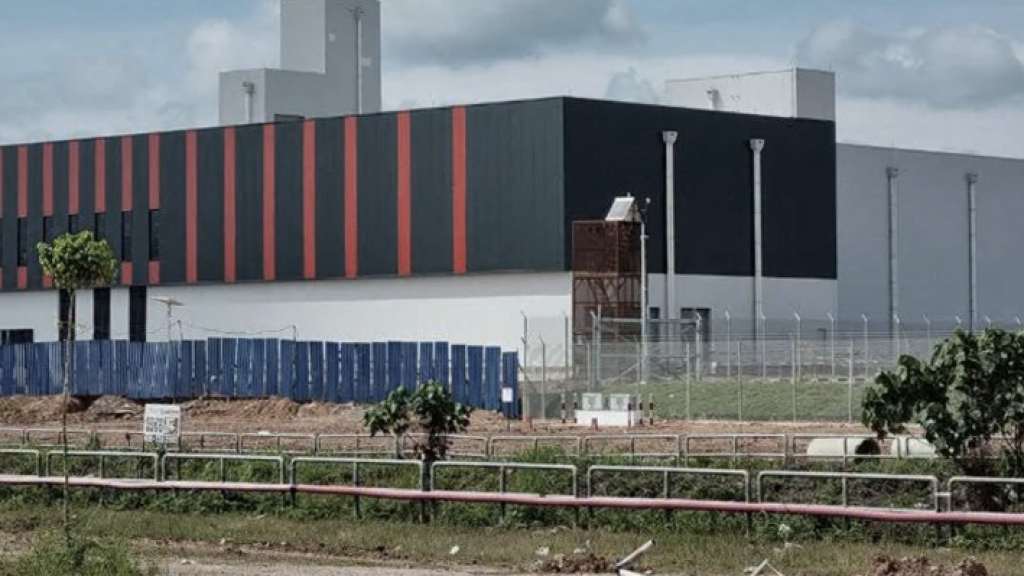
Investment, Trade and Industry Minister Johari Abdul Ghani says Malaysia’s data centre industry must now move beyond simply attracting investment. The focus, he says, should be on AI adoption, home-grown innovation, skilled talent and higher-value jobs.1
Parti Sosialis Malaysia (PSM) agrees. But Johari should explain why the government waited until Malaysia had approved hundreds of billions of ringgit in data centre investments before asking these questions.
Data centre and cloud computing projects accounted for RM95.8 billion, or almost 44% of Malaysia’s approved investments in the first half of 2026. Since 2021, approved data centre investments have reached RM385.7 billion.2
These are enormous figures. Yet Bank Negara Malaysia’s own research shows that data centres typically create fewer jobs than manufacturing because of automation and remote operations.
A 50MW data centre can consume electricity equivalent to around 22,000 households and water equivalent to around 2,200 households every day.3
At the same time, Malaysia imports much of the specialised equipment required by these facilities.
BNM warns that this weakens local value creation and technology transfer, while foreign-owned operators can eventually repatriate profits.
What are we getting?
So Johari should answer a much more basic question: what are Malaysians actually getting for providing the land, electricity, water, infrastructure and incentives that make these investments possible?
How much are we subsidising these companies through tax incentives, discounted utilities, land and infrastructure? How much corporate tax and other revenue are data centre operators actually returning to Malaysia? What is the government’s net fiscal gain after all incentives and public infrastructure costs are counted?
And how many permanent jobs are being created? How much technology is being transferred to Malaysian companies? How much of the equipment and services are being sourced locally? How much of the profits will remain in Malaysia?
These figures should be disclosed publicly.
Quality investment?
Johari’s argument about “quality investment” cannot stop at attracting capital.
Malaysia has already shown that it can attract capital. The real test is whether this capital strengthens our domestic productive capacity.
It is especially concerning that data centre investment is now overtaking manufacturing as a major destination for investment.
Malaysia needs jobs, stronger local industries, technology transfer, and economic ownership. Not simply more server farms.
If the government wants Malaysians to celebrate RM385 billion in data centre investment, then it should show us the balance sheet.
How much do the corporations gain, how much does the government give and how much does the Malaysian public actually get back?
Johari has asked what comes next. PSM’s answer is simple: show the public the numbers first.
Gandipan Nantha Gopalan is PSM deputy secretary-general
- 1
Bernama. ‘Over 40 applications to set up, expand data centres received by govt's task force this year — Johari Ghani.’ The Edge. September 14, 2026. https://theedgemalaysia.com/node/817943
- 2
Ibid.
- 3
Bank Negara Malaysia. ‘From bytes to bucks: The economics of data centres in Malaysia.’ BNM. November 20, 2025. https://www.bnm.gov.my/.../20124/19910400/qb25q3_en_box1.pdf