What makes the US war against Iran different?
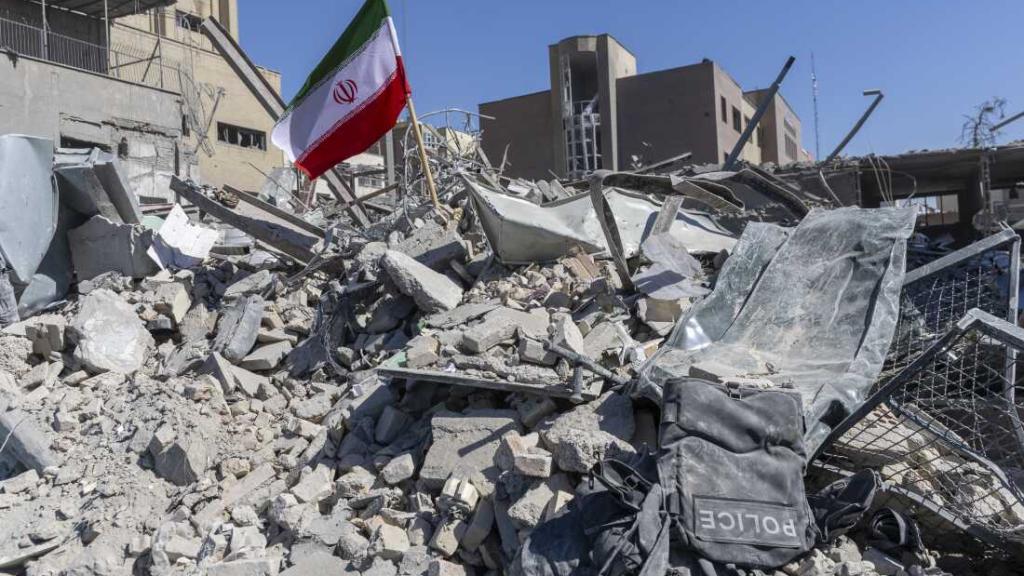
This war is different. You can see it from the incoherent and inconsistent explanations of the Trump administration as to why they have launched another war against Iran and its objectives. You can also see it from the fact that the war seems to have been badly prepared, as the Pentagon and its Gulf allies worry, after just a few days of bombing, about the danger of depleted stocks of munitions if the war continues much longer. The US Central Command is asking the Pentagon to send more military intelligence officers to its headquarters to support operations against Iran for at least 100 days (but likely through to September) as the war will probably last much longer than initially expected.
The result of this is that in contrast to past wars, the attack on Iran is highly unpopular among the US people — even before it has suffered any meaningful losses. Former senior US diplomat Gerald Feierstein, who dealt with the Middle East, comments on the chaotic nature of the US operation:
What we’ve seen is a completely ad hoc operation where it appeared that nobody actually understood or believed that military action was imminent. It seems like they woke up on Saturday morning and decided that they were going to start a war.1
However, the improvised character of the US-Zionist war against Iran is rather a reflection of a much deeper contradiction — one which makes this war different from all past US imperialist wars since 1945. Until now, Washington’s wars were always a result of its strategy. The Korea and Vietnam wars were a result of its Cold War against the Soviet Union. The first Iraq War in 1991 served to establish US global domination as Stalinism was collapsing. The Afghanistan War and second Iraq War in 2003 were supposed to defend its global hegemony and domination of the Middle East in particular.
Deprioritising the Middle East?
In contrast, the present war against Iran stands in glaring contradiction to the actual strategy of the White House — the so-called “Donroe Doctrine” (or “Trump Doctrine” to use the formulation of a servile Washington Post columnist).2 As we noted in our analysis of the National Security Strategy document, the Trump administration announced a major shift in US foreign policy. As a result of its long-term decline, US imperialism no longer attempts to be the global hegemon but rather wants to focus on fully dominating the Western hemisphere, which includes a reactionary offensive to recolonise Latin America, pressurise Canada, occupy Greenland and destroy the European Union. Another result of this shift is that Washington is looking for a temporary détente with Russian and Chinese imperialism.3
A consequence of this new foreign policy doctrine was the deprioritisation of the Middle East. While this was a key region for US imperialism, where it had fought most of its wars since 1991, the Trump administration has always emphasised its desire to reduce its military presence there. The NSS document explicitly states:
Conflict remains the Middle East’s most troublesome dynamic, but there is today less to this problem than headlines might lead one to believe… But the days in which the Middle East dominated American foreign policy in both long-term planning and day-to-day execution are thankfully over — not because the Middle East no longer matters, but because it is no longer the constant irritant, and potential source of imminent catastrophe, that it once was. It is rather emerging as a place of partnership, friendship, and investment.4
However, only a few months after the publication of this document, Washington ordered the greatest amount of air and naval power in the Middle East since the 2003 invasion of Iraq and started a major war by killing Khamenei, Iran’s Supreme Leader and the highest religious authority for up to 260 million Shia Muslims globally. With one stroke, Trump and Israel Prime Minister Benjamin Netanyahu provoked a conflict which might have much worse consequences for US imperialism than the wars in Afghanistan and Iraq. In any case, this is a war that will shape the future not only of Iran but the Middle East and the Trump presidency.
The Israel factor
So, why is Trump taking such a huge risk and starting a “war of choice” without any military necessity, a war that is in full contradiction to established US foreign policy doctrine? As I indicated in past articles, there exist several political factors, both of strategic as well as of conjunctural nature, which explain this war.5
The first is the role of Israel and Zionist forces in the US. To avoid any misunderstanding, I deliberately speak about Zionist and not Jewish forces. I do so not because of “political correctness” but because it is fundamentally wrong to identify Zionism and Jewry. Historically, before 1945 Zionism was only a minority current among Jews. While Zionism became a majority among Jews after the Shoa, today many Jews have turned away from Israel — in particular after the horrible genocide of the settler state against the Palestinian people in Gaza since October 7.
In the US, where about the same number of Jews live as in Israel, a growing minority of them no longer support the settler state. Recently, a study released by the Greater Boston Jewish Community found that among younger adults between 18–29 years, 38% identify as somewhat or strongly anti-Zionist and only 30% agree with the statement that it is important for Israel to be the nation-state of the Jewish people.6
At the same time there are highly influential reactionary forces, such as Christian fundamentalists, which are non-Jewish but fanatical supporters of Israel. In other words, Zionism is not an ethnic or religious category but a political one: those who support the existence of the Israeli settler state.
Netanyahu’s intensive lobbying for Trump joining a war against Iran is hardly surprising. A retreat from the Middle East would be a setback for US imperialism. However, it would hardly question its existence. Things are different when it comes to Israel. Its very existence would be at risk if Washington retreated from the region. How would a settler state of 7 million Israelis, which has terrorised the native population for more than three quarters of a century, with the help of Western imperialist powers, survive in a region of more than 450 million Arabs?
Israel has to do whatever it can to keep the US military involved in the Middle East. Dragging it into a major war against Iran, which inevitably would provoke long-term instability full of political explosions, was the surest way to achieve this. No doubt, Netanyahu has accomplished a diplomatic victory for now.
It is well documented, and hardly disputed, that Netanyahu has lobbied for many years to convince the White House to wage war against Iran. Even leading figures in the Trump administration admit that Israel — the only country that the Pentagon’s National Defence Strategy document calls a “model ally”7 — played a crucial role in the decision to start this war. Marco Rubio, Trump’s Secretary of State and, at the same time, National Security Advisor, told leading representatives of both parties in a confidential meeting on 24 February (four days before the war started) “that, no matter if Israel or the United States struck first, Iran would respond with a powerful barrage of weapons against U.S. bases and embassies. It was logical then, Mr. Rubio said, that the United States should act in concert with Israel, since America would be dragged in anyway. And Israel, Mr. Rubio said, was determined to act.”8
He repeated this argument in public on March 2, when he said to journalists:
If we stood and waited for that attack [from Iran, Ed.] to come first, before we hit them, we would suffer much higher casualties. And so, the president made a very wise decision: We knew that there was going to be an Israeli action. We knew that would precipitate an attack against American forces. And we knew that if we didn’t preemptively go after them before they launched those attacks, we would suffer higher casualties.9
Unsurprisingly, this has caused much outrage, even among Trump’s MAGA supporters and pro-Zionist mainstream politicians from the Democratic Party, as Rubio effectively admitted that the Trump administration was letting Netanyahu dictate US policy.
Another confirmation of Israel’s highly influential role in dragging the US into the Iran War was a report by the Jerusalem Post in early February, which quoted an Israeli defence official saying: “We told the Americans we will strike alone if Iran crosses the red line we set on ballistic missiles.”10 This is a remarkable statement given the fact that Israel is the much smaller partner in the US–Zionist alliance and the settler state would have no chance in any conflict with Iran without US weapons, ammunition and protection. Hence, the Netanyahu government is fully aware that it has strong influence over the Trump administration.
Israel’s influence in the decision process of this war is also reflected in the fact that, according to Axios — a US news website with close connections to the US and Israeli political and security apparatuses — Netanyahu succeed in pushing the Trump administration to start the war earlier than it had originally planned (late March or early April).11
Historical reasons for the disproportionate Zionist influence
How is it possible that such a small state such as Israel can play such a disproportionally large role in US foreign policy? There are several reasons.
First, Israel is a small country in terms of its population, but since the 1990s it has become a junior imperialist state with a sizeable monopoly capital, particularly in arms and IT industries — key sectors in the modern economy.
Second, the Zionist lobby is not a mysterious conspiracy by shady figures but a highly influential and dominant sector of the US ruling class, which historically emerged after the US replaced Britain and France as the chief backers of Israel in the 1960s. As the Middle East played an increasingly important role in US foreign policy, the US needed a heavy-armed guardian in the region. Israel perfectly fitted this role because, as a settler state whose very existence is based on the expulsion and genocide of the Palestinian people, it was a “natural-born enemy and oppressor” of the native (Arab) population in the region.12 Such a role has always been an integral part of Zionism. The founder of Zionism, Theodor Herzl, wrote already in 1896: “We should there [in Palestine, Ed.] form a portion of the rampart of Europe against Asia, an outpost of civilisation as opposed to barbarism.”13
Hence, Zionism was conceived by its founders as a settler project in close collaboration with imperialist Great Powers. Given that Zionism emerged among European Jewry, it was clear that its leaders were trying to become key allies of Western imperialism. As a result of this historically developed relationship, and Israel’s key role as a “model ally” in one of the most important regions of the world, the ruling class in Western imperialist countries has become closely entangled with their Israeli partner (in crime).
In other words, the Zionist fortress has been crucial for Western imperialism to keep an important region under control where the vast majority of the population deeply detests the settler state and its Western backers. Resulting from this relationship have been various security ties, including the training of US police force by Israeli officers.
Likewise, support for Israel could easily be ideologically justified by all sectors of the ruling elite. The liberals can claim that this is a “progressive” project aimed at “fighting antisemitism” and preventing “another Holocaust”. Conservative and right-wing sectors can refer to Israel’s “whiteness”, the (supposed) close religious ties between Judaism and Christianity and the shared hatred against Muslims.
In short, Israel’s indispensability for US and European imperialism combined with shared military and economic interests have provided this “model ally” with disproportional influence in Western countries.
However, the developments of the past few years have hugely undermined the position of Zionism. The US no longer wants to focus on the Middle East and wants to withdraw large parts of its military forces from the region. At the same time, a huge pro-Palestine movement has emerged since October 7, which has made Israel increasingly unpopular in Western countries, including the US. For the first time, more US citizens sympathise with Palestinians than with Israelis, according to the latest polls (41% vs. 36%).14 In the past, Republican and Democrat candidates were frightened by hostility of the Zionist lobby organization AIPAC; today candidates hasten to assure the public that they do not take any donations from this organization.
However, until now such a shift has not found its reflection within the ruling class, so the dominating representatives of the ruling class — from former president Joe Biden to Trump, from Democratic Senator John Fetterman to Republican senators Lindsay Graham and Ted Cruz — are still hardcore Zionists.
Trump’s desperate hope for a ‘little, successful war’
The second, no less important, factor for Trump’s decision to go to war against Iran is the fragile domestic political situation and his enormous unpopularity. His tariff policy is in deep crisis, as it has not solved the problem of trade unbalances, resulted in higher prices for US citizens and was finally overruled by the Supreme Court. The living conditions of the US population have not improved and his policy of sending ICE thugs to cities to terrorise the people has provoked huge popular resistance and public backlash. There have been mass demonstrations and strikes against ICE terror and, today, half of US citizens even support abolishing this racist agency.15
Unsurprisingly, the Republican Party has lost nearly all federal and state elections since Trump came to power and is projected to lose its majority in both chambers of Congress at the mid-term elections in November — something that could paralyse the presidency for the remaining two years.
Furthermore, Trump himself is deeply discredited since it has become public knowledge that he and his friends are deeply involved in the horrific Jeffrey Epstein scandal. This scandal is most likely related to the above-mentioned Israel factor, as Trump is said to be mentioned thousands of times in the unpublished three million Epstein files, which include very serious and discrediting incidents. Since Epstein had well-known close connections to Israeli politicians and security figures for many years (Epstein was considered as an Israeli intelligence asset), the Zionists are likely in a position of holding highly discrediting material on the US president. It would be surprising if this factor had not played a role in Trump’s decision to support Israel’s strategy of waging war against Iran, in contrast to his own foreign policy doctrine.
In any case, the collapse of Trump’s popularity and the danger of losing the incoming mid-term elections has pushed Trump to look for a prestigious “little, successful war”. The triumph of kidnapping Venezuela’s President Nicolas Maduro without losing any US soldier certainly emboldened him. The prospect of going down in history as the US president who brought down the regimes of Iran, Venezuela and Cuba — as Cruz outlined two weeks ago — must have had an enormous appeal to the unpopular clown.
While such a triumph can not be excluded, it is far more likely that the US will become stuck in a long war and a long-term and explosive mess.
Ynet, the online outlet for the Yedioth Ahronoth (Israel’s largest newspaper), has published a remarkable article which — despite its support for the war against Iran — points to the factors behind Trump’s decision.
A little over a year into his second term, Trump has completely forgotten those promises — if he ever truly believed them himself… Last summer, following the previous strike in Iran, Trump claimed that “the Iranian nuclear program was eliminated.” When American journalists reported that this was not in fact the case, they received direct threats from the White House. Now, eight months later, the American president has launched a war without obtaining the required congressional authorization, as mandated by the Constitution — and without explaining to the American public, or to the world, why he is doing so… Despite what he says publicly, Trump knows his political standing is not strong. The economy is faltering, the Epstein files scandal is not going away, and the midterm elections are approaching — and could become a Democratic tsunami. Trump has decided that a war with Iran — if it ends with regime change — could completely transform the picture.16
The past weeks have demonstrated, once more, the difference between Trump and Netanyahu as state leaders — differences which are not only caused by their respective personalities but also the different long-term interests of their respective states. Netanyahu has a strategy and knows what he wants. Objectively, his strength lies in the fact that his personal interests (staying in power and out of jail) overlap with the interests of the settler state — the “Ideal Total Imperialist” (to paraphrase Karl Marx), which desires expansion in the Middle East to build a “Greater Israel”.
In Trump’s case, there also exists a certain overlap of personal interests and objective interests of declining US capitalism — his determination to stay in power at any costs is complementary with the necessity to increasingly replace bourgeois democracy with a bonapartist system. However, at the same time, his personality of a clown is in unresolvable contradiction to the collective interests of the most powerful imperialist state.
For all these reasons, I think Trump’s war against Iran is one that has been badly planned, is very risky and is in contrast to the foreign policy doctrine of his own administration. Nevertheless, political and conjunctural factors have pushed him to start this war. In contrast, Israel has managed to drag the US into a war that is necessary from the point of view of their own strategic interests. However, if the US-Zionist monster loses this war, the US can retreat. Israel can not but will rather face the beginning of its end.
To conclude this article, I reiterate that in this war socialists have the duty to take an unequivocal anti-imperialist position: Defend Iran – defeat the American-Zionist aggression!17
Michael Pröbsting is a socialist activist and writer. He is the editor of the website thecommunists.net, where a version of this article first appeared.
- 1
Politico: Inside the Trump administration’s scramble to support its own war, 3 March 2026, https://www.politico.com/news/2026/03/04/evacuation-middle-east-iran-war-00812898
- 2
Marc Thiessen, We’re witnessing the birth of the Trump Doctrine, Washington Post, 3 March 2026, https://www.washingtonpost.com/opinions/2026/03/03/iran-strike-venezuela-military-trump-doctrine/
- 3
Michael Pröbsting: Trump and the Political Crisis of European Imperialism. On the inner contradictions and challenges of Europe's ruling class in face of Trump’s new foreign policy doctrine, the opportunist position of left reformism and the tasks of socialists, 28 January 2026, https://www.thecommunists.net/theory/trump-and-the-political-crisis-of-european-imperialism/; Trump’s Donroe Doctrine and its Consequences for Venezuela, Latin America and the World (Part 1: https://www.thecommunists.net/worldwide/latin-america/trump-s-assault-on-venezuela-and-his-plan-to-recolonise-latin-america/ and Part 2 https://www.thecommunists.net/worldwide/latin-america/trump-s-assault-on-venezuela-and-his-plan-to-recolonise-latin-america/#anker_3); An Official Confirmation that the U.S. Is No Longer the Global Hegemon. Trump’s new National Security Strategy outlines a strategy for U.S. imperialism for a multi-polar world, 20 December 2025, https://links.org.au/trumps-new-national-security-strategy-outlines-us-imperialisms-policy-multi-polar-world; A Major Shift in Washington’s Foreign Policy Doctrine. The draft of the Pentagon’s newest National Defense Strategy reflects the dramatic decline of U.S. imperialism, 10 September 2025, https://www.thecommunists.net/worldwide/global/a-major-shift-in-washington-s-foreign-policy-doctrine/.
- 4
The White House: National Security Strategy of the United States of America, November 2025, p. 28
- 5
Michael Pröbsting: Towards the next Zionist-American War against Iran. On the reasons for Trump’s desire to attack Iran in the age of the “Donroe Doctrine”, 19 February 2026, https://www.thecommunists.net/worldwide/africa-and-middle-east/towards-the-next-zionist-american-war-against-iran/; Heading towards more Wars in the Middle East, 30 December 2025, https://www.thecommunists.net/worldwide/africa-and-middle-east/heading-towards-more-wars-in-the-middle-east/
- 6
2025 Greater Boston Jewish Community Study, 12 February 2026, https://www.cjp.org/cjp-news/2025-greater-boston-jewish-community-study
- 7
Department of War: 2026 National Defense Strategy, p. 2 and 12
- 8
New York Times: How Trump Decided to Go to War. President Trump’s embrace of military action in Iran was spurred by an Israeli leader determined to end diplomatic negotiations. Few of the president’s advisers voiced opposition, 2 March 2026, https://www.nytimes.com/2026/03/02/us/politics/trump-war-iran-israel.html
- 9
Al Jazeera: Iran live news: US jets crash; Iran says no Trump talks, hits energy sites, 2 March 2026, https://www.aljazeera.com/news/liveblog/2026/3/2/us-israel-attack-iran-live
- 10
Jerusalem Post: Israel warns Trump: We may act alone if Iran crosses ballistic missile red line, 8 February 2026, https://www.jpost.com/israel-news/defense-news/article-885948
- 11
Axios: The Trump-Netanyahu call that changed the Middle East, 3 march 2026, https://www.axios.com/2026/03/03/trump-netanyahu-call-iran-war-israel-coordination
- 12
See two books by Yossi Schwartz, a Jewish Anti-Zionist since nearly six decades living in Occupied Palestine, who has dealt extensively with the Zionist state and the Marxist program: The Zionist Wars. History of the Zionist Movement and Imperialist Wars, 1 February 2021, https://www.thecommunists.net/theory/the-zionist-wars/; Palestine and Zionism. The History of Oppression of the Palestinian People. A Critical Account of the Myths of Zionism, RCIT Books, Vienna 2019, https://www.thecommunists.net/theory/palestine-and-zionism/; see also a pamphlet by Michael Pröbsting: On some Questions of the Zionist Oppression and the Permanent Revolution in Palestine, May 2013, https://www.thecommunists.net/theory/permanent-revolution-in-palestine/
- 13
Theodor Herzl: A Jewish State (1896), Federation Of American Zionists, New York 1917 p.12
- 14
Axios: America's slipping sympathy for Israel, 27 February 2026, https://www.axios.com/2026/02/27/palestinians-israelis-us-polling-gallup
- 15
Axios: Half of Americans support abolishing ICE in record poll, 4 March 2026, https://www.axios.com/2026/03/04/trump-ice-support-abolish-half-americans-record-poll
- 16
Ynet: Trump's big gamble: overthrowing Iranian regime to save his presidency, 1 March 2026, https://www.ynetnews.com/article/rysgrpwfbe#autoplay
- 17
For a more detailed elaboration of the position of defending Iran see: The Defence of Iran and the Anti-Imperialist United Front Tactic, 12 March 2026, https://www.thecommunists.net/worldwide/africa-and-middle-east/the-defence-of-iran-and-the-anti-imperialist-united-front-tactic/