How can Venezuela recover its sovereignty?
Venezuelan leftist Luis Fernando Marquez says “recuperating sovereignty and control over our resources is essential”. But he gives no indication of how to do this.
Venezuela has been subject to a US naval blockade. In December 2025-January 2026, US forces took control of nine ships containing Venezuelan oil. The US stole the oil and put money from oil sales in US-controlled bank accounts.
These ship seizures have had a lasting impact. Even if ships are not currently being seized, the threat remains. The Venezuelan government and shipowners know ships can be seized if they try to export oil without US permission. The intimidatory effect continues. The naval blockade remains in place, just in a less obvious form.
Oil exports require US approval, with revenue paid into US-controlled accounts. The US has imposed a “deal” on Venezuela that hands over oil commercialisation to intermediaries.
China was previously Venezuela's main customer. Now, the state oil company, PDVSA, is not allowed to sell oil to China, though US-approved intermediaries can.
How should the Venezuelan government respond? There are three choices.
- Venezuela could try to export oil without asking for US permission. This would probably be met with renewed ship seizures. Defying these seizures would require placing Venezuelan soldiers on oil tankers with instructions to shoot at US troops boarding ships. The US would then likely bomb the ship. Venezuela could also attack US warships with missiles and drones. The US would undoubtedly respond by bombing Venezuela.
- Another alternative would be ceasing all oil exports until the US hands back control of oil sales. Venezuela’s oil industry would be largely shut down and the government would lose oil revenue that funds government services.
- The third alternative, chosen by the Delcy Rodríguez government, is to make big concessions to foreign capital and have polite discussions with US government officials, in the hope they will allow some oil revenue to go to the Venezuelan government.
Undoubtedly, many Venezuelans are dismayed by these concessions to US imperialism. But there have been no big protests, because the US seems too powerful to defy. This is obviously a bad situation. But Marquez gives no real indication of what he thinks should be done.
Left critics of the Rodriguez government have little support among the Venezuelan people. Marquez admits this, saying:
At the same time, liberal thought has gained ground among the population; that is undeniable. This largely has to do with the false equating of Chavismo with Communism. Moreover, the inability of left-wing sectors opposing the regime to create an organic movement has left a political void in most poor and working class sectors.
Left critics will be ignored by most people if they have no answer for how to respond to the threat of renewed US military action.
Marquez also says:
Progressive and left-wing sectors face the enormous task of winning people over to a nationalist program. Recuperating sovereignty and control over the country’s resources is essential; without this it will be impossible to develop the country's productive forces.
The question is how to implement such a program when Venezuela is subject to the threat of further US aggression. In my view, this problem can not be solved solely within the borders of Venezuela. There is a need for political change in the United States. There needs to be a huge movement — at least on the scale of the anti-Vietnam war movement - in opposition to US imperialist intervention in Venezuela and other countries.
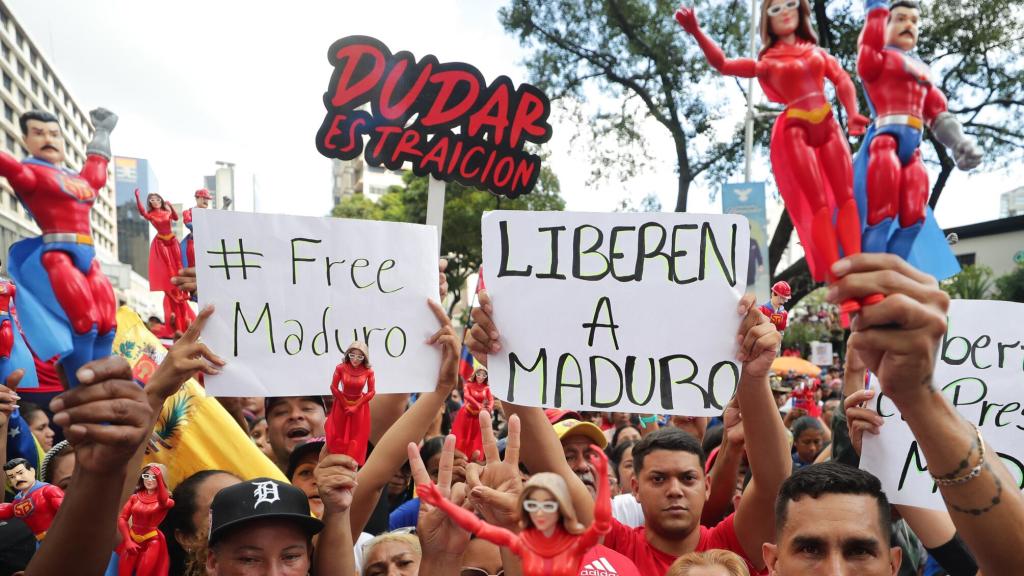
Of course, actions within Venezuela are important. There have been nationalist mobilisations calling for Nicolás Maduro and Cilia Flores’ freedom. Their kidnapping was a violation of Venezuela’s sovereignty; the demand for their freedom is a nationalist demand. While calling for a “nationalist program”, Marquez says nothing about these demonstrations. They are limited in their demands, but they are a start.
There are many other things I could criticise in the interview. Marquez talks of “countless episodes of violence” under the Maduro government, but fails to mention the right-wing opposition’s role in instigating violence.
Marquez refers to “the neoliberal policies imposed by the [Hugo] Chávez and Maduro governments over more than two decades”, which is a strange accusation. Chávez used oil revenue to bring free health care and education to poor areas. Chavez can be criticised for not moving quickly enough to diversify the economy away from an excessive oil dependence, but this is not the same as neoliberalism.
Marquez cites an opinion poll that shows 78% support for right-wing politician Maria Corina Machado, ignoring the notorious unreliability of opinion polls in Venezuela. In recent years, some workers became disillusioned with the Maduro government. But this does not mean they all became Machado supporters. According to the National Electoral Council, electoral abstention reached 42% in the 2024 presidential election.
Marquez is right that there is a “political void” in at least some working class and poor sections. This is mainly due to hardships created by US sanctions, which caused them to lose hope. They feel the US is too powerful to be successfully defied. The left needs to be able to explain how US imperialism can be defeated. Marquez has not done this.