Pakistan: How a regional warmonger came to host US-Iran peace talks
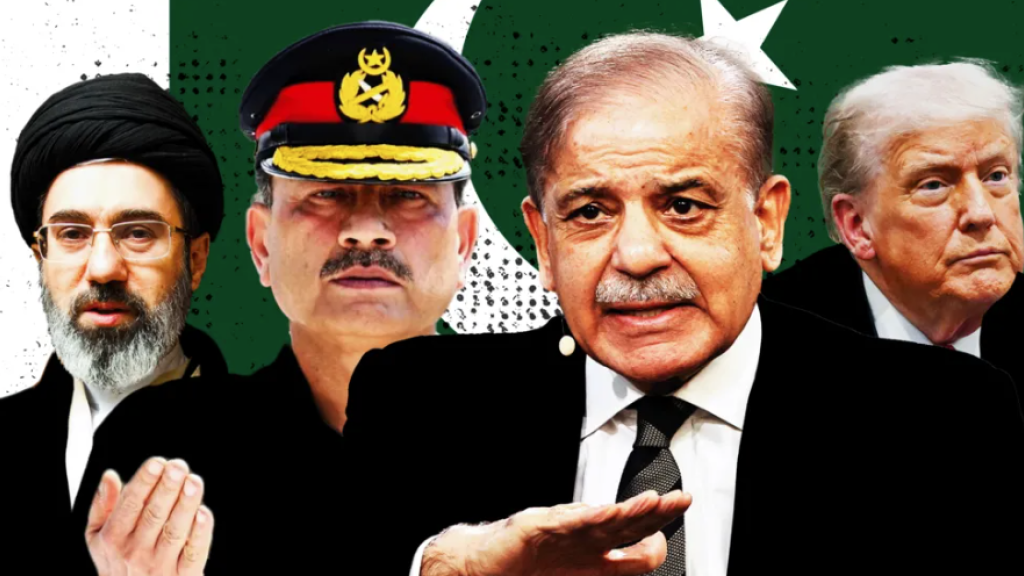
Mainstream Pakistan is basking in (self)glory. As host of the US-Iran negotiations — rumours of a second-round abuzz — Islamabad is upbeat. From talk show hosts to YouTube influencers, the one-dimensional message is clear: Pakistan has finally been assigned the role it deserves in the global hierarchy.
International Relations (IR) academics, otherwise considered irrelevant by the know-all legacy media, are dotting the screens and op-eds. Perhaps one of these IR scholars introduced the media to Giovanni Botero’s 16th century notion of a “middle power.” In any event, the urban middle classes and Twitterrati have enthusiastically embraced Botero’s otherwise vague concept.
That traditional rival India is not just absent in the negotiations but burning with jealousy is the icing on the cake for the media, the chauvinistic middle classes and, of course, the state managers. In my opinion, this is the second most important “moment of glory” for the country’s ruling class, since hosting the Islamic Summit in 1974. However, this time around, it is an event of an even bigger consequence.
The question, however, remains: what has catapulted Islamabad, temporarily at least, to the status of “global peacemaker”, Scandinavian-style? The India-Pakistan conflict in May last year apparently endeared the Pakistani leadership to United States President Donald Trump. Yet, this is an inadequate explanation.
Foreign policy as bread and butter
Pakistan is a country that survives and thrives on foreign policy. The Pakistani ruling class learnt the art of banking on and cashing in geostrategic benefits, whenever an opportunity presented itself, back during the Cold War. Back then, they grasped the diplomatic art of balancing relations between rival powers. For example, Pakistan has friendly relations with China and the US. In 1970, Pakistan facilitated secret Sino-US negotiations, paving the way for diplomatic relations. However, Pakistan has also, on occasions, annoyed both the powers.
Pakistan is hosting the present peace talks only 150 kilometres from Abbottabad, where Osama bin Laden was hunted down on May 2, 2011. Several Taliban commanders and their families, post-9/11, were also residing in Islamabad, a stone’s throw from the US embassy. Beijing has its own grievances against Pakistan. The biggest Chinese resentment, presently, is Islamabad’s attempt to hinder China’s Belt & Road Initiative (BRI) project in Pakistan. The deadly attacks on Chinese nationals employed in huge Chinese projects have at times driven otherwise polite Communist Party of China bureaucrats to publicly reprimand Islamabad.
Likewise, since 1979, Pakistan has managed good relations with Riyadh as well as Tehran. But in each case, irritants and disagreements persist. Tehran has been unhappy over state-patronage lent to anti-Shia militant outfits, responsible for mass violence against Pakistan’s Shia citizens (there was spillover in Afghanistan too). In January, Iran fired missiles and sent drones to attack Pakistan’s Balochistan province. Pakistan, before announcing a truce, repaid in kind.
Mohammed bin Salman, likewise, was incensed by Islamabad’s refusal to dispatch Pakistani troops to fight in the “jihad” against “Houthi rebels” in 2015. Yet, on April 16, Pakistan’s prime minister, Shahbaz Sharif was warmly received by MBS. Shahbaz Sharif speaks broken-Arabic, largely to impress domestic audiences. He learnt Arabic when his family was exiled to Saudi Arabia by the military in 2001.
Iranian foreign minister Abbas Araghchi welcomed Pakistan’s military czar Asim Munir to Teheran on April 16. As Pakistan is a garrison state, military chiefs have command over troops and civilian affairs. Munir’s visit received greater coverage in the Pakistani media than Sharif’s trip to Jeddah. There is a reason for this difference. Not unlike economy and politics, foreign policy also falls within the domain of Pakistan Army’s General Headquarters. Most importantly, the military (manpower, technology) is also Pakistan’s most important diplomatic manoeuvre and valuable export.
A clever client
Pakistan is a client state, but a clever one. It is one thing whether their policies benefit Pakistani citizens, but state managers have successfully peddled their international interests. Owing to their ability to stay effective internationally, they have gained and maintained access to global and regional corridors of power. This access can apparently be explained by a lucky mix of history and geography (more below). During the recent Israeli-US war on Iran, they successfully deployed this as self-interest was involved.
For the past several days, there have been power cuts every second hour. This is because electricity is largely produced from imported oil. Sectarian tensions are another headache for the ruling class. The attacks on the US consulate in Karachi on March 1, in the wake of Iranian leader Ali Khamenei’s assassination, and the large-scale unrest in Gilgit-Baltistan have made global headlines. However, the sectarian aspect went missing in the global and local coverage, for understandable reasons. The attack on the US Consulate was mounted by Shia youth, while Gilgit-Baltistan is a Shia-dominated region (though not all Shia belong to the Ithna Ashari branch).
Given a near-universal anti-Americanism and widespread dislike for Israel, support for Iran during the month-long invasion cut across the sectarian divide. Field Marshal Munir summoned top Shia clerics to warn against any further agitation. His advice to clerics who preferred Iran over Pakistan’s national interests was to “migrate to Iran”. Though his advice was justifiably censured, Munir’s warning was indicative of the ruling elite’s worries.
Meantime, every missile Iran fired at the Gulf sheikhdoms unnerved Islamabad. While Pakistan cannot annoy Tehran, it can hardly afford the wrath of Arab Sultans either. After China, the Gulf states (collectively) are Pakistan’s largest lenders, if one takes into account Pakistan’s bilateral debt. Equally important are the millions of Pakistanis working in the Gulf states, who constitute the largest source of remittances. This diaspora in the Arabian Peninsula, often working in slave-like conditions, keeps the Pakistani economy afloat.
Ironically, while Pakistan was playing the role of peacemaker internationally, China was hosting a week-long round of talks between Kabul and Islamabad, and relations with India remain fraught. Pakistan is neither a peace-maker by ideology or necessity. The Pakistani state’s ideological basis rests on an enmity with India. Present tensions with Kabul are partly an extension of this India-centric approach. Islamabad is furious that the Taliban regime has been cosying up to New Delhi (among other factors). Pakistan may seek to play the role of peacemaker globally but regionally it acts as a warmonger.
Roots of cleverness
Balancing powerful global or regional rivals is not a specifically Pakistani achievement. There are other case studies of a client state pleasing competing patrons. However, the specificity of the Pakistani elite is the fact that they manage it all this time. What explains this clever “ability”?
A combination of the following factors has allowed the ruling clique to perform as a clever client.
- The state’s garrison character. In a democracy, even when it is highly flawed, a ruling dispensation can not afford unpopular decisions. Foreign policy makers in Pakistan, however, are not answerable to any electorate.
- Pakistan has a military equipped with nuclear capacity. While Pakistan has sent troops to the Gulf states, its top nuclear scientists have helped Iran and Libya build their nuclear programs.
Pakistan foreign policy scholars usually refer to Pakistan’s geography and the Cold War as an explanation for its foreign policy. On the contrary, the state’s character is the defining factor. A Pakistani state with a different ideology or dispensation would have behaved differently, despite geography.
The claim that Pakistan survives and thrives via its foreign policy is made from the ruling classes’ viewpoint. From the citizens’ perspective, Pakistan’s foreign policy failures are damningly visible when it comes to the neighbourhood. For instance, the post-9/11 policy of running with the hare (Taliban) and hunting with the hound (Washington) turned Pakistan into “Terroristan”. The wave of terror that swept Pakistan after September 11 claimed more than 70,000 lives. The blowback, in the form of the Pakistani Taliban, continues to claim hundreds of lives annually even now.
It is, likewise, a huge failure of diplomacy if a state can not live peacefully with its neighbours, as is Pakistan’s case. While peace with all four neighbours is vital and desirable, it is not on the horizon in the case of India (and Afghanistan) for two reasons. First, as highlighted above, Pakistan identifies itself ideologically as India’s nemesis. Pakistan has no plans to shed this identity anytime soon. Second, the Hindu fundamentalist BJP presently ruling India, with an almost unchallenged hegemonic hold over Indian society, also thrives on anti-Muslim and anti-Pakistan politics. Hence, the outlook is not optimistic for the foreseeable future.
Most importantly, by facilitating these peace talks, the hybrid regime in Pakistan is no doubt building itself a good image that will help legitimise it, even if it was a product of rigged elections. The better image it has internationally, the more repressive it is likely to be domestically.
Farooq Sulehria is the editor of Pakistan’s Foreign Policy and Strategic Relations in the Twenty-First Century, forthcoming for Palgrave Macmillan.