Democracy, socialism, Lenin
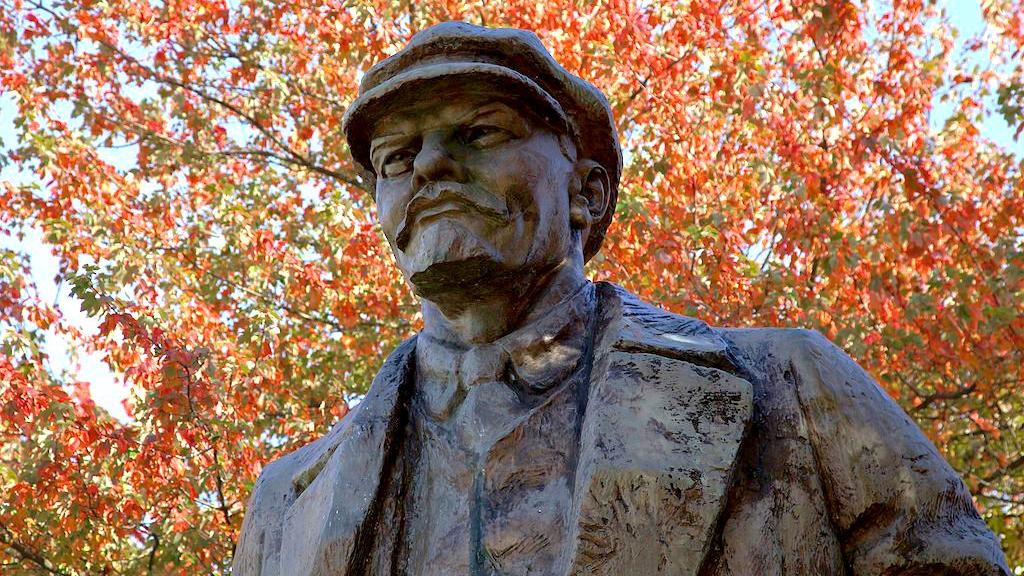
“Democracy, Socialism, Lenin” is Paul Le Blanc’s rejoinder to “Lenin versus democracy,” where Dan La Botz’s replies to criticisms of his original article “Goodbye to Lenin and Leninism,” first published on LINKS International Journal of Socialist Renewal on April 25. Le Blanc’s “Democracy, Socialism, Lenin” is appearing simultaneously on LINKS and Communis. Other contributions to the discussion can be read here.
I appreciate Dan La Botz’s critical challenge regarding Vladimir Lenin’s contributions to the revolutionary struggle for socialism. This is exactly the right moment for the rising numbers of socialist activists to consider the question of “what is to be done” in our time of multiple capitalist crises and catastrophes, and glean whatever might be useful in the ideas and examples of previous revolutionary Marxists, Lenin included. Dan’s comradely tone facilitates the clarifications needed as we go about this task. As he also recognizes, it is important to be frank when exploring differences.
In his latest article, Dan usefully re-lists the eleven alleged decisions made by Lenin that Dan (in my opinion wrongly) believes demonstrate that genuinely democratic socialists should reject what Lenin has to offer. In what follows I shall comment on that list, but first I would like to address Dan’s criticism of an aspect of my “methodology.”
Methodology
According to Dan’s initial “Goodbye to Lenin and Leninism” essay, “Lenin’s experience, his life and his work, both intellectual and practical, brought him into conflict with the underlying principles of Marxism and democratic socialism.” Dan stressed the “personal psychological basis” for Lenin’s “tendency toward authoritarianism.” He also noted that “several leading socialists” — not only Mensheviks but Rosa Luxemburg, the pre-1917 Leon Trotsky, Maxim Gorky and David Riazanov — “were fiercely critical of Lenin,” based on their reading of Lenin’s writings, “their personal familiarity with Lenin, and their observations of his leadership of the Bolsheviks.” He concluded that “we have all known people like this” who have a “personal psychological basis” inclining them toward authoritarianism.
This struck me as a set of issues worth considering. Consequently, I did two things:
- I took some time to explore, as Dan puts it, “people from all social classes, walks of life and political stripes” (especially Luxemburg, Trotsky, Gorky and Riazanov) on the question of whether Lenin was seen as one of those authoritarian personalities “we have all known.”
- I examined Lenin’s writings — with special attention to Two Tactics of Social-Democracy in the Democratic Revolution that Dan cited, plus a 1915 polemic challenging Luxemburg’s perspectives of the national question — to see if there was a basis there, as Dan suggested in his essay, for Lenin’s contemporary critics to conclude that his alleged authoritarian personality was matched by authoritarian theorizations.
In neither area (which he himself had originally urged us to consider) were Dan’s allegations corroborated. It seems to me that it will not do for Dan to now (a) disdainfully dismiss the issue of Lenin’s personality (as he puts it, “whether Lenin was a nice guy”), or (b) shrug that “talk is cheap” in regard to the democratic content in Lenin’s writings. Since Dan himself raised these issues, I am wondering if his decision to drop them signals a narrowing of the differences between us.
Eleven decisions made by Lenin
At any rate, I agree with Dan’s insistence on shifting the discussion to firmer ground: Lenin’s political decisions — especially the eleven that he asserts, “had an authoritarian character and a dangerously anti-democratic impact.” Here are the eleven decisions:
- The organization of the Bolshevik faction, which later became the Bolshevik Party, and then the Russian Communist Party;
- The organization and execution of the Bolshevik coup, which detonated the October 1917 Russian Revolution;
- The shutting down of the democratically elected Constituent Assembly in January 1918;
- The establishment of a Bolshevik-led coalition Soviet government, which soon became simply a Bolshevik government;
- The establishment of “one-man management” in Soviet industry;
- The establishment of a political police, the Cheka, and unleashing of the Red Terror;
- The establishment of War Communism and militarization of society to win the Civil War;
- Russia’s war on Poland, which ended in defeat;
- The crushing of the Kronstadt Rebellion;
- The banning of factions in the Communist Party;
- Lenin’s empowerment of Joseph Stalin.
These alleged decisions from one through five, along with eleven, are seriously oversimplified. An in-depth examination of the historical record, as revealed in studies by Alexander Rabinowitch, Moshe Lewin, Ronald Suny, Lars Lih and others, suggests that Lenin’s political decisions from 1900 to 1917 were far more democratic than authoritarian. (See also two of my own books — Lenin and the Revolutionary Party and Lenin: Responding to Catastrophe, Forging Revolution.)
On the other hand, I do think that the historical record provides substantial support for Dan’s characterizations of Lenin’s decisions six through ten, with Lenin tilting significantly toward authoritarianism in those incredibly desperate times. Shortly before his death, he tried to reverse the negative effects of these decisions, but it was too little and too late. He left in his wake an increasingly undemocratic Communist Party and an authoritarian regime — adding up, as Hannah Arendt once put it, to “Lenin’s greatest defeat.”
Dictatorship and democracy
Some anti-Communist commentators argue that authoritarian seeds can be found in Karl Marx’s call for a proletarian dictatorship. But as Hal Draper and others have shown, Marx, Friedrich Engels, and others in the Marxist tradition (Lenin included) viewed the notorious phrase “dictatorship of the proletariat” as meaning, quite simply, political rule by the working class.
By 1919, however, dictatorship of the proletariat came to mean a dictatorship exercised by the Communist Party for Lenin and his comrades. This has often been seen as the defining attribute of “Leninism” — although Lenin himself stressed the centrality of genuine and thoroughgoing democracy to socialism. As he put it two years before the 1917 revolution, “socialism cannot maintain its victory and bring humanity to the time when the state will wither away unless democracy is fully achieved.” On precisely this point, Luxemburg, in her critique of the Bolshevik revolution, commented: “No one knows this better, describes it more penetratingly; repeats it more stubbornly than Lenin.”
Prominent Bolshevik Lev Kamenev, in his 1920 pamphlet The Dictatorship of the Proletariat, scoffed at the notion that
the Russian Communists came into power with a prepared plan for a standing army, Extraordinary Commissions [the Cheka, secret police], and limitations of political liberty, to which the Russian proletariat was obliged to recur for self-defense after bitter experience.
Immediately after power was transferred to the soviets, Kamenev recalled, the opponents of working-class rule were unable to maintain an effective resistance. The revolution had “its period of rosy illusions,” he continued.
All the political parties — up to Miliukov’s [pro-capitalist Kadet] party — continued to exist openly. All the bourgeois newspapers continued to circulate. Capital punishment was abolished. The army was demobilized.
Even fierce opponents of the revolution arrested during the insurrection were generously set free (including pro-tsarist generals and reactionary officers who would soon put their expertise to use in the violent service of their own beliefs). Kamenev went on to describe increasingly severe civil war conditions that finally changed this situation, ending a period of “over six months (November 1917 to April–May 1918) [that] passed from the moment of the formation of the soviet power to the practical application by the proletariat of any harsh dictatorial measures.”
This is corroborated by anti-Leninist scholar Alfred G. Meyer, in his 1957 study, Leninism. Meyer observes that “the unceremonious dissolution of the Constituent Assembly” in January 1918 hardly constituted the inauguration of Bolshevik dictatorship:
or some months afterwards there was no violent terror. The nonsocialist press was not closed until the summer of the same year. The Cheka began its reign of terror only after the beginning of the Civil War and the attempted assassination of Lenin, and this terror is in marked contrast with the lenient treatment that White [counter-revolutionary] generals received immediately after the revolution.
Lara Douds’ recent study, Inside Lenin’s Government: Ideology, Power and Practice in the Early Soviet State, tells us Lenin and his comrades were committed to giving all power to the soviets, seeking to construct “a novel and superior democratic system.” But the authority of soviet structures soon gave way to Communist Party rule, largely because of aggressive assaults on the revolutionary regime by powerful and vicious enemies, within Russia and globally.
Relevance for today and tomorrow
Dan writes:
Yes, the objective conditions were terrible, oppressive, practically overwhelming, etc. But even within that context, the question remains: were there no alternatives to Lenin’s strategic decisions? Might other approaches have led to different outcomes? There is no guarantee, of course; but they might have. So, the question deserves discussion.
I agree with Dan that all of this deserves discussion — far more than can be encompassed in this little flurry of debate. Of course, we must get the history right, but I think Dan and I are especially concerned with helping advance the struggle for democracy and socialism today and tomorrow, especially for the rising layer of young activists.
Dan urges us to join him in saying “goodbye to Lenin.” But it is difficult to believe that Dan himself would have us say goodbye to all of Lenin. For example:
- Lenin’s Marxism involves a serious engagement with theory and analysis — blending an open yet critical-minded approach with an activist orientation, taking organization seriously to facilitate the crystallization and mobilization of revolutionary collectives. At the same time, a remarkable flexibility was key to Lenin’s orientation. “History as a whole, and the history of revolutions in particular,” Lenin emphasized, “is always richer in content, more varied, more multiform, more lively and ingenious than is imagined by even the best parties, the most class-conscious vanguards of the most advanced classes.”
- Inseparable from Lenin’s Marxism was, as Georg Lukács pointed out in 1925, the notion of the actuality of revolution, in which several vibrant elements are dynamically blended.
- One element involves a refusal to be satisfied with revolutionary talk without active engagement in projects and struggles contributing to help bring about a revolution.
- Also involved is a practical strategic orientation to help win short-term reform victories that, at the same time, are utilized to help expand and deepen revolutionary consciousness and commitments, infused with organizational know-how, animating expanding layers of organizers and militants.
- The strategic role of democracy in the struggle for socialism fits in here. Lenin argued democracy was essential for workers’ immediate interests and the ultimate achievement of socialism. But, dovetailing with his insistence that the working class and socialism must be fused together if either is to triumph, Lenin went on to make the essential Bolshevik point: “Only the proletariat can be a consistent fighter for democracy.”
A vivid revolutionary internationalism is another essential element in Lenin’s contribution. Not only did his 1916 classic Imperialism, the Highest Stage of Capitalism reflect this sharpened and multi-faceted internationalism, but it gave that understanding a profoundly activist form in the global workers’ movement. Anti-imperialism and struggles of self-determination for oppressed nationalities and peoples subjected to colonialism became a defining quality of the revolutionary left.
Far greater stress than ever before was now given to the expanding insurgency embracing the laboring masses not only of Europe and the Americas, but of Asia and Africa. This comes through, for example, in Lenin’s exposition at the Second Congress of the Communist International, eloquently summarized by Victor Serge:
In a few brief strokes, Lenin outlined truly colossal pictures. The word “millions” was on his lips oftener than any other … He calculated with millions and again with millions of human beings, with worldwide humanity, with the mighty social reality. He spoke constantly of the masses and brought the different races before our mental vision … He showed the surging up of new forms of social life of the races of Asia: 330 million Chinese, 320 million Hindus [Indians], 80 million Japanese, 45 million Malays … millions and again millions of human beings, impelled forward by the lash of plantation owner, the whip of the slaveholder, the machine gun of the agents of “civilization” … masses of human beings slowly setting themselves into motion…
Indeed, Lenin saw the 1917 Russian Revolution as inseparable from the international revolutionary process. In his 1918 “Letter to American Workers,” he explained that Russian revolutionaries were “banking on the inevitability of the world revolution,” although he also emphasized that “the revolution is developing in different countries in different forms and at different tempos (and it cannot be otherwise).”
He explained: “We are now, as it were, in a besieged fortress, waiting for the other detachments of the world socialist revolution to come to our relief,” adding that “these detachments exist, they are more numerous than ours, they are maturing, growing, gaining more strength the longer the brutalities of imperialism continue.”
Lenin and other leading Bolsheviks, plus clusters of revolutionaries outside of Soviet Russia, quickly moved forward to build up these detachments of world revolution, taking the early steps to create the Communist International. Some of these first steps sometimes had a truly heroic quality, others had a quality reminiscent of a comic opera. This effort attracted its share of opportunists, dogmatists, inexperienced adventurers and fumblers, but also significant layers of experienced and outstanding working-class activists and intellectual fighters for social justice.
By 1920, this development resulted in a dramatic expansion and consolidation of parties. In her recent study of the Communist International, Brigette Studer noted that it “formulated a new political grammar, a distinctive set of rules for a new form of collective, radical engagement.” She adds that it saw itself as “a strictly disciplined organization, a network in part underground and in part triumphantly public, directed and coordinated by an Executive Committee.”
Yet this coexisted in contradictory tension with Lenin’s open, dialectical approach, dovetailing with more than twenty-five years’ political experience. Nor was Lenin the only experienced, mature and insightful comrade involved in this collective effort. Bertram Wolfe, at the time a young revolutionary, perceived the rising movement as something “new, malleable, fresh, spontaneous, and open.” He later described the impact that Bolshevism inspired among revolutionaries, old survivors and young converts alike:
From all lands men and women turned in the midst of the darkness of universal war toward the beacon of hope they thought they saw shining from the Kremlin towers.
During its first years, the Communist International proposed and tested strategic and tactical concepts — mass action, the united front, efforts to build powerful class-conscious workers’ movements in different countries — that retain their value and continue to be studied. While the Communist International was deformed and destroyed by the rise of bureaucracy and authoritarianism associated with Stalinism, its perspective on the fight for international revolutionary change still presents a compelling vision and an inspiring example for millions throughout the world.
John Riddell and a team of dedicated collaborators labored for decades to produce a full documentary record, in eleven volumes in English, of these early years. Riddell has recently published Lenin’s Comintern Revisited, a clear and well documented set of essays summing up the findings of this effort — a splendid resource for scholars and activists alike.
All of this suggests, as Michael Brie has recently insisted, that we must “not leave Lenin to our enemies.” Far from saying “goodbye” to Lenin’s legacy, we should confront and renew it. Lenin and his comrades offer too much of value to do otherwise.