Against the tribunal left: DSA, moralism and the problem of socialist discipline
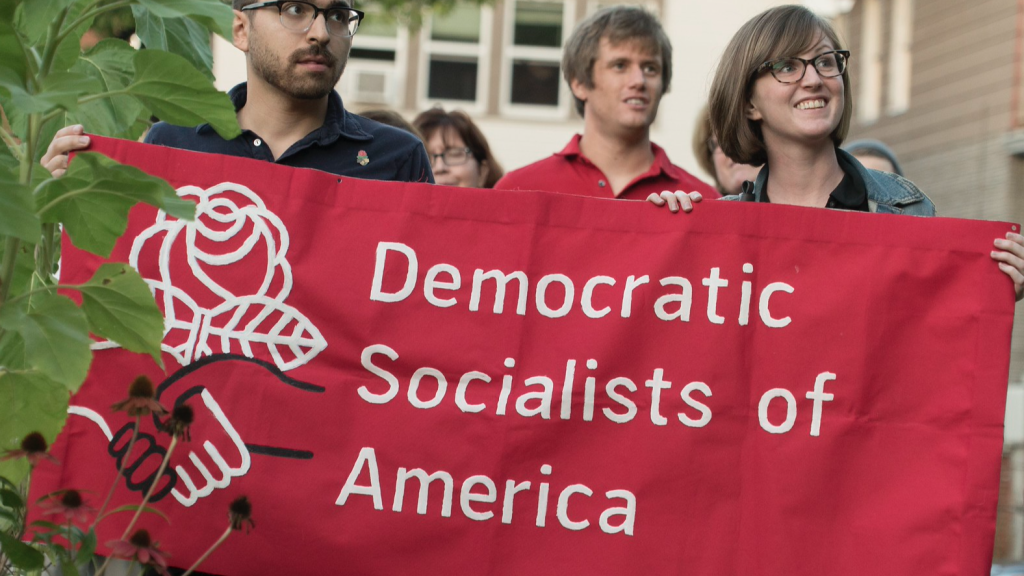
Internal fights with the Democratic Socialists of America (DSA) over “cancel culture,” “political correctness” and “call-out culture” are not side dramas. They are symptoms of a deeper organisational sickness: the inability of a would-be mass socialist organisation to distinguish political discipline from moral punishment, comradely correction from public shaming, and class struggle from subcultural boundary maintenance.
Let us state the matter plainly. A socialist organisation must be absolutely serious about racism, sexism, transphobia, harassment, chauvinism and abuse. These are not “distractions” from class politics. They are among the ways capitalism divides the working class, cheapens labour power, polices bodies, disciplines social reproduction and fractures solidarity. Any “class politics” that treats oppression as a nuisance is not Marxism. It is economism with a lunch pail.
But the opposite error is just as destructive: a politics that turns every disagreement into an accusation, every clumsy formulation into a moral indictment, every political dispute into a question of personal purity, and every organisational problem into a demand for exclusion. That is not socialist accountability. It is liberal moral management wearing a red hoodie.
DSA’s own formal standards recognise the need for conduct rules. The national Code of Conduct prohibits harassment on the basis of sex, gender, gender identity or expression, sexual orientation, disability, race, religion, national origin, class, age and other protected categories. Its meeting code also asks members to refrain from demeaning or harassing speech, exercise consideration and “share analysis and opinions rather than accusations.” That last phrase is crucial. It points toward a socialist culture of debate, not a permanent tribunal.
The issue, then, is not whether DSA should have standards — of course it should. The question is the standards to be enforced, the politics involved and the organisation’s purpose.
DSA says in its Workers Deserve More programs that it wants to bring together millions of people across the United States to fight for a democracy where working people control their lives, government and economy. That is a mass-political ambition, not a boutique affinity group.
A mass organisation cannot operate like a graduate seminar, a nonprofit HR department or a social-media pile-on machine. It has to organise real workers as they exist: uneven, contradictory, wounded by capitalism, shaped by reactionary common sense, capable of transformation, and often more interested in rent, wages, health care, transit, war and the boss than in mastering the latest activist vocabulary.
A socialist organisation cannot require people to arrive already purified. If it does, it will not build a working-class movement. It will build a political boutique for people who already know the password.
The false choice between class or anti-oppression politics
The worst version of this debate counterposes “class” to “identity.” This is lazy, and worse, politically disarming.
Marxism does not require indifference to oppression. Capitalism does not exploit an abstract worker floating above history. It exploits workers who are racialised, gendered, sexualised, disabled, criminalised, documented or undocumented, paid or unpaid, housed or unhoused. The working class is not a grey block of identical wage-earners. It is internally divided because capital actively organises those divisions.
So, the socialist answer cannot be: “Stop talking about oppression and go back to economics.” That is not class politics. That is class politics stripped of its actual class content.
Yet the moralistic answer is no better. The fact that oppression is real does not mean every conflict should be handled through denunciation. It does not mean accusation is analysis. It does not mean discomfort is violence. It does not mean disagreement is harm. It does not mean the loudest or most wounded person in the room automatically has the correct political line. Furthermore, it does not imply that bureaucratic punishment is the path to liberation.
The real divide is this: one’s politics try to integrate struggles against oppression into working-class organisations; the other substitutes moral adjudication for political struggle.
The first asks: How do we build solidarity across real differences? How do we politically educate one another? How do we transform people through struggle? How do we make the organisation safer without making it brittle, paranoid and afraid of debate?
The second asks: Who is harmful? Who is unsafe? Who must apologise? Who must be removed? Who has failed the vocabulary test? Who can be made an example?
The first builds a movement. The second builds a courtroom with worse rules of evidence.
Solidarity is not niceness
Twin Cities DSA’s “solidarity culture” statement is useful because it comes from the labour movement rather than from the moralistic etiquette wing of progressivism.
It argues that in unions, solidarity means honouring picket lines, protecting coworkers from bosses, and having heated debates from the standpoint of a united front against the boss. It explicitly contrasts these principles with call-out dynamics that isolate people rather than build collective power.
That is the key insight: solidarity is not the absence of conflict; solidarity is conflict disciplined by a shared enemy and a shared project.
In a workplace, workers must assemble with people who do not agree with them on everything. The union must organise a diverse group of coworkers, including the MAGA supporter, the liberal, the apolitical individual, the one who makes inappropriate comments, the person who has never attended a political meeting, and the coworker who believes socialism means Joseph Stalin personally stealing their pickup truck.
This does not mean anything goes. A union cannot allow racist harassment, sexual abuse, homophobic intimidation or anti-trans cruelty to fester. That would destroy solidarity from within. But the labour movement, at its best, does not begin with purification. It begins with common struggle, collective discipline, democratic debate and transformation through action.
A socialist organisation must do the same. It must be able to say: “That behaviour is unacceptable.” But it must also be able to say: “This person can be corrected.”
It must be able to say: “This political line is wrong.” But it must also be able to say: “Wrong is not the same as evil.”
It must be able to say: “This conduct requires consequences.” But it must also be able to say: “Consequences are not revenge.”
Without those distinctions, accountability becomes arbitrary. And arbitrary accountability does not produce political clarity. It produces silence, resentment, factional manipulation and fear.
Professional class-style punishment
The problem is not merely that some people are “too sensitive.” That is a shallow diagnosis.
The more profound issue is that DSA has absorbed much of the political culture of the contemporary professional-managerial progressive milieu: nonprofit procedure, academic jargon, HR-style harm language, social-media reputational punishment, and a tendency to convert political disagreement into ethical contamination.
This culture has a class basis. It is not simply a set of undesirable ideas floating in the air. It reflects the habits of people trained in institutions where power often works through credentials, language, reputation, access, compliance and informal social sanction. In these spaces, individuals accumulate status by demonstrating correct awareness and lose it by violating norms that are often unstable, unspoken and unevenly enforced.
Jo Freeman’s classic essay “ The Tyranny of Structurelessness” remains useful here. Freeman argued that supposedly structureless groups do not abolish power; they merely make power informal, opaque and less accountable. Informal cliques, hidden rules and invisible hierarchies replace democratic structures.
That applies directly to activist moralism. A group can claim to be horizontal, anti-authoritarian and decentralised, while still being governed by informal status hierarchies based on who knows the language, who has the right friends, who can mobilise outrage, who can frame the accusation, and who can define the room’s emotional reality. The result is not democracy. It is rule by those most fluent in the culture of accusation.
This is why “call-out culture” is not actually anti-bureaucratic. It frequently lays the foundation for bureaucracy. First comes the informal pile-on. Then comes the demand that the leadership “do something.” Then comes the disciplinary procedure under pressure. Then comes precedent. Then comes fear. Then comes silence. Congratulations — the revolution now has a complaints department.
The Bowman lesson: Accountability or expulsion reflex?
The Jamaal Bowman controversy revealed this contradiction in public form.
Bowman’s 2021 Israel trip, sponsored by J Street, and his vote for Iron Dome funding produced a serious conflict inside DSA. DSA’s BDS and Palestine Solidarity Working Group, along with several chapters, demanded expulsion unless Bowman explicitly supported BDS. The National Political Committee ultimately declined to expel him but stated that he would not be re-endorsed unless he demonstrated solidarity with Palestine in alignment with DSA expectations.
This was not a trivial matter. Palestine is not a decorative issue. US imperialism, Israeli apartheid, military funding and socialist internationalism are core political questions. A socialist organisation has every right to hold its endorsed candidates accountable. Indeed, it must. Otherwise, endorsements become branding exercises for ambitious politicians who borrow the rose and forget the class struggle.
But the Bowman fight also exposed DSA’s underdeveloped theory of discipline. What does accountability mean for elected officials? What commitments are binding? Who decides? What is the sequence of correction, public pressure, censure, non-endorsement and expulsion? Is expulsion a first resort, a last resort, or a factional weapon? How does the organisation distinguish betrayal from contradiction, tactical disagreement, cowardice, district pressure and outright political rupture?
A serious socialist organisation needs answers to those questions before the crisis hits. Otherwise, every controversy becomes a referendum on everyone’s moral seriousness. One side accuses the other of betrayal; the other accuses the first of purity politics; the media publishes a story about socialist chaos; members learn that politics is mostly procedural combat; and the working class, once again, is invited to watch the left eat itself with utensils made of recycled bylaws.
The problem is not that Bowman should have been above discipline — no elected official should be. The problem is that the DSA often oscillates between two failures: loose electoral opportunism and punitive overcorrection. It adapts too much, then panics too late. It tolerates ambiguity until members explode, then tries to resolve political weakness through moral emergency.
That is not strategy. That is indigestion.
Censorship, memory and the fear of debate
The same contradiction appears in debates over publications and speech.
In 2018, Democratic Left published an editorial on article removal and censorship after coordinated calls to remove pieces or authors from the publication’s archives. The editorial resisted the idea that already-published pieces should be removed simply because of retrospective ideological disagreement, while recognising that socialist publications need ethical and political standards.
This is precisely the kind of distinction DSA needs more of. There is a difference between refusing to publish reactionary garbage and pretending that disagreement can be solved by making old arguments disappear.
A socialist organisation needs archives, memory, debate, correction, polemic and public development. It should not be terrified of its own past. Every living political tradition contains errors, fights, reversals, unsatisfactory formulations and unfinished arguments.
The bourgeoisie has its reason for erasing history: it wants to hide exploitation. The left should not imitate that impulse in miniature by hiding disagreement. We should argue. We should annotate. We should rebut. We should say: “This was wrong, and here is why.” But removal is not clarification. It is often just avoidance dressed up as justice.
A movement that cannot survive the existence of an old bad article is unprepared to survive the state.
Moralism is not materialism
Marxism begins with social relations, not moral essence. It asks what structures produce behaviour, what interests are at stake, what forms of power are operating, and what kind of collective action can transform the situation. Moralism begins with guilt, contamination, accusations and purification.
This does not mean Marxists have no morality — obviously we do. Exploitation is monstrous. Imperialism is monstrous. Racism and misogyny are monstrous. Capitalism is essentially organised barbarism operating through a payroll system. But Marxism does not stop at moral condemnation. It moves from condemnation to analysis, from analysis to organisation, and from organisation to power.
The tribunal rarely gets that far. It often mistakes accusations for politics. But accusing is easy. Organisation is hard. Denunciation is easy. Recruitment is hard. Expulsion is easy. Transformation is hard. Calling someone out is easy. Building a durable working-class majority in the most powerful capitalist country on Earth is, regrettably, a bit more demanding than writing “do better” in the tone of an assistant dean.
The Communist Manifesto argues that communists do not form a separate party opposed to other working-class parties, and that they have no interests separate from the proletariat as a whole. It also insists that the proletariat must constitute itself as a class and fight politically. That is the standard: not subcultural distinction, but class formation.
A socialist organisation should ask of every internal norm the following: does this help constitute the working class as a political force? Or does it merely distinguish the enlightened from the suspect?
If a norm helps workers fight bosses, landlords, police violence, imperialism, racism, sexism and ecological destruction, good. Keep it. Strengthen it. Teach it. Institutionalise it democratically.
If a norm mostly helps insiders police outsiders, veterans humiliate newcomers, factions weaponise grievances, and educated activists display refinement over ordinary members, throw it into the nearest procedural compost bin.
The subculture trap
The danger for DSA is not that it has too many standards. The danger is that it has too many informal, unstable, moralised standards and not enough democratic, political, transparent ones.
A mass socialist organisation should be demanding. It should expect discipline, seriousness, study, accountability, anti-racism, anti-sexism, internationalism and commitment. But demanding is not the same as precious.
A revolutionary organisation cannot be built around the emotional reflexes of the most conflict-averse people in the room. Nor can it be built around the punitive reflexes of those who experience every disagreement as an opportunity to prosecute.
The working class is not recruited by lowering politics to the lowest common denominator. That is not the argument. The working class is recruited by connecting socialist politics to lived antagonisms: wages, rent, debt, schools, healthcare, war, climate, policing, reproduction, time, dignity and power.
People can grow politically when they enter a serious organisation that treats them as capable of growth. They do not grow when they are treated as walking liabilities.
A socialist organisation must be a school of class struggle. Schools are correct. They do not merely expel. They set standards. They also teach. They distinguish ignorance from malice, confusion from sabotage, and contradiction from betrayal. A school that expels every student who enters without already knowing the curriculum is not an educational institution. It is a club.
What socialist accountability should look like
The answer is not “anything goes.” Such an approach would be idiotic and, even worse, it would leave vulnerable members at the mercy of those who can dominate the room. Socialist democracy requires conduct rules.
But those rules must be clear, political, proportional and democratically controlled.
First, DSA should distinguish sharply between political disagreement, bad formulation, oppressive conduct, harassment and abuse. These are not the same. Treating them as identical destroys trust.
Second, discipline should be proportional. Correction, mediation, education, warning, temporary suspension, removal from leadership, non-endorsement and expulsion are different tools. A serious organisation does not use a hammer for every repair unless it wants the house to look like it lost a fight with a toddler.
Third, accusations should not substitute for evidence. A socialist organisation cannot reproduce carceral logic in red packaging, but neither can it abandon due process. Due process is not liberal weakness. It is protection against arbitrary power.
Fourth, political education must be central. If members keep violating norms because they do not understand the politics behind them, the answer is not endless punishment. The answer is systematic education, mentorship and collective discussion.
Fifth, elected officials need explicit discipline mechanisms before crises emerge. Endorsement agreements, reporting requirements, public accountability processes and defined consequences should be clear in advance. No more improvising socialist discipline in the middle of a media firestorm.
Sixth, DSA must rebuild the art of the polemic. A polemic is not a denunciation. It is a political weapon aimed at clarification. A good polemic names the line, explains the stakes, defeats the argument and leaves the person room either to change or to reveal their unwillingness to change. A bad polemic just throws someone into the volcano and calls the smoke “accountability.”
Conclusion: No more tribunal socialism
DSA faces a strategic choice. It can become a mass socialist organisation rooted in workplaces, tenants’ struggles, anti-imperialist politics, electoral fights and democratic class formation. Or it can become a self-policing progressive subculture whose main product is internal discipline and whose main emotional register is suspicion.
The first path requires standards. The second path also has standards. The difference is that the first uses standards to build solidarity, while the second uses standards to ration belonging.
A socialist organisation must not tolerate bigotry, harassment, abuse or chauvinism. But it also must not confuse socialist politics with moral purification. It must not turn every contradiction among the people into an enemy proceeding. It must not import the punitive habits of the nonprofit office, the university seminar, the HR department and the social media pile-on, and then call the result liberation.
The working class does not need a tribunal. It needs an organisation.
It needs a place where people can fight, learn, argue, change and act together. It needs discipline without bureaucratic moralism. It needs accountability without ritual humiliation. It needs anti-oppression politics rooted in class struggle, not class politics amputated from oppression or oppression politics amputated from class.
The question is not whether DSA should be “nice.” Niceness is cheap. The question is whether DSA can become serious. And a serious socialist organisation does not ask, “Who can we punish to prove we are righteous?” It asks: “What must we build to win?”
Anthony Teso is a member of the Democratic Socialists of America, Tempest Collective and Solidarity in the United States.