1968–73: Humanity’s lost opportunity
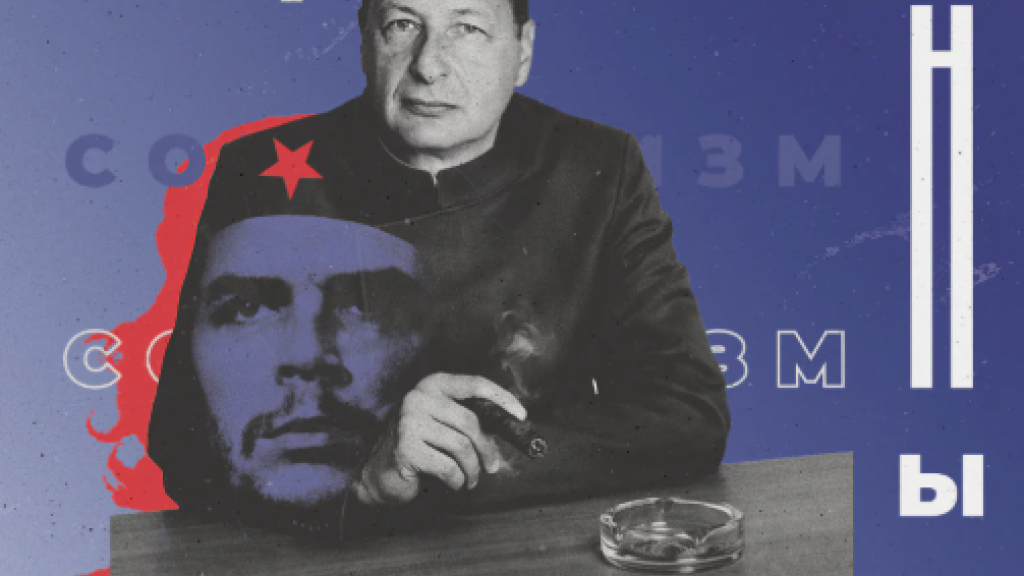
First published in Russian at /spichka. Translated by Dmitry Pozhidaev for LINKS International Journal of Socialist Renewal. Boris Kagarlitsky wrote this article from a Russian penal colony, where he is currently serving a five-year sentence for his opposition to Russia’s war on Ukraine.
In 2017, British cultural theorist Mark Fisher began teaching a lecture course at Goldsmiths, University of London, titled Postcapitalist Desire. After delivering five lectures, he assigned students work in preparation for the sixth session, returned home and hanged himself.
I admit that joking about such matters is inappropriate, but it strikes me as entirely unacceptable to suicide without finishing a university course. More importantly, however, what remained undelivered was, in my view, the most interesting lecture of all, entitled “The Destruction of Democratic Socialism and the Origins of Neoliberalism: The Case of Chile.”
One can gain some sense of what Fisher intended to say from remarks he made during the introductory session and throughout the course, which have since been published in Russian. These ideas struck me as both profoundly important and deeply resonant, and I feel compelled to develop and carry them through to their conclusion. That is what I will attempt to do in this article. Though, naturally, I will do so from the standpoint of my own perspective and experience — not only political but emotional as well.
The 1973 coup in Chile, when the military under General Augusto Pinochet overthrew the left-wing government of Salvador Allende and unleashed a wave of bloody reprisals against the defeated, was an event of more than merely Latin American significance. It marked the end of an entire period, brief but brilliant, of attempts at radical transformation in very different corners of the world: from Czechoslovakia to Peru, and from France to the United States. The forms and scale of these developments varied considerably, but they were united by a common aspiration to overcome the conservative equilibrium of the existing world order and break through toward a new developmental horizon: democratic socialism.
Naturally, all these efforts had a longer prehistory, rooted above all in the fact that the models of development prevailing both in East and West had, by the late 1960s, clearly exhausted their positive potential. It would be entirely mistaken to assume that the revolutions of 1968–73 emerged out of the failures of preceding development. Quite the opposite.
Competition between the two systems initially had a beneficial impact on the social position of working people, in advanced capitalist countries and in states governed by Communist parties. Consumer society was triumphing everywhere, albeit in different forms: for some it meant affordable family cars; for others, cramped yet private apartments replaced communal flats and barracks.
Europe had lived without war since 1945. Regrettably, the same could not be said of Asia, where the Korean War was followed by a new phase in the decades-long conflict in Vietnam. This nevertheless remained far removed from the global catastrophes of the first half of the twentieth century.
Changes were also taking place in the Third World. Colonies gained independence one after another, and new governments, though often strikingly indifferent to civil liberties and human rights, nevertheless undertook campaigns to eliminate illiteracy and build industry, seeking assistance either from former colonial powers or the Soviet bloc, and often from both.
In Latin America, a wave of hope for change rose after the 1959 Cuban Revolution. By the mid-1960s, however, the first doubts had begun to emerge about developments on the Island of Freedom. It was hardly accidental that the legendary comandante Che Guevara preferred the doomed Bolivian expedition to a government career under the new regime. Yet, overall, enthusiasm and hope endured, and not only among the left.
One can say, without exaggeration, that the 1960s were “good times”. Perhaps more than ever before, humanity, or at least a considerable part of it, was beginning to experience itself as a single whole. The extraordinary success of science fiction vividly reflected this orientation toward the future and the desire to discover new worlds, not necessarily on distant planets but simply through transcending the boundaries of everyday life via technological progress, which, logically enough, was expected to be followed, however unevenly and contradictorily, by social progress as well.
The problem was that by the mid-1960s, both regulated capitalism, with its accompanying consumer society, and the Soviet system, modernised and softened after Joseph Stalin’s death, had already exhausted their developmental potential.1 They had satisfied the basic material needs of substantial sections of the population, while simultaneously revealing that human beings do not live “by bread alone” — not coincidentally the title of one of the defining Soviet novels of the Thaw period.2
A transformed individual demanded greater freedom. Rising levels of education and professional qualification among wage earners generated new aspirations and new demands, while the methods of economic governance in both advanced capitalist countries and the Eastern bloc increasingly required adaptation to changing realities.
The contradictory reforms of the 1960s
Economic reforms were launched in the Soviet Union and other Communist countries between 1964–66. Initially, the goal was to increase enterprise autonomy and expand the powers of managers. Yet it quickly became clear that granting administrators greater economic freedom exposed an entire set of previously latent contradictions, not merely economic but also social and even political. After all, if a factory director was to be given more authority, why should engineers and workers not also receive additional rights? And, conversely, how could one restrain manifestations of collective self-interest among enterprise workers?
Previously, everything had been rigidly, if not especially efficiently, controlled by higher administrative bodies, the system of centralised planning and a bureaucracy external to the labour collective itself. But once its iron grip began to loosen, the need arose for new forms of coordination. Could these be achieved solely through the market? But what then was to be done about the vast range of needs and problems that the market, by its very nature, simply fails to “see”? No money means no demand. The expansion of collective rights generated a demand for democracy, and not merely in the form of bourgeois parliamentarism.
The contradictions of the economic reforms of the 1960s are well described in Aleksei Safronov’s The Great Soviet Economy, 1917–1991. Yet the central problem was that, in the end, all these contradictions led back to politics. If in the Soviet Union this resulted in the gradual rollback of reform, in Czechoslovakia, by contrast, transformation assumed a systemic character.
The political centralisation that existed within the so-called “Communist bloc” meant the reform process initiated in the Soviet Union affected all countries within the Soviet geopolitical orbit. However, it would be a profound mistake to imagine that Eastern European states merely copied the Soviet experience or obediently followed instructions from Moscow.
First, each country developed its own reform projects, and in many cases Eastern European economists were in close contact with their Soviet counterparts. In the cases of Czechoslovakia and Hungary, one can even speak of mutual influence.
Second, political, economic and cultural conditions varied significantly from country to country. Against this backdrop, Czechoslovakia stood out sharply. Unlike most Eastern bloc countries, it had already been a highly developed industrial society before World War II. Moreover, it emerged from the war relatively unscathed.
In other words, the developmental tasks that had been addressed, with relative success, through the Soviet centralised mobilisational model had already been solved in Czechoslovakia. Whereas centralised planning initially served as an instrument of industrial modernisation elsewhere in the bloc, here its limitations became apparent very quickly, and it increasingly turned into an obstacle to further development.
At the same time, precisely because the tasks of modernisation, among them those historically addressed by the Russian Revolution, had already been accomplished, genuinely socialist questions came to the forefront, both objectively and ideologically: how could society become master of its own destiny? How could conditions be created for democracy in the spheres of economic and social development?
In his 1967 book Plan and Market under Socialism, the leading theorist of Czechoslovakia’s reforms, Ota Šik, argued that the abolition of private property did not eliminate differences in the interests of various individuals and social groups. Democratic planning, which makes use of market mechanisms where appropriate, aimed above all at development grounded in the reconciliation of these differing interests. And naturally, the articulation and representation of interests required political freedom. Yet the transformations that unfolded in Czechoslovakia in 1968 were by no means confined to the abolition of censorship and preparations for free elections.
The Action Program adopted by the Czechoslovak Communists envisioned the creation of organs of workplace self-management. Mass participation by working people in economic decision-making, from the bottom up, not only laid the foundations for entirely new economic institutions but also shifted the centre of gravity in political life, away from parliamentarianism and toward industrial democracy, in which many problems could be addressed directly at the local level, without the mediation of political parties and officials, without either the bourgeoisie or bureaucracy.
As is well known, the Prague Spring of 1968 was interrupted by Soviet intervention. Far less widely known, however, is the fact that the struggle over workplace self-management continued even after the Soviet invasion in August. Despite the occupation, enterprise councils were established and began coordinating among themselves. Only in 1969 did the new Czechoslovak authorities succeed in dismantling the workers’ councils and returning enterprises to bureaucratic control. This process later became known as the “Second Prague Spring”.
From hope to neoliberalism
Meanwhile, the ideas of self-management gained popularity far beyond Czechoslovakia. Naturally, when speaking of 1968 in Western Europe, people tend first to recall the student uprisings in Paris. Yet the story went far beyond youthful rebellion alone. In France, workers went on strike. In 1969, Italy experienced a wave of mass protests. In both cases, slogans of self-management emerged and were later developed further in the theoretical and programmatic documents of left-wing organisations and trade unions.
But why remain focused exclusively on Europe? In that same year, 1968, General Juan Velasco Alvarado came to power in Peru and proclaimed a program of sweeping social reforms. Here too, the ideas of self-managed socialism played a significant role. Revolutionary sentiment spread rapidly throughout Latin America, and the electoral victory of the left in Chile in 1970 represented merely the crest of this broader wave.
Allende’s election as president of Chile created an opportunity, under very different conditions but still in recognisable continuity, to once again attempt the strategy of transformation that had emerged during the Prague Spring and the European protest movements of 1968–69. Having nationalised parts of the economy, the left-wing government simultaneously encouraged the development of workplace democracy and sought to employ the achievements of cybernetics to create new mechanisms of communication and planning.
Chile’s Cybersyn system, which Mark Fisher aptly calls a “socialist internet,” genuinely anticipated managerial technologies that would only become familiar decades later. One might also recall here the Soviet academician Viktor Glushkov, who sought to modernise and optimise planning through cybernetics.
The Soviet Union lacked sufficient computing power to implement the OGAS system proposed by Glushkov.3 Beyond this, each ministry advanced its own version of OGAS, in hopes of securing a dominant role within the emerging management system. As a result, the project began to be implemented sector by sector, with the expectation that these parts would later be integrated into a unified structure. That future, however, never arrived.
There was even a joke that Glushkov wanted to replace the Politburo with robots. The political implications of the academician’s proposals appeared, at best, unclear to the party leadership and therefore suspicious. Better not to rush matters.
In retrospect, it has often been assumed that the “market” reforms proposed in the Soviet Union and Eastern Europe during the 1960s and Glushkov’s ideas represented two opposing visions of transformation. Credit must be given to Safronov for convincingly demonstrating that reality was quite different. The two approaches complemented one another and were initially promoted by many of the same people.
It is crucial to understand that the so-called “market reforms” had nothing in common with the notions of the “free market” advanced by neoliberal ideologues. The point was not to subordinate people and enterprises to market domination, but rather to make use of market mechanisms in solving immediate problems of economic optimisation, in pursuit of priorities that could be entirely different from profit maximisation.
Meanwhile, Chilean revolutionaries were well aware of the Czechoslovak experience. In the early 1960s, Valtr Komárek, one of Ota Šik’s closest associates, worked in Cuba. Latin American leftists were not merely familiar with the ideas being discussed in France or Italy; they were given a historic opportunity to put this agenda into practice.
The turbulent three years of the Chilean revolution were not only marked by successes. Yet what remains significant is that Allende’s government was able, first, to carry out radical socio-economic reforms while strictly adhering to democratic norms and procedures, and second that, despite difficulties and mistakes, support for the left not only failed to decline over those three years but actually rose. After the success of Allende’s supporters in regional elections, it became clear that the old ruling classes had no path back to power other than unconstitutional violence.
By 1973, the coalition had gained two additional deputies compared to 1969, while retaining the same number of senators. Yet the internal balance within the coalition shifted considerably: the Socialists gained thirteen seats, the Communists three, while the left-centrists of the Radical Party lost seventeen. Three deputies from smaller parties also joined the coalition. In short, support for the coalition as a whole remained broadly stable, but its most radical components emerged significantly strengthened.
Pinochet’s coup in the autumn of 1973 not only drowned the project of democratic socialism in blood, bringing the revolution to an end, but also became a kind of template for later coups in Uruguay and Argentina. Moreover, the military regimes did not merely wage campaigns of repression against the left. They also began implementing their own economic agenda.
This agenda, later known as neoliberalism, was initially implemented precisely by dictatorial regimes in South America, and only later transferred to Western Europe and the former Soviet bloc. This trajectory was far from accidental. The success of neoliberal reforms depended upon suppressing not only working-class resistance but democratic institutions as such. This is precisely why neoliberalism advanced much more slowly and less consistently in Western and Eastern Europe.
The erosion of democracy unfolded wherever this agenda was introduced, and its consequences, in varying degrees, can still be observed today in countries ranging from Russia to the US. The dismantling of the welfare state, privatisation, tax cuts for the wealthy, and the redistribution of resources toward major corporations and financial capital laid the foundations for a succession of crises, the largest of which was the Great Recession of 2008–10, whose consequences remain unresolved. Yet this instability of economic and social life represents, in a sense, the price capital has had to pay for its decisive victory over the alternative social projects born from the experiences of the 1960s and 1970s.
Partial reforms instead of social transformation
Crucially, however, the defeat of the Chilean revolution not only marked the beginning of a new stage in capitalist development but also triggered profound transformations within the left itself. These changes did not occur overnight, but it is telling that, following the Chilean coup, the Italian Communists, then the most influential and theoretically sophisticated left-wing party in Europe, began rethinking their strategy.
Enrico Berlinguer, then General Secretary of the Italian Communist Party, explicitly pointed to Chile as a lesson necessitating a change in left strategy. In essence, this meant abandoning attempts at comprehensive and conceptual social transformation of the kind pursued during the Prague Spring or by Chile’s Popular Unity government between 1970–73. In its place, Berlinguer advanced a strategy of gradual progress through partial reforms, aimed at shifting the balance of forces within society through a “historic compromise” with the progressive wing of the bourgeoisie.
Yet this approach, seemingly far more realistic than the self-management revolution envisioned in the late 1960s, ran into one serious obstacle: the “progressive” faction of the bourgeoisie itself grew increasingly marginal with each passing year. Given that the trend continues even today, progressive bourgeois figures may soon have to be placed in a conservation program alongside other endangered species.
Naturally, the turn toward reformism and moderation occurred unevenly and at different speeds, just as the retreat of the left and the erosion of its political influence did not immediately become obvious trends. In Portugal, the 1974 Carnation Revolution, led by progressive military officers, saw the “April Captains” aspire not merely to establish democracy but to carry out the radical transformations then central to the left agenda. Portugal became a democracy, yet socio-economic transformation was blocked, with the Socialist Party, already moving toward moderation, becoming one of the principal brakes on change.
Military progressivism also suffered defeat in Peru. The reforms initiated by Velasco remained incomplete, and he himself was removed from power by his own allies. Later, the slogans of self-managed socialism resurfaced repeatedly, whether in France during the early François Mitterrand years or in Poland among the ranks of Solidarity, but such projects either failed to move beyond rhetoric or were quickly abandoned. Even where ideology remained radical, as in Brazil’s Workers’ Party, actual policy increasingly drifted away from those ideals.
By the late 1970s and early ’80s, the general trend toward “moderation” increasingly overshadowed the radicalism of the previous decade. Following the Italian Communists, the Socialists of France and Spain, the British Labour Party (which was not particularly revolutionary even in its heyday) and eventually left-wing parties in Latin America all moved in this direction.
A commonplace justification for this new moderation was the claim that “the Chilean project had failed.” In Eastern Europe and the former Soviet Union, the Prague Spring’s defeat was similarly invoked to justify abandoning the idea of democratic socialism. Yet, as Fisher rightly observed, there was no “failure.” If an experiment is interrupted through violence, this does not mean the experiment itself was misguided. Quite the contrary. If violence had to be employed to halt it, one may reasonably suppose that, otherwise, it might have succeeded. As Fisher put it: this was not failure, but destruction.4
Political or military defeat is, of course, still defeat, and one whose lessons must be taken seriously. Yet it also invites us to reflect on the internal logic of an unfinished experiment, and on what might have happened had it not been violently interrupted.
A premature revolution?
The founders of socialist theory assumed that a new type of society would emerge on the basis of a higher level of productive development, as the productive forces “outgrew” the limits of capitalist relations of production. If the flourishing of capitalism was clearly linked to the rise of industry and large-scale machine production, then the foundation of a post-capitalist — to use Fisher’s term — or socialist society would have to rest upon the new post-industrial technologies now rapidly entering our lives.
For Fisher, this led to an important conclusion: the objective conditions for transition in the 21st century may in fact be more favourable than they were in 1968–73. Yet, unlike that earlier era, the political, psychological and moral conditions have deteriorated.
Can we therefore conclude that the attempts of 1968–73, much like the revolutions of the first half of the 20th century, were historically “premature,” and that the achievements of Bolshevism, Maoism and Castroism were linked not to a genuinely socialist agenda but rather to a project of modernisation? To some extent, such a conclusion also suggests itself when reading Aleksandr Shubin’s The Global Revolutionary Wave (1918–1923): The Tide and The Ebb, devoted to the revolutionary wave of the early 20th century.
It was none other than Karl Marx who wrote:
No social order is ever destroyed before all the productive forces for which it is sufficient have been developed, and new superior relations of production never replace older ones before the material conditions for their existence have matured within the framework of the old society.
Following this logic, are we compelled to conclude that the defeats suffered by Communist movements in the 20th century were historically inevitable and that the classical Marxists themselves were simply premature in promising an imminent transition to socialism, at a time when the Industrial Revolution had by no means exhausted its potential?
At first glance, such conclusions may seem unavoidable. Yet important questions arise. After all, capitalism’s emergence began well before the Industrial Revolution. Bourgeois relations of production already existed in 14th-century Flanders, Northern Italy and Bohemia, and later spread into England and France long before the steam engine’s invention. Manufacturing, banks, merchant houses, stock exchanges, wage labour and joint-stock capital all developed in the pre-industrial era and, in turn, contributed to the onset of industrial transformation.
And did not political revolutions in England, and even earlier in the Netherlands, create favourable conditions for the emergence of new productive forces? In other words, did emerging bourgeois relations not themselves begin generating a firmer economic foundation for their own reproduction?
History unfolds far less linearly than we often imagine, and transitions between historical stages in no way resemble a railway timetable, with fixed stops announced in advance.
Reflecting on the historic legacy of the Paris Commune, Jean Jaurès convincingly observed that it would have been naïve to imagine that, had the Commune succeeded, France would already have become a socialist state by the beginning of the 20th century. Yet its victory would undoubtedly have accelerated social development. I would add: perhaps economic development as well.
Applying this logic to the years 1968–73, we are inevitably led to ask whether the post-industrial technologies we discuss today might have emerged earlier, in different places, under different conditions and, perhaps, in somewhat different forms, had the revolutionary wave succeeded. The creation of the Cybersyn network in Allende’s Chile is, in essence, already an answer to that question.
But even if we look at the history of the internet in the US, we immediately discover that what later became the global network did not arise from market relations. Rather, it emerged as a public and state-supported structure, made possible precisely through its relative independence from the logic of markets and private profit. It is clear that the political conditions of democratic socialism are especially favourable for technological projects of this kind — and this was no less true in the early 1970s than it is today.
Why do the 1960s still haunt us?
When speaking about social transformation, we obviously cannot separate technology from politics. In the early 1920s, when Nikolai Sukhanov and other Social Democrats reproached the Bolsheviks for launching a socialist revolution in a country that was “not yet ripe for socialism,” Vladimir Lenin emphasised the political circumstances that made a radical socialist agenda both necessary and historically inevitable. Yet, in an important sense, the reverse possibility also exists: the defeat of democratic socialism in 1968–1973 may itself have slowed and distorted economic development, not only in particular countries but across the world as a whole.
At the same time, this defeat was not so much the result of political mistakes committed by the left, but rather the broader balance of mass and social forces. Consequently, the left’s shortcomings lay less in tactics than in an insufficient understanding of this strategic relationship of forces. More fundamentally, should we even speak here of “mistakes”? Or are we instead dealing with tragic contradictions inseparable from the historical process itself?
Whatever the case, the defeat of the left between 1968–73 changed not only the political landscape but capitalism itself, stimulating the emergence of entirely new tendencies. The alternative to socialist transformation became not only neoliberalism but also, to borrow Naomi Klein’s term, “disaster capitalism.” Joseph Schumpeter once wrote of capital’s tendency toward creative destruction. Yet in this new form of capitalism, destructive processes increasingly move to the foreground, becoming both a key instrument of accumulation and a necessary condition of reproduction.
The growing instability of the contemporary world has a systemic character, and explanations must be sought not merely in politics but in political economy. Countless books and articles have already argued that the neoliberal model of capitalism, triumphant at the end of the 20th century, represented a form of bourgeois social revenge, rolling back concessions granted to working people over the course of nearly a century. Yet only now are we in a position to fully appreciate the long-term, systemic consequences of this reversal.
The regulated capitalism of the 20th century minimised many of the disruptions generated by cyclical market crises through social concessions. Yet from the late 1970s onward, ruling classes came — partly instinctively and partly consciously — to believe that the risks associated with socio-economic reforms aimed at overcoming or avoiding crises were greater than the costs generated by crises themselves.
In other words, if overcoming crisis tendencies would require the system to radically transform and ultimately abolish itself, then it becomes preferable not to resolve crises at all, but simply to learn to live with them. As we can now observe, cyclical crises, occurring not only in the economy but across multiple spheres of life, increasingly overlap and intensify, gradually merging into a single chronic crisis that reproduces itself.
At the same time, the immense resources accumulated over the past two centuries allow the system to survive, and even expand, under conditions of permanent crisis for an almost unlimited period of time. The key word here, however, is almost. Objective limits still exist; we simply will not recognise them until we collide with them. And that moment may not be as distant as it seems.
The increasing frequency and, above all, scale of armed conflicts, the recurring social crises, and the repeated uprisings of populations enraged by them all testify to a world increasingly slipping beyond the control of ruling classes. The problem is not a shortage of resources as such, but the manner in which they are used and distributed, producing ever more collisions and confrontations. Yet wars, popular uprisings and even political coups do not by themselves transform the system. They are symptoms of a deeper illness generated by underlying structural processes.
A transition to a new social order requires not merely political change but a systematic reconstruction of social relations and the rules of the game, as well as the creation of a new balance of forces, something that repeated popular uprisings and middle-class revolts have thus far failed to achieve. Radical slogans occasionally emerge, including demands touching upon property relations, yet these movements still lack the systemic and ideological depth that characterised the struggles of 1968–73.
Capitalism may, of course, place its hopes in renewal through artificial intelligence. Yet such technologies are more likely to intensify the system’s contradictions than resolve them. Here, the contradiction between productive forces and relations of production manifests itself in a multitude of inefficient measures undertaken by corporations and governments alike, transforming technological revolution into yet another financial bubble, or clumsily attempting to manage the consequences of their own efforts to digitise the economy.
In their article, “The Long Downturn and Its Consequences,” US Marxists Robert Brenner and Dylan Riley draw attention to the fact that total factor productivity indicators in most advanced capitalist countries have steadily deteriorated since the mid-1970s. Many other authors, representing very different intellectual perspectives, arrive at similar conclusions.
One can say that a broad consensus has already emerged among economic historians on this question. Significantly, many identify 1973 as the start of the trend. Clearly, the problem does not lie in the absence of new technologies. We can plainly see that technological innovations continue to emerge across a wide range of industries and spheres of life. Rather, the issue lies in the system’s diminishing capacity to make effective use of them for its own development and consolidation.
Every new cycle of technological progress intensifies contradictions and accumulates further imbalances. At first glance, this appears to be a textbook example of the contradiction between productive forces and relations of production described by Marx. Yet we must also recognise the social dimension of the process: social structures themselves become disorganised, social ties weaken, and relationships grow increasingly unstable.
Where political economy identifies overaccumulation of capital — capital that is more profitable to squander meaninglessly than to invest productively, thereby lowering the overall rate of profit — anthropology or sociology finds the widespread proliferation of “bullshit jobs,” famously described by David Graeber. Where populist politicians rail against uncontrolled migration, economists instead observe profoundly inefficient resource allocation, both between states and within them. One may describe all this as “liquid modernity,” but behind these symptoms lies a creeping process of desocialisation, an increasing chaos in social relations.
The disorganisation of society under late capitalism becomes a political problem for the left and goes a considerable way toward explaining not only the successes of the far right but also the deepening crisis of democracy itself, a crisis driven not only from above but from below as well. The instability of social existence makes it harder for people to recognise and clearly articulate their interests, let alone organise collectively to defend them.
During the 1990s and 2000s, liberal left movements attempted to substitute weakening class ties and their corresponding forms of political organisation with “identity politics.” Yet the paradox behind their widespread failure is that, amid accelerating desocialisation, identities themselves dissolve even faster and more profoundly than class structures, which, though weakened, continue to reproduce themselves through the underlying logic of bourgeois social relations.
As Fisher wrote in Capitalist Realism: “The required subject — a collective subject — does not exist, yet the crisis, like all the other global crises we’re now facing, demands that it be constructed.” Politics without a subject is impossible, or rather, it becomes very poor politics, reflecting only the shifting contingencies of circumstance and manipulation. Yet reconstructing a collective political subject under conditions of growing desocialisation and social atomisation is no simple task.
A paradoxical conclusion suggests itself. Compared with the 1968–73 period, the conditions for transition to a new society may at that time have been less technologically mature, yet in many respects far more favourable socially, politically and culturally. At the same time, however, the need for transformation imposed by the current conjuncture has become immeasurably more urgent than it ever was in the “prosperous 1960s” or the “stable 1970s.”
If the situation has changed so radically, then it is reasonable to pose the same question Fisher asks both himself and his audience: why are we still haunted by the 1960s? In Fisher’s view, the answer lies in “unrealised desires” expressed through particular cultural forms. Forms change, but desires and needs persist. More than that, the sharpening of contradictions compels us repeatedly to return to the unrealised radical agenda of that era.
Neoliberal capitalism and left politics
Can desire exist without a subject? Of course, we all experience different emotions and develop various needs, formally distinct, though in essence often remarkably similar. These shared social needs form the objective basis of group and class identity. Yet such commonality must still be consciously recognised and politically articulated.
Fisher argues that, on the one hand, economic and social development constantly generates the conditions, or at least the preconditions, for post-capitalist practices, while on the other hand, neoliberalism is compelled to suppress and contain them to preserve the system. Under such conditions, ruling elites are willing to encourage the emergence and competition of every identity except class identity.
Before our eyes, despite all obstacles, a new social community is emerging spontaneously, one that might be called the post-industrial proletariat, or perhaps even the post-proletariat: a growing mass of wage earners who resist proletarianisation more than they develop class consciousness in the familiar forms of the 19th and 20th centuries.5 This is precisely why the traditional language and agenda of the left appear simultaneously highly relevant and strangely outdated, even archaic.
Scientists, engineers and computer specialists naturally dislike thinking of themselves as mere cogs in a corporate machine. The forms of collective action that came naturally to industrial workers in large enterprises often feel alien to them. They are hired through individualised contracts that create the illusion of equal “partnership” with corporations and are generally reluctant to fight for collective agreements or sector-wide bargaining, traditionally defended by trade unions. Yet despite their opportunities and privileges, they become increasingly dependent on labour markets, much like everyone else, whether those who have already reconciled themselves to this condition or those who have consciously recognised themselves as participants in class conflict.
We may indulge in nostalgia for the old days of industrial capitalism, but we are left with the world we actually inhabit. The transition has already begun, though under conditions far less favourable than those imagined in the 1960s and ’70s, and entirely within capitalism itself. Whether we like it or not, this is the terrain we must work with. More importantly, it remains terrain on which we can work.
Fisher quite rightly points to the latent growth of class consciousness, one that nonetheless fails to find adequate expression in either politics or culture. As an alternative, he calls upon us to “regain the optimism of that Seventies moment, just as we must carefully analyse all the machineries that capital deployed to convert confidence into dejection.”
But is bourgeois hegemony alone the problem? “The story of how the counterculture was co-opted by the neoliberal Right is now a familiar one,” Fisher writes, “but the other side of this narrative is the Left’s incapacity to transform itself in the face of the new forms of desire to which the counterculture gave voice.”
The political upsurge of 1968–73 provided an enormous impulse to cultural transformation in the broadest sense, from cinema and music to everyday life, forms of education and patterns of behaviour. Yet, tragically, its political potential was lost. The revolution of everyday culture absorbed the political revolution, eliminating what had been most essential to the left: the will to power.
Despite ritual admiration for the dynamic and turbulent struggles of the recent past, much of the left turned into moralistic scolds, endlessly quarrelling over the use of “incorrect” language or over events they neither can nor wish to influence, while proving incapable of waging struggles for practical change capable of attracting people not already burdened with a pre-existing political ideology.
The radical right intuitively grasped the spirit of the age and offered its own version of populism. As Fisher observed, they “play class politics in order to suppress class consciousness,” exploiting the fears, frustrations, social anxieties and cultural disorientation generated by the system itself. In this sense, the permanent crisis reproduced by neoliberalism becomes their ideal environment. The less educated can be turned against the educated, “natives” against “outsiders,” one nation against another. The tragedy is that the left often eagerly joins this game as well, becoming a politically correct mirror image of the right.
Why, however, should we assume that populist politics must necessarily be tied to reactionary or conservative agendas? Contemporary society is far more fragmented than that of the second half of the 20th century, but this is precisely why the task of modern class politics is to identify points of convergence and foundations for solidarity by advancing a comprehensive political agenda.
The aesthetics of diversity produced by the late-1960s counterculture need not function solely as an instrument of fragmentation. They can also become a basis for unity, provided we seek within this diversity the enduring elements of a deeper commonality, that same “post-capitalist desire,” the impulse to move beyond the limits of the system.
The left politics yet to be developed in practice will undoubtedly rest not upon monolithic unity but upon coalition-based solidarity, where class consciousness becomes not the precondition of collective action but its result.
To a considerable extent, the left populism and broad coalitions characteristic of 20th-century Latin America appear not as peculiarities of one region and period but as prototypes for new forms of left political organisation. Yet one thing must not be forgotten: no organisational form can function without an adequate political agenda.
If we are unable to agree upon a comprehensive program capable of expressing the desires and needs of different social and cultural groups, then no coalition agreement will save us. And if such a program remains superficial, avoiding the questions that can only be addressed through systemic transformation, then even electoral victories and charismatic leaders will ultimately fail, as recent experience in Peru and Chile has already demonstrated, where the left, after impressive electoral successes, struggled once in power.
The conditions that gave rise to the mass revolutionary movements of 1968–73 were technologically less mature for transition than those of today, yet socially and politically far more favourable. Since then, economic and social relations have grown increasingly chaotic, left politics has undergone a catastrophic crisis, and democratic institutions have experienced an unprecedented degree of corruption and decay. Public influence over political decision-making has weakened, while the “revolt of the elites,” so persuasively analysed by Christopher Lasch, has pushed democratic representation backward, almost to 19th-century conditions, when the opinions of ordinary citizens mattered only insofar as they coincided with those of the ruling class.
And yet the demand for change not only objectively exists, it is widely felt. The institutional crisis generated by neoliberalism creates among millions of people, if not conscious understanding, then at least a powerful sense that the present condition of things is abnormal and must be fundamentally transformed.
The direction of that change, however, remains deeply uncertain, creating fertile ground for every variety of reactionary utopia. In this respect, we lag tragically behind the great five years of 1968–73, when the direction of transformation appeared, or at least seemed to appear, relatively clear.
It is precisely this new clarity and sense of direction that we must now create, drawing, among other things, upon the experiences of 1968–73, the left and revolutionary movements of that period, and the political culture and traditions they produced.
- 1
Boris Kagarlitsky’s note: “Living standards continued to improve, but the pace of growth slowed. The Soviet planned system had performed well during the period of modernization and industrialization, but it failed to manage the transition to a new technological paradigm based on computers and robotics. In the Soviet Union, labour productivity increased more slowly than in the West, partly because of the slow pace of automation and industrial modernization. The USSR could no longer economically outperform capitalism without systemic change.”
- 2
In 1956, Vladimir Dudintsev (1918–1998) published the novel Not by Bread Alone. In it, the author tells the story of the inventor-engineer Dmitry Lopatkin during the Stalin era. The protagonist struggles to defend his invention against bureaucrats, but is ultimately denounced, and the inventor’s life ends tragically. In 1957, the novel was criticized by Khrushchev, who accused the author of “deliberately darkening the picture and maliciously dwelling on shortcomings.”
- 3
OGAS (Obshchegosudarstvennaya Avtomatizirovannaya Sistema Uchyota i Obrabotki Informatsii), or the National Automated System for Computation and Information Processing, was a Soviet project proposed by cyberneticist Viktor Glushkov in the 1960s to create a nationwide computerized network for economic planning and management. Intended to link enterprises, ministries, and planning bodies through real-time data exchange, OGAS sought to modernize socialist planning through cybernetics and automation. Although often described as a Soviet precursor to networked information systems, the project was never fully implemented due to institutional resistance, bureaucratic competition, and technological constraints.
- 4
Fisher wrote: “The horrific testing ground for that is, first of all, Chile — a democratic socialist project, close to the US, very different from anything to do with the Soviet bloc, technologised, had the so-called socialist internet, CyberSyn, in place, destroyed… It can’t be said, “ah, it didn’t work, what happened in Chile”. It didn’t work because there was a CIA-backed coup to destroy it — the military destruction of the Allende government in Chile — which I think then provides a kind of prototype for what would happen afterwards. In places like the UK, it wasn’t quite so immediately violent. There was violence — the Miners’ Strike, etc. — but it was a kind of capitalist-realist lab which allowed capital to experiment with these new forms of subjection.”
- 5
Boris Kagarlitsky’s note: The concept of “proletarianization” and analyses of resistance to this process among scientific and intellectual workers are well established in Western sociological literature. In particular, Wallerstein wrote about proletarianization as an uneven process. Soviet studies on the history of the eighteenth and nineteenth centuries also frequently employed the concept of the “semi-proletariat.”