Stop war against the Kurds: Stand for peace, justice and freedom; solidarity with the Kurdish people
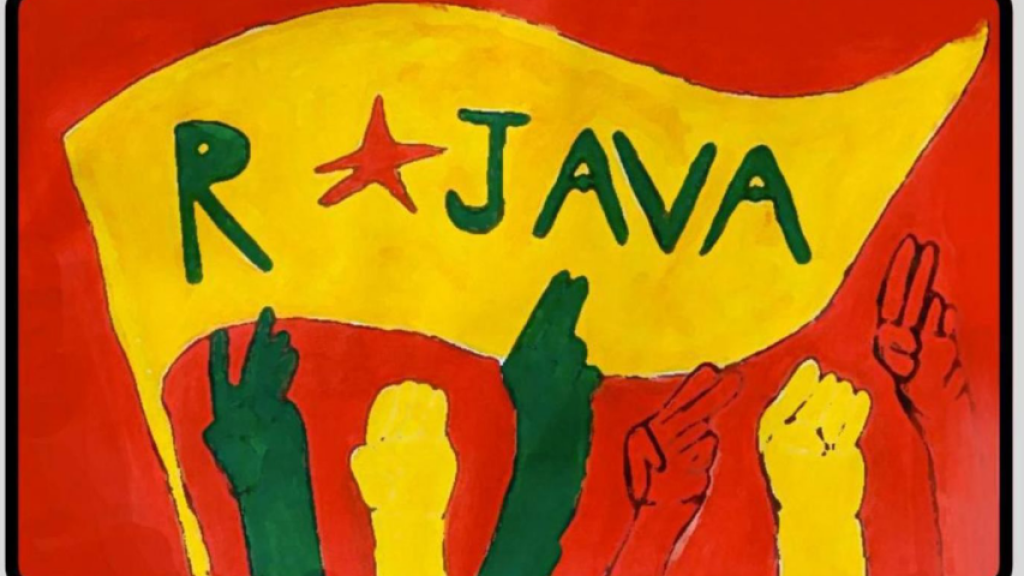
The Transitional Government in Damascus, dominated by members of the former al-Qaida affiliate Hay’at Tahrir al-Sham (HTS), is once again using violence to consolidate control over all of Syria. This has initiated a new war of choice that threatens to return the country to the darkest days of its civil war and poses a serious threat to international stability. The campaign is being coordinated by the jihadist regime in Damascus in conjunction with Turkish Defence Minister Yaşar Güler and Foreign Minister Hakan Fidan. The Turkish state is playing an active role in the conflict, employing fighter jets, drones, and reconnaissance aircraft, and has reportedly deployed its own soldiers to fight alongside jihadist forces.
By contrast, since their fight against IS, the Kurds in Syria have consistently expressed openness to dialogue with the Syrian government. They have never sought the division or secession of Syria, instead advocating for inclusion within a decentralised Syrian state.
The clear objective of the war of annihilation against the Kurds is to hand Syria over from the Baath dictatorship to the HTS dictatorship following the international recognition of Al Jolani (jihadist nom de guerre of Ahmed al Sharaa) as a statesman. Al Jolani’s vision for the new Syria does not include democracy or peace between nations. Women will continue to be treated as slaves. In opposition to this dictatorial concept of power, the Kurds have established a political and administrative self-government over the last 15 years, enabling women, nations and religions to express themselves freely. Therefore, there should be no place for the Kurds in Syria under Al Jolani. Genocide is once again being imposed on the Kurds to this end. Once again, the states in the international coalition against IS have demonstrated their hypocrisy. When their own interests are at stake, they not only forget their values, they also disregard international law.
Background and introduction
Since 6 January, large-scale attacks have been carried out against Kurdish communities in Syria by forces of the Syrian Transitional Government (STG), in collaboration with jihadist groups and Turkish-backed militias. Beginning in Aleppo, these attacks have amounted to attempts at ethnic cleansing, resulting in the massacre of Kurdish civilians and the forced displacement of thousands.
Over the past year, the Autonomous Administration of North and East Syria (DAANES) has undertaken multiple rounds of negotiations with the Syrian Transitional Government, seeking a democratic solution and the establishment of a decentralised system of governance that reflects Syria’s ethnic and religious diversity.
By 4 January, negotiations had reached an advanced stage, with the involved actors reportedly close to a tentative agreement. However, before any public announcement could be made, the process was abruptly terminated by the Syrian Foreign Minister, who maintains close ties with Turkey. On 6 January, following a meeting in Paris facilitated by the United States, Syria and Israel announced that they had reached an agreement. That same afternoon, STG forces — including Turkish-backed militias that have since been incorporated into the Syrian army—launched attacks on Kurdish neighbourhoods in Aleppo.
In the days that followed, despite the declaration of multiple ceasefires, STG forces and their allies continued to advance towards North and Eastern Syria (Rojava), creating an existential threat to Kurds and other communities in the region, as well as to the system of autonomous, democratic self-governance established there. These attacks endanger the achievements of the Rojava Revolution, including struggles for women’s liberation, peaceful coexistence among peoples, and democratic self-governance. The silence of the international coalition and other state and international actors amounts to complicity in the violence being carried out by al-Sharaa’s forces on the ground.
Thousands of Kurds, especially Kurdish women and youth, have responded to the call for general mobilisation, streaming into Rojava to join the resistance or organising in cities across the region and across the world. This report provides an overview of recent developments, documents human rights violations and potential war crimes, international reactions and mobilisations, and concludes with key demands. As it is still a developing situation, more information is likely to come in the next days.
Download the full report here.