Venezuela: Forty days of accelerated counter-revolution
First published in Spanish at Luís Bonilla-Molina’s blog. Translated by LINKS International Journal of Socialist Renewal.
The pace at which the counter-revolution in Venezuelan politics has unfolded since January 3 is incredible. Let us summarise what has happened so far.
Who exercises power?
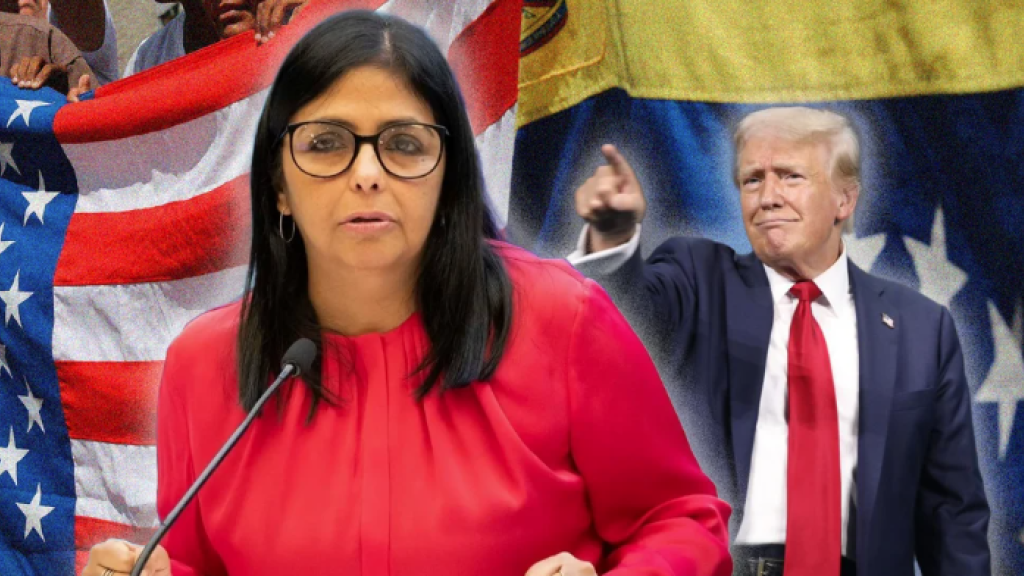
United States President Donald Trump organised a media conference on January 3 to explain in detail the US attack on Venezuela. He made it clear that, moving forward, the US would rule in Venezuela. Trump noted that the political leaders who had governed with former president Nicolas Maduro (until his kidnapping) were willing to cooperate, and even praised Maduro’s vice-president Delcy Rodríguez, who according to the constitution was to fill the presidential vacancy. But the main message was that those in charge of Venezuela’s government were now to implement orders from the US administration.
On January 7, US Secretary of State Marco Rubio announced the administration’s stabilisation plan for Venezuela, which involves three phases. Phase 1 is stabilisation to “avoid Venezuela falling into chaos and to maintain internal order and security.” This includes controlling oil production and exports, the release of political prisoners and the return of exiles. Phase 2 is economic recovery and national reconciliation, in which efforts are made to revive the economy, lift international sanctions, guarantee US and Western transnational corporations full access to Venezuela’s market, and steps towards national reconciliation (finally sealing an inter-capitalist class agreement). Phase 3 is political transition to consolidate the structural changes in Venezuela’s political system and return to bourgeois democracy. The aim is to open up spaces for the different political forces to come together (though excluding the left by pretending it is represented by Madurismo) and organise new elections.
This colonial plan is already being implemented. In Venezuela, the government’s response has been moderate, with occasional statements to appease its supporters, while the right celebrated Maduro’s kidnapping. The quartet running the colonial administration (Delcy Rodríguez, National Assembly president Jorge Rodríguez, interior minister Diosdado Cabello and defence minister Vladimir Padrino) have generated great uncertainty by accepting the role of valid interlocutor for the US, while the radical left has failed to build an anti-imperialist front of national unity.
Who runs the oil industry?
The Trump administration has announced it will directly sell Venezuela’s oil, receive all payments and decide how those funds are used for the good of the US and the Venezuelan people. It is the clearest example of the country’s new colonial status.
The announced confiscation of between 30–50 million barrels of oil, the creation of a bank account in Qatar from which funds will be disbursed to Venezuela (at Trump’s discretion), the return of four Venezuelan private banks to the Swift system to allow them to sell foreign currency generated from crude oil sales (rather than the Central Bank of Venezuela) and the requirement that Venezuela’s government report to the White House how it uses those funds — all this was sealed with the US’ first international sale of Venezuela’s oil for US$500 million on January 15.
US energy secretary Chris Wright arrived in Venezuela on February 11 to oversee oil operations and reforms to the Hydrocarbons Law that the Trump administration ordered after the January 3 attacks. Venezuela has lost any genuine control over the sale of its crude oil, the country’s main source of income, and now depends on the US administration to access funds from oil sales and to decide what these can be used for.
Legalising the colonial status
Central Intelligence Agency (CIA) director John Ratcliffe, who coordinated the January 3 attack and Maduro’s kidnapping, visited Venezuela on January 16, and met with Delcy Rodríguez to personally lay out the US government’s plans. This visit preceded the arrival of US Chargé d’affaires for Venezuela Laura Doug, on February 1. Doug, who will directly coordinate Washington’s interests from Caracas, was received at the presidential palace, Miraflores. One of her priorities will be ensuring that the legal and institutional reforms Trump has ordered are implemented.
Jorge Rodríguez (brother of the acting president) has announced the legislative agenda for 2026. It includes a plan to modernise the legal system through 29 new laws and eight new codes, in line with changes needed to facilitate foreign investment. This package of reforms includes mechanisms for international oil trade licenses, bills on prices and domestic regulation, a more flexible tax regime (with tax and royalties cuts to attract investment) and allowing contracts and operations to be authorised without any state oversight.
On January 29, the National Assembly reformed the Organic Hydrocarbons Law. The new law takes the country back to a situation similar to the start of the 20th century when transnationals exercised control. It rolls back previous progressive legislations promoted by social democracy (Law 1943, the nationalisation of 1976) and all progress made during the Chavista period. This law marks the de facto end of the state’s monopoly — exercised through the state-owned oil company, PDVSA — over the exploration, extraction, marketing and export of crude oil. Private companies, both national and foreign, can now extract and sell oil without needing to sign mixed ownership contracts granting the state majority control.
Direct contracts with private companies have been introduced, allowing private companies to assume operational management, risk and costs in return for agreed upon benefits. Even minority shareholders in joint ventures can sell all or part of the oil produced and open accounts in foreign currencies outside the country. Royalties and taxes have been reduced from 30% to 15%, with several taxes being eliminated and an integrated hydrocarbon tax created. One of the most harmful aspects for national sovereignty is the introduction of the potential to resolve contractual disputes through international arbitration or independent mediation. This violates the constitution, which explicitly states that disputes in the public interest must be resolved in Venezuelan courts.
As if all this was not enough, the reform reduces to a minimum — practically eradicating — the role of the legislature in approving oil contracts. The National Assembly now only has to be notified. The drop in taxes and royalties will lead to a cut in public revenue, which will structurally worsen the economic situation. On the other hand, Trump’s intentions to run the local oil industry at full production may end up affecting oil geopolitics, especially Venezuela’s relationship with OPEC.
Amnesty without freedom of opinion
Madurismo always denied the existence of political prisoners, even as community, trade union and party leaders remained jailed, accused of violating the Law against Hatred, treason against the homeland or subversion. But as soon as Trump demanded the release of political prisoners in early January, the cell doors begun swinging open.
Hundreds of social and political activists, as well as ordinary citizens unjustly accused of crimes for having an opinion or being somewhere the state considered suspicious, were freed, though under conditions preventing them from speaking publicly, attending meetings or demonstrating. Human rights activists say more than 1000 people remain in prison. The government also refuses to publish the names of those released, much less those still detained.
After Trump publicly complained that the release of political prisoners was going too slow, Delcy Rodríguez proposed an Amnesty Law on January 29. Framed as a pardon, it reflects the state’s refusal to recognise the killing of innocent people, the lack of due process, extrajudicial arrests, deaths in prison and dozens of citizens considered disappeared by their relatives. Social organisations and human rights defenders continue demanding freedom for all, without conditions. They are also considering demanding state compensation for damages.
The Labour Law: The most complex obstacle
An amendment to the Labour Law has been announced. Meanwhile, the business federation Fedecamaras refuses to accept salary rises without the elimination of rights enshrined in the current legislation. The greatest point of social tension, after the issue of political prisoners, is wages. The minimum wage in Venezuela is about 35 cents a month. The average salary of a university professor is $1 a month, plus $160 in bonus payments (which are not included when calculating vacation subsidies, social security, severance pay, etc). This is in a nation where basic products can cost up to three times more than other countries in the region. Raising salaries could deactivate the trigger of a social explosion that may be brewing.
But salaries have fallen so far that any rise, which in another country would seem extraordinary, in Venezuela would be miserable. A 100% salary rise in Venezuela — unthinkable in Colombia or Spain — would still mean a minimum wage of less than $1 a month. This creates a very complex situation. After announcing improvements in the country’s income, the justification for opening up the oil industry, social expectation is that wages will rise enough to cover basic household costs, estimated at above $500 a month. That is why Fedecamaras is pressuring to ensure that any labour legislation reform finally puts an end to salaries, with employment instead being remunerated through bonus payments, which would take the country back to the situation before the first Labour Law was passed.
Trump knocks on the IMF’s door
This fast-track counter-revolution has seen Rubio lobbying for Venezuela’s reentry into the International Monetary Fund to be fast-tracked to access resources currently denied to it by this multilateral body. But this would only occur as part of a structural adjustment plan, such as those being imposed in Bolivia or Argentina, which would see the public budget further cut.
While Delcy Rodríguez’s representative sits patiently waiting for the US efforts to succeed at the IMF, in Venezuela expectations are that workers’ situation will improve after the IMF releases the$4.9 billion currently being held back by the organisation. But the numbers do not add up.
Undercurrents
Venezuela is marked by a tense calm. Expectations are very high — exaggeratedly high — that people’s material situation will improve, allowing us to return to a life with a minimum of dignity, and facilitating the return of 8 million migrants. The working class wants wage rises now, before May 1, that are substantive and genuinely in line with existing needs.
Yet this is not on the horizon. It would be wonderful if it happens, but would be a surprise. If this does not occur, however, the wave of outrage that exists as an undercurrent throughout the country could become a volcano, converting the current democratic bubble into the prologue of an unprecedented repression of social movements.
And the left?
Madurismo not only buried the progressive aspects of Chavismo; it also destroyed democracy.
The US aggression on January 3 represented a deep blow to the republic and opened up a new colonial relationship, clearly revealing the historic defeat of the Bolivarian project and 21st century socialism that Hugo Chávez Frías embodied. This is the reality in which democratic, popular, progressive and left-wing forces will have to reformulate their politics.
This defeat is expressed in the absence of an autonomous, popular and self-organised response against the military aggression and the colonial status that the US intends to impose. The government has managed, using the state apparatus, to organise small mobilisations lacking any combative spirit. Meanwhile, the right was immobilised by Trump’s decision to recognise Delcy Rodriguez as head of the Colonial Administration Board. The radical, anti-capitalist and anti-colonial left has also failed to mobilise popular sectors. The popular movement activated itself on February 2 around the most pressing demand: better wages and material conditions.
Though it hurts to say it, there are no possibilities right now for united mobilisations that demonstrate broad anti-imperialist national unity. This disaster is Madurismo’s fault. The exercising of citizenship has hit rock bottom, leading to collective despair, expressed politically by the fact that an important swath of the population (not just the right) think US tutelage might be better than Madurismo’s mismanagement. That is why there have been no large mobilisations nor any anti-imperialist national front created. Denying this reality means not understanding the political moment.
Consequently, the struggle to redemocratise the country’s social and political life must be a national priority. This requires restoring public powers and a process of political opening up that attends to urgent social demands. This is the only possible way to create channels for raising consciousness and advancing anti-colonial struggle. Without democratising Venezuelan society, it will be impossible to recover the republic.
In previous colonialist experiences, we have seen how the aggressor sponsored the formation of sepoy political parties that, because they accept the country’s colonial status, are considered valid interlocutors. Today, an important part of the political class, both in government and parts of the opposition, seek to fulfill that role. Consequently, the challenge is to build democratic political parties that can genuinely fulfill the role of intermediation in a way that constructively contributes to recovering the republic. This will involve building spaces of convergence that accept differences and organising plural political instruments, as the only way to prevent redemocratisation leading to the rise of parties that simply promote the new colonial status.
It will not be easy, because we are coming out of decades of polarisation, disagreements, and abandonment of politics as the art of making possible the impossible for the majorities. For the non-Madurista left, this implies overcoming self-importance, sectarianism and radical posturing that has no ability to link up with the mass movement. But it also means defending identity and the right to exist as an option for power of the poor and popular sectors, within an imperial framework that may seek to outlaw any political instrument that references socialism. The biggest challenge for the Venezuelan left, in a moment as complex as this, is to reinvent in order to not err.