For a cultural and academic boycott of the UAE: An open letter in solidarity with the Sudanese people
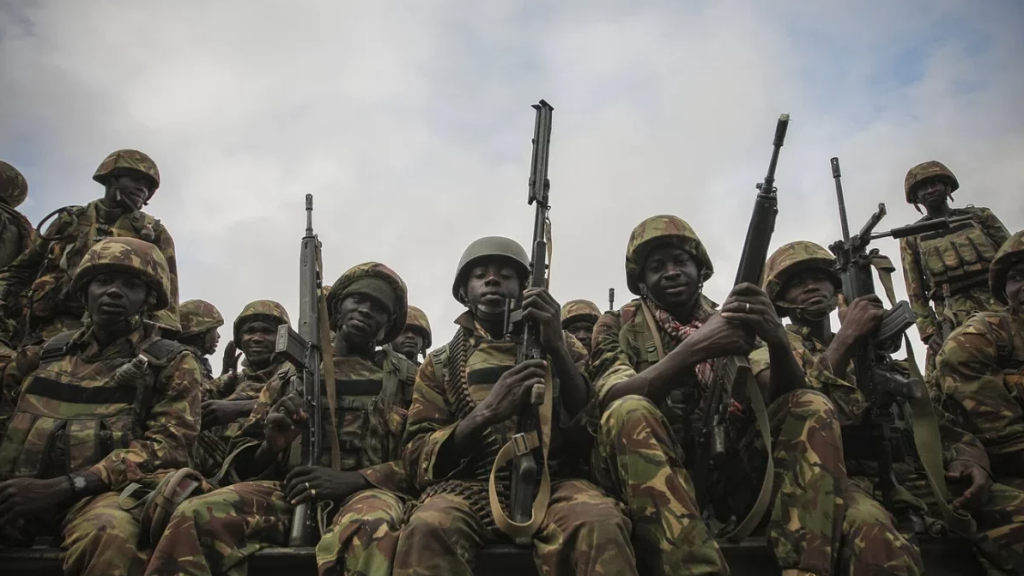
For full list of signatories and to sign the statement, visit the site where it was originally published here.
We, the undersigned workers and members of academic and cultural institutions, condemn the United Arab Emirates' role in creating, funding, and prolonging the counter-revolutionary war in Sudan between the Sudanese Armed Forces (SAF) and the Rapid Support Forces (RSF) since its eruption on April 15th 2023. The UAE’s alliance and bankrolling of the RSF has been particularly destructive as the brutal paramilitary group continues waging terror in Darfur and Kordofan, committing countless crimes against humanity, including ethnic cleansing, the use of rape as a weapon of war, and human trafficking.
This campaign is organized by TAGATU3: Sudanese Campaign for the Academic and Cultural Boycott of the UAE, a group of Sudanese diasporans and allies working to end the UAE’s patronage of the RSF militia and its political complicity in the creation of the counter-revolutionary war in Sudan. TAGATU3 (تقاطع) translates to “intersection” or “junction” in Arabic. The root of the word (قطع/qat3) means to cut off and is the same derivative of boycott (مقاطعة/muqataa3a). The word encapsulates the confluence of struggles that define our politics and points to our main political strategy of boycott.
Now in its third year, the war’s longevity is directly driven by external support to the warring parties through a network of foreign actors with competing geopolitical and economic interests in Sudan. While SAF primarily receives political, logistical, military, and financial support from Saudi Arabia, Egypt, Turkey and Iran, the RSF has historically relied on the UAE and European Union to arm and fuel its war machine. In this complex and extensive political economy of power, no foreign entity has so viciously pursued its security and economic hegemony in Sudan, underwritten the warring factions, and reaped financial benefit through devastating war economic mechanisms as the UAE. It is time to end the UAE’s complicity now more than ever.
Emirati interventionist strategy in Sudan, though not unique, sits in a class of its own. Its significant counter-revolutionary efforts during the transitional political process foreclosed Sudanese liberatory horizons in favor of military actors, setting the stage for military rivalry that eventually tipped the country into war. As the primary benefactor of the notorious, brutal RSF militia, the UAE has provided an endless stream of funding, arms, and political cover, enabling the militia’s genocides and massacres across Darfur and Kordofan. The Emirates plays a decisive role in prolonging the fighting through its illicit gold trade with SAF and RSF, providing their war efforts with critical financial lifelines for the foreseeable future. Allowing the UAE’s ruthless sub-imperialism in Sudan to go unchecked will continue to prevent a permanent ceasefire and make a return to the revolution’s core demand of a civilian-led government, with “the military (SAF) to the barracks and the Janjaweed (RSF) dissolved,” a receding possibility.
The UAE’s continued funding of the war has turned Sudan into the largest humanitarian crisis in the world today, claiming over 150,000 lives and displacing over 14.5 million people. Both SAF and RSF have been accused of committing war crimes, crimes against humanity, ethnic cleansing, and genocide. Evidence points to mass killing and displacement of civilians, acts of widespread gender-based and sexual violence, torture, obstructing humanitarian aid, deploying chemical weapons, and the looting of homes. The SAF and the RSF have destroyed between 60-70% of Sudan’s healthcare infrastructure and manufactured the conditions for a country-wide famine ensuring that at least 100 people a day die from starvation. Both warring parties and their enablers have also decimated Sudan’s cultural, historical, and educational institutions, guaranteeing the loss of Sudanese history and artifacts for generations to come. These reprehensible actions reflect the malicious, interconnected pattern of the UAE’s expansionist policies towards the Horn of Africa and the broader region.
Such a horrific and extensive inventory of violence demands an extensive and resounding response. Yet, partnerships and collaborations between the UAE and global academic and cultural institutions have played a critical role in silencing the UAE’s critics and sanitising its human rights violations in Sudan, the Horn of Africa, and beyond. It is our duty as scholars and cultural workers of conscience to hold our institutions accountable and refuse to continue participating in the normalization of the UAE’s record of violence, the unbridled violation of Sudanese lives and land, and the theft of Sudanese political futures.
Herein, as a collective, we call upon the international academic community and cultural workers globally, our colleagues, and our allies to acknowledge the UAE-funded genocides taking place in Sudan and the man-made famines ravaging populations across the country, to condemn the United Arab Emirates as enablers and beneficiaries of the strategically orchestrated humanitarian crisis in Sudan, and to organize for an academic and cultural boycott of Emirati institutions complicit in whitewashing the UAE’s human rights violations in Sudan until the campaign’s demands are met.
The UAE’s burgeoning empire
The UAE relies on military, commercial, and maritime technologies to extract resources from the region and to extend its regional control in the Horn of Africa and the Sahel. In 2015, the UAE struck a deal with the Eritrean government to lease Eritrean airspace and territorial waters for thirty years. This allowed the Emirati government to maintain the blockade of Yemen and conduct other military operations that directly contributed to the displacement of over 7 million people, several famines, and the destruction of Yemen’s infrastructure before UAE troops withdrew from Yemen in 2021. The political and financial relationship between the UAE, Saudi Arabia, and the Rapid Support Forces was strengthened throughout the Saudi and UAE-led campaigns in Yemen. The RSF supplied these governments with Sudanese mercenaries including children as young as 14 years old. In return, the RSF was allowed to operate its financial networks through Emirati banks which facilitated the movement of millions of dollars, weaponry, and commercial assets into Sudan.
In addition, the UAE-backed port operator and logistics company Dubai Ports (DP) World enables the UAE’s power grabs in the Horn of Africa and the Sahel through their transport of military technology to Somalia, Chad, Sudan, Uganda, Ethiopia, Mali, and their coordinated military efforts with these governments, with complete disregard for human rights violations against their citizens. In line with these broad-based efforts to evade democratic change in the region for the sake of Emirati interests, in 2020 the UAE became the first Arab state since 1994 to normalize ties with Israel.
The UAE’s wealth has long come from its dependency on oil exports, now dwindling and making the future of its economic prosperity precarious. The UAE is planning for this uncertainty by relying on the tried-and-tested playbook of 19th and 20th-century empires which looted Africa to amass resources to maintain themselves. The aforementioned political relations with violent actors on the continent ensure the UAE’s access to gold and other mineral resources, arable land, and seaports from the Horn of Africa and the Sahel region.
The UAE’s exploitation of land and resource-rich regions in Sudan in particular and since the early 2000’s is grotesquely violent, dispossessing indigenous peoples and farmers from their land and placing people at greater risk of food insecurity. The UAE has invested billions in Sudanese land, real estate, and infrastructure projects to outsource its food production following a series of World Bank-recommended privatization policies implemented by the former al-Bashir regime. Through a deal struck with the DAL Group conglomerate, owned by one of Sudan’s most infamous capitalists, Osama Daoud Abdellatif, the UAE-based International Holding Company (IHC) and Jenaan Investment collaborated to farm over 160,000 hectares of land in Sudan in 2022.
These agreements have reified internal patterns of exploitation maintained by the Sudanese business elite and simultaneously invited foreign governments to reap the spoils of small farmers and herders' deprivation. Further, the patron-client relationship between the UAE and the RSF has enabled the latter to monopolize the gold trade and expand their militarized commercial enterprise. These transnational networks secure the UAE’s gold reservoir — 50% to 80% of Sudan’s gold is smuggled abroad, mostly to the UAE — and facilitate the trade of mercenaries, weapons, and even enslaved peoples across the Sahel region.
The RSF has relied on this relationship to wreak havoc and terror across Sudan. The RSF continues to commit massacres in the Darfur states, Al Jazirah, and Sennar and carry out ethnic cleansing campaigns directed against non-Arab ethnic groups historically marginalized by the Sudanese state. These are dynamics that are part of the RSF’s entangled, dark history with the Sudanese government. The RSF originates from SAF’s historical tendency to incorporate militarized groups in Sudan’s periphery in the central government’s monopoly over violence. The RSF is a direct offshoot of the Janjaweed militia which executed Omar al-Bashir's suppression of anti-government protests in Darfur in the early 2000s. They launched a strategic campaign of genocide and scorched earth tactics that have informed their present-day machination of war, particularly in North Darfur.
UN sanctions monitors have evidenced the UAE’s critical military support to the RSF and their bankrolling of the counter-revolutionary war. The UAE has sent weapons and other military technologies to the RSF through its networks along the Sahel region. The UAE has even claimed that it created a humanitarian aid center in Chad for Sudanese refugees, but in reality, it used these centers to smuggle weapons to the RSF through the Chad-Sudan border in violation of the international Darfur arms embargo. The US plays a direct hand in this war. In 2024, the Biden administration approved $1.2 billion in sales of weapons, training, and support to the UAE.
On December 18th, 2024, following US congressional pressure, the Emirati government admitted to funding the RSF and stated that it would not do so going forward after months of staunchly denying its involvement. Given Trump’s enabling of the Gulf monarchies, this is unlikely to be implemented or seen through. The US government’s non-committal stance to ending the war was also hinted at in the State Department’s sanction of Mohamed Hamdan Dagalo, the head of the RSF, and seven key RSF-owned companies based in the UAE on January 7th, 2025. Their statement made no mention of the UAE’s role in the RSF’s procurement of weapons of destruction, nor did it make any tangible moves to hold the UAE government accountable. The ramifications of this superficial attempt at accountability have already materialized: on January 24th, 2025, two US lawmakers determined that the UAE has continued to send arms to the RSF. Naturally, the UAE has continued to deny this.
The recent seizure of El Fasher marks the latest expansion of US-UAE imperialist aggression as RSF forces consolidate further control in the region and legitimize the greater UAE-RSF criminal enterprise. The RSF’s crimes include: the massacre at the Saudi Maternity Hospital, the displacement of 26,000 people, the entrapment of an estimated 177,000 citizens, the kidnapping of journalist Muammar Ibrahim, and the assasination of Siham Hassan. These reprehensible actions are wrought out of the bloody hands of the RSF’s chief backer, the UAE, who represents a new world of imperialism that is materially, financially, and militarily attached at the hip of the American political empire. Thus, it makes complete sense that US-sanctioned criminals like Algoney Hamdan Dagalo, the brother of RSF leader Hemedti, are warmly welcomed on US soil.
The UAE’s whitewashing campaign in academia
The relationship between the government of the United Arab Emirates and Western academic institutions is a long-standing one that has enabled the UAE to avoid responsibility for its perpetuation of global systems of violence and crimes against humanity. The UAE has solicited the creation of sister campuses of North American, European, and Australian campuses in the UAE to manufacture consensus among academics for its crimes against humanity. These include, but are not limited to, the following institutions:
- INSEAD, affiliated with Sorbonne University (France)
- New York University Abu Dhabi, affiliated with NYU (USA)
- Sorbonne University Abu Dhabi, affiliated with Sorbonne University (France)
- City, University of London Dubai Centre, affiliated with City, University of London (UK)
- Curtin University, affiliated with Curtin University (AUS)
- Heriot-Watt University Dubai Campus, affiliated with Heriot-Watt University (UK)
- Hult International Business School, affiliated with Hult International Business School (USA, UK)
- London Business School, affiliated with the University of London (UK)
- Middlesex University Dubai, affiliated with Middlesex University (UK)
- MODUL University Dubai, affiliated with Modul University Vienna (AUST)
- Murdoch University Dubai, affiliated with Murdoch University (AUST)
- Rochester Institute of Technology of Dubai, affiliated with Rochester Institute of Technology (USA)
- Royal College of Surgeons in Ireland, affiliated with The Royal College of Surgeons in Ireland (IRE)
- SAE Institute, affiliated with the SAE Institute (AUST)
- University of Manchester Worldwide, affiliated with the University of Manchester (UK)
- University of Birmingham Dubai, affiliated with the University of Birmingham (UK)
- University of Exeter, University of Exeter (UK)
- University of Bradford Regional Hub, Dubai (UK)
Since the accelerated expansion of Western universities in the Emirates in the 2010s, these institutions have proven time and time again that they will fall in line with the standards set by the UAE government. On numerous occasions, UAE security authorities banned faculty affiliated with American and European universities based in the UAE from the country and imprisoned, tortured, or censored them for speaking against the UAE’s unfair labor practices, amongst other human rights violations. To date, only two universities — Birmingham and Exeter in the United Kingdom — have called for a Dubai campus boycott in 2018 after the sentencing of a Durham University doctoral student, Matthew Hedges, to life imprisonment in Dubai on suspicion of spying. Such calls have unfortunately found no traction in academia; in fact, new campuses for both universities have since been built in Dubai and commitment to the boycott has wavered.
This broad-based compliance with the UAE is not surprising. Such schemes in the UAE are defined by huge financial investments that put financial interests above upholding the principle of academic freedom and the safety of faculty and students. Crucially, between February 2001 and April 2024, the UAE gifted $402,330,743 to universities based in the United States, with New York University, Harvard University, Boston University, Johns Hopkins University, Columbia University, UC Berkeley, and Stanford University being some of the biggest recipients of these gifts. Per the reporting of these universities to the federal government, these awards were received for undisclosed reasons, allowing donors unknown influence. This points to a worrying trend of financial opacity, academic whitewashing, and intellectual capture that has lent the UAE legitimacy and leveraging power in economies of knowledge production without practical avenues for accountability.
The UAE’s cultural cover
Culture is a critical site of power and plays a key role in the (re)production of dominant ideologies. Rather than being a neutral space, culture is produced within specific power structures that shape discourses, realities, and perceptions. It is no coincidence, then, that at the same time as the UAE’s colonial expansionist project is intensifying, we see a rapid proliferation of cultural activities and global cultural partnerships in the country. This recent acceleration in cultural diplomacy efforts has served as an effective tool shaping a positive public opinion on the country as well as managing its image during times of foreign policy crisis, particularly following its wars in Yemen and Sudan.
The UAE’s strategic partnerships with Western institutions in particular — such as the Louvre and Sotheby’s, both marked by huge Emirati investments of at least $1 billion each–have enabled it to grow exponentially and amass cultural capital. Embarking on a long portfolio of cultural investments–the latest of which are Dubai Expo and Sole DXB–is more than a bid for front-runner status in the creative economy but a crucial ideological tool in building soft power. These soft power gains in turn work to improve the UAE’s brand image and reputation all the while sanitising not just its abysmal record on labor abuses of migrant workers, but also its violent empire-making and systemic human rights violations in Sudan.
So central is the UAE’s cultural project to its grand geopolitical ambitions as a sub-imperialist power that it has institutionalized this cultural diplomacy strategy in government policy by creating a Soft Power Council. Established by Sheikh Mohammed bin Rashid Al Maktoum in 2017 through the state budget, one of the main aims of the council according to its “Soft Power Strategy” is to “strengthen the UAE’s foreign policy and add new tools to consolidate its role.... in the international arena” as well as promote the UAE’s “modern and tolerant” global reputation. Culture and politics work synergistically here, the former providing the discursive cover for the latter, thereby shielding the UAE from any accountability measures for its destructive alliance with the RSF in Sudan. In fact the UAE has been ranked among the world’s top 10 nations worldwide for soft power and the first in Nation Brand Performance according to the Global Soft Power Index (2022), demonstrating that its top-down approach to culture is inextricably linked to its political standing in the world order.
Since the council’s inauguration — the first of its kind in the world — the Emirati government has made significant contributions valued at upwards of $35 billion to the fields of art, design, museums, destinations, publishing, and media. Additionally, at the local emirate level, Dubai, Abu Dhabi and Sharjah have all adopted policies around specialized free zones, flexible visa programs to attract foreign talent, and facilitated favorable business conditions for creative enterprises. These shifts deliberately orchestrate buy-in from artists and cultural workers around the world, particularly in areas of rising fascism and financial austerity policies that have suffocated the arts, making the UAE the ideal destination for workers in the creative economy.
Sudan's heritage and material culture itself, much like gold, cash crops, and arable land have been transformed into commodities of war and subsumed into the UAE’s unregulated matrix of extraction and power. The UAE-backed RSF has openly targeted cultural institutions and historic archeological sites, including looting the Sudan’s National Museum, the National History Museum and Ethnographic Museum in Khartoum, Darfur Museum in Nyala, Sultan Ali Dinar Museum in El Fashir, El Geneina Museum, the Gazira Museum in Wad Madani, and the Khalifa Art Museum in Omdurman among others. RSF incursions are also responsible for the destruction of archeological sites of Naqa and Musawwarat es-Sufra, monuments inscribed as UNESCO World Heritage. The looting of artefacts forms part of the RSF’s self-sustaining strategy through illicit trafficking to European and African art dealers, illustrating the link between the war economy and commercial art markets.
This coordinated decimation of Sudan’s cultural heritage constitutes another weapon of war aimed at severing Sudan’s cultural memory, history, and identity. Simultaneously, the UAE has attempted to establish itself as a site of knowledge, artistic and cultural production on Sudan and Africa — via institutions such as the Global Studies University in Sharjah and NYU Abu Dhabi — sustained by the labor of displaced and migrant Sudanese labor within its burgeoning cultural economy. This violent calculus allows it to produce and control circulation of knowledge on Africa in ways that reinforce and enshrine its matrix of power relations on the continent.
As the UAE continues to advance its long-range plans for economic diversification, in tandem with “Vision 2030” policies adopted in Abu Dhabi and neighboring GCC states, we should expect and prepare for further strategic co-optation and cannibalization of Sudanese heritage, cultural production, and artistic labor. Shedding its legacy as 'America's oil mill' and solidifying itself as a beacon of modernity, innovation, and high culture has indeed come at a hefty price for the UAE. We see these inflated cultural budgets as a direct outcome of the wealth violently accumulated from Sudan and the Horn of Africa region, positioning the UAE as an emerging world power with the capacity to link the West and the Middle East to circuits of capital in Africa.
In this context, working with complicit Emirati institutions plays directly into the UAE’s cover and aids in manufacturing consent for its sub-imperialist project in Sudan. Inspired by the legacies of cultural boycott against South African Apartheid, the Israeli occupation, and the role boycott has played in decolonial struggles the world over, we see this tool as the strongest and most strategic weapon we have to pierce this morbid illusion and wrest our political future back from the architects of our demise.
As the UAE is primarily a trading nation and dependent on its global links to mediate flows of capital in a competitive world economy, it is particularly sensitive about its brand image and reputational damage. This makes boycott an effective pressure tool for exposing and holding the UAE to account. Furthermore, as a burgeoning empire, it is at a critical juncture where manufacturing consent for its deadly interventions in Sudan and creating a global consensus in favor of its government politically through cultural offerings is crucial to the success of its geopolitical projects. Thus, problematising this ideological cover and draining it of its power and function at a time when the UAE is most dependent on it is central to weakening its sponsorship of war, denial of land sovereignty, and Sudanese people’s right to life.
These calls to boycott the UAE have been echoed by the Sudanese diaspora since the beginning of the war. We seek to elevate this to an organized, sector-specific boycott and movement that is capable of concretising our outrage and indignation at the ongoing atrocities in Sudan into durable change. The lack of human rights protections inside the UAE, the existence of a minority local population without the capacity to democratically challenge autocratic state policy, and the dependence of Sudanese artists displaced by the war on the domestic economy in the UAE all add further urgency to the need for a global boycott movement against the UAE.
Demands & call to action
The time is now to practice a deep solidarity with the Sudanese people and firmly oppose the UAE’s imperialist agendas in Sudan. We define complicity for Emirati institutions as:
I. Financial complicity in the shape of receiving Emirati state funding or royal wealth to partially or wholly fund institutions or institutional activities and products.
II. Ideological complicity through academic and cultural activity that whitewashes or creates misinformation/propaganda campaigns, silence, or active censorship on the UAE’s role in creating, funding, and perpetuating the counter-revolutionary war in Sudan.
We, the undersigned workers and members of academic and cultural institutions, demand the following:
- We urge our colleagues to call attention to and acknowledge the genocides in Sudan, the man-made famines ravaging populations across the country, and the global enablers of violence wrought by the Sudanese Armed Forces and the Rapid Support Forces, the United Arab Emirates being the most prominent among them.
- We call on academic and cultural institutions to thoroughly investigate their links with the Emirati government and royal families. We demand divestment from any investment projects made with the Emirati state, royal families, and complicit institutions.
- We call upon academics, cultural workers, and their affiliated institutions to reject funding, collaborations, partnerships, and sponsorships from the Emirati government, royal families, and their complicit institutions (including lobby groups and corporations) or those involved in ideological work amounting to whitewashing the UAE’s violations in Sudan.
- We call on our colleagues to boycott the UAE by refusing to teach at, attend, or collaborate with any complicit Emirati institutions until such institutions shall: (i) publicly recognize and lift censorship on the UAE’s role in the creation, funding, and perpetuation of the war in Sudan, (ii) practice financial transparency by independently auditing financial statements in line with international financial reporting standards and investigate any financial links tied to war profiteering and illicit trade in Sudan, including extractive conflict gold and weapons manufacturing/sale, (iii) end all financial and ideological complicity in the UAE’s counter-revolutionary war in Sudan.
This boycott is a refusal of complicity that is both symbolic and material; its power lies not only in declaring opposition, but in severing our material links with the integument of the UAE’s genocide, extractivism, and colonial geopolitical aspirations in Sudan.