Trump and Netanyahu’s lurch into Iran: Imperial hubris in the wake of a people’s uprising
First published at IMHO Journal.
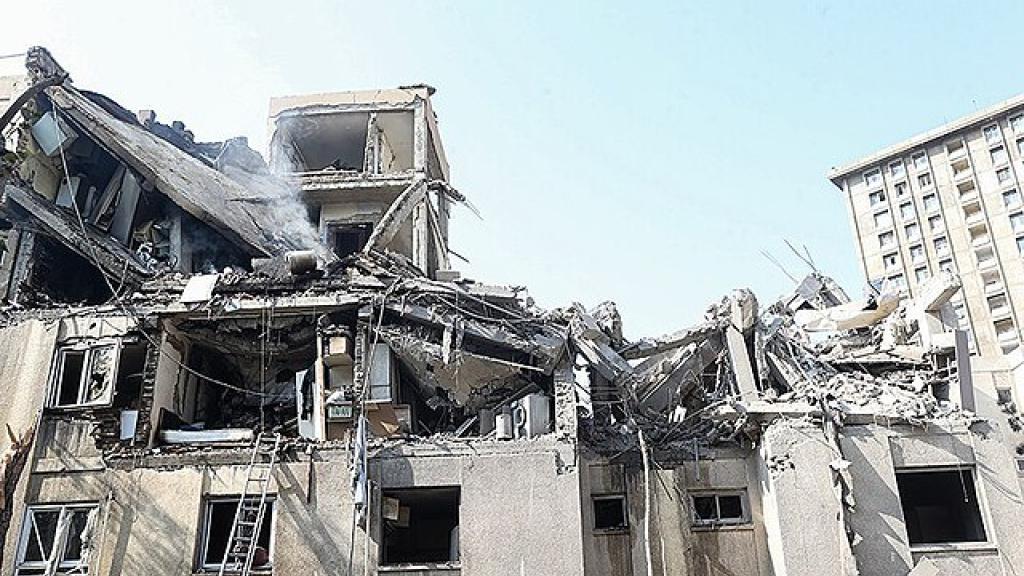
Seizing upon what they consider to be a generational opportunity, with Iran’s theocratic dictatorship shaken by the January people’s uprising, Trump and Netanyahu launched a “prolonged” attack from the air on February 28. While the attacks are aimed, they say, at eliminating Iran’s nuclear and missile capacity, it clearly involves an effort at regime change. With their nefarious surprise attack — conducted in the middle of negotiations — and the assassination of Iran’s Supreme Leader Ali Khamenei in his residence along with other regime leaders and members of his family, they have committed at least three major war crimes: launching a war of aggression, attacks on the civilian population, and assassination of the political and military leadership of sovereign nation. This is also a precedent for other imperialist and subimperialist powers everywhere.
Of course, it is not surprising that many sectors of the Iranian population have expressed joy at the demise of the murderous Khamenei, who in January gave the green light to the massacre of at least 7,000 of his fellow citizens who had dared to demand democracy and an end to 47 years of theocratic authoritarianism. But we must ask, as many Iranians also are doing, what the US and Israel have in mind for their country, amid the language about destroying the “evil” Islamic Republic and its violent threats to the region and the world. Spoken by perpetrators of genocide against the Palestinian population of Gaza, and of a new form of fascist imperialism in the Americas, their claims to humanitarianism give the word hypocrisy a bad name.
The US and Israel have shown incredible technical proficiency in managing to assassinate at one swoop not only the Iran’s Supreme Leader, but also many others in the top leadership. And this is a leadership that was forewarned against such stealthy assassinations by the precedent of Israeli precision attacks in 2024 on the top leadership of Iran-allied Hezbollah inside their secret headquarters in Lebanon and on Hamas representatives right inside highly secure government sites inside Iran itself.
At this juncture, the US and Israel sense victory against their opponents in the region and seem to believe that now is the time, in Netanyahu’s murderous expression, “to finish them off.” And to be sure, this sense of victory was augmented by the assassinations of February 28. But the more important factor here lies in how all this reeks of imperial hubris, not only from the side of tiny Israel, but even from the gigantic US superpower, the greatest military colossus the world has ever seen. For never in history have airstrikes of this sort overthrown a government without the use of ground troops sent by the imperialist power (as in Iraq) or a well-organized armed rebel force (as in Libya).
Even as Trump is facing growing social and political opposition at home, including from the cascading revelations of the Epstein files, he keeps expanding his imperial reach.
At present, this is happening all at once in three major regions: (1) The US has a number of major naval vessels blockading Venezuela, now under what amounts to a predatory protectorate, even as it has formed what amounts to a blockade around Cuba, depriving it of the oil supplies crucial for the functioning of any modern society. (2) He has launched an open-ended conflict with Iran, population 90 million. (3) Trump has set up a “Board of Peace” to administer the Gaza Strip after the Israeli genocide, in which Israel as well as Arab and Muslim states participate, but no Palestinians. Moreover, he has expressed the intention of developing this Board, over which he has sole veto power, into an alternative to the United Nations.
Iran in the Wake of the 2026 People’s Uprising
At this writing, the US believes it has Iran on the ropes. It thinks it can corral a popular uprising that exceeded in depth and scope anything the country has seen since the 1979 revolution. In January, the theocratic regime succeeded in driving the population off the streets at the cost of at least 7000 deaths and 40,000 arrests. The truly massive and determined 2026 uprising united two major strands of recent opposition, the more class-based and rural uprisings of 2017 and 2018-19 over economic grievances, and the giant 2022-23 “Woman, Life, Freedom” movement that united demands for the end of theocratic restrictions on women with unrest in two regions inhabited by oppressed minorities, Kurdistan and Sistan and Baluchistan. In this sense, the opposition matured and deepened by January, embracing very wide sectors of society, including the vast majority of the working people. However, unlike “Woman, Life, Freedom,” this uprising did not put forth any positive slogans about the future. This is partially but not entirely explained by its very brief duration, only a little over a week, before it was crushed by gunfire.
Another distinctive feature of the 2026 uprising was its economic context, that of a collapsing currency and other dire economic problems, far worse than those already faced in the uprisings of 2017 and 2018-19. The 2025-26 economic collapse strikes at the very heart of the regime and has forced much of the population into desperation. Given that desperation, the regime evidently decided it had to crack down harder than in the past to contain the movement.
At the same time, the 2026 uprising against the Islamic Republic has been imbued with deep contradictions, most notably support in certain quarters for Reza Pahlavi, the cossetted son of the shah overthrown in 1979. Pahlavi enjoys this support despite his anti-feminist, anti-Kurdish, pro-Trump, pro-Netanyahu, and other reactionary stances. But because the Pahlavis have been out of power for 47 years, during which time various other forms of opposition to the regime have sprung up but never succeeded even in liberalizing it, a tinge of nostalgia has occluded the reality of their oppressive rule. While part of this is surely due to media manipulation from abroad, not to speak of organization and funding from the US and Israel, it also reflects the rightwing, neofascist turn that is impacting many countries across the globe at a time when the left is being defeated or relegated to a defensive position.
That said, some real openings in favor of democracy and social justice are also on the agenda in Iran, as seen most notably in the 2022-23 “Woman, Life, Freedom Movement,” which expressed on the whole an emancipatory agenda with more in common with the aspirations of the global left than with Pahlavi and his ilk. It is also seen in the courageous demonstrations at the end of February by university students, which included a slogan directed against both the regime and Pahlavi, “No monarchy, no supreme leadership.”
If the popular movement has gained in strength and depth over the past decade, even considering these deep contradictions, the regime has also evolved. Many are noting that the 2026 generation of the Revolutionary Guard Corps (RPGC) and the Basij militia has been much more brutal and callous toward the population than its earlier counterparts. In considering why this seems to be the case, it should be noted that during the 2010’s, Iranian regime forces like the RPGC fought for many years in Syria. There, they took part in and drew lessons from the Assad regime’s slaughter of some 500,000 people in order to suppress the 2011 people’s uprising, which allowed it to stay in power all the way until 2024.
The 2024 overthrow of the Assad regime in the face of popular unrest and collapse due to internal corruption and misrule, the defeat of Hamas under Israel’s genocidal military campaigns in Gaza by 2025, and the decimation of Lebanese Hezbollah at the hands of Israel in 2024, have left Iran bereft of allies and thus more isolated in the region than at any time in the past century. This stung the regime especially hard, given the fact that only three years ago, it exercised a degree of domination across an entire area sometimes called the Shia crescent, ranging from Iraq through Syria and Lebanon, and then down into Yemen, along with its Sunni Muslim allies Hamas and Islamic Jihad in Palestine. Not for millennia had Iranian power reached into the Mediterranean to this extent. While the current Iranian regime has never more than a subimperialist power, as its economic and military weight remained limited, it too suffered from a kind of wannabee imperial hubris. These pretensions were brutally dashed by the end of 2024.
All this surely gave the Iranian masses a sense that the regime was entering its final phase. After this year’s uprising, the antagonism between those masses and the regime has reached a point of no return. It is probably irrevocable now. But even though many on the streets may believe that fall of the regime is now on the agenda, this is far from clear. In fact, the failure of parts of the security and military apparatus to come over to the people suggests that the regime may be able to survive in some form. Nor, as mentioned above, can the US-Israeli air attacks topple it on their own. Moreover, US goals remain murky, especially when one considers what happened in Venezuela, where they reached a compromise with factions of the Maduro regime. Do they really want a mass uprising in Iran to succeed?
Be that as it may, the January uprising and the February-March air attacks have signaled that Iran and the region have entered a real turning point.
In approaching this, the global left needs to recognize these new developments, which include: (1) a new level of popular unrest in Iran, the deepest anywhere since the COVID pandemic; (2) a new type of reckless, violent, and fascist-tinged imperialism, abetted by frightening new weapons of surveillance and assassination and willing to speak openly of conquest, domination, and forcible resource extraction.
And while surely focusing on the new, we also need to rely on longstanding principles that have guided the left, such as support for the emancipation of women, oppressed ethnic and sexual minorities, and the working class as a whole; anti-imperialism and support for national independence and sovereignty; and finally, envisioning a society free of dictators, kings, theocrats, and monarchs, not only in the state, but also our families, communities, and workplaces, which can be accomplished fully only with the abolition of capitalism on a humanist basis.
In the context of Iran today, this would mean the firmest opposition to both the vicious US/Israeli attacks AND to the reactionary, theocratic regime of the Islamic Republic.