The hidden cost of the Cuban crisis
Published in Spanish at La Joven Cuba. Translation by Jackson Remple for LINKS International Journal of Socialist Renewal.
The strategy of strangling Cuba economically has achieved one of its most silent victories — turning US sanctions into business as usual, even to academic, media and political circles that for years have acknowledged the sanctions’ economic and humanitarian impact. While the coercive measures are being tightened and extended to international actors who previously traded with the island, public debate on the crisis seems to focus almost exclusively on the palpable errors and failings of the Cuban government, as if the two phenomena were taking place in separate universes.
Originally conceived as a strategy for regime change — which has failed — the sanctions policy has successfully mutated into a form of collective punishment, where the deterioration of the population’s living conditions also serves as a deterrent. Cuba thus becomes the “bad example” to be paraded before the world, so that its crisis serves as a permanent warning against any political or economic alternative that challenges the power of the United States.
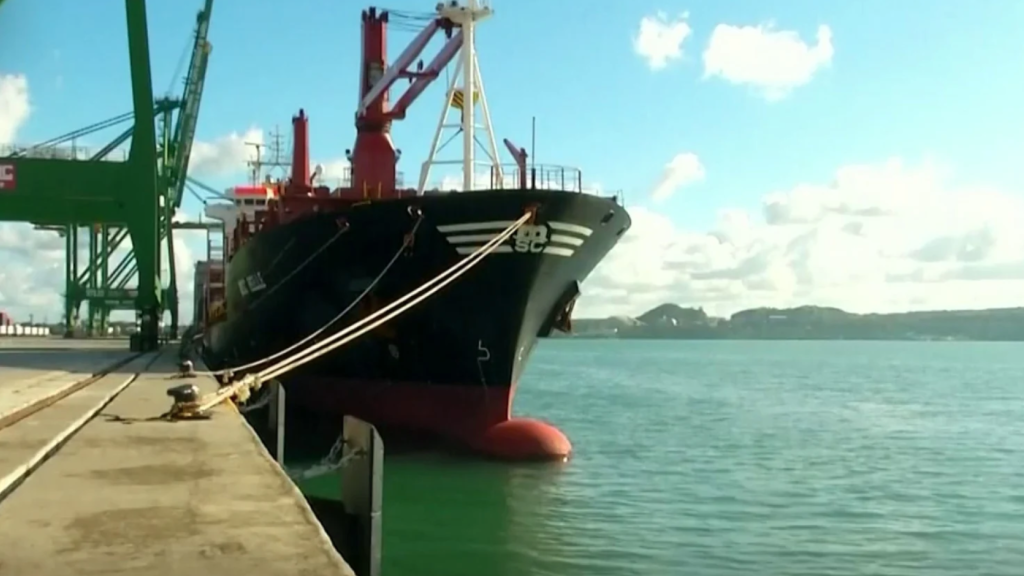
In this regard, the recent decision by the shipping companies Hapag-Lloyd and CMA CGM to suspend taking new bookings linked to Cuba is an alarming sign of the ripple effect that the new US sanctions are having on the Cuban economy and, above all, on the daily lives of millions of people who are already surviving in extremely precarious conditions.
The shippers’ move comes just weeks after Donald Trump signed an Executive Order on May 1 that significantly broadened the scope of sanctions against Cuba. The order also authorized reprisals against foreign companies or entities that maintain economic ties with sectors considered strategic for the Cuban state. Although the shipping companies have presented the suspension as a precautionary measure while they assess the potential legal and financial risks, various media reports cite industry sources who estimate that Hapag-Lloyd and CMA CGM together handle about 60% of container traffic to Cuba. Their suspension of service is likely to have drastic and immediate effects on supply chains. Furthermore, there is a possibility of a domino effect on other companies, which, fearing potential reprisals and fines, may decide to suspend their operations on the island.
Although US authorities often present these measures as tools that are aimed at the Cuban state apparatus, the reality is that in the final analysis they impact the civilian population directly. When two of the world’s largest shipping companies halt shipments to an island nation that is heavily dependent on imports, this immediately affects the supply of food, medicines, fuel, raw materials and other essential goods.
Cuba is currently experiencing one of the severest economic and social crises in its history. Senior UN officials have recently noted that shortages of electricity, fuel and medicines are pushing the healthcare system to its limits and affecting millions of people’s access to essential services. The organisation has pointed out that hospitals and clinics have had to suspend surgeries, vaccination programs and emergency services because they lacked basic resources. Furthermore, it warned that “the most vulnerable people — children, the elderly and pregnant women — will suffer the most” if the current situation continues.
At the same time, inflation has eroded families’ purchasing power, domestic production remains depressed, and shortages or exorbitant prices for basic goods have become a daily reality.
The problem lies not only in the direct sanctions imposed by the US, but also in the so-called “deterrent effect” or overcompliance, whereby foreign companies, banks, insurers and logistics operators, choose to end or limit their ties with Cuba to avoid possible reprisals, fines or future restrictions by the United States. The result is an economic isolation of Cuba that goes far beyond the formal provisions of the unilateral coercive measures.
In this specific case, the precautionary suspension of operations by these shipping companies could lead to higher transportation costs, delays in imports and difficulties in ensuring the stability of supplies. For Cuba, where a large proportion of food depends on imports, this will result in new inflationary pressures, shortages and even greater food insecurity. The most vulnerable families would, once again, be the hardest hit.
Such measures also deal a significant blow to Cuba’s emerging private sector, which relies on imports to sustain small businesses, services and supply chains. Many entrepreneurs use logistics intermediaries and international shipping companies to acquire food, spare parts, technological supplies, raw materials and essential goods, which they then sell or use in their economic activities. Rising transport costs, financial restrictions and the reluctance of foreign suppliers to do business with Cuba further reduce the capacity of this sector, which in recent years has acted as one of the main buffers against domestic shortages.
There is also a psychological and social impact that often goes unnoticed. Uncertainty over the arrival of basic goods raises collective anxiety, encourages hoarding and reinforces the perception of constant instability. In Cuba, large sections of the population spend a large part of their income solely on food. So it is likely that any disruption to supply chains will have an immediate impact on daily life.
Figures in the exile community and Cuban-American members of Congress often justify sanctions as “chemotherapy” needed to eliminate the “cancer.” However, this therapy has been applied for more than 60 years. It has failed to bring about a political transition in Cuba, but it has contributed to the material deterioration of people’s living conditions. They are the ones who are bearing the brunt of the sanctions.
It is legitimate to question the Cuban government’s internal policies, to push for structural reforms and to demand more freedom and economic efficiency. However, we also need to recognise that external coercive measures are having real human consequences on a society that has been battered by years of accumulated crisis.
These days the Cuban landscape is characterised by growing social fragility. Intensifying mechanisms that further hinder the island’s economic integration into international trade will only increase poverty, accelerate emigration and widen existing inequalities. No political strategy can be considered legitimate when its main consequences fall upon the civilian population.
Today we should remember what José Martí said:
The Americas must promote everything that brings peoples closer together and abhor everything that drives them apart. In this, as in all human problems, the future lies in peace’.