Oppose repression of mass uprising in Pakistan-administered Jammu Kashmir
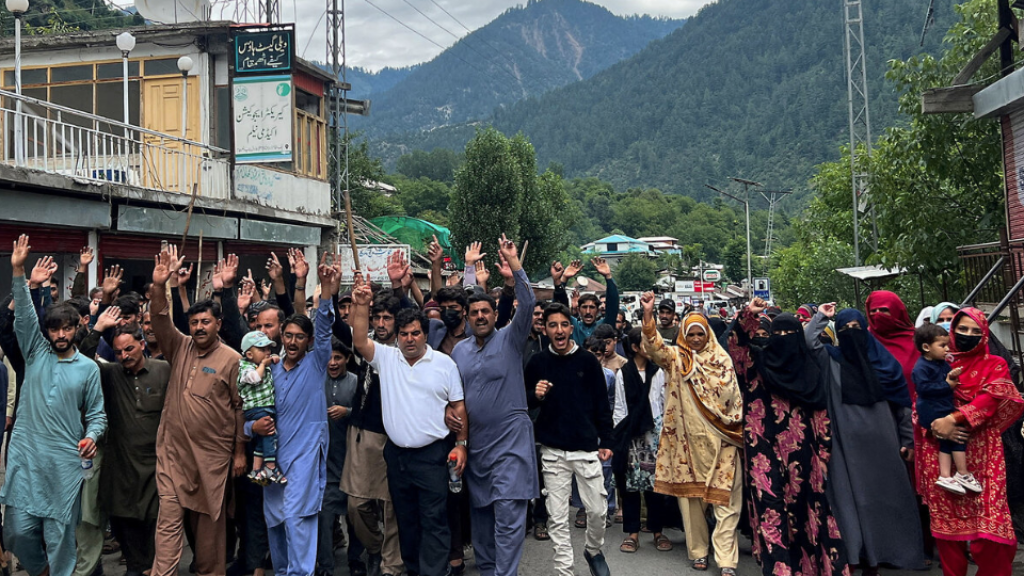
In one of the most brutal attacks on an unarmed rally, Pakistani rangers and police killed at least 18 Kashmiris, and left dozens injured, on July 28.
The direct firing by state forces on demonstrators was without any provocation. Participants of the Long March to Kashmir capital Muzafarabad were camping for over a month in the outskirts of Rawalakot, one of the main cities in Pakistani-controlled Jammu Kashmir.
Thousands joined the call of the Jammu Kashmir Joint Awami Action Committee (JAAC), a non-partisan civil society mass organisation who had led earlier mass campaigns for lowering electricity prices.
This time they were asking for election reforms to enable real representation for Kashmiris. They were demanding an end to the 12 seats for Muhajirs (migrants) Kashmiris settled in Pakistan. These seats were mainly a political gimmick used to form governments in Jammu Kashmir.
JAC was banned after lengthy negotiations with them by the state ministers that failed. The JAAC was deemed a terrorist organisation linked to India, and its main leaders as agents of India’s RAW [Research and Analysis Wing foreign intelligence agency]. Most of the main leaders were arrested. A curfew was imposed in Rawalakot, the main centre of resistance to state repression.
However, in one of the most glaring examples of mass awakening, the whole Kashmir was almost shut down on the call of JAAC. No shops opened and there was no internet or people in the streets. JAAC had become the real representative of Kashmiris.
The government wanted to go ahead with the scheduled July 27 general elections. However, a mass boycott of the whole process meant very small numbers of people voted.
The same day, JAAC announced its Long March to Muzafarabad, which was fired upon and attacked with tear gas.
One of the main characteristics of this mass movement for civil and political rights was the participation of women, who came in thousands every day to the sit-in outside Rawalkot for over a month. They brought food for participants and ensured the sit-in could continue.
Never has such a brave mass movement been witnessed in this region as the one currently unfolding in Pakistani-controlled Jammu Kashmir. More than 50 protesters have been killed by state forces since the movement started a month ago.
The Long March has started again from Rawlakot where, despite the bloodshed, participants were able to enter the city despite the security forces’ barriers.
Solidarity from international labour and civil society movements is urgently needed. Please condemn the deaths and repression by sending protest letters to Pakistan embassies. Please raise the issue wherever possible. The death of innocent Kashmiris should not go unheard.
The names of the July 28 martyrs are listed below.
1. Naeem Butt – Kotli, Pakistan-administered Jammu Kashmir
2. Usman Nazir – Rawalakot, Pakistan-administered Jammu Kashmir
3. Nisar Ahmed – Baloch, Pakistan-administered Jammu Kashmir
4. Kashif Yaqoob – Rawalakot, Pakistan-administered JammuKashmir
5. Sardar Fida Hussain – Tatrinote, Pakistan-administered Jammu Kashmir
6. Muzammil – Ali Sojal, Pakistan-administered JammuKashmir
7. Basit Shah – Hajira, Pakistan-administered Jammu Kashmir
8. Fahim Afzal – Chhota Gala, Rawalakot, Pakistan-administered Jammu Kashmir
9. Kamran Mushtaq – Panakha, S/o Mushtaq, Hajira, Pakistan-administered Jammu Kashmir
10. Zargham Khalil – Darek, Rawalakot, Pakistan-administered Jammu Kashmir
11. Saqib Hanif – Reerh Bann, Rawalakot, Pakistan-administered Jammu Kashmir
12. Saqib Ishaq – Numb, Gawara, Palandri, Pakistan-administered Jammu Kashmir
13. Areej Asghar – Tatta Pani, Pakistan-administered Jammu Kashmir
14. Usman Gul – Darek Dhok, Rawalakot, Pakistan-administered Jammu Kashmir
15. Jaffar Pehlwan – Tatrinote, Pakistan-administered Jammu Kashmir
16. Nisar Shaheen – Pakho, Narbai, Pakistan-administered Jammu Kashmir
17. Ali Hussain – Khari Sharif, Mirpur, Pakistan-administered Jammu Kashmir
18. Khawaja Abrar Latif Dar – Khurshidabad, Haveli, Pakistan-administered Jammu Kashmir