France
France: Sarkozy rejected in regional elections
[*Note: Check chart on right for final figures.]
By the executive committee of the New Anti-Capitalist Party
March 14, 2010 -- Paris -- Two major lessons emerge from the first round of the regional elections.
France: New Anti-Capitalist Party defends democratic right to wear hijab

By Olivier Besancenot, translation by Yoshie Furuhashi (MRZine)
February 3, 2010 -- Le Figaro caricatured my words regarding the candidacy of Ilham Moussaïd, who is on our list in the Provence-Alpes-Côte d'Azur regional elections. After a serious and complex debate, the Vaucluse chapter of the New Anti-Capitalist Party (NPA) made a choice to include on its feminist, anti-capitalist and internationalist lists an NPA member who believes in wearing a headscarf on account of her religious convictions.
[See French capitalist press report below.]
Haiti: A history of struggle and exploitation
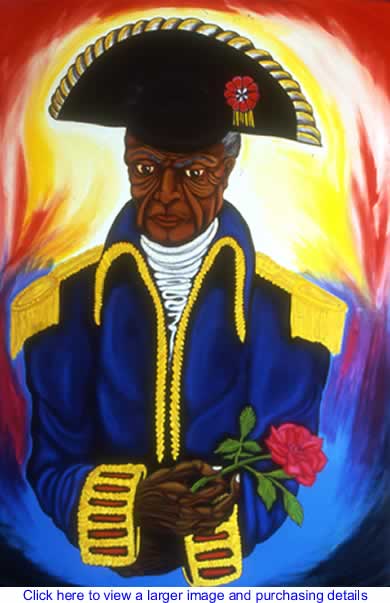
By Amanda Zivcic
January 23, 2010 -- Since the earthquake struck Haiti on January 12, 2010, there has been a global outpouring of support. Many people, horrified by the scenes of sheer devastation, the astronomical death toll and the struggle of survivors to gain access to medicines, food and shelter, are left wondering: why so many?
The oft-repeated tag of Haiti being “the poorest nation in the Western hemisphere” is true but this did not just happen. It is the result of a history of colonialism, slavery, imperialism, foreign military intervention, foreign-imposed dictatorships and unjust debt.
The Caribbean nation’s indigenous people were all but wiped out by 1520 due to the disease and exploitation that came with the arrival of the Spaniards in 1492. After France and Spain divided the island of Hispaniola into Haiti and the Dominican Republic, French and Spanish settlers arrived.
Haiti's `odious debt' must be completely and unconditionally cancelled!
By Eric Toussaint and Sophie Perchellet,[1]Translated by Francesca Denley in collaboration with
Marie Lagatta
Haiti was partially destroyed by an earthquake measuring 7 on the Richter scale. We have all shed tears and the media, as it bombards us with apocalyptic images, reports on generous financial pledges various states have made. Haiti needs to be rebuilt. But most mainstream comments fail to look beyond the terrible earthquake. While we are told that Haiti is one of the poorest countries in the world, no explanations of why that is so are provided. We are led to believe that poverty just happened, that it is a situation beyond remedy, that Haiti is an "accursed land”.
Daniel Bensaïd: militant, intellectual, friend

By François Sabado
International Viewpoint -- Daniel Bensaïd left us today, Tuesday, January 12, 2010. Born in 1946 he gave his life to the cause of defending revolutionary Marxist ideas right to the end. He was one of the founders of the Jeunesse Communiste Révolutionnaire (JCR -- Revolutionary Communist Youth) and the Ligue Communiste Révolutionnaire (LCR -- Revolutionary Communist League, French section of the Fourth International).
A leader of the May '68 movement, he was one of those people with a very sure feeling for political initiative. He had been one of the leaders of the 22nd March Movement. Grasping the dynamic of social movements, in particular the link between the student movement and workers’ general strike, he was also one of those who understood the necessity of building a political organisation, of accumulating the forces for building a revolutionary party.
The quality of Daniel’s intelligence was to combine theory and practice, intuition and political understanding, ideas and organisation. He could, at the same time, lead a stewarding force and write a theoretical text.
Science and empire in the Pacific

Mai (aka Omai), the first Pacific Islander to visit Europe, with Joseph Banks in 1774. Painting by William Parry.
By Barry Healy
More than 240 years ago, on April 13, 1769, the peace of Tahiti was interrupted by the visit of Captain James Cook, supposedly observing the transit of Venus across the Sun, but really following secret orders to investigate the Pacific Ocean and its islands for the benefit of British colonialism.
Mainstream Australian history raises James Cook to a pinnacle because he established a white, British dominion on the Australian continent. However, at the time his fame was eclipsed because on board his ship was gentleman scientist Joseph Banks with a posse of staff.
Banks’ star outshone Cook’s because his work acquired the botanical treasures of Oceania for the British Empire, paving the way for Britain to dominate vital areas of science for its own benefit.
Positive developments in the European left

By Ian Angus

Kanaky: Interview with jailed pro-independence trade union leader Gérard Jodar

This interview with Gérard Jodar, president of the pro-independence trade union federation USTKE (Union of Kanak and Exploited Workers), was published in Libération, issue #14790, on August 17 2009. He was interviewed by Matthieu Ecoiffier. Translated into English for Links International Journal of Socialist Renewal by Annolies Truman.
Sentenced at the end of June 2009 to a year in prison for ``hindering the circulation of an aircraft'' [click HERE for background information to the struggle], Gérard Jodar is one of very few trade unionists to be imprisoned in France –- and his lawyers’ application for a lesser sentence has just been rejected by the appeals judge of the Noumea Supreme Court.
Gérard Jodar explains the conditions of his detention as well as the situation on the ``Pebble’’ [the nickname for New Caledonia, the colonial name for the South Pacific territory of Kanaky, which remains a colonial possession of France -- translator].

Australia: Damage on many fronts in false charge of slavery in Western Sahara

A documentary on Western Sahara refugees marks a low point, Kamal Fa