Trump, Europe and the international neo-fascist movement: From ideological support to political coordination
First published at CADTM.
The National Security Strategy document published in December 2025 (NSS 2025) is a key text in this regard. Under the pretext of defending “Western civilisation” and “European identity”, the Trump administration explicitly identifies its true “allies” in Europe — not the EU member states or their institutions, but rather the nationalist, authoritarian, and reactionary political forces that Washington categorises as “patriotic European parties”. This stance is coupled with conspiratorial, racist, and demographic rhetoric — reflecting the theories of “great replacement” and “civilisational war” — alongside direct, overt, and sometimes dramatic political support for these groups.
This article analyses a strategic shift, its ideological foundations, and its concrete implications. It demonstrates how Trump and his entourage support the electoral rise of the far right in Europe, aiming to reshape the European political order, weaken the European Union, and promote an international neo-Fascist bloc centred on Trumpism and the interests of large US private corporations. Éric Toussaint illustrates the extent to which the European far right has, thus far, expressed sympathy for and sought to emulate Trumpism. He highlights the coherence and dangers of this global political offensive by examining the NSS 2025, the German case, the institutional rise of the far right within the EU, and transnational networks such as CPAC and Foro Madrid.
From Trump’s first term in 2017 to his second in 2025, a significant change concerning Europe
In 2017, in the National Security Strategy document, D. Trump was positive about Europe:
“The United States remains firmly committed to our European allies and partners. The NATO alliance of free and sovereign states is one of our great advantages over our competitors, and the United States remains committed to Article V of the Washington Treaty. European allies and partners increase our strategic reach and provide access to forward basing and overflight rights for global operations. Together we confront shared threats. European nations are contributing thousands of troops to help fight jihadist terrorists in Afghanistan, stabilise Iraq, and fight terrorist organisations across Africa and the greater Middle East.” NSS 2017, p. 48
In the section on Europe, there was no criticism of European governments or the European Commission. The contrast between 2017 and 2025 is enormous. In the National Security Strategy document published in early December 2025 (NSS 2025), Trump took a very explicit turn.
Trump explicitly interferes in European internal affairs and unreservedly supports far-right parties and governments. He harshly criticises the European Commission for undermining states’ sovereignty. Faced with Trump’s attacks, the European Commission has adopted a docile vassal attitude:
- On the tariffs imposed by Trump,
- In the context of a promise to increase imports of liquefied gas and other fossil fuels from the United States,
- By agreeing to significantly increase military spending and to purchase US weapons,
- In collusion with Netanyahu’s neo-fascist government and the State of Israel, which Trump has unwaveringly supported in its pursuit of genocide against the Palestinian people.
Trump’s claims regarding Greenland confirm the major shift in his position towards EU countries. The submissive stance of European leaders on various issues has emboldened Trump to escalate his demands. Although European leaders are rhetorically attempting to resist on matters such as Greenland and a few other topics, they remain largely on the defensive.
The aspiration to claim Greenland and its natural resources clearly aligns with the NSS 2025’s focus on the Western Hemisphere, which, for Trump, spans from Canada and Greenland in the north to Patagonia in the south. This ambition reflects his unabashed desire to exert complete dominance over the region. It also correlates with military actions against Venezuela and Trump’s intention to gain total control of that country’s oil resources, along with threats directed at the Panama Canal, Canada, Cuba, and Colombia.
Let us revisit the national security document, which notably did not specify Trump’s intentions regarding the annexation or purchase of Greenland.
Concerning Europe, Trump’s NSS 2025 document states:
“We want to support our allies in preserving the freedom and security of Europe, while restoring Europe’s civilisational self-confidence and Western identity;” NSS 2025, p. 5
We must be clear about what the Trump administration means when it refers to supporting “our allies”. The term “allies” does not denote the countries of Europe as a whole. Instead, it specifically refers to far-right or neofascist parties within Europe, which Trump describes as “patriotic European parties”. According to the official document from Donald Trump’s administration, these “patriotic European parties” are reportedly being suppressed by European authorities, as well as by the often minority governments of various European nations — they are certainly thinking of the governments in France and Spain, to give just two examples.
Washington’s backing of far-right and neo-fascist parties in Europe is unmistakably illustrated in the following sentence:
“America encourages its political allies in Europe to promote this revival of spirit, and the growing influence of patriotic European parties indeed gives cause for great optimism.” NSS 2025, p. 26
Let us add that Trump, as we have already shown, supports the racist conspiracy theory of the great replacement, claiming that some European countries will no longer be European in the future as a result of migration flows. In the United States, this idea is known as the theory of “white genocide”.1 Steve Bannon, who was one of the main ideological architects of Trumpism, particularly in its nationalist, authoritarian and far-right dimensions, invokes “civilisational warfare”, the “destruction of the West”, “mass immigration as a political weapon” and denounces the “globalist elites who betray the people”. All these elements can be found in Trump’s document when he refers to Europe and asserts that Europe’s economic decline:2
“But this economic decline is eclipsed by the real and more stark prospect of civilisational erasure. The larger issues facing Europe include activities of the European Union and other transnational bodies that undermine political liberty and sovereignty migration policies that are transforming the continent and creating strife, censorship of free speech and suppression of political opposition (Trump and his administration refer to policies restricting the actions of far-right parties and their racist or anti-immigrant propaganda, note by Éric Toussaint), cratering birth rates, and loss of national identities and self-confidence.” NSS 2025, p. 25
The conspiracy theory of the great replacement also appears transparently in this sentence:
“Over the long term, it is more than plausible that within a few decades at the latest, certain NATO members will become majority non-European." NSS 2025, p. 27
Germany: a clear example of Trump and his administration’s support for the neo-fascist far right
During the German election campaign in early 2025, Donald Trump directly supported the neo-fascist AfD (Alternative für Deutschland, Alternative for Germany) party through his adviser Elon Musk and his vice-president J.D. Vance. These were the early federal elections (Bundestagswahl) in Germany, which took place on Sunday, 23 February 2025. The interference and support of these American figures manifested itself mainly as follows: In late 2024 and early 2025, Elon Musk publicly and explicitly expressed his support for the AfD on his social network, X (formerly Twitter), by attacking Social Democratic Chancellor Olaf Scholz and declaring that “only the AfD can save Germany.” He also organised a live discussion with AfD leader Alice Weidel in January 2025. In addition, in mid-February 2025, J.D. Vance spoke at the Munich Security Conference (held from 14 to 16 February 2025), urging traditional German parties to end the “cordon sanitaire” (firewall) against the AfD. The statement was widely perceived by the German government as direct interference in the ongoing election campaign.
It should also be remembered that on January 20, 2025, in the midst of the German election campaign, during Donald Trump’s inauguration, Elon Musk, from the stage where he was giving a speech, made a gesture in which he struck his heart before extending his right arm, palm down, and fingers clenched — a movement that was widely interpreted by many observers, historians, and the media as resembling the Nazi salute or the Roman fascist salute. Many saw it as a coded message from Musk, as Trump’s adviser, to far-right communities, given Musk’s support for the AfD in Germany.
The AfD’s neo-fascist orientation is clear: it openly advocates the mass expulsion of migrants from Germany. The AfD’s sympathy for Nazism is so apparent that Marine Le Pen’s National Rally decided to expel the AfD from the Identity and Democracy group it led in the European Parliament between 2019 and 2024.
The rise of the far right in Europe and its participation in power
It is worth remembering that the far right has made significant electoral gains in Europe over the last 15 years. With a few rare exceptions, all far-right and neo-fascist parties in Europe express sympathy for Trump’s positions. Many of their leaders aspire to align themselves with Trump and emulate his communication style.
The far right is in government in several countries: Italy, Hungary, Belgium (the prime minister is from the NVA), Slovakia, the Czech Republic, Finland, Croatia, not to mention Sweden (where the far right, without being part of the minority government, supports it).
The far right has succeeded in becoming the leading political force in Italy (Brothers of Italy), France (RN), Hungary (Fidesz-Hungarian Civic Union) and Austria (FPÖ). In Flanders (Belgium), Vlaams Belang (neo-fascist) was the party that received the most votes in the European elections in June 2024. It beat the Flemish far-right party NVA. In the Netherlands, Geert Wilders’ PVV (Partij voor de Vrijheid - Freedom Party), which had become the leading party,3 lost ground in the October 2025 elections. It became the second largest party behind D66, which had campaigned against the PVV’s extremism.
The Presidency of the European Commission, led by German conservative Ursula von der Leyen, reached an agreement with the far-right parliamentary group headed by Giorgia Meloni of Italy. This agreement enabled Meloni’s group to secure a position as Executive Vice-President of the European Commission4 and three committee chairmanships.5 This development is particularly significant because the committees obtained by Meloni’s group include agriculture, budget, and petitions. Consequently, petitions from the European populace, including attempts to initiate a referendum, will be managed by a committee chaired by the far right.
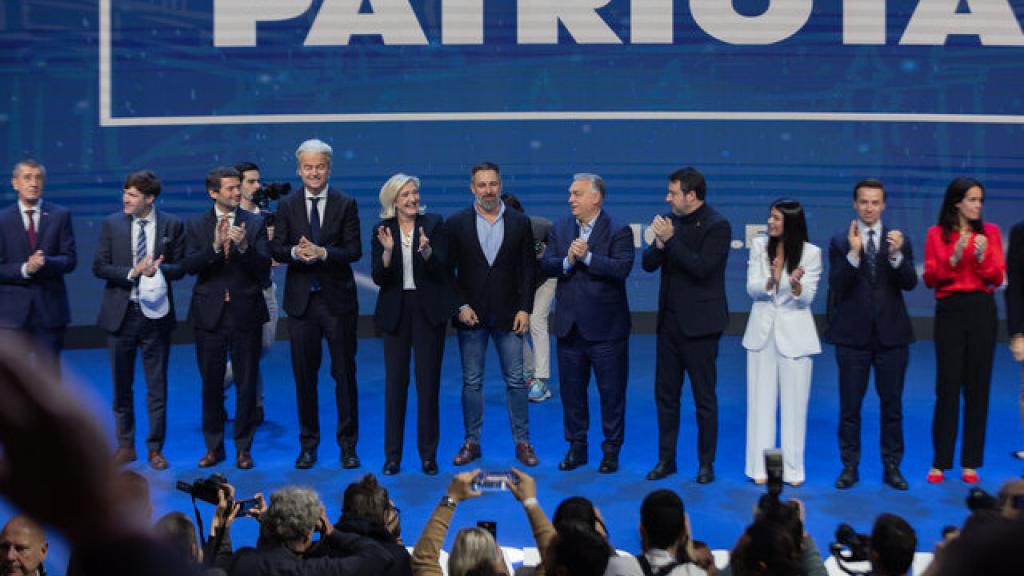
There are three far-right parliamentary groups in the European Parliament: the European Conservatives and Reformists (ECR), Meloni’s group, which comprises 79 MEPs,6 the Patriots for Europe group, led by Marine Le Pen and Viktor Orbán, with 86 MEPs;7 and the Europe of Sovereign Nations group formed around Germany’s AfD, which has 27 MEPs.8 Should these three groups unite, the far right would emerge as the largest faction in the European Parliament, boasting 192 MEPs — five more than the largest current group, the increasingly right-wing conservative European People’s Party, which has 187 members.9 The parliamentary group of social democratic and socialist parties has 136 MEPs. The RENEW Group, which includes Emmanuel Macron’s party and Georges-Louis Bouchez’s French-speaking Belgian far-right MR party, has only 75 MEPs, having lost 23 seats in 2024 compared to the 2019 elections, mainly to the far right. The European Green Party has 53 MEPs, having lost 17 seats in 2024 compared to 2019. Following this is The Left, with 46 MEPs (an improvement on the 37 MEPs elected in 2019).
Conclusion: Far-right and neo-fascist parties are making notable gains in the European Parliament, within European institutions, and in the governments of a significant number of EU member states. With the exception of the issue concerning Greenland, they exhibit strong sympathy for the neo-fascist and imperialist orientations of Donald Trump and other far-right or neo-fascist leaders worldwide. The result includes particular alignment with the Netanyahu government in Israel, the Javier Milei administration in Argentina, the newly elected Chilean president, José Antonio Kast, and the former president of Brazil, Jair Bolsonaro.
In the following list, we will describe the main European far-right and neo-fascist forces and their affinity with Trump.
This is a non-exhaustive list of far-right or neo-fascist parties in Europe that enjoy the sympathy of the Trump administration and express their affinity with him.
1. Alternative für Deutschland (AfD) in Germany. AfD won 20.8% of the vote in the federal elections on 23 February 2025. It is the second largest party in terms of votes. The AfD has increased its contacts and visits to the United States. As mentioned above, it received direct support from Elon Musk, when he was an adviser to Trump, and from J.D. Vance, Vice-President of the United States, during the January-February 2025 election campaign. Within the European Parliament, the AfD leads one of three far-right parliamentary groups. The group is called Europe of Sovereign Nations and has 27 MEPs (15 of whom are from the AfD). Representatives and figures from the AfD, including Christine Anderson (former MEP) and other members of the leadership, were invited to and participated in the Conservative Political Action Conference (CPAC) in the United States with Trump, along with a significant portion of the European and Latin American far right, notably in the 2023 and 2024 editions. To avoid clutter, we will return to the neo-fascist far right’s structures and international meetings at the end of this list. Recently, Euronews reported: “Bavaria’s AfD suggests a police unit similar to the US immigration agency ICE for tracking asylum seekers and deportations, amid criticism of ICE’s harsh tactics and recent deadly incidents.” (Source: Euronews, published 26 January 2026).
2. Rassemblement National (RN) in France. The RN has held 142 seats in the National Assembly since the June 2024 legislative elections. The RN and its allies won 33% of the vote in the first round of the 2024 parliamentary elections. Jordan Bardella, the likely future candidate for the French presidency in 2027, congratulated Trump after publishing the NSS 2025 in December 2025. He distanced himself from Trump on 20 January 2026 with regard to Greenland. We await confirmation of this distancing in the coming weeks. Jordan Bardella chairs Patriots for Europe, the largest far-right and neo-fascist group in the European Parliament, which has 86 MEPs, 30 of whom are from the RN.
3. Fidesz in Hungary. Fidesz is the dominant party in Hungary, with a significant majority in Parliament following its victory in 2022, and it governs with a supermajority. Viktor Orbán, the party’s leader, aligns ideologically with Trump regarding anti-migration policies, opposition to diversity, equality, and inclusion rights, as well as criticism of the European Union. Recent bilateral meetings have taken place in 2025. Orbán is also one of the founding fathers of “Patriots for Europe,” an organisation chaired by Jordan Bardella. Fidesz currently has 11 MEPs. It is important to note that until March 2021, Fidesz MEPs were part of the European People’s Party group, although tensions had been escalating since 2019.
4. Vox in Spain. Vox fluctuates between 10 and 12% of the vote. It has 33 members in the Spanish parliament and 6 in the European Parliament. Vox has clearly expressed its admiration for Trump’s political style and is increasing its meetings with Trump’s envoys in Europe and Latin America. In 2024, Vox left Meloni’s ECR group and joined the Patriots for Europe group chaired by Bardella as a sign of its radicalisation towards even more neo-fascist positions. In January 2026, Vox enthusiastically supported the US military aggression against Venezuela. Vox has so far remained silent on Trump and Greenland.
5. Fratelli d’Italia (Brothers of Italy, FdI) in Italy. FdI is the majority party in the governing coalition, having secured 26% of the vote in the 2022 elections and 29% in the 2024 European elections. Giorgia Meloni has developed open ties with Donald Trump, which include a visit to Mar-a-Lago and her attendance at the presidential inauguration in January 2025. Additionally, Meloni’s party leads the European Conservatives and Reformists (ECR) group in the European Parliament, which comprises 79 Members of the European Parliament (MEPs), 24 of whom are affiliated with her party.
6. La Lega (The League) in Italy. Led by Matteo Salvini, it is part of the Italian government headed by Giorgia Meloni. Matteo Salvini is Deputy Prime Minister. The Lega is part of the Patriots for Europe group, to which it contributes eight MEPs.
7. Law and Justice (PiS) in Poland. This is a large, ultra-conservative, ultra-nationalist, patriarchal party. The PiS, currently in opposition, shares some of the nationalist rhetoric and has often praised certain positions taken by the Trump administration on sovereignty and security. It is the only party on this list to express reservations about Trump’s policy towards Russia, which the PiS considers too conciliatory. The PiS is the second largest party in the ECR group led by Meloni, with 20 MEPs.
8. The Freedom Party (FPÖ) in Austria. It has scored highly in recent elections (the FPÖ reached 29% in 2024). Its leaders have regularly publicly congratulated Trump since 2016 and adopted the same positions on immigration. The FPÖ contributes six MEPs to the group led by Bardella and Orban.
9. Vlaams Belang (Flemish Interest) in Belgium (Flanders). The neo-fascist VB emerged victorious in the June 2024 European elections, narrowly surpassing Prime Minister Bart de Wever’s far-right N-VA. Vlaams Belang is part of Patriots for Europe, the group led by Jordan Bardella and Viktor Orban. Vlaams Belang has regularly praised Trump since 2016 and maintains a racist anti-immigration discourse similar to MAGA themes. Vlaams Belang contributes three MEPs to the group led by Bardella and Orban.
10. The Nieuw-Vlaamse Alliantie (New Flemish Alliance, N-VA) in Belgium. It is a member of Meloni’s ECR group in the European Parliament. The N-VA is relatively discreet in its support for Trump, given that it leads the government of the Kingdom of Belgium, but Theo Francken, one of its most prominent leaders and Minister of Defence, has expressed his sympathy and support for Donald Trump more openly and regularly, from the first administration of 2017-2021, during the 2024 elections, and up to the present day. As Minister of Defence, he is fully aligned with US requirements, particularly in terms of purchasing US-made weapons, such as F35 fighter bombers. The N-VA has three MEPs in the ECR group led by Giorgia Meloni.
11. Partij voor de Vrijheid (Party for Freedom, PVV) in the Netherlands. Led by Geert Wilders. The party achieved significant electoral success until 2023 and participated in the government; however, it experienced a loss of votes in 2025 and subsequently left the government. Geert Wilders likens himself to the “Dutch Trump.” The PVV contributes six Members of the European Parliament (MEPs) to the group led by Bardella and Orbán. Additionally, the PVV supported Washington’s military actions against Venezuela.
12. Sweden Democrats (Sverigedemokraterna in Swedish). They broke the 4% barrier in 2010, and their support has continued to grow, reaching 20.5% of the vote in the 2022 elections, making them the second largest party by votes. The SD plays a significant role in the restructuring of the Swedish right wing. Although they remain outside the government, in 2022 they signed a pact with the three right-wing parties that form the government. While not part of the government, the SD is essential for the survival of the minority coalition and wields unprecedented ideological and political influence over the country’s leadership, especially regarding immigration and repression. The SD has adopted an anti-immigration and sovereigntist discourse that closely aligns with Trumpian themes. Additionally, the three SD Members of the European Parliament (MEPs) are affiliated with Meloni’s European Conservatives and Reformists (ECR) group in the European Parliament.
13. In the Czech Republic, the three parties that have formed the government since the end of 2025 are close to Trump’s positions. These are ANO (Action of Dissatisfied Citizens, 34.5% of the vote in the 2025 elections), led by billionaire Andrej Babiš, who became prime minister; Freedom and Direct Democracy (SPD — Svoboda a přímá demokracie, 7.8% of the vote in 2025); and the AUTO party (Motorists for Themselves - Motoristé sobě in Czech, 6.8% in 2025). ANO (7 MEPs) and AUTO (2 MEPs) are part of the European parliamentary group Patriots for Europe, led by Jordan Bardella and Viktor Orban, respectively. The neo-fascist Freedom and Direct Democracy party supports the Europe of Sovereign Nations group led by Germany’s AfD but has no MEPs.
14. In Romania, the Alliance for the Union of Romanians (AUR, Alianța pentru Unirea Românilor) emerged as a significant force in the Romanian Parliament after the 2025 legislative and presidential elections, in which its candidate came out on top in the first round before being defeated in the second round by a pro-EU candidate. The main leader, often described as “pro-Trump” in Romania, is George Simion. International media outlets such as The Guardian describe him as an admirer of Donald Trump who transposes elements of the MAGA style or movement into the Romanian context. Simion is considered a “natural ally of Trump”. The AUR’s five MEPs are part of Meloni’s ECR group in the European Parliament
15. CHEGA in Portugal. Chega has experienced rapid growth since its establishment in 2019, increasing its vote share from 1.3% in that year to approximately 22.6% in the early parliamentary elections held on 18 May 2025, during which it secured 60 out of 230 seats. This achievement positions Chega as the second largest political force in the Portuguese Parliament and the primary opposition party, surpassing the Socialist Party. Following the 2024 European elections, Chega’s two Members of the European Parliament (MEPs) have joined the Patriots for Europe group in the European Parliament, which is led by J. Bardella and V. Orban. In the first round of the Portuguese presidential election on 18 January 2026, André Ventura, the leader of the far-right Chega party, finished in second place with around 23.5% of the vote, trailing behind Socialist candidate António José Seguro, who received 31%.
The main meeting places for Trump supporters and the European and Latin American neo-fascist far right
Beyond ideological support and public statements, the European far right is now integrated into transnational spaces for political coordination directly linked to Trumpism. The Conservative Political Action Conference (CPAC), a major annual gathering of the US far right, serves as the main meeting place and has gradually become an international gathering. Since the early 2020s, leaders and executives from the AfD, Vox, the National Rally, Fidesz, Fratelli d’Italia, Chega, Vlaams Belang and the Romanian AUR have been participating regularly, alongside Donald Trump, his associates (Steve Bannon, J.D. Vance, Mike Flynn) and Latin American far-right leaders. CPAC functions as a global ideological platform where the central themes of Trumpism are disseminated and harmonised: civilisational warfare, rejection of multilateralism, hostility to the EU, obsession with migration, attacks on women’s and minority rights, climate scepticism and criminalisation of the left and social movements.
This internationalisation has been further strengthened by the active participation of Javier Milei, President of Argentina; Jair Bolsonaro and his networks; and José Antonio Kast, leader of the Chilean far right and recently elected President of Chile. Trump systematically promotes these Latin American figures as models of “resistance to socialism” and the restoration of authoritarian order. The CPAC meetings, organised outside the United States (Brazil, Mexico, Argentina, and Hungary), confirm the existence of a transatlantic and transcontinental axis linking Washington, certain European capitals, and reactionary Latin America. These are not just symbolic exchanges; these spaces allow the circulation of funds, electoral strategies, digital communication techniques, and methods of social polarisation inspired by the MAGA movement.
Alongside CPAC, Spain’s Vox party plays a central role in shaping this international network, particularly through the Foro Madrid, which was launched in 2020. Marketed as a “patriotic” alternative to progressive international forums, the Foro Madrid unites far-right parties and leaders from both Europe and Latin America, including Milei, Bolsonaro, and Kast, as well as representatives from the RN, Chega, Fratelli d’Italia, and various Central European parties. The initiatives of Foro Madrid and Vox act as a bridge between Trumpism, the European far-right, and the radical right in Latin America, promoting a discourse that is overtly opposed to the left, feminism, environmentalism, human rights, and any form of popular sovereignty that does not align with authoritarianism. While it represents a coalition of national forces, the far right emerges as a coherent international ideological bloc, with Donald Trump serving as its primary political, media, and symbolic figure.
Trump in Davos in January 2026
On 21 January 2026, a month and a half after the publication of the NSS 2025 and almost a year to the day after the start of his term of office, Trump made white supremacist and racist remarks in Davos before an audience of billionaires and heads of state and government who applauded him. Here are some excerpts:
"Listen, I come from Europe, specifically Scotland and Germany. My mother is 100% Scottish and my father is 100% German. We believe deeply in the ties that bind us to Europe as a civilisation... The explosion of prosperity, and conclusion, and progress that built the West, did not come from our tax codes, it ultimately came from our very special culture. This is the precious inheritance that America and Europe have in common. We share it. We share it. We have to keep it strong. We have to become stronger, more successful and more prosperous than ever. We have to defend that culture and rediscover the spirit that lifted the West from the depths of the Dark Ages to the pinnacle of human achievement. (Source: WEF. Part of the quote can also be found at: Whitehouse, 21 January 2026)
He reiterated his racist insults towards Ilhan Omar, a member of the US Congress of Somali descent, elected from Minnesota. His remarks targeted Somalia as a nation, the entire Somali community in the United States, and, more broadly, African civilisations:
“And then we have this fake congressperson, who they just reported is worth £30 million. Can you believe this? Ilhan Omar talking about the Constitution that provides me ... she comes from a country that’s not a country, and she’s telling us how to run America. She’s not going to get away with it much longer, let me tell you ...” (Source: MinnPost, “D.C. Memo: Trump, at the Davos forum, takes more shots at Minnesota, Somalis” and WEF)“The situation in Minnesota reminds us that the West cannot mass import foreign cultures, which have failed to ever build a successful society of their own. I mean, we’re taking people from Somalia, and Somalia is a failed … it’s not a nation, got no government, got no police, got no mili… got no nothing.” (Source: WEF)
Trump not only resorts to insults; he also employs flattery towards his supporters present in Davos:
“Many of you in this room are true pioneers. You’re truly brilliant, brilliant people. Just your ability to get a ticket is brilliant, because you have about 50 people for every seat... But you’re in this room, and some of you are the greatest leaders anywhere in the world. You are the greatest minds anywhere in the world. And the future is unlimited. And to a large part because of you, we have to protect you and we have to cherish you.” (Source: WEF)
Conclusion-summary
Donald Trump’s second term extends beyond merely challenging the European Union; he is actively organising ideological, political, and operational support for far-right and neo-fascist movements in Europe. The NSS-2025, alongside instances of electoral interference and public backing for parties such as the AfD, RN, Fidesz, and Vox, as well as the establishment of transnational networks like CPAC and Foro Madrid, demonstrates a coherent strategy aimed at undermining the EU and fostering an authoritarian international bloc centred on Trumpism.
Trump’s claims regarding Greenland highlight a significant contradiction. By openly questioning the sovereignty of a territory that belongs to a European NATO member state, he exposes the deeply imperialistic and aggressive nature of his agenda. This stance is likely to foster enduring tensions with European governments and, in the long run, could undermine relations between Trump and the far-right parties in Europe. These parties find themselves in a dilemma, torn between their ideological alignment with Trumpism and their professed commitment to national sovereignty. This contradiction could serve as a potential breaking point for the neo-fascist international that is currently taking shape.
- 1
Moreover, Trump does not hesitate to accuse the South African government of committing genocide against white people.
- 2
Economist Gabriel Zucman has put into perspective Trump’s deliberately negative assessment of Europe’s economic situation compared to that of the United States. Read in open source: “The myth of European decline” https://gabrielzucman.substack.com/p/le-mythe-du-decrochage-europeen published on 15 December 2025.
- 3
In 2023, the far-right PVV had grown significantly, from 17 seats in 2021 to 37 in 2023. The party experienced a severe correction in 2025, dropping to 26 seats after losing about 11. In the elections, the centre-right D66 party enjoyed electoral success, enabling it to overtake the PVV by around 30,000 votes. D66 obtained around 1,790,000 votes, compared to around 1,760,000 for the PVV.
- 4
The ECR group secured the appointment of one of its members, Raffaele Fitto (Italy) from Meloni’s party (Fratelli di Italia), as Executive Vice-President of the European Commission (mandate of the “von der Leyen II” Commission, which took office on1December 2024) for the “Cohesion and Reforms” portfolio.
- 5
Johan Van Overtveldt (member of Meloni’s ECR group in the European Parliament and of the N-VA party in Belgium) was elected chair of the “Budget” committee (BUDG). Veronika Vrecionová (ECR, Czech Republic) was elected chair of the “Agriculture and Rural Development” committee (AGRI). Bogdan Rzońca (ECR, Poland) was elected chair of the Parliament’s Petitions Committee (PETI).
- 6
Since the June 2024 elections, the ECR has gained one additional member, bringing its total to 79 MEPs as of January 2026.
- 7
Marine Le Pen and Victor Orban’s Patriots for Europe group also gained two additional seats between the June 2024 and October 2025 elections. It has 86 members in its group in the European Parliament.
- 8
The Europe of Sovereign Nations group formed around Germany’s AFD has grown from 25 to 27 MEPs between June 2024 and the time of writing this article.
- 9
According to research carried out on the EP website on 25 January 2026, the combined number of seats held by the three far-right groups would reach 192, five more than the European People’s Party group, which has 187.