‘Workers in China have never truly fallen silent’: An interview with Workers’ Labor Bulletin activists
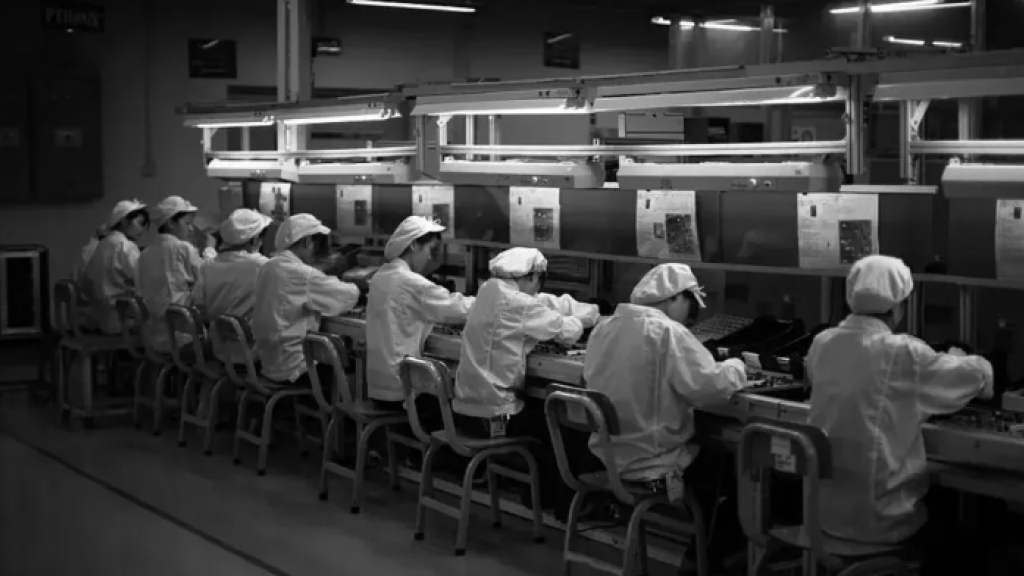
The Workers’ Labor Bulletin: Focusing on Today’s Working People (工劳快讯:关注当代打工人) seeks to highlight how workers keep Chinese society running, while pointing out why they remain the biggest victims of social injustice. Amid what they describe as a powerless situation, where workers remain “voiceless and invisible”, WLB seeks to bring workers’ stories to light, so that they can better understand each other's plight and unite across professions, genders, and ethnicities.
In the following interview, WLB members respond to questions from Serhii Shlyapnikov for LINKS International Journal of Socialist Renewal, addressing their work and the situation of China’s labour force today.
Could you explain the aims and tasks of Workers’ Labor Bulletin?
WLB was created in 2022. At the start, our aim was quite simple: to gather various forms of information related to Chinese workers, including news reports, articles and more. Later, we began editing this scattered content into a bi-weekly newsletter. After that, we started writing our own articles and conducting interviews.1
How did this project come about? Why did you decide to create a project about workers?
It was born out of a sense of helplessness. In China, any activism directly related to workers faces heavy restrictions and offline communities focusing on labour issues have been forcibly disbanded, one after another. So, we turned towards online-based approaches.
As for why we focus on workers, it is because we see this as our responsibility. In this highly developed capitalist world, Chinese workers and the labour they contribute sustain a significant part of the global circulation of information and goods.
Yet despite the high degree of material development and rapid economic growth, workers’ living conditions have not improved proportionately, and only a very small portion of the value they create returns to them. This is deeply unfair.
Furthermore, beyond the blue-collar frontline workers people usually notice, many young white-collar workers in China are also trapped in a situation where they cannot pursue the kind of life they aspire to. They either fall into passive unemployment or drift among various companies accumulating frustration.
We needed to find a path that could allow workers to truly unite, reclaim their dignity, and make China and the world understand that it is labour that creates the world, and labourers are capable of imagining and building different futures.
How do you carry out responsibilities within the project?
We are a fully volunteer-based community. Everyone contributes using their free time outside of work or school hours. We hope to preserve this mode of operation.
How has the self-identity of workers in Guangdong, especially those in the electronics industry, changed over the past ten years?
This is a difficult question to answer. To provide a direct account of how workers’ self-identity has changed is very challenging, and we have not yet thoroughly engaged with this topic.
Still, from certain shifts in popular vocabulary, you can observe some changes. For example, terms like “pick up the bucket and run” and “lying flat” first became popular among electronics factory workers.2
Another example: in many of the large electronics factories, the number of regular full-time workers has been declining, and young workers increasingly have no desire to become regular employees. Why? Perhaps young workers can no longer accept the idea of spending their whole lives on the assembly line.
This does not necessarily signify resistance, but it does suggest a kind of rejection of the worker identity. Yet this rejection is also forced, because such work neither provides a decent working environment nor offers any hope or prospects.
It is difficult for me to say how these workers view themselves. I can only say that young workers today are highly heterogeneous, which makes it very hard to directly determine their ideology, self-identity or the possibilities that class consciousness might emerge.
What do young workers (between 20–30 years old) think about their future? What kind of people do they hope to become?
This question is closely related to the previous one, and perhaps all the questions are essentially interconnected.
I once heard a Foxconn worker express his frustration to us in the following terms: “The harder you work, the more money you get cheated out of. Not working hard, lying flat, is the only solution.”
He had once wanted to escape the life of an electronics factory worker, so he spent his savings to enrol in a video editing course that cost tens of thousands of yuan. The training school promised he would easily find a job afterward and enter an office as a quasi–white-collar worker.
But near the end of the course, he realised he had been deceived: almost no one from the previous cohort had found work. In fact, the whole thing was a scam, because even university students in the relevant major often struggle to find jobs, let alone someone who trained for only a few months.
Later, he joined a training program to become an excavator operator. But after taking his money, the instructor barely taught him anything. Only after two months did he realise that this line of work requires two to three years of endurance before one can get a decent job, and competition has become increasingly fierce. Essentially, this too was a scam.
His savings were drained and he discovered that all his efforts had produced the opposite result. So he could only lie flat: spending a few months doing nothing, then a few months working in factories, repeating this cycle. He looks for temporary opportunities to earn quick money, wherever they might be, but he no longer hopes for any other possibilities.
Perhaps not all workers think this way. Many young migrant workers still hold out hope and long for a more stable and secure life. But in the repetitive routines of factory life, such hope is gradually crushed. You even find that people lose the ability to think about this question at all — it is too overwhelming, too despairing.
All we can do is record the present moment and the frustrations of daily life. If there are more overtime opportunities this month, then at least their bodies can still be exchanged for a bit of money; that is about all. As for the future, even next month’s overtime is not guaranteed. How can one talk about any future beyond that?
Are there clear differences between the younger and older generations of workers?
Certainly. I believe there are significant differences at the level of consciousness.
The older generation of workers is, of course, not homogeneous, but very often I notice that they have a much higher tolerance for their work. They are willing to accept jobs that are monotonous, without prospects, unchanging and with poor working conditions.
They are also willing to stay in such jobs for long periods, and within that environment may develop a desire to change the workplace or engage in collective struggle. Especially when the factory begins losing orders and is on the verge of shutting down; you often find that in such cases it is the older workers, the ones who have worked there for decades, who initiate resistance.
Even though this is their final act of resistance, it reveals something important: in their struggle, you realise they did not quietly accept all the unreasonable conditions they endured before. When the factory is about to close, they demand a final reckoning with the boss.
But this does not mean the older generation is inherently more hardworking or more willing to endure hardship. That is simply the employer’s one-sided narrative. In reality, older workers live with a constant fear of losing their jobs. As they age, their chances of being re-employed under similar conditions become extremely slim.
Younger workers, by contrast, see more opportunities and a wider world. They can enter factory work at any time (most factories only care about physical condition for general positions and pay little attention to skills or experience). So why should they settle for the job immediately in front of them?
They can leave whenever they want and pursue new directions and opportunities. When food delivery and ride-hailing became viable options, many young workers flooded into these sectors to earn some money. But, ultimately, these opportunities are limited, and they are drying up faster and faster.
Which recent strikes would you consider to have been the most crucial, and why?
If we are talking about recent years, the events that left the deepest impression on me were the Foxconn workers’ uprising in Zhengzhou in 2022, the delivery riders’ strike in Shanwei in 2023, and the 2022 HuoLaLa drivers’ strike.
The Foxconn workers’ strike involved direct physical confrontation with the police and factory security. Their decisiveness and force of action were admirable.
The Shanwei riders’ strike and the Huolala drivers’ strike were both actions by platform labourers, and they demonstrated the possibility that workers can overcome the divisions created by platforms, unite, and confront the larger system.
Are strikes usually spontaneous or do they involve some level of organisation? Do workers in different factories influence one another or “infect” each other’s actions?
In fact, factory boundaries may no longer be as important as they once were. Even within the same factory, if workers do not operate the same machines or are not on the same production line, they may be complete strangers. Even in the lunch rooms of electronics factories, workers may see each other every day without actually knowing one another.
Today, most strikes occur in factories that are on the verge of closure, or take the form of collective actions against platform companies. In the former case, these strikes are essentially the final act of resistance just before the factory shuts down. After the closure, the workers disperse, and it is very difficult for them to return to their original industry (after all, why would a shrinking industry want to hire older workers?).
In the latter case, such actions do indeed have the potential to spread, but it is more accurate to say that workers are already linked together through online tools such as WeChat groups, Douyin, or Kuaishou.
Has there been an event in China that could be described as a “turning point” in workers’ sentiments, after which worker actions became active again?
I believe that worker actions in China have never truly fallen silent, nor have the painful emotions experienced by workers ever been genuinely alleviated. Times are difficult, and we can only keep moving forward with determination.
But there is no need to complain. Even in harsher eras and in more dangerous countries, there have always been many workers and activists striving and fighting.
China Labor Bulletin was recently shut down. It used to be an important source of information on the labour movement. How do you view this event?
We were saddened by this. CLB accomplished important work, even though there were some positions they held that we did not fully agree with. But we respect and are inspired by the work they did.
In the workers’ movement, which do you think is more important: culture or organisation?
This is a very interesting question. I suspect you may be thinking about this from the perspective of traditional organising. This has indeed been the direction that many people engaged in Chinese labour organising often pursued in the past.
But from our experience, and from the actions of some friends, we have come to see that culture, or organisational culture, may need to be addressed earlier than the question of what kind of organisation to build.
If a worker community can cultivate and spread a culture of mutual aid and willingness to step forward, then forming an organisation will not be far off. Conversely, if a community’s culture is shaped by cynicism or world-weariness, then it may be impossible for any meaningful organisation to emerge from within it.
Through what kinds of channels are today’s workers forming a culture that belongs to them? (For example, meme groups, songs, worker literature, etc)
As you mentioned, almost every form of expression exists today. But precisely for that reason, there is no longer a clearly defined form that can be called workers’ culture.
Worker literature and novels about the working class have become things of the past. Young workers today are enthusiastic about gaming and scrolling through Douyin, much like people from other social groups. And in these media, the vast majority are not actually focused on their own labour. So, can we really call this workers’ culture?
Of course, we still see some migrant-worker poets, some workers who have begun publishing their own writings, some who create songs on Douyin and Kuaishou with a strong working-class flavour, and quite a few who compose short rhyming verses on social media to mock the hardships they encounter in working life.
However, I still feel it is difficult to say that a distinct workers’ culture of its own is taking shape. A special kind of culture requires, first, a space that belongs to them, where they can freely say what they want to say and trust one another. I do not think such a space exists yet.
Workers’ culture today is still eruptive and inspiration-driven: it appears everywhere, yet disappears just as easily.
Which films, books, or songs would you recommend to help people understand contemporary Chinese workers’ culture?
I would recommend Sha Ma Te, Wo Ai Ni (We Were Smart), Wang Bing’s Youth Trilogy and
My Poems. There are also some creations by Bilibili users, such as the song ‘I Come from Wanderers’ Mountain — The Autobiography of a Little Cow-Horse Demon.
- 1
For example: Labor Bulletin, Issue 73, has the headline, “State Firms’ Wage Arrears, Overseas Worker Abuses, Job Market Hardship, and Insurance Deficits,” and features a report on the case of a seriously ill worker in Wenzhou who, after repeated refusals of help from management, jumped from a building, revealing the lethal consequences of employers evading responsibility. The issue also includes stories about the struggles of delivery couriers. - Serhii Shliapnikov
- 2
“Pick up the bucket and run” is a meme used by electronics factory workers, referring to the simple plastic bucket every new hire receives. Taking the bucket and bolting stands for quitting instantly because conditions are intolerable. “Lying flat” describes young workers’ rejection of overwork and ambition, choosing instead to do the bare minimum to survive. Both phrases point to quiet forms of resistance born from exhaustion and disillusionment. - Serhii Shliapnikov