Venezuela: Trump’s recolonisation project and the shape of resistance to come
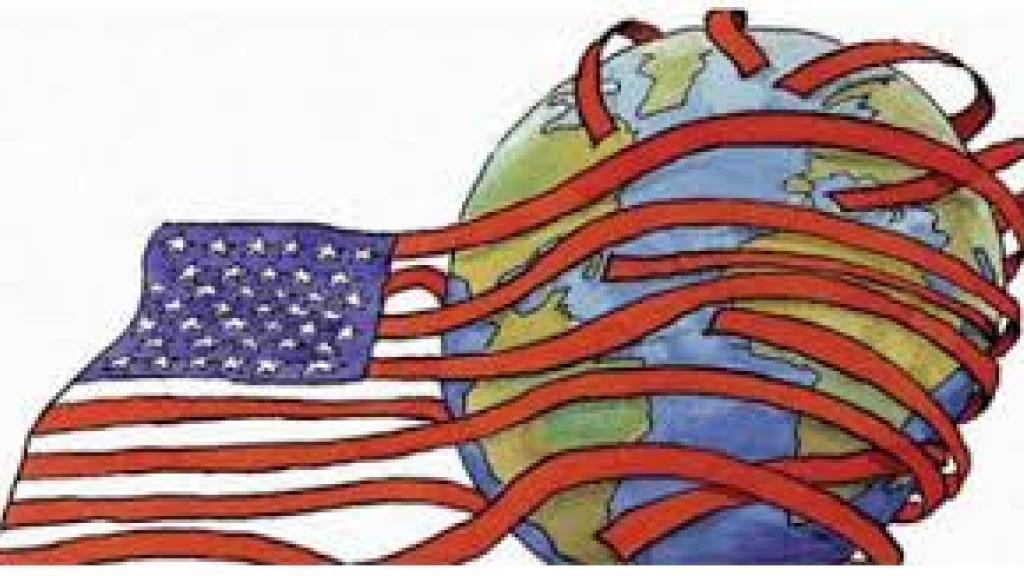
First published in Spanish at Luís Bonilla-Molina blog. Translation by LINKS International Journal of Socialist Renewal.
For the past few months I have argued that the Donald Trump administration wanted to gain political, economic and military control over Venezuela’s oil and mineral wealth, as well as to manipulate the population’s behaviour to collect data and establish a predictive control regime over the country. I maintained that the stationing of US military bases in Simón Bolívar’s homeland seemed a real possibility.
But I underestimated the situation, believing the US would do this by simply placing María Corina Machado (MCM) and Edmundo González Urrutia (EGU) at the head of the Venezuelan government: two figures historically allied with the White House and that have social support, but who are utterly incapable of governing a country as fractured as Venezuela. On January 3 — the day of the military attack on Venezuela and kidnapping of President Nicolas Maduro and Cilia Flores — Trump brought the Venezuelan right-wing opposition back down to earth by saying MCM was "not respected" in the country and would be excluded from the “transition”.
Trump declared that, from now on, Venezuela would be governed by him and his closest team: Secretary of State Marco Rubio, Secretary of War Pete Hegseth, Deputy Chief of Staff Stephen Miller, CIA Director John Ratcliffe, and Joint Chiefs of Staff General Dam Caine.
This represents a real, tangible and unprecedented colonial threat against Venezuela. What has transpired since confirms it.
The new Guipuzcoan company
Founded in 1728, the Royal Guipuzcoan Company of Caracas was a Spanish trading company that operated in Venezuela between 1730–85 for the purpose of colonial relations between the two countries. Its main activity was administrating exclusive trade between Spain and Venezuela by exporting products (cacao, tobacco, cotton, indigo and hides) while importing European goods (tools, textiles, wines, etc). It operated to halt contraband from the Netherlands, England and other countries, as well as to direct local economic development toward increasing profits for the Spanish Crown.
Trump wants to control Venezuela’s territory and trade in a manner reminiscent of this colonial-era company, but via a more modern instrument: the US embassy. Hence the rush to announce his intention to reestablish a US diplomatic mission in Caracas. The US embassy will play the role of this company, only now appropriating oil, gold, rare earth materials and other resources, alongside gathering on-the-ground data and information vital for further developing its predictive control model based on cutting-edge technologies.
White House press secretary Karoline Leavitt has said “we obviously have maximum leverage over the interim authorities in Venezuela right now.” Rubio declared “they have oil that is stuck in Venezuela; they can’t move it because of our quarantine and because it’s sanctioned” Trump complemented these statements, saying “Venezuela is going to be purchasing ONLY American Made Products”
Meanwhile rumours are circulating of threats against government officials such as Interior Minister Diosdado Cabello to ensure their obedience to the Rodríguez administration.
Three phases of colonisation
On the evening of January 5, Trump announced his late Christmas gift to Venezuela: the US was forcibly seizing 30–50 million barrels of Venezuelan oil. On January 7, Rubio followed this by announcing the three phases of Venezuela’s recolonisation.
The first phase involves seizing control of up to 50 million barrels of available oil production in the short term. This has been presented not so much as a forced purchase but rather as a publicly announced theft of Venezuelan wealth through the use of US military force, and the expectation of little local opposition.
The second phase involves assuming the role of colonial administrator, with the US selling Venezuelan oil on the world market, appropriating for itself the use and administration of the spoils of war. To soften the media impact of this blatant violation of capitalist trading practices, Rubio has said the US will use these resources to rebuild Venezuela and further US interests. They clearly want to recoup some of the costs incurred during the months-long naval blockade in the southern Caribbean and use Venezuela’s resources to repair oil infrastructure that will be used for colonial oil extraction by companies summoned by the Trump administration.
The third phase, initiating a government transition, it appears will depend on their evaluation of the Rodríguez government, as well as the process of building political relationships (with “good people”) that can ensure an ongoing colonial relationship.
Rubio knows he cannot turn a republic into a colony without facing local resistance. This foreshadows a period of US military/police/intelligence power playing a leading role, with the hope that local military/police forces will collaborate — something that remains to be seen.
Protectorate or nationalist government
The Venezuelan government that took office on January 3 will have to weather some internal storms if it is to demonstrate that it is capable of either holding back imperialism or assuming a collaborationist role. Both scenarios require consolidating its capacity to govern.
The possibility of forging a broad national unity against US colonialism hinges on overcoming the trauma of the kidnapping of the Maduro-Flores couple, which occurred with so little military resistance as to cast serious doubts about internal betrayal. The current Bolivarian administration faces the challenge of locating and disclosing the perpetrators of this treachery.
This is linked to the urgent task of boosting morale in the national armed forces, which suffered dozens of casualties — alongside the 32 Cuban combatants who were part of the president’s security detail — without inflicting any on the invading forces.
Furthermore, whether as part of his strategy or because it reflects objective reality — time will tell — Trump has repeatedly said that the interim Rodríguez government is cooperating with his administration and “doesn't want to repeat Maduro’s mistakes.” Rodríguez has timidly denied these claims, while indicating that any oil leaving Venezuela will do so under normal commercial terms of sale and payment.
This ambiguity, understandable given the ongoing impacts of the January 3 military action, must be overcome if it is to organise anti-colonial resistance or assume the role of a colonial governing body. I hope the path it chooses is the former.
Nationalist sentiment is sweeping the country, but it lacks a clear political leadership.
The Venezuelan left, in particular the Communist Party of Venezuela (PCV) and Comunes, have clearly expressed their opposition to Trump’s colonial plans, while also apportioning blame to the Maduro regime (of which Rodríguez was part of) for leading the country into this dire situation by implementing an anti-working-class program that dismantled even the most basic democratic freedoms of those who wish to organise autonomously. However, the radical left is not strong enough on its own to build a nationalist front capable of reverting the current defensive situation.
Effectively resisting US military aggression and colonialism requires building a broad national front with an unambivalent policy toward imperialism. The Rodríguez government has yet to show any willingness to fully embrace this role.
Revolutionary tasks
Up until January 2, the main task of revolutionaries had been to regain the minimum democratic freedoms that could allow the working class to express its opinions and organise against both the imperialist offensive and the Maduro government’s authoritarian drift.
After January 3 and the White House’s announcements of turning Venezuela into a US colony, the priority is defending national independence, within a framework of the broadest possible political freedoms for patriotic forces. Events will determine if the situation evolves toward a struggle for national liberation.
There is no doubt about the need to promote the broadest possible unity of action, one involving all political and social forces that today prioritise the question of national sovereignty and independence. We must focus on the common ground that unites us — that of defending the nation, its sovereignty and independence.