Former Chávez VP: Venezuela needs a new ‘struggle for liberation’
United States President Donald Trump signaled again this week he was “seriously considering a move to make Venezuela the 51st state.” The statement comes just months after the US military assault on the South American country and kidnapping of its president, Nicolás Maduro.
Venezuela’s Acting President Delcy Rodríguez responded saying her country was “not a colony” and that “President Trump knows that we have been working on a diplomatic agenda of cooperation.”
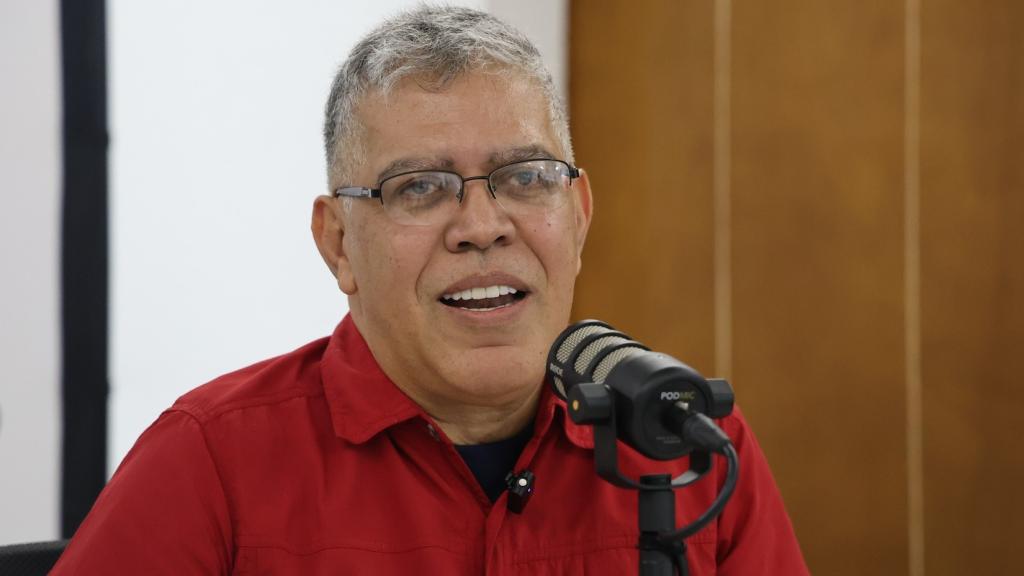
But for Elías Jaua, a former vice-president under Hugo Chávez and current Director of the Centre for Studies on Socialist Democracy (CEDES), Venezuela is today under US “military occupation,” “coercive tutelage” and “neo-colonial administration.” Speaking to LINKS International Journal of Socialist Renewal, he said the Venezuelan state should be denouncing this “serious act of aggression”.
Interviewed by Federico Fuentes, Jaua discussed Trump’s plan for Venezuela, the domestic political factors that facilitated the January 3 assault, why the US left the government in power, and how competing political forces and the population have responded since.
A committed Chavista, socialist and revolutionary, Jaua also outlined his views on the Maduro government and the United Socialist Party of Venezuela, the state of popular participation, and the solidarity Venezuela needs today.
You have referred to Venezuela’s situation after January 3 as a “ military occupation”. Could you explain why?
This is based on what the Venezuelan government as well as Trump and [US Secretary of State Marco] Rubio have officially declared.
The US government said that, under the threat of further large-scale infrastructure destruction and removal of more leaders, Venezuela accepted Trump’s plan.
So, undoubtedly, the public threat of a larger-scale military attack exists. This implies military coercion. It also explains what has happened since in Venezuela.
What is Trump’s plan for Venezuela?
The most visible aspect of his plan — and openly stated by the Trump administration — is controlling Venezuela’s oil sales and depositing the income into a US Treasury Department administered fund. Only some money will be handed back to allow the Venezuelan state to keep functioning.
No further explanation is needed to comprehend the gravity of a situation where a nation has been forced to allow its main income stream to be administered by another country.
This is nothing more than tutelage under coercion and the neo-colonial administration of one government by another. That is what they have imposed on Venezuela.
Subsequently, the US’ goals then expanded to include gold and other strategic minerals. Venezuela’s foreign policy has also been curtailed on issues such as solidarity with Cuba, Iran and Palestine.
This constitutes a very serious act of aggression. Such actions are outside all international legal frameworks. The international community should be seriously concerned about a country being subjected to these conditions.
You wrote that the “inability or unwillingness to manage the political conflict within a national and democratic framework” opened the door to foreign interference. What internal factors help us understand January 3?
Well, it was a long journey to January 3, but I will summarise it.
From the outset of the Bolivarian Revolution, which began with Commandante Hugo Chávez’s election win in 1998, a section of the opposition opted to call for foreign interference, in a bid to halt this revolutionary democratic process.
From 2001–2002, [when the right-wing opposition launched a failed coup in April 2002 and then tried to shut down the oil industry between December 2002–January 2003], an external agent became involved in this national political conflict. This shaped the course of events over the next two decades.
This conflict worsened after Chávez's death. At the time, the opposition falsely believed his death had weakened the Bolivarian Revolution’s foundations to the extent that they could quickly resolve it by overthrowing President Maduro, who was elected in 2013.
So, in 2014, we had the so-called La Salida [The Exit, a wave of violent protests between January-February]. This was an insurrectionary strategy to overthrow the government.
After this strategy failed, the US government began openly involving itself in Venezuelan politics. This started when the Barack Obama administration declared Venezuela an “unusual and extraordinary” threat.
What specifically changed?
I believe this is when we lost what I call the “domestic management” of the national conflict. Despite all the foreign interference since 2002, at least until 2013 the conflict was managed democratically among domestic Venezuelan forces.
In 2004, the national conflict was managed via a political agreement between Chavismo and the entire opposition. This enabled a long period of political stability, and economic growth, poverty reduction, and lower inequality. All this occurred after the 2004 presidential recall referendum — a constitutional process that ultimately reaffirmed Chávez’s presidency.
But from 2014–15 onwards, the US started directly intervening in the attempts by domestic forces to secure a political resolution to the national conflict. They imposed conditions on, and sabotaged, agreements.
I was part of the negotiating team in the Dominican Republic ahead of the 2018 elections, where we were on the verge of signing an agreement with the opposition. However, this was called off on the US’ instructions.
Then came the Trump administration, and the establishment and recognition of [opposition leader] Juan Guaidó’s parallel government.
How did the Maduro government respond to this change?
At this point, the national government sought to establish direct dialogue with the US government, something it ultimately achieved.
Thus, negotiations stopped solely involving domestic forces. Both the opposition (which sought, encouraged and opened the doors to foreign intervention) and the government (which wanted to recognise the US as the sole negotiating partner) contributed to the loss of domestic management over the national conflict.
From there, the situation escalated until January 3, with the grave consequences of a treacherous military attack and subsequent US occupation and tutelage over Venezuela.
On top of the economic tutelage and illegal and arbitrary administration of our resources, today the fundamental political decisions affecting Venezuela are not being resolved nor decided in Venezuela. The majority of political forces now look to the White House to see what they decide, to see when they will call elections and whom they will endorse as candidates.
The main cause of the current political situation lies in having allowed the management, regulation and containment of the national conflict to slip from the hands of Venezuelans, especially over the past 10 years.
This allowed US intervention to achieve its objectives — seize control of energy and mining resources and strike a blow against the people’s resistance — as part of its bid to re-establish itself as a hegemonic power.
What has been the mood of the population since January 3?
There are mixed feelings. Regarding Maduro’s kidnapping, one section of the population condemns it, but another section celebrates it and identifies with these events. That is at one level.
But then there is the level of perceptions regarding the act of military aggression and tutelage that has only just begun, which causes anguish, pain, and a sense we are losing our republic. People do not fully understand what our new status with the US is, but every day reality demonstrates that this status is that of a state under tutelage. This generates a sense of shame, which grows stronger daily.
There is also another level, a sense of expectation that the country’s economic and social situation will improve. In those early days, amid the confusion and pain, among both those who celebrated and rejected the military aggression, the underlying sentiment was: “Look, everything is going to get better.” We were already imagining ourselves in a state of economic prosperity.
This was because Venezuelans — especially since Chávez’s death — have been subjected to systematic aggression, which undermined the entire system of social rights, political participation and hope in building something different.
Underneath all the feelings being expressed on one side or the other about the country and the government, everyone wants the situation to improve. But there has been no significant change. Four months have passed and the day-to-day economic situation of Venezuelan families is worse than before January 3.
Despite all the talk of possible regime change, Trump left the government in power. Why do you think that was?
First, because of US domestic politics. Trump plays heavily on linking domestic and international policy — what is known as “intermestic” politics.
A key part of his program was that the US should stop promoting regime change in other countries. So, achieving his goals without removing the government in Caracas fitted perfectly with his rhetoric and election promises.
That is why he tried to repeat the formula in Iran: assassinate the Ayatollah, leave the Iranian leadership in place, come to an understanding with them and say there was no regime change. I believe that was the intention.
Second, the need for political stability and realising that the Venezuelan opposition lacked the leadership, strength and authority to guarantee political stability in the short term.
Above all, the attack on Venezuela and kidnapping of Maduro and Cilia Flores must be understood as a prelude to the attack on Iran. Trump assessed that, by controlling Venezuela’s oil reserves, the US could risk going to war with Iran without being impacted by the closure of the Strait of Hormuz, at least in terms of its energy security.
However, his assessment overlooked the damage caused by US sanctions on Venezuela’s oil industry. It will take at least four years to fully recover production levels, according to experts, and that is if all sanctions are lifted and billion-dollar investments are made — which so far are not forthcoming.
I believe this goes some way to explaining why the temporary constitutional succession, as provided for in the Constitution, has been recognised by the Trump administration, and instead, under coercion, a tutelage relationship has been established with the current Venezuelan government.
Where does this leave the traditional opposition?
The opposition has been left in a quite disconcerted state. Ever since 2002 they have dreamt of a military occupation, on even a larger scale, involving occupying troops and the annihilation of all popular forces. They imagined the occupiers would take them in a helicopter and place them in Miraflores [the presidential palace]. So, all this has left them somewhat out of place.
Nevertheless, they are using all their lobbying mechanisms in the US to try and force an election in Venezuela, believing they will win.
Clearly, there are differing views on the new government of Acting President Delcy Rodríguez. In your opinion, how can we characterise the current government and its actions?
The current government must be characterised, and its actions understood, on the basis that it is subject to military coercion with national resources being administered by a foreign government. That is the reality.
Now, the set of policies enacted, particularly regarding oil and mining, undoubtedly represent a step backwards with respect to the gains and achievements in terms of sovereignty that Venezuela had made over almost 100 years, and which had been consolidated and expanded during Chávez’s government.
The Hydrocarbons Law, for example, after its reform just days after the military attack, establishes that operational control of the entire oil production process, from extraction to commercialisation, can be handed over [to private hands]. This takes us back to a situation similar to the 1930s.
Very serious changes have occurred, such as allowing oil royalties to be set as low as zero. There can now be oil concessions where the concessionaire does not pay a single cent in royalties to the resource owner, which is the Venezuelan nation.
These are some of several changes that have seriously set back Venezuela’s oil sovereignty.
Given the situation, could the government be doing anything different? If so, what could be done?
I am very careful about giving advice to the government or speculating on what it should or should not do. I was in the government and I know that in government you have information that is not public, access to more precise data, which forces you to make certain decisions.
I can only say that the decision to not respond to the January 3 military attack seems to have been the right decision at the time, to prevent the total destruction of our Armed Forces and huge harm to the civilian population. But four months on, the Venezuelan state should be denouncing internationally the coercion to which it is being subjected.
In your “Manifesto for the Democratic Republic”, you propose a “national agreement” to “declare to the world that the vast majority of Venezuelans do not accept being a state under tutelage nor a colony.” Could you explain your proposal?
You asked me, “What could be done?” Well, the answer lies in this document.
The government cannot do this alone. It must be the nation as a whole — all the political and social forces, and a broad majority of the population — united behind this political and diplomatic demand. This demand should be raised in international forums, despite knowing these forums and international law are currently being ignored, because they still exist.
The republic should set a precedent so that in future it can make the needed claims over the serious acts being committed against Venezuela.
First: the unjustified, unprovoked and disproportionate military attack, which put at risk large sections of the civilian population in Caracas and other towns.
Second: the occupation, which is prohibited by United Nations resolutions that stipulate no country may plunder another’s resources. No government can claim the right to administer another country’s economic resources. No country can be coerced into making political, economic or legislative decisions under military threat.
The nation as a whole, all political forces, should raise this issue immediately at international bodies and among the free peoples of the world.
We must demand that the Venezuelan state be handed back control over its national income so that the state can address the serious problems caused by the political confrontation, the [US economic] blockade and sanctions, social unrest, violence, and so on, which have inflicted structural economic damage. This is the only way to resolve the most important issues facing the population: wages, education, health, public services. There can be no prosperity without a republic.
Such a national agreement implies resolving — or at least a containment — of the national political conflict in Venezuela and establishing a democratic, electoral, political and peaceful path forward. The decision to resolve this conflict domestically and democratically must be made by the Venezuelan nation, rather than being imposed by an occupying power.
My final point is that Venezuela must have the autonomy to formulate an independent foreign policy, which is a fundamental element of a sovereign state.
Undoubtedly, the Maduro government had to deal with an extremely difficult situation: sanctions, opposition violence, a deep economic crisis. Nevertheless, it was criticised by left sectors, who accused the government of implementing pro-capitalist and anti-worker policies. What is your assessment of the Maduro government?
Since 2018, many of us have criticised the government’s economic policy, particularly regarding wages.
Differences were also expressed over political methods that did not contribute to the national cohesion needed for a conflict of the magnitude that was looming. And on other aspects too, which were all expressed in internal and public documents.
Unfortunately, there was no space for a fraternal discussion on these and other issues.
What role is the United Socialist Party of Venezuela (PSUV) playing? From the outside, it seems there is little debate, discussion, or even political life within the party. Is that the case?
Any genuine spaces for discussion and debate within the party were lost a long time ago. This closure of political spaces for debate was justified as needed in the context of escalating foreign aggression, and led to a logic of war against all enemies.
However, many of us believe that in times of aggression, we must listen even more to the people, open up the debate even more, in order to hear the diversity of views on how to address the situation.
Creating spaces for deliberation, and accepting a plurality of opinions, would have strengthened cohesion, first, within Chavismo as a revolutionary force, and then of Chavismo as the driving force behind the social cohesion needed to confront an aggression such as Venezuela continues to experience.
Venezuela has been characterised by a high level of politicisation and grassroots organisation, particularly with the communes. What is the level of politicisation and organisation today?
Significant organisational structures remain both in the communes and within the party. Indeed, the PSUV is the only truly existing organisational structure with a territorial and sectoral presence today.
Part of the situation facing the country is that the opposition parties are not really parties at all. They do not have a presence on the ground, in working-class sectors, and so on. Most opposition leaders are simply social media commentators who are heavily funded by the US and European countries.
The main political activity of most opposition leaders, particularly over the past six years, has not been building parties or movements, but promoting military aggression, which they finally succeeded in bringing about on January 3.
However, deteriorating material and social conditions has led to a decline, not in levels of politicisation — because Venezuelan society is not depoliticised — but in political participation.
Indeed, the high level of political awareness among much of the population — both opposition and Chavista supporters — enabled them to understand the shift after 2018. They grasped that what had been a social struggle to transform the material conditions of people’s lives, with Chavismo’s successive victories leading to improvements and expansions of rights, had again become a classic conflict between power blocs, in which the vast majority gained nothing; on the contrary, they lost more every day.
This led to a decline in political participation. From then on, a democracy that had achieved voter turnouts of more than 80%, constant mass mobilisations in support of one political project or another, and enthusiastic participation at the local and sectoral levels, began to wane.
This decline has been reflected in high abstention levels in every election since 2015. It has also been reflected in the decline of political, social and local activism.
Among other things, people have been too busy just trying to survive: “I have to work three or four jobs; I no longer have time to go to a meeting, to go on a march, to participate in self-government”. The economic situation also had political consequences on participation.
That is why, undoubtedly, the January 3 military attack occurred amid a society, on both sides, exhausted by the conflict. Regardless of what the US planned, had the opposition possessed the organised political strength they claim to have, that day would have been the perfect opportunity to seize power through an insurrection. But that did not happen.
At the same time, we must also acknowledge a kind of hesitation among sectors that had historically supported the revolutionary process on that fateful day.
The question of solidarity with Venezuela has caused debates within the international left. What solidarity do the Venezuelan people need today?
At this moment, solidarity with Venezuela, with the country, with a people that is under attack and being plundered.
Fundamentally, the international left must understand that — beyond the government and whatever view one takes of it — Venezuela is a country that was militarily invaded, militarily occupied, and subjected to a policy of coercive tutelage. Therefore, the international left’s duty is to denounce this, regardless of whatever government is in power.
I always remember that we were young left-wing activists at the time of the [1989] Panama invasion, and there were few people we sympathised less with than [Panamanian leader] Manuel Noriega. But this was not about Noriega; it was about a sister people being invaded and massacred, and we, Latin American left-wing youth, rose up for months, marching, protesting and so on, against that invasion.
The international left must not discard the struggle for Venezuela’s liberation, because the Venezuelan people will have to wage a struggle for national liberation in the coming months and years.
And that struggle for national liberation from US government tutelage must count on the solidarity of the entire international left and extend beyond the left to those sectors that believe the world cannot become Trump’s world.
Now is the time to raise — with far greater force than ever — our anti-imperialist banners and denounce that they are trampling on international law, they are crushing nation states, they are committing crimes against humanity, such as the genocide in Gaza, which continue before the eyes of the world, or the attack on Iran. Regardless of what one may think of the regime in Iran, what is happening is unacceptable.
This obliges the international left to increase its capacity for organisation, communication and mobilisation, because the struggle against imperialism and the military aggression of empires against peoples has been a historic banner of the left. Today, the cause of humanity demands that we fight.