Asia
Socialist Party of Malaysia's 2013 general election manifesto: Enough! Reject 56 years of UMNO-BN
April 9, 2013 -- Links International Journal of Socialist Renewal -- Malaysians soon go to the polls in state and federal elections, expected to be held on April 27. The ruling Front National, or Barisan Nasional (BN), coalition is dominated by the United Malays National Organisation (UMNO), and has traditionally attracted votes from the 50% of the population of Malay descent. The coalition has controlled Malaysia's parliament since the country's independence from Britain in 1957.
However, many predict that in this election BN dominance will be shaken by gains by the Pakatan Rakyat, the opposition coalition led by Anwar Ibrahim.
The Parti Sosialis Malaysia (PSM, Socialist Party of Malaysia) is also standing in a number of state and federal seats, seeking to retain its two sitting MPs and increase its representation of the country's working classes and poor. The party's election manifesto is below. It can also be downloaded HERE.
For more on the PSM, click HERE.

US sailors aboard the aircraft carrier George Washington pre
Fidel Castro: The duty to avoid a war in Korea

"Now that [the Democratic People’s Republic of Korea] has
April 4, 2013 – Links International Journal of Socialist Renewal – This gathering of left women’s organisations and activists from Afghanistan, Indonesia, Kurdistan, Nepal, Philippine
Human Rights Council resolution on Sri Lanka crimes provokes huge protests
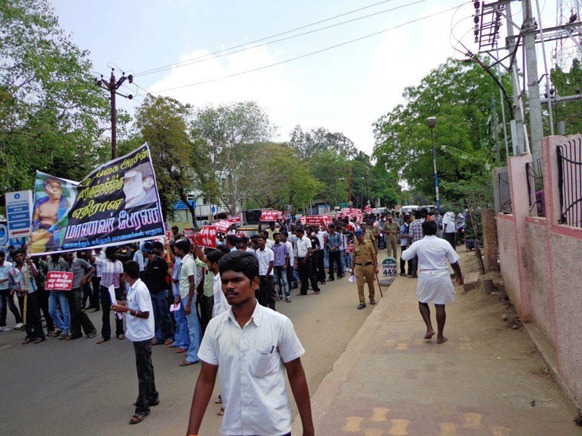
Student demonstration in Mathurai, Tamil Nadu, March 14, 201
The problem of relative privilege in the working class
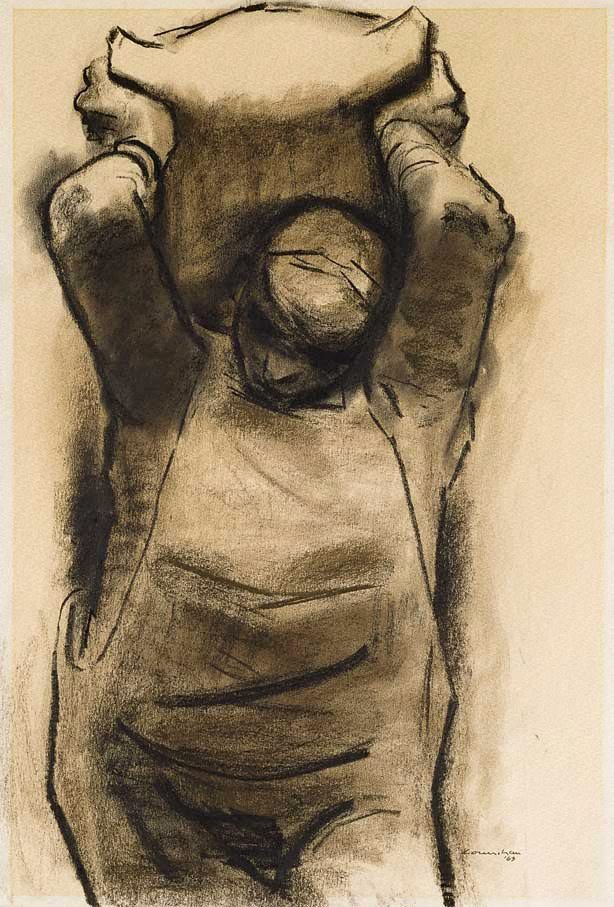
"Waterside worker', by Noel Counihan, 1963.
By Chris Slee
March 18, 2013 – Links International Journal of Socialist Renewal -- In his article entitled “Is there a labour aristocracy in Australia?” (published in the Socialist Alternative magazine, Marxist Left Review) Tom Bramble criticises the concept of the “labour aristocracy” on a number of grounds.
Hugo Chavez Frias – visionary, fighter, companero (Asia-Pacific left statements) (updated Mar. 17)

[Below are statements issued by socialist and progressive organisations in the Asia-Pacific region. More will be posted as they come to hand.]
* * *
Statement of the Socialist Alliance (Australia)
March 6, 2013 -- The Socialist Alliance in Australia expresses its deepest sympathies with the people and government of Venezuela on the death of Companero Hugo Chavez Frias on March 5. His passing is a huge loss for all peoples, across Latin America and the globe, struggling for a world free of inequality, exploitation and oppression.
It is testament to Hugo Chavez’s great leadership that, while mourning his death, we are also confident that the Bolivarian Revolution and the new movement for socialism of the 21st century that Chavez inspired will be continued by the mass of people, to whom he worked so hard to give power.

Indonesia: Solidarity needed for trade unionists

January 30, 20133 -- Solidarity -- Trade union activist Sulthoni Farras, a leader of the Indonesian union federation Progresip, union alliance Sekber Buruh, and member of Indonesian political organisation KPO PRP, is in danger of arrest for leading a strike in 2012. Another activist, Bona Ventura, may also face charges.
The Indonesian government and bosses are using these kinds of tactics against a growing workers’ movement in Indonesia. Solidarity is asking for messages of support and for signatures to a letter we will give at the Indonesian Consulate this Friday 1 February, 2013. More details below.
* * *
Dear Comrade/Friend,
We are writing to ask your solidarity for a number of unionists in Indonesia presently in danger of being arrested and charged for taking part in lawful industrial action.
Below is some background to their situation in Indonesia. We would ask you to sign the letter (text below) that we intend to hand to the Indonesian consulate this Friday, 1 February following a solidarity protest at the consulate.
Socialist Alliance: Free Somyot and all political prisoners! Democracy for Thailand!

[Please continue to send protest notes to the addresses contained in this link. For more on Thailand and the Red Shirt movement, click HERE.]
Socialist Alliance (Australia) statement
- Free Somyot Prueksakasemsuk and all political prisoners in Thailand!
- Abolish the anti-democratic lese majeste law!
- Democracy for Thailand!
January 24, 2013 – The Socialist Alliance of Australia condemns in the strongest possible terms the January 23 sentencing of workers’ rights and free speech advocate Somyot Prueksakasemsuk to a total of 11 years’ jail under Thailand’s draconian anti-democratic “lese majeste” law (Article 112 of the Criminal Code). Somyot and all political prisoners in Thailand should be released immediately and unconditionally.
Conviction of Thai labour activist Somyot Prueksakasemsuk condemned

Please continue to send protest notes to the addresses contained in this link.
By the Socialist Party of Malaysia
January 23, 2012 -- Socialist Party of Malaysia (PSM) is deeply concerned and disappointed over the verdict of Thai court today that sentenceed labour activist Somyot Pruksakasemsuk to 10 years of imprisonment for charges under the Article 112 of the Criminal Code (the lèse-majesté law) and another year of imprisonment for a violation of printing act in 2009, totaling 11 years of jail terms.
The PSM is of the view that those charges and convictions of Somyot are politically motivated, with the aim to suppress the right to freedom of expression and activism of political dissidents who not adhere to the will of ruling elite in Thailand.
The prosecution and conviction of Somyot are regressive and push the country back to the Middle Ages. Such persecution against a political activist is devastating to the democratic process in Thailand.
India: Kavita Krishnan on the new movement against gender violence
January 22, 2013 – Green Left TV – Indian