Asia

Thailand: Freedom of speech is a severe danger to the ruling class
By Giles Ji Ungpakorn
August 10, 2010 -- Tantawut Taweewarodomkun, the United Front for Democracy Against Dictatorship (UDD) USA's web designer, known as “Red Eagle”, who was arrested on April 1, 2010, on “computer crimes” and lese majeste charges, has been remanded in custody until February 2011, when the court has set a date to interrogate prosecution and defence witnesses. That means that Red Eagle will be detained in prison for at least 10 months BEFORE being tried in court. He has only just had access to his lawyer. Red Eagle has not been charged with any crime of violence or charged with committing any physical act. He is accused of looking after a website that has comments that the royalist elites do not like (see www.norporchorusa.com and www.norporchorusa2.com).
Philippines: Extrajudicial killings and the struggle for land reform under ‘Noynoy’ Aquino

Satur Ocampo.
Satur Ocampo, Bayan Muna president, interviewed by Reihana Mohideen
August 11, 2010 -- Some 1205 extrajudicial, summary or arbitrary killings, largely political activists and journalists, took place under the government of former Philippines president Gloria Macapagal Arroyo, according to the human rights organisation Karapatan. In the few weeks since the June 30 inauguration of the new president Benigno “Noynoy” Aquino III, six extrajudicial killings have taken place, three being members of organisations aligned with the Bayan Muna (Country First) party.
Bayan Muna is an electoral formation and Satur Ocampo is its president. Ocampo is a former member of the Philippines Congress representing Bayan Muna, when Bayan Muna topped the 2001 and 2004 party list elections (the system of proportional representation for the marginalised sectors). Ocampo headed the peace negotiations panel of the National Democratic Front, allied with the Communist Party of the Philippines–New People’s Army (CPP-NPA), after the collapse of the Marcos dictatorship in 1986.
Pakistan: Labour Relief Campaign launches appeal for millions affected by floods

Appeal from the Labour Relief Campaign, Pakistan

August 7, 2010 -- More than 12 million people are suffering from floods in Pakistan. Please donate to the Labour Relief Campaign to help people of Pakistan facing the worst-ever floods in its history. Torrential rains have unleashed flash floods in different parts of the country in the last three weeks. Levies have broken, leaving the people exposed to flood water.
More than 650,000 houses have collapsed, mainly in villages. Thousands of hectares of crops have been destroyed due to flood water. Livestock, household goods, clothes, shoes and other items have been destroyed. Residents of villages are without drinkable water, food, shelter and in need of clothes.
Malaysia: Bringing power to the people (+video)
By Stephanie Sta Maria
PETALING JAYA, Malaysia, August 6, 2010 -- Free Malaysia Today -- Kota Damansara assemblyman and Socialist Party of Malaysia (PSM) chairman Nasir Hashim is a realist. But he is also fond of quoting Argentinian revolutionary Che Guevara to “be realistic and do the impossible”.
And Nasir is doing the impossible: he is spearheading an ambitious project to eradicate urban poverty in a small community in the vicinity of Ara Damansara, Petaling Jaya.
The project has a bold vision. It will empower the poor not only by developing their skill sets but also by encouraging a mindset shift from that of victim to victor. The project also aims to have various parties – federal and Selangor governments, businesses, non-governmental organisations and local communities – working hand-in-hand to achieve this vision. It is a radical concept and one that could be seen as remarkably idealistic.
Statement Solidaritas Bersama Hentikan Ancaman Terhadap Venezuela Sekarang!
[In English at http://links.org.au/node/1817.]
3 Agustus 2010
Malaysia: Barricades greet anti-ISA vigils, 36 arrested
By Lee Way Loon and Hazlan Zakaria
August 1, 2010 -- Malaysiakini -- Riot police barred activists from holding candlelight vigils to commemorate the Internal Security Act's 50th anniversary in eight places around the country.
At Dataran MBPJ, Padang Timur in Petaling Jaya, Selangor -- which saw the earliest vigil begin at 8pm -- members of the police Light Strike Force (LSF) began dispersing the 300-strong crowd just as the latter began singing while marching from the mall, through the adjacent car park and towards the field across the main road.
As they approached the field, they were confronted by a wall of LSF shields wielded by about 30 riot police, backed by another 50 uniformed police.
South Korea: Ssangyong trade unionist's appeal

By Australia Asia Workers Links
Thailand: No justice for Red Shirt detainees
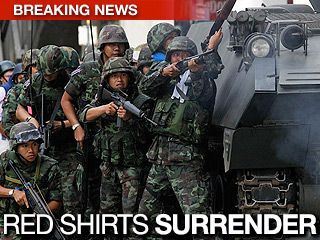
By Giles Ji Ungpakorn
July 30, 2010 -- Pro-democracy movement Red Shirt political prisoners, detained by the Abhisit Vejjajiva military junta after the bloody crackdown against unarmed demonstrators in May are facing a total lack of justice with internationally recognised legal standards being blatantly ignored. This is more evidence of the total destruction of democracy, justice and the rule of law in Thailand since the 2006 military coup.
Prachatai, the web-based newspaper, which the junta repeatedly tries to close down, reports that Red Shirt detainees in the north-east provinces of Ubon Rajatanee, Kon Kaen, Mahasarakarm, Mukdaharn and Udon Tanee are facing the following problems and there is no reason to believe that other Red Shirt detainees are any better off elsewhere.
1. Police evidence used for warrants of arrest is unclear and lacking in legal standards. So people have been arrested and detained under conditions where there is a lack of clear evidence.

Banning the veil: Rights of women or anti-Islamic racism and communalism?

July 21, 2010 -- On July 13, the parliament of France, on the eve of Bastille Day, voted 335 to one in favour of preventing Muslim women wearing a full face-covering veil in public. The July 13 Le Monde said the new law was strongly supported by the right. The Socialist Party, Communist Party (PCF) and Green Party abstained. Anyone who chooses to wear a face covering on religious grounds now faces a fine of 150 euros or a “citizenship course”. The law does not come into effect until spring 2011 to allow a period of “education”. There is also a year in prison and a fine of 30,000 euros for anyone found guilty of forcing a woman to wear a veil, a penalty which is doubled if the “victim is a minor”.
Earlier this year, the Indian organisation Radical Socialist issued a statement taking up this wave of Islamophobic legislation in Europe.
* * *
Statement by the Radical Socialist organisation, India