Marxism & ecology
Who’s causing the environmental crisis: 7 billion or the 1%?

October 26, 2011 -- Grist via Climate and Capitalism, posted at Links International Journal of Socialist Renewal with permission -- Ironically, while populationist groups focus attention on the 7 billion, protesters in the worldwide Occupy movement have identified the real source of environmental destruction: not the 7 billion, but the 1%
This article, published today on the environmental website Grist, has provoked a vigorous discussion there. Many of the comments defend variations of the “consumer sovereignty” argument, that corporations only destroy the environment in order to provide the products and services consumers demand. We encourage readers to join that conversation.
* * *
By Ian Angus and Simon Butler
The United Nations says that the world’s population will reach 7 billion people this month.
Two radio interviews with Ian Angus: What is ecosocialism? Are there too many people?

October 24, 2011 -- Is the ecosocialist revolution coming? Ian Angus is a veteran of the socialist and environmental movements in Canada. He is also the founder of climateandcapitalism.com, and co-author of the new book, Too Many People? Population, Immigration and the Environmental Crisis. He visited Adelaide, South Australia, in September, to speak at a public forum organised the Socialist Alliance, on “Political solutions to the climate crisis: What is ecosocialism?” He was in Australia to participate in the Climate Change, Social Change conference in Melbourne, September 30-October 3.
John Bellamy Foster: Capitalism and the accumulation of catastrophe
Film produced by Jill Hickson and John Reynolds.
[For more material from the conference, click HERE.]
October 20, 2011 -- Links International Journal of Socialist Renewal -- At the 2011 Climate Change Social Change Conference held in Melbourne, John Bellamy Foster, Marxist academic, editor and author on economics and ecology, was a featured speaker. Above is the video of his keynote speech on September 30.
The conference was sponsored by the Office of Environmental Programs, Melbourne University, and organised and co-sponsored by Green Left Weekly, Resistance, Socialist Alliance and Links International Journal of Socialist Renewal. Other co-sponsors included Friends of the Earth (Melbourne), the Labor Party Pakistan and Sydney University Political Economy Society.

Ian Angus: How to make an ecosocialist revolution
By Ian Angus
October 8, 2011 -- Green Left Weekly/Climate and Capitalism/Links International Journal of Socialist Renewal -- Ian Angus is editor of Climate and Capitalism and co-author, with Simon Butler, of the new book Too Many People? This is his keynote presentation Climate Change Social Change conference in Melbourne, on October 2, 2011. For more material from the conference, click HERE. Thanks to artist Margaret Scott for permission to use her drawings in the PowerPoint slides visible in the video.
* * *
Derek Wall: 'Ecosocialism places Marx at the centre of its analysis'
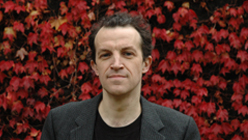
September 10, 2011 -- Green Left Weekly -- Economist, activist and writer Derek Wall (pictured above) is a member of the Green Party of England and Wales (and the Green Left grouping within it) and is the author of several books on ecology and politics. Wall will speak via video link at the Climate Change Social Change activist conference in Melbourne,r September 30 to October 3. He maintains the ecosocialist blog Another Green World. He spoke to Green Left Weekly’s Simon Butler about the politics of ecosocialism.
* * *
What are the most valuable insights ecosocialists can bring to discussions about the source of our ecological problems?
Ecosocialism, without being reductionist, cuts to the roots of the ecological crisis. The destruction of the environment is not an accident. It is not simply a problem of false ideas and it is not a product of inappropriate policies that can easily be dealt with by electing a new set of politicians.

John Bellamy Foster: The ecology of Marxian political economy
[This article is an extended version of a talk delivered at the Marxism 2011 Conference, University College of London, July 3, 2011.
Marxism and ecology (video): John Bellamy Foster at Marxism 2011
John Bellamy Foster addresses the British SWP's Marxism 2011, July 3, 2011.
For an extended text version of the talk delivered at the Marxism 2011 Conference, University College of London, July 3, 2011, click HERE. John Bellamy Foster will be a featured international guest at the second World at a Crossroads: Climate Change – Social Change Conference, Friday, September 30 – Monday, October 3, 2011, Melbourne University.
Keynote speech by John Bellamy Foster: "Capitalist crises, ecology and socialism"
Friday, September 30, 2011, 7.30-9.30 pm,
Sidney Myer Asia Centre (http://maps.unimelb.edu.au/parkville/building/158), Melbourne University.

Mauritius: Marxism, ecology and the contribution of John Bellamy Foster

By Lalit de Klas
June 2011 – Lalit [the revolutionary socialist party in Mauritius] sees the natural universe, whether it be the air above us, the sea around us or the Earth we walk upon, and all that lives upon it, and even outer space, as being our collective heritage as human beings. We are part of it, and also the guardians of it. This natural universe, our Mother Earth, is now endangered.
Our planet is already suffering irreversible damage, damage so serious as to threaten the very existence of the totality of human civilisation in all its varied forms. We humans have the minds to know this.
The threat is posed by our own human-made forms of agricultural and industrial “development”. This is serious because it is our way of survival that has become this destructiveness.
The main damage has been done in the past 250 years. Increasingly serious damage is being done. And yet most of us are oblivious to it, and once we know, we are “helpless”. We sit and watch a potential meltdown of a nuclear plant in Japan, as the capitalists who run it admit their own helplessness.