racism
France: New Anti-Capitalist Party defends democratic right to wear hijab

By Olivier Besancenot, translation by Yoshie Furuhashi (MRZine)
February 3, 2010 -- Le Figaro caricatured my words regarding the candidacy of Ilham Moussaïd, who is on our list in the Provence-Alpes-Côte d'Azur regional elections. After a serious and complex debate, the Vaucluse chapter of the New Anti-Capitalist Party (NPA) made a choice to include on its feminist, anti-capitalist and internationalist lists an NPA member who believes in wearing a headscarf on account of her religious convictions.
[See French capitalist press report below.]
Haiti: A history of struggle and exploitation
By Amanda Zivcic
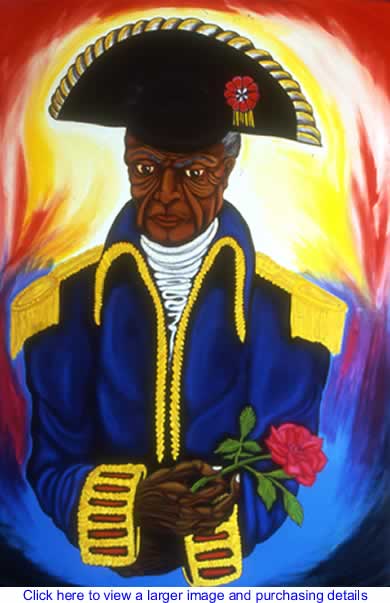
January 23, 2010 -- Since the earthquake struck Haiti on January 12, 2010, there has been a global outpouring of support. Many people, horrified by the scenes of sheer devastation, the astronomical death toll and the struggle of survivors to gain access to medicines, food and shelter, are left wondering: why so many?
The oft-repeated tag of Haiti being “the poorest nation in the Western hemisphere” is true but this did not just happen. It is the result of a history of colonialism, slavery, imperialism, foreign military intervention, foreign-imposed dictatorships and unjust debt.
The Caribbean nation’s indigenous people were all but wiped out by 1520 due to the disease and exploitation that came with the arrival of the Spaniards in 1492. After France and Spain divided the island of Hispaniola into Haiti and the Dominican Republic, French and Spanish settlers arrived.
New Zealand: Socialists cooperate in defence of refugees

By Grant Morgan, Socialist Worker-New Zealand
January 19, 2010 -- The refugee issue is almost certain to rise from near invisibility in New Zealand politics to become a strategic battleground. Waves of refugees will be thrown up by the poverty, strife and ecotastrophes of global capitalism's end times.
The right, centre and much of the left in New Zealand politics will seek to portray these waves of refugees as threats to "our way of life". This could open the way towards authoritarian nationalism which jackboots the New Zealand working class as well as offshore refugees.
New Zealand socialists and our allies must show that offshore refugees are a resource, not a threat, to the majority of Kiwis under the thumb of corporate bosses and politicians.
Refugees are a resource for our side because they are fleeing the poverty, wars and other calamities caused by the same world system which kicks most Kiwis around. They are our natural allies against the unnatural forces of global capitalism.
Martin Luther King Jr in the age of Obama: Why we can't wait

By Billy Wharton
January 17, 2010 -- Albert Boutwell's election as Birmingham, Alabama, mayor in 1963 might have signaled the end of the modern civil rights movement. As a moderate Democrat, Boutwell promised to temper the harsh repression unleashed by the city’s notorious chief of police and his mayoral opponent Eugene “Bull” Connor. Mainstream leaders of the black community were told to wait it out –- let the storm pass and incremental changes could begin. Dr Martin Luther King Jr. refused to wait. Instead, he launched Plan “C” (confrontation), a large-scale protest campaign that broke the back of Southern segregation.
United States: Blacks still taking the hit
January 2010 -- Against The Current -- It took 10 months before the US Congressional Black Caucus (CBC) stood up and challenged President Barack Obama. In a surprise move, 10 CBC leaders refused to participate in a key House of Representatives financial committee vote in December 2010 until some more relief is provided to Black businesses.
Black politicians and civil rights leaders have been understandably careful about criticising the first Black president. Yet facts on the ground, especially the super high unemployment in the Black communities, forced their hand. While their challenge is mild, it is significant.
The impact of the Great Recession has been greatest on Blacks as well as on other ethnic minorities. Official unemployment is nearly 50% higher for African Americans than for whites. What’s most striking is that the Black middle class, including those with Ivy League educations, are having a hard time finding jobs.
The issue of “race” once again is becoming a hot topic in the Black community as qualified professionals and skilled workers with equal or better résumés than whites are being turned down for jobs — going instead to whites with lesser qualifications. It is a reminder of the pre-civil rights era.
Australia: How governments and the capitalist media marginalise the Muslim community

By Helen Patterson
December 15, 2009 -- The antipathy of mainstream Australian society toward Muslims is not a new development. As early as 1912, Australians were being cautioned about the danger of Australia falling under Islamic control. The adoption of camel transport had brought Muslim men from Afghanistan to Australia in increasing numbers from 1860 until they controlled the camel transport business. Despite their valuable contribution to the expeditions carried out by the European “explorers” and their vital role in establishing a transport system in the harsh outback conditions, the early Muslim immigrants were considered inferior to the dominant, white, Christian Europeans and marginalised in a similar way to the detribalised Aboriginal community.[1]
Hamba kahle Comrade Dennis Brutus (1924-2009)

There will come a time
There will come a time we believe
When the shape of the planet
and the divisions of the land
Will be less important;
We will be caught in a glow of friendship
a red star of hope
will illuminate our lives
A star of hope
A star of joy
A star of freedom
-- Dennis Brutus, Caracas, October 18, 2008
By Patrick Bond
December 26, 2009 -- World-renowned political organiser and one of Africa’s most celebrated poets, Dennis Vincent Brutus, died early on December 26, 2009, in Cape Town, in his sleep, aged 85.
Even in his last days, Brutus was fully engaged, advocating social protest against those responsible for climate change, and promoting reparations to black South Africans from corporations that benefited from apartheid. He was a leading plaintiff in the Alien Tort Claims Act case against major firms that is now making progress in the US court system.
United States: `Birthers', `deathers' and haters -- Right-wing populism and liberal retreat

October 11, 2009 — The heat is on the administration of US President Barack Obama. The energised conservative base has taken over town hall meetings on health care. There are “birthers” (those who claim Obama is not a US citizen and ineligible to be president), “deathers” (those who claim Obama’s health care reform is a plan to kill old people) and just pure haters. Obama has been personally attacked as a racist, socialist, communist, Stalinist, fascist, Nazi, Pol Potist, foreigner and every other name the right finds in its vocabulary.
When Obama led the US delegation to Copenhagen to get his home town of Chicago the 2016 Olympics — and failed — he was attacked as “out of touch” by the right. When Chicago was knocked out in the first round of voting, the right gleefully cheered! The “country first” crowd forgot that a Chicago Olympics would be in the United States, not “Obama Land”.
The Holocaust: `May history attest to us' -- resistance, collaboration and survival

Hitler’s Priests, by Kevin Spicer, Northern Illinois University Press, 2008, 369 pp. US$34.95
Who Will Write Our History? Emanuel Ringelblum, the Warsaw Ghetto, and the Oyneg Shabes Archive, by Samuel D. Kassow, Indiana University Press, 2007, 523 pP., US$34.95
Kasztner’s Train: the True Story of an Unknown Hero of the Holocaust, by Anna Porter, Scribe, 2008, 548 pp., A$32.95
The Complete Maus: A Survivor’s Tale, Art Spiegelman, Pantheon, 1996, 296 pp., US$35.
Review by Barry Healy
July 28, 2009 -- In October 2008 the Catholic Synod of Bishops convened in Rome for a four-day theological discussion. Without warning, on the first day, Pope Benedict XVI suspended discussion and ordered the 200 participants to attend a special commemoration mass for Pius XII, who was the pope between 1939 and 1958.
Assaults on Indians in Australia: Globalisation, recession and renewed racism

Students protest against racist attacks and police inaction in Melbourne.
By the Communist Party of India (Marxist-Leninist) Liberation
June 4, 2009 -- The continuing spate of attacks and violence against Indians and Indian students in particular in Australia has once again exploded the much-touted myth that globalisation promotes and respects pluralism and multiculturalism. The response of the Australian government has been shockingly muted, trying to cover up and even deny the racist dimensions of the attacks, terming them as just routine robberies and muggings. If so, why do Indians constitute a disproportionate share of the victims –- 30% in Melbourne?

By Chris Slee
April 25, 2009 -- The Sri Lankan government claims to be on the verge of totally defeating the Liberation Tigers of Tamil Eelam (LTTE — also known as the Tamil Tigers). The LTTE has fought for more than 30 years for an independent state for the Tamil people on the northern and eastern parts of the island.
The roots of the conflict lie in a long history of state-sponsored oppression of the Tamils, which eventually led some Tamil youth to take up arms. When the British granted independence to Sri Lanka in 1948, power was handed to politicians drawn mainly from the upper classes of the majority Sinhala ethnic group. These politicians used racism as a tool to divide the working class.
Second-class citizens
Tamil plantation workers were deprived of citizenship rights. Sinhalese was declared the sole official language of Sri Lanka, making Tamil language speakers second-class citizens. Knowledge of Sinhalese became necessary for public service jobs, excluding most Tamils. Discrimination was also applied in education.
* * *