racism
South Africa: FIFA, not migrants, are the real tsotsis

By Patrick Bond, Durban
June 25, 2010 -- South Africa's soccer-loving critics have long predicted the problems now growing worse here because of its World Cup hosting duties:
- loss of large chunks of government’s sovereignty to the world soccer body FIFA;
- rapidly worsening income inequality;
- future economic calamities as debt payments come due;
- dramatic increases in greenhouse gas emissions (more than twice Germany’s in 2006); and
- humiliation and despondency as the country’s soccer team Bafana Bafana (ranked #90 going into the games) became the first host to expire before the competition’s second round.
Soon, it seems, we may also add to this list a problem that terrifies progressives here and everywhere: another dose of xenophobia from both state and society.
The crucial question in coming weeks is whether, instead of offering some kind of resistance from below, as exemplified by the Durban Social Forum network’s 1000-strong rally against FIFA on June 16 at City Hall, Durban, will society’s sore losers adopt right-wing populist sentiments, and frame the foreigner?
Krise i Hellas – reaksjonær understrøm i Europa
Av Paul Kellogg
Den voksende massebevegelsen og åpningen mot venstre i Hellas er oppmuntrende.
Det er i den bevegelsen det ligger håp om at det en gang kan vokse fram et
virkelig progressivt Europa.
Neville Alexander: South Africa – An unfinished revolution?

Neville Alexander.
[The following address -- the fourth Strini Moodley Annual Memorial Lecture, held at the University of KwaZulu-Natal on May 13, 2010 – was delivered by renowned South African revolutionary socialist and theorist Neville Alexander. From 1964 to 1974 he was imprisoned on Robben Island. Strinivasa Rajoo "Strini" Moodley (December 22, 1945–April 27, 2006) was a founding member of the Black Consciousness Movement in South Africa. In 1976, he was convicted of terrorism in a trial involving members of the South African Students' Organisation and the Black People's Convention, and imprisoned on Robben Island. The speech is posted at Links International Journal of Socialist Renewal with Neville Alexander’s permission.]
Greek crisis reveals ‘progressive’ Europe’s reactionary stew
May 3, 2010 – The bailout of the debt-ridden Greek government seems finally to be complete.
From the civil rights movement to Barack Obama

Beyond Black & White
By Manning Marable,
Verso Press, 2009, 319 pages
Review by Malik Miah
Manning Marable’s latest book, Beyond Black & White, is an update of a valuable critique of Black and US politics first issued in 1995. He revised it last year, adding new chapters covering the period from 1995 to 2008, including an analysis of the meaning of the election of the first African-American president of the United States, Barack Obama, in November 2008.
The closing chapter, “Barack Obama, the 2008 Presidential Election and the Prospects for a ‘Post Racial Politics”, is a good place to begin reading the collection of articles and essays. Marable’s two prefaces —for the first and new edition — outline his views on “Black and white” and the evolution of how race impacts US political conversations and the failure of leadership in the Black community.
Australia: Freedom fighter Chicka Dixon departs, his activist spirit lives on

Sri Lanka: Left-Tamil alliance to contest elections
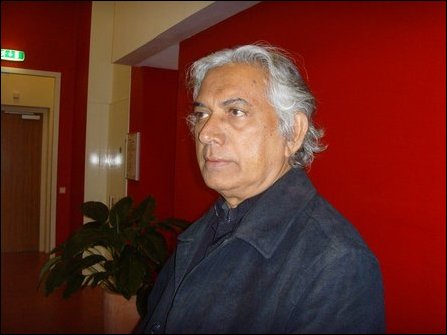
Vickramabahu Karunaratne, the presidential candidate for the NSSP.
An Phoblacht: Racism and resistance in Australia

This article first appeared in An Phoblacht, Ireland’s biggest selling political weekly newspaper. It has been posted at Links International Journal of Socialist Renewal with An Phoblacht's permission. An Phoblacht reflects views of Sinn Fein. For more information about An Phoblacht click HERE.
* * *
By Emma Clancy
February 25, 2010 -- An Phoblacht -- When Australia's Prime Minister Kevin Rudd apologised to the Stolen Generations of Aboriginal people in February 2008, hopes were high that this indicated a new approach from the government in its relations with the country’s Indigenous people.
But Rudd, elected in November 2007 after 11 years of conservative, Thatcherite rule under John Howard, has continued many of his predecessor’s policies, which undermine the rights and wellbeing of Australia’s Indigenous people.
Mugabe and reconciliation: The genesis and meaning of `We Are All Zimbabweans Now'

By James Kilgore
[This paper was presented to the Center of African Studies, University of Illinois, Champaign-Urbana, on February 3, 2010. It is posted at Links International Journal of Socialist Renewal with James Kilgore’s permission.]
Left Party Sweden: Combating `Fortress Europe'

By Billy Wharton
Australia: Trade union solidarity with NT Aboriginal struggle
By Emma Murphy, Ampilatwatja, Northern Territory
February 12, 2010 -- From February 1-14, in a remote part of Australia's Northern Territory (NT), a group of trade unionists and Aboriginal rights activists from Victoria, New South Wales and the NT joined forces with the Alyawarr people from Ampilatwatja community to help make history.
Many people around Australia have already been inspired by the Alyawarr people’s walk-off. On July 14, 2009, following a great tradition from Aboriginal struggles of the past century, they walked off their community and set up a protest camp.