Cuba: An urgent, but risky, reform
First published in Spanish at La Joven Cuba.
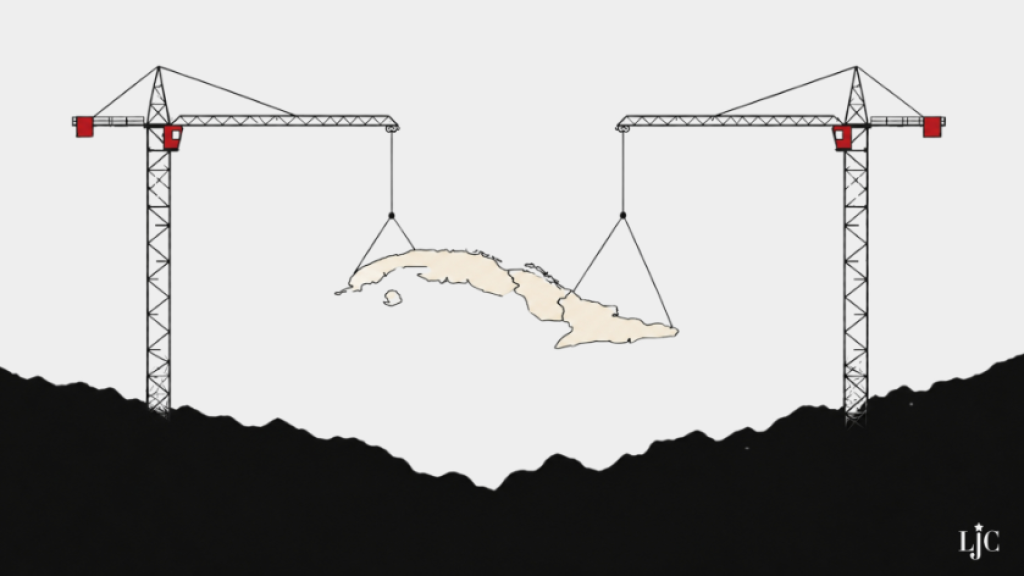
Cuba faces not just another reform, but a make-or-break decision. The government has announced some of the most far-reaching economic and social reforms in the country’s post-1959 history. It comes as the country has no more room to manage the crisis with stopgap measures, slogans or delays.
Various economists have repeatedly recommended many of the measures. That they are finally being heeded is a positive sign, but also confirms how much time was wasted. Cuba faces one of the most severe socioeconomic crises in its recent history, with an energy crisis devastating daily life, production, services, family care, mental health and people’s ability to sustain a dignified existence. Added to this is the real, profound and growing impact of the United States’ sanctions. These have intensified in recent years and aim to cut off funding sources, foreign income, access to fuel, international operations and economic room for manoeuvre.
Acknowledging this impact, however, does not absolve the government of its domestic responsibilities. Precisely because the island faces such severe external pressure, the government had less right to waste time, less room for improvisation and a greater obligation to make the changes needed to build a stronger economy.
There lies a paradox of our times. The economic war makes reform riskier, because it is implemented under conditions of extreme scarcity, institutional decay, low social trust and impoverishment. Yet it is also clear that, indirectly, this pressure ultimately propelled a transformation that had been continuously postponed. Many of the measures now presented as essential could have been adopted during the opening promoted by the Barack Obama administration, when there was a less hostile international environment, greater domestic wealth and a less exhausted society.
The outcome of this process will not just depend on internal decisions. The role of the US, as well as powers with strategic ties to Cuba such as China and Russia, will be key to the transformation’s success or failure. If the reform sends credible signals of openness, legal certainty and economic rationality, they could help stimulate foreign investment and partially reduce the country’s financial isolation. However, if sanctions are maintained or tightened, and if international allies limit themselves to political support without significant economic commitments, the scope for reform will be much narrower. Cuba needs to play its part, but the international environment can accelerate, limit or profoundly distort its results.
Overall, the package contains measures that point in the right direction. It is correct to recognise the need to grant state-owned enterprises greater autonomy, expand the scope for private-sector activity, reduce absurd prohibitions, facilitate access to inputs, open more diverse financing channels, review pricing policy, and give greater decision-making power to producers, enterprises and local communities. It is also important that it opens a discussion on wage reform, regular pension and benefit rises, and better-targeted subsidies.
For too long, the Cuban economy operated under a combination of shortages, prohibitions, ineffective controls and delayed decisions, which ultimately pushed millions of people into precarity, informality or emigration. Opening up space for initiative, the market and diverse ownership and management forms should not be seen as a concession. Rather it is a minimum condition to restore productive capacity and sustain any viable social policy.
These potential benefits, however, coexist with significant risks. This reform could expand production, attract capital, revitalise regions and reduce red tape; but if not implemented with clear rules, they could also increase inequalities, further affect those who depend on an income in national currency, facilitate asset concentration and create new areas of inequality.
The difference between a transformation geared towards national wellbeing and a simple redistribution of privileges will depend on transparency, citizen participation and effective protection of those unable to compete in the new market. The debate must not be reduced to for or against the reform; the key is what kind of reform is implemented and in whose interest. This requires looking beyond the measures' general outline and focusing on practical scenarios for their implementation.
In this sense, the transition from subsidising goods to subsidising people may be needed, but it will only be considered legitimate if it translates into concrete and enforceable social protection. It is not enough to announce a fund or set out general objectives; it must define who will be protected, with what resources, through which institutions, and with what safeguards against potential price rises and further dollarisation of the economy.
In today’s Cuba, the effects of a state withdrawing from its role guaranteeing basic services without creating decent redistribution mechanisms are already being felt. New forms to access income have emerged — such as the sale of gas for foreign currency amid the energy crisis and shortages of subsidised services — creating alternatives for one part of the population while closing the door on most workers and pensioners. It may be better to have this option than none at all, but if an essential good is available to only part of the population — and not necessarily those who work, or have worked, the most — daily life becomes organised around a stark divide between those who can survive and those left destitute.
That is why every step towards liberalisation must be accompanied by redistributive measures. It is not a question of preventing new supply channels from emerging, but of ensuring that access to basic needs is not completely out of reach for those on average incomes. If the state withdraws from certain areas without putting effective safeguards in place, the reform will not be a social lifeline, but rather the unequal management of scarcity.
The announced measures do provide for an annual adjustment of the minimum wage, pensions and benefits in line with inflation, as well as a public sector pay rise, but these will prove insufficient if they remain far below the real cost of living.
Another critical issue is privatisation. In this context, it means the part transfer of management, ownership, shares, assets and accumulation opportunities to domestic and foreign private actors. This may be needed in some areas, particularly where the state has not efficiently managed underutilised assets, companies have suffered sustained losses, or in sectors requiring capital, technology and expertise. However, we must remember that privatising, leasing, selling shares or granting usufruct rights without transparency can open a dangerous door.
Without measures such as transparent final beneficiaries, public tenders, independent audits, or conflict-of-interest declarations, the transfer process could lead to oligarchic appropriation of public assets. We must clearly define the rules for how opportunities are distributed, who has access to them and how, and the measures taken to prevent wealth accumulated over generations from being opaquely transferred to new networks of privilege. This cannot be achieved without citizen access to information, civil society organisations and a media genuinely capacity of scrutiny — all shortcomings of the Cuban political model.
Municipal decentralisation also deserves close attention. In principle, transferring powers to municipalities can bring decision-making closer to the local level and promote local solutions. However, many of these structures are underfunded, lack qualified staff and are plagued by management problems. Delegating economic, urban planning, budgetary and investment powers to them without strengthening their capacities or citizen oversight creates a perfect breeding ground to exacerbate corruption.
Oversight cannot rest solely with the state. Institutions have important responsibilities, but cannot substitute for citizen oversight. This means civil society, independent media outlets, trade unions that truly represent workers, community organisations, and the general public, with access to data, processes, contracts, tenders, budgets and results. Likewise, there must be effective mechanisms to influence decision-making, demand accountability and recall elected officials who fail to act in the interests of those they represent.
Unleashing productive forces without also unleashing civic forces would be an extremely dangerous contradiction right now. The history of several former socialist republics shows that economic liberalisation without transparency, pluralism, accountability and popular control can lead to deeply unequal oligarchic capitalism that is captured by power networks. Cuba is not immune to this risk; quite the contrary, particularly with its political culture permeated by secrecy and the systematic dismissal of criticism.
Finally, another worrying element is the implementation timeframe. The announcement said the reform will affect more than 100 legal provisions, including regulations to be repealed, amended and created. This raises the question of how long it will take to translate these general statements into concrete policies, regulations and operational mechanisms. For now, the direction is supposedly clear, but the timetable and sequence are not. In a crisis of this magnitude, time is a decisive political and social factor.
***
This may be the Cuban government’s last chance to reverse the erosion of the basic material foundations underpinning the social gains of the nation’s project. But this project will not be salvaged with slogans, appeals to the past or repeating that the reform is not abandoning socialism. It will only be salvaged if people’s lives concretely improve.
Resistance to change has already caused too much suffering. Persisting with it would only make things worse. But, alongside unleashing productive forces, we must unleash civic forces to ensure the fruits of that production benefit the majority, and do not impoverish those who have worked for years for the country’s development. That will be the true measure of reform; beyond what it achieves in terms of macroeconomic indicators, how much dignity does it manage to preserve and rebuild.