Cuba’s postponed transition
First published in Spanish at Temas. Translation by LINKS International Journal of Socialist Renewal.
Any Cuban who has been paying attention since 1993-94 knows that Cuban socialism has not been the same since then.
After socialism’s collapse in Eastern Europe and the Soviet Union’s dismantlement, things in Cuba changed dramatically. The market and private sector were introduced, the US dollar was legalised, most state-owned land was redistributed and Cuba opened up to foreign investment. This not only created a new economy and new relationship with the world, but new perspectives on socialism as a system, including its reversibility.
These policies were initially justified as a response to the crisis known as the “Special Period in the Time of Peace”, or at least they were presented that way at the time. As the crisis eased — or so it seemed (for a time) — these changes slowed. Yet their ideological consequences (what sort of socialism are we building?), and especially their impact on social inequalities and poverty, continued to spread.
Policies that had levelled the playing field between different social classes and groups in Cuba, such as a very limited wage structure, a basic food basket subsidised through the ration card system (the “ration booklet”), price controls, free services and subsidies of all kinds, gradually faded away, formally or de facto. Wages and income diverged, access to foreign currency altered the established relationship between wages and training, and production levels failed to recover.
Despite the supposed temporary nature of the crisis, Cuba never returned to the level of well-being and the vision for the future that had existed, above all in the decade prior to the Special Period.
More than a decade after those measures — approved and implemented under Fidel Castro’s leadership — a document entitled “ Economic and Social Guidelines” was publicly discussed in a mass consultation and officially adopted at the Sixth Congress of the Communist Party of Cuba (PCC) in 2011. Five years later, barely 23% of agreed-upon policies had been implemented.
In 2018, a public consultation on very broad constitutional reforms yielded unexpected results. These included the fact that the most controversial parts of the new text were not the radical changes to diversify means of production ownership, market expansion, or allowing private capital access to sectors such as agriculture and services (including those nationalised in 1960).
These transformations did not provoke opposition, despite their fundamental scope. The new Constitution, approved by an overwhelming majority in 2019, prioritised equity — instead of equality — and addressed income inequality without outlawing it.
From the early 1990s to now, more and more experts, within and outside Cuba’s institutions, have proposed a reform program that goes beyond the scope of an anti-crisis package.
Although none have proposed policies like those that marked socialism’s dismantlement in Eastern Europe and the Soviet Union, quite a few were branded emissaries of capitalism.
Despite the differences in documents issued over the past 30 years regarding the nature of Cuban socialism, misgivings towards any proposed reform persists to this day.
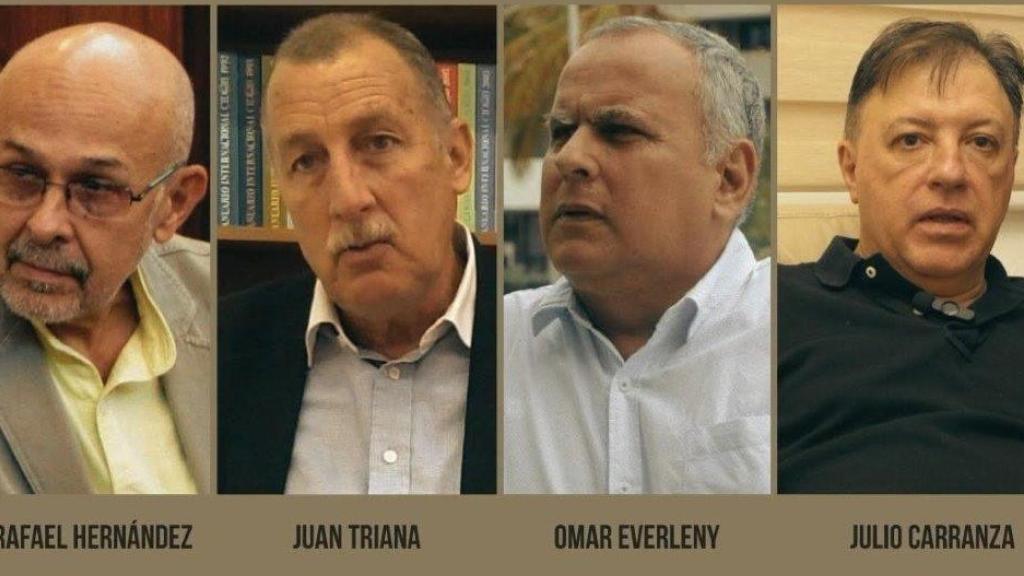
Following the United States' intervention in Venezuela on January 3, I [Rafael Hernández] asked a group of economists and political analysts the question: what should our key strategic priorities be to overcome the crisis while addressing the complexity of the moment?
Some readers told me clearly that my respondents’ answers were “excessive” (ie: neoliberal).
Now, the National Assembly of Popular Power (ANPP) has approved a reform program that far exceeds, in its radicalism and scope, anything these experts ever proposed. Nevertheless, views that identify reforms with the virus of capitalism persist.
If one reads, for example, foreign media outlets that are supposedly well-informed about what is happening now, one sees them equating recent transformations with concessions to capitalism and socialism’s definitive collapse. They are just like the local fundamentalists. It is as if nothing has changed in Cuba since the fall of the Berlin Wall.
In an attempt to shed light on the complex questions arising from the 176 measures debated in the ANPP, I spoke to three pioneering economists who anticipated them in their writings and talks, and whose way of thinking, persistence and commitment I know well: Juan Triana Cordoví (JTC), Omar Everleny Pérez-Villanueva (OEP) and Julio Carranza (JCV).
I thank them for answering my multifaceted questions and for replying in record time.
According to some economists, the focus of the reforms is, or should be, expanding the private sector into all those activities where it could operate more efficiently than the state or public sector. Will this, or should this, be the focus of the proposed economic policy? Would this not imply, in the medium term, the private sector swallowing up the public sector?
JTC: There is not just one central focus in the reforms, but at least two or three. One is expanding the private sector and its role in the economy. Another is reforming state-owned enterprises, which has been postponed so many times.
I do not think the private sector can swallow up the public sector. The public sector is still very large and powerful; it would take a lot of work for the private sector to displace it, especially since it is still a nascent sector.
OEP: The private sector must play an essential role in the proposed economic policy. Not because it is private, but because Cuba’s problem is, more than financial, a problem of supply of goods and services. The state currently lacks the financial resources to produce what the private sector can.
I do not think it is going to swallow up the public sector. Everyone has their own space.
The first thing to define is the size of the public sector. Energy, steel, all those types of production requiring large amounts of capital, can only be guaranteed by the state.
But in retail, food, personal services, the private sector could fill a large hole.
In the past, the public sector has been inefficient for various reasons. The state has diverted resources generated by socialist state-owned enterprises. Those rules have to change.
JCV: A fundamental part of the current approach is granting businesses the recognition and powers they need to operate, whether state-owned, cooperative, private or mixed, whether national or foreign owned. They should all be integrated into state-regulated markets. State-owned enterprises should be subject to strategic and financial planning, not the still existing bureaucratic and administrative approach.
Prejudices against the private sector must be overcome. The sector must be given the role it deserves. The private and cooperative sectors have an important and essential role to play; their interests must be recognised and represented, but under no circumstances should these individual or business interests — however legitimate they are — be imposed above the general and overriding interests of the people and nation.
Of course, the fundamental, strategic means of production must remain under social ownership with legal protection. All efficient public enterprises must also be maintained and developed.
The state sector that emerges from this must be efficient and competitive. This does not preclude certain activities that, by definition, operate at a loss and, given their function, must be state subsidised. But these should be few and fully justified.
Key sectors such as education and health must also remain under state control and be allocated the needed resources, even if some specific activities within these sectors are transferred to the private sector. This is already happening with some pharmacies and optical and dental services, where ownership is mixed.
These measures will exacerbate social inequalities, but these must be regulated and accompanied by a progressive and rigorous tax policy. Income disparities must result from efficiency and hard work, not corruption and illicit activities. Social policies must be strengthened to support a weary and now impoverished population. The principle that no one should be left behind must be upheld.
We must prevent perverse privatisations carried out without a competitive tendering, which benefits special interest groups, many from the old bureaucracy. We saw what happened in Eastern Europe.
These dangers are present, and the means to anticipate and control them must be put in place. At the heart of this lies the participation and political power of the population, through the effective functioning of popular power institutions and the republic’s oversight bodies — its political and social institutions, first and foremost the PCC.
To adequately play this role, however, these institutions must be reformed, including the PCC. For the state, the Comptroller General's Office must play a crucial role, its function encompassing all sectors of the economy without unjustified exclusions.
The country's democratic institutions, first and foremost parliament, must have an active and diverse voice, reflecting Cuban society today and in the future.
An efficient public sector, with genuine autonomy to plan, decide on production, redistribute profits among its workers and involve them in decision-making, operate in the foreign exchange market, and establish agreements with other companies, whether public or private, national or foreign, seems like a very different beast from the current one. Is such a metamorphosis possible? What needs to happen to allow this transformation? And within what timeframe?
JTC: The transformation of state-owned enterprises must be deep and far-reaching. We can not expect it to happen quickly. But this metamorphosis, as you call it, can happen because, although this is sometimes overlooked, we have very capable entrepreneurs who have not been allowed to develop into true business leaders.
This transformation will not only take place through direct measures on state-owned enterprise management, but also through indirect actions. Some of the policies being discussed and approved today will compel this metamorphosis: participating in the foreign exchange market, establishing much more fluid relationships with foreign companies, and free exports and imports; all of this requires change in that sector.
What else should happen? Let entrepreneurs get their act together, or at the very least do not take away their initiative once they have started, which has happened.
It is very difficult to set a timeframe. It involves a learning process, which requires shedding old habits, unlearning them, adopting new ones and learning all over again. I would not dare set a timeframe for that process, but it will not be short — it will not happen in six months. Some Cuban companies started working with foreign firms and transformed themselves quickly, but it is always a complicated process, as unlearning and relearning is relatively complex.
OEP: There will be different stages to the reform. One stage, in the first two years, will be what some economists identify as a stabilisation stage. Next will come a stage of structural changes, of between two and five years, which is where the deepest changes will occur.
In the first two years, we must focus on three vital issues: energy, food and infrastructure. Cuba’s population faces critical problems, such as water, solid waste collection and other public services that need restoring.
Then we have to determine which sectors and areas are going to be prioritised.
I still see tourism as important, and the possibility of private tour operators and tourism agents emerging offers some assurance that this sector can recover. For example, if a small hotel — say with 30 or 40 rooms — or hostels and motels can be managed by a private entity, why not do it, especially if foreigners already own them?
The government has a very concrete plan and has been very skillful, very pragmatic in recent days in raising proposals that it would not have thought of at another time.
We need to switch to private foreign exchange bureaus (CADECAs), because currency is being exchanged on the street anyway and that is money is not reaching the state. Why not establish CADECAs and charge a tax on transactions?
Another important step is eliminating the monopoly on foreign trade, so that all forms of ownership can import and export directly. If someone wants to do so through an experienced state-owned enterprise, they should be able to. But it should not be mandatory.
Likewise, we must eliminate the employment agencies, which have been an obstacle for foreign investors. And, above all, we must tackle the external debt. If the debt is not resolved, a lack of financing will continue.
An efficient public sector concentrates its resources in specific entities. For these to be efficient, they require a law governing businesses that places them all on an equal footing. This will allow the state sector to participate in the foreign exchange market and retain a portion of its profits to restore production and offset capital depletion.
With the rules applied to date, certain goods and services cannot be guaranteed. Of course not! If a state-owned company is profitable, but the state collects those profits for a “common good” — such as producing certain goods for the entire population — that may be justified. However, it undermines the company’s capacity.
In the medium term, they should be given the same opportunities that the most dynamic sector of the economy has enjoyed to date, which is currently Cuba’s largest food importer (the figures back this). The public or state sector does not have the ability to use remittances to decide where to buy and at what prices.
Autonomy has to be real. I believe the path ahead will include improved competitive conditions.
JCV: The current situation presents urgent needs that must be addressed as a priority. A comprehensive and deep transformation of the economic model is also needed. These are interdependent aspects, but should not be confused.
The immediate response to these urgent needs is determined by the fundamental problems affecting the population: energy, food, water, health, public hygiene, mobility, etc. This response requires access to more external resources. That is why the issue of debt and access to credit, investment, etc, is also a priority. The proposed measures include ways to address these urgent needs.
The other aspect is the comprehensive transformation of the economic model. This is necessarily a slower process, although it must be sped up as much as possible, and must begin with restoring macroeconomic equilibriums: fiscal deficits, inflation, external deficits, etc. This process takes longer because there is so much that needs to be transformed.
It is essential to define stages, spheres of action, general and specific objectives, indicators, and so on. Above all, to have a clear strategic vision and the political capacity to correct inevitable deviations. Otherwise, we could end up with a grim and undesirable outcome, from which there may be no coming back. I have written about at length and proposed all of this since my 1995 book, and in many subsequent texts with corresponding updates.
Today, politics is more important than ever, despite what some may think. Not to obstruct or halt the reform process, but to guide it along the needed path while always responding to the nation’s interests and not those of spurious sectors or groups, much less imperialist pressures. Therein lies a fundamental challenge. In a recent article, I said ideas, not uncontrolled events, should be the driving forces behind this process.
One feature of this new socialism, as set out in the new constitution, is decentralisation, particularly transferring powers to local levels. Seven years after that constitutional provision was adopted, we still do not have a law granting these powers. However, decentralisation and the strategic role of municipalities are now being emphasised. Are local governments prepared for this autonomy? Are they capable of administering their resources, handling domestic and foreign investment, designing fiscal and employment policies, overseeing basic services and adapting social policies to their needs? What needs to happen for local governments to fully assume this role? What are the risks involved in decentralisation?
JTC: I do not think local governments are prepared for the autonomy granted to them. That is the simple answer.
As for what needs to happen for them to be ready, one thing already happening is being granted areas of responsibilities, certain rights and obligations. The other thing that needs to happen is training suitable personnel for the task.
If you look at local governments today, they are not only “poor” because they are in poor areas, but because their staff are probably not the most suitable, although, mind you, they may well be the most dedicated.
Undoubtedly, there are many risks involved in decentralisation, ranging from misinterpretation of national policies to corruption. I do not dare list them all as new ones keep popping up.
Having the ability to interpret national policies, adapt them to local needs and generate one’s own policies involves risks and, undoubtedly, possible mistakes. I would rather take that risk than do nothing at all.
OEP: One shortcoming affecting both local and central levels is the lack of staff preparedness. Sometimes, someone appointed is unprepared or lacks expertise. Given the challenges ahead, local governments should be better prepared and granted the prerogatives they lack — powers that have been announced but, in practice, not granted. Local autonomy must be accompanied by training and incentives to enable leaders to effectively manage resources at that level.
If salaries are low and unmotivating, people will not be willing to take on municipal leadership roles. Before assuming positions, say in municipal education, people will be more interested in working in the private sector, where they can earn 10 times more. All these imbalances must be corrected. But I do believe in local government; we must work hard to prepare for what lies ahead.
There are indeed risks with decentralisation, but we must accept them. Previously, central government measures were implemented in a context where the state could manage resources. Today it does not have them, nor will it in the coming years, because today we are on our own. This means we will not have the access to the credit or allies we need, as we lost them due to mismanagement.
If a friend gives you, say, a fleet of buses for your public transport system, and you do not pay for them, they will not give you spare parts for those buses. That is how we have treated friends such as China, who help by selling to us on short payment periods but at very low interest rates. They allowed us to pay with products such as nickel, but we stopped sending nickel because we no longer produce it.
All that needs to be corrected. That is the only way forward; there is no other option. We have to overcome all adversities, but this comes at a cost. Not so much a greater social cost, because social reform has already been implemented — I will tell you more about that later.
JCV: Decentralising to the municipalities must be done with extreme care. It is positive and needed, and could make governance more democratic and efficient, but not if it is done in just any manner. Municipal decentralisation must not mean that the central government shirks its own, non-delegable, responsibilities.
A country is not simply the sum of its municipalities, not even in countries with strong federal structures. Municipalities are very different from each other, and their coordination and complementarity as parts of a whole is an inalienable responsibility of the central government.
Economic policy and implementing the national development strategy are central government responsibilities. Successful municipal decentralisation should not mean eliminating the central government’s essential role, because we are one nation.
Also, for decentralisation to function properly, municipalities must have the resources needed. First and foremost, they need capable staff and officials. Meritocracy (ability, training, ethics, integrity, empathy and commitment) should determine appointments and selections at this level, as it should at all levels.
In general, the calibre of municipal officials and civil servants is below what is required for this complex function. Of course, this work should pay what it deserves.
Against a backdrop of undercapitalisation, lack of financing, high external debt, deteriorating infrastructure, and energy and food crises, where can the investment needed to revive the economy and restructure the model come from? Do Cuban emigrants have the capital and will to become that main source? To what extent do the political circumstances within the Cuban diaspora facilitate or jeopardise this? Would it be possible without the US and Cuba returning to the path of normalisation?
JTC: The investment needed to revive the economy and restructure the model can come from different sources.
One is foreign investment, which may feel encouraged by decisions to facilitate and expand opportunities in the country.
Another source could be the opportunities offered by the BRICS. This requires a thorough understanding of how to negotiate and participate within that framework.
A third source could be domestic capital — not just private capital, but also capital from successful state-owned enterprises that want to invest to grow and diversify. They should be allowed to.
There are also loans that multinational organisations and individual countries can provide. They are much harder to access these days, but I would not dismiss them entirely.
Finally, there is capital from Cubans living abroad. To what extent do political circumstances in the Cuban diaspora facilitate or jeopardise this? So far, the history of this relationship has been very complex — you know this far better than me. It means that a segment of that diaspora is very wary of investing in Cuba.
On the other hand, Cuba’s legal framework is still not well understood. It needs significant refinement and improvement to provide to investors in general, and particularly Cuban investors who have lived in Cuba. This uncertainty must be eliminated by creating a set of very clear rules that incentivise and guarantee this participation.
Most of the Cuban diaspora lives under the constant risk and threat of the restrictions the US government imposes on Cuba. They must constantly monitor whether they are breaching any US laws that could make them subject to reprisals. This is undoubtedly a reality and could complicate large-scale investment by Cubans living abroad.
If the US and Cuba do not return to the path of normalisation, it will be difficult, but not impossible. I would have to elaborate at length to explain, but as things stand, there is already investment of capital by Cubans living abroad in the national economy. Taking these facts into account and as a measure of the truth, I would say that it is possible, even if there is no normalisation of relations between Cuba and the US.
OEP: We must recognise that Cuba’s natural economic environment is the US, given proximity and the fact that it has received most Cuban emigrants. But the US government has been very aggressive toward Cuba, and sanctions have been particularly severe in recent months.
However, Cuba needs to do what it can to promote normalisation. I have learned that Cuban emigrants have capital and could become an important source of funding. But for that to happen, legislative changes are needed. Negotiations must take place to analyse the issue of nationalisations and other pending matters, which must be resolved.
Where possible to exchange investment for assets, via a swap arrangement, this should be done. If we have a hotel with only 10% occupancy, an emigrant could manage the hotel and receive a portion of the profits. There are many options.
It will be very difficult for Cuba to access the needed capital if relations are not repaired and normalisation not achieved. Because capital today is transnational and although many companies would be willing to invest in Cuba, they won’t if they are going to be sanctioned by the US. That is what happens right now.
But we cannot give up; we must seek any positive alternative, without surrendering sovereignty but without being too rigid, because there is no other way to resolve the problems you have raised. External financing is a priority.
The state must undertake a two-year stabilisation process to resolve two key short-term problems: energy and food. It will no longer guarantee the ration card system as in the past; it simply does not have the means. This will help people understand that the socialist Cuba that existed prior to 2026 is no longer viable, and that to maintain it under new conditions requires restructuring the model.
We need to build a social market model. One mistake in recent years has been failing to implement the reforms that many suggested, especially Russia and China, where all forms of production — especially private ones — would have carried greater weight. Cuba was far too slow to implement them.
Today we are doing so when we have no other options. Negotiating under these circumstances is very difficult, because we have to accept many things that would not be accepted at another point in history, above all to save the country.
JCV: As mentioned before, resource allocation is a fundamental problem, a major bottleneck affecting the national economy; so accessing new resources is a matter of urgency. And resolving the debt issue is essential.
I proposed swapping debt for assets and investment; this is entirely possible and probably the most viable option. There are many resources and capabilities that are currently underused, and many are falling into disrepair.
Of course, this must always be done rigorously yet swiftly; we must ensure that the pressures of the moment do not lead to ill-advised decisions affecting the nation’s sovereignty and control over strategic resources.
The Cuban diaspora is part of the nation. Part of it possesses capital and entrepreneurial capacity, although this is not the majority, which consists of wage earners. Everyone, however, should be able to participate in some way; the former, through investments, technology, trade, markets, and so on.
This must be part of a shared commitment. All guarantees should be provided transparently and without hesitation, establishing laws and regulations on what can and cannot be done. In other words, broad and clearly defined scopes and safeguards, in line with a national project embraced by all, including, hopefully, those who have been hostile. This is a highly topical political issue.
The short answer is: yes, they should play an important role, without sacrificing their individual interests. There will always be risks, but we must face them with intelligence and resolve. The most important thing is people’s interests and wellbeing. Is it difficult to reconcile all this? Yes. Is it impossible? No. It is perhaps the most important political challenge today.
The most desirable scenario involves negotiations with the US, as it could significantly change the situation, help overcome the economic crisis, and so on. I believe the government has worked and continues working intensively on this, now with the benefit of years of experience, historical lessons, past mistakes, and so on. But the question must always be: what to negotiate, and to what end?
Here the answer must be crystal clear. We need a broad position that includes many sensitive decisions, but containing very clear points on what is non-negotiable under any circumstances. It has been said that sovereignty and internal order are non-negotiable; I agree. Cuba’s internal affairs are a matter for Cubans — for all Cubans — and them alone.
The US government must be aware and confident that Cuba is willing to progress and put a lot on the table, except what is non-negotiable. This could lead to a relationship based on respect and mutual benefit. However, will the US government — and this administration in particular — be willing to establish a suitable framework for negotiation?
Cuba must work toward this, but must prepare for the worst-case scenario, including unwanted military aggression. Sovereignty, properly understood, is non-negotiable; this requires no academic justification. It is the historic will of a people demonstrated for almost two centuries. Now is no different. Negotiation, yes — as much as possible, realistic, and comprehensive. But under no circumstances can we accept impositions and concessions on sovereignty.
Since 2011, successive reform programs have been adopted, agreements reached at PCC congresses, and a new constitution and new laws approved. However, the reform process has stalled and, to some extent, seems to have lost its way. What reasons are there to think things will be different going forward?
JTC: I would say there are many reasons and none at all.
The first reason for thinking differently is the international context Cuba finds itself in, which has changed dramatically and creates significant stress for the country. This situation could speed up the reform process and prevent repeating past mistakes.
Second, there is the constant threat from the US and its intentions to change the country, according to their own vision of what needs to change. Obviously, it is a driving force behind this reform process, and ensures we do not take a step backwards.
Third is the economic and social situation, the polycrisis we are immersed in and constantly suffering. Without reform, it will be very difficult to emerge from this polycrisis.
We must also understand that this government has been through a learning process. Today, it is in a situation with very few alternatives other than following a reform path that was already broadly mapped out but never followed; instead, it was halted and reversed. Now we must implement these reforms, and that is undoubtedly another reason. There is a learning process here, and that matters a great deal.
OEP: The model that is being proposed is different. While we have approved dozens of programs, reached thousands of agreements, and taken stock of PCC congresses, the constitution, the laws, etc, the country has still not made progress. Obstacles preventing progress include fear of the private sector, which is an ideological problem.
Today must be different because, I reiterate, Cuba is alone in the world. Never before have we faced such a moment of multiple crises. We have a financial crisis, a food crisis, prolonged blackouts, problems with medicine, and transportation problems, all at once.
A Cuban family today sleeps poorly, eats poorly, walks to work, has low wages, and faces high inflation. No other time in Cuba’s recent history — since the 1990s — has seen such a turbulent and complicated situation.
If we want to save not just the model, but the country, we have to do things differently. If we keep doing the same thing, we will continue redistributing misery. If new policies require constitutional changes, we must make them. If we have to remove the constitutional clause prohibiting the concentration of income and property, then so be it.
As long as the private sector is legitimate, as long as it is legal, and as long as it provides certain goods and services, why be afraid of it? The state’s strength lies in its ability to tax these activities and redistribute revenue throughout society.
For me, the only difference is that we must build a country with a market.
JCV: We have reached a make-or-break situation: external aggression on one side (which is not just the blockade) and internal shortcomings on the other, including the tremendous delay in implementing comprehensive and far-reaching economic reforms. That is one of the main errors; we have been arguing this for at least three decades, when it became evident that the bureaucratic planning economic model had run its course.
If one reads documents approved at party congresses since 2011, and the 2019 constitution, it becomes clear that this reality was understood from the outset, and that documents were approved that provided the needed political and legal scope for reform. However, inertia, misunderstandings, dogmatism and vested interests have been a constant obstacle.
What is new is that this has been acknowledged and there is the political will to move forward despite that resistance. It will be difficult, but the journey has already begun. We must be wary of that Cuban maxim since colonial times: “Acknowledged, but not obeyed.”
We must overcome entrenched obstacles, as strong as they are diffuse, making them so difficult to eliminate. They will always be present, but with consensus, essential popular participation, accountability and effective leadership, we can do it..
It is difficult to declare oneself a pessimist or optimist in the face of such a complex process. We must be realistic and, as Antonio Gramsci said, perhaps move forward with pessimism of the mind but always optimism of the heart.