The dark shadow spreading across Latin America
This is an edited version of an article first published at International Viewpoint.
The Americas is the only part of the world where United States President Donald Trump has made significant progress with his national security policy goals. Yet at home, Trump faces significant difficulties in trying to limit his predicted setback in the November midterm congressional elections.
Trump’s failures
When it comes to the war on Iran — carried out with his sidekick, Israeli Prime Minister Benjamin Netanyahu — Trump has not only suffered a loss in popularity, but is losing the war itself. The White House is therefore desperate to cover up this humiliating defeat.
On the economic front, Trump’s tariff war against the world has yet to achieve any positive macroeconomic results, particularly in terms of reducing prices or the utopian dream of bringing back industries the US relocated abroad during the past 35 years. His tariff wars may end up being a complete failure.
On the technological competition with China front, which is key for Trump, the situation seems to be at an impasse despite large-scale protectionist measures targeting China’s electronic chips and AI. Beijing has responded with a conciliatory discourse combined with retaliatory measures based on the principle of “an eye for an eye, a tooth for a tooth.”
Progress in Latin America
The only region where Trump, his billionaire friends and the global far right can point to serious progress is, undoubtedly, the large region that stretches south of Mexico’s Rio Bravo (which the US insists on calling Rio Grande).
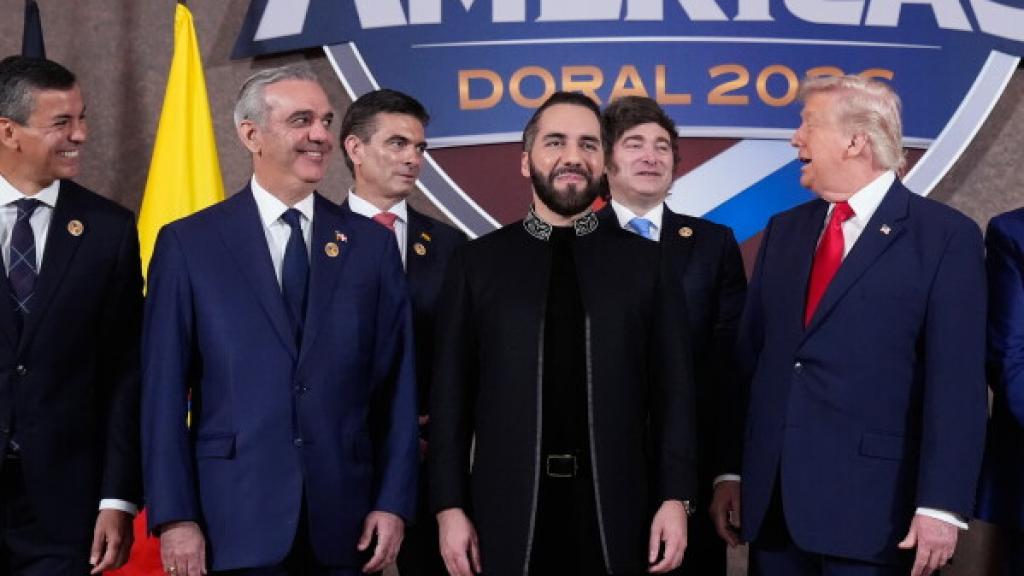
The world leader has besieged Latin America — so far successfully — through colonialist and authoritarian attacks. Hegemonic imperialism has launched a series of offensives, seeking to promote its Shield of the Americas [a military cooperation alliance involving far right and right-wing governments in the region to allegedly oppose transnational criminal organisations, in particular drug cartels]. This situation would not be possible without the more or less enthusiastic support of large sections of the capitalist oligarchies in Latin American countries, which have turned to neo-fascism.
These far-right governments have invited US companies and troops into their territories, applied ultra-neoliberal structural adjustment programs that benefit the most retrograde local capitalists, and suppressed democratic and social gains. Their objective is to eradicate all memory of the recent progressive reforms implemented in the region, and the governments that enacted them. Though limited, these reforms included important social policies, respect for human rights and defence of national sovereignty.
Trump and the far right won three important regional victories in June. Or, said differently, the left and social movements suffered three consecutive defeats: two electoral losses in Peru and Colombia, and the defeat of the street mobilisations in Bolivia.
Far right’s shadow spreads
Hegemonic imperialism has already invaded Central America and the Caribbean, deploying an unprecedented military contingent to maintain total regional domination and relying on help from allies such as Nayib Bukele in El Salvador and Raul Mulino in Panama. It is also sought to suffocate Cuba and restore capitalism on the island — a path that the Cuban Communist Party’s latest economic plan also appears to want to go down.
Trump’s strategists view Colombia and Venezuela as part of the Greater Caribbean [made of forty territories including an archipelago of Caribbean islands and a continental zone of countries in South and Latin America]. The latter country is currently dealing with the fallout of the devastating earthquakes, which Delcy Rodríguez’s puppet regime has been unable to deal with.[2] Since January, the birthplace of the Bolivarian revolution has become a colonial protectorate.
Meanwhile, Colombia will soon be ruled by a previously unknown extremist, Abelardo de la Espriella, inspired by former far right Brazilian president Jair Bolsonaro and current far right Argentine president Javier Milei. With Keiko Fujimori’s narrow election win in Peru, the right and far right are clearly casting their shadow over South America through governments that will only worsen superexploitation, corruption, privatisation, land theft, environmental degradation, resource plunder and repression.
Growing polarisation
Without wanting to minimise this harsh reality and the setback that these governments represent for the region’s peoples, we also need to take a closer look at existing contradictions and ask: will these recent victories guarantee imperialism a pacified, stable and submissive “Western hemisphere” (how the neo-fascist in the White House calls the region)?
What happened in Peru and Colombia indicates that is not the most likely hypothesis, as in both countries the left and social movements showed they were capable of delivering their own surprises.
In Peru, no one could have imagined before the election campaign that a progressive representative from the provinces would make it to the second round. Yet the electoral confrontation ended in a technical draw, indicating that the decades-long crisis in this Andean country has not been resolved.
In Colombia, on top of likely fraud and brazen imperialist intervention in the electoral campaign — through financial backing and technological support to disseminate disinformation — the far right was also aided by the privatised political system. Yet, never before has the left united behind a candidate as it did in these elections and obtained such a high score, suggesting a difficult road ahead for the Abelardo de la Espriella government.
In Bolivia, the outcome was more complex: we saw the defeat of a peasant, indigenous and worker-popular uprising, led for the first time in decades by (divided) forces that did not belong to the former Movement Towards Socialism (MAS). It is too early to draw definitive conclusions, but this fragmentation — engendered by the former party-movement’s self-destruction — and the immeasurable difficulty of overthrowing an elected government in a very unfavourable regional context, will force the uprising’s protagonists to ask themselves whether it would have been more prudent to back down in an organised way, after the movement achieved a precious victory by blocking the neoliberal decrees on prices and land ownership.
The battle for Brazil
The next big battle has already begun in Brazil. Together with Mexico and Uruguay, these three Latin American countries are the only ones with governments that are, to more or less extent, on the left. Defeating current president Lula da Silva and the Workers Party (PT) in the October elections is crucial for the global far right — and for Trump in particular.
There is no doubt Trump and the tech giants will seek to replicate in Brazil the disinformation war they waged in Colombia. US imperialism’s leader has already declared his support — through photos and social media posts — for Flávio Bolsonaro, the eldest son of the former putschist president and only viable candidate on the right. But the US is also trying to interfere in the vote through the issue of public safety, with Trump labeling two Brazil-based criminal groups as “terrorist organisations”, and by stepping up his tariff war against Brazilian products.
Direct US interference in Brazil’s affairs is frowned upon in the country, even among some sections of Bolsonaro’s electorate. But the left will pay a price in these elections for the PT government’s weaknesses and limitations, and those of Lula in particular. The support Lula lent to Bolivian President Rodrigo Paz at the height of the popular revolt and the decision to procrastinate rather than act quickly and ruthlessly to remove members involved in financial scandals are two examples.
None of this, however, should prevent all left, progressive and democratic sectors in Latin America, and around the world, from supporting Lula’s candidacy for a new mandate and against the return of Bolsonarism and international neo-fascism. Similarly, the Cuban government’s steps towards capitalist restoration should not prevent us from standing unconditionally with Cuba in its struggle for sovereignty against the giant of the north.
Unity against imperialism and the far right
In Latin America, the question of defending national sovereignty against imperialism remains a central axis for organising resistance to neofascism — perhaps more so than in any other corner of the world right now.
From Colombia’s Historic Pact — now a registered party backed by half the country — to the broad left coalitions in Peru, Argentina, Chile and Mexico, to the heroic resistance fighters in Venezuela and Central America, we need unity and mutual support amid this new period of struggle opening up against far-right governments (and those under Trump’s thumb), as we wait and hope Trump suffers an electoral setback in the US midterm elections.