Britain: Poverty and inequality fuel Labour’s crisis
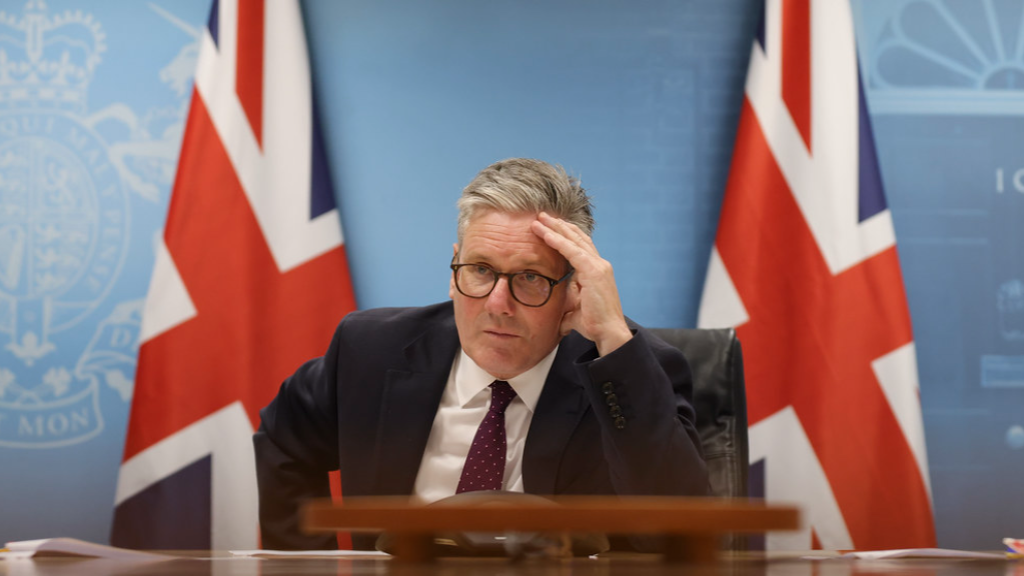
Despite its huge parliamentary majority, Britain’s Labour government is in turmoil after its vote collapsed in the May 7 local council elections and defeat in the February 26 parliamentary by-election in a working-class Manchester suburb to the Green Party.
The crisis has left Prime Minister Keir Starmer facing a challenge from Wes Streeting, who resigned as health secretary on May 14. If Streeting collects enough MP support, a leadership election may ensue. Should that occur, potential opposition to Streeting could come from former deputy leader Angela Rayner or former leader Ed Miliband. The most popular politician in Britain, Manchester mayor Andy Burnham, is not an MP, and therefore unlikely to stand.
In any case, none of the potential candidates are committed to radical policies that could resolve the chronic problems of poverty, inequality, housing shortages and a hugely underfunded health service (NHS). If anything, Streeting would likely push the party further right — on public spending, on Palestine and on the right to protest.
One fact starkly reveals the depth of Britain’s crisis: the difference in healthy life expectancy between rich and poor areas. Life expectancy without a major health condition has fallen from 62 years to 60 years. But the gap between rich and poor areas has widened to about 20 years. Poverty clearly makes people ill.
End of Labour-Conservative dominance
The local council elections saw more than 1000 Labour councillors defeated, alongside substantial gains for Nigel Farage’s far-right Reform UK party and the Greens, led by dynamic new leader Zack Polanski.
With only half of local council seats up for re-election, exact percentages for each party are difficult to calculate. But the raw data shows Reform winning 26%, the Green Party 18%, Labour and the Conservatives both on 17%, and the Liberal Democrats 16%.
As Polanski noted, these results signal “the end of Conservative-Labour two-party politics. The real battle is now between the Greens and Reform.”
The depth of Labour’s crisis is such that many are asking whether it can survive. When even the Labour loyalist paper, Tribune, says the party is on its last legs, the situation is at least deadly serious.
Green Party challenge
The vote to Labour’s left is now dominated by the Greens. Polanski has been responsible for positioning the Greens more clearly as an anti-austerity party focused on housing and environmental issues, while also condemning the US-Israeli wars on Gaza and Iran.
As a result, Green Party membership has undergone a sensational rise — from 54,000 in early 2024 to an estimated more than 220,000 today.
The Greens benefited from the fiasco of Your Party (YP), with Jeremy Corbyn and his trade union allies carrying out a split before its founding conference. YP stood no candidates in these elections.
For the moment, YP is effectively dead as an electoral force. This is a great disappointment to the hundreds of thousands who expressed interest in joining YP, but have now moved on.
Elections for the Welsh and Scottish parliaments were also held. In Wales, Labour suffered an historic defeat at the hands of Reform and Plaid Cymru (the Party of Wales). Plaid, a moderate left-wing nationalist party, will now form a minority government. All Welsh parties have said they will not work with Reform.
In Scotland, the Scottish National Party was again the largest party, but will once more need support from other parties to pass particular bills.
What’s behind the crisis?
Like many decisive political events, the issues that started the current turmoil are underlain by more fundamental events.
On the surface, it began with the revelation that Starmer’s choice for ambassador in Washington, Peter Mandelson, had been flagged by security services as problematic due to his links with Jeffrey Epstein. Starmer claimed the vetting problems were hidden from him — an obvious invention.
Since then, each week has brought a fresh scandal. But the real problem is much deeper.
The common thread is the deference shown by Britain’s major parties towards wealth and power. Even without controversies such as the Mandelson-Epstein revelations, Labour would still be trapped in the contradictions of its economic strategy.
The growth myth
Starmer and finance minister Rachel Reeves promised economic “growth” would magically generate tax revenue. It did not. That partly reflects a sluggish global economy. But, more importantly, it reflects a domestic context in which working-class households and poorer segments of the middle class lack spending power.
The result? Millions face low pay, inadequate benefits and deteriorating public services. The NHS and transport systems are visibly struggling. Meanwhile, the housing crisis grinds on, locking people out of stable and affordable homes.
Yet despite this, Labour has pressed ahead with deeply unpopular policies: keeping the two-child benefit cap, scrapping winter fuel payments, and attempting to cut disability mobility payments. These moves were only withdrawn after backbench revolts. Add to that the retreat on key net-zero pledges and refusal to take meaningful action over Gaza, and the political damage becomes clearer.
Decaying public services and housing
Labour has bound itself to strict fiscal rules, meaning improvements to the NHS, elderly care and housing remain elusive. Local government too is near breaking point. Across public services, the picture is bleak.
Water is a glaring example. Privatisation has delivered vast profits for investors, rising bills for consumers, and chronic under-investment in infrastructure. The result: polluted rivers and sewage-strewn beaches.
Housing is among the Starmer era’s clearest failures. Labour pledged to boost housebuilding dramatically, expand affordable housing, and sweep away planning “obstacles”. Yet little meaningful public investment has followed.
Promises of large-scale social housing construction have not materialised. Labour promised 300,000 new homes each year until 2029; last year, only 122,500 were built.
Everyone knows that climbing onto the housing ladder is hugely difficult when the average house price across Britain is £300,000 and a staggering £553,000 in London. Rent for a two-bedroom flat is also extremely high. Many private renters are paying 50% or more of their disposable income on rent or mortgage repayments.
The housing crisis and low wages are graphically revealed by the fact that about 30% of people are still living at home at 30.
The housing crisis remains a major driver of poverty and insecurity. High housing and utilities costs lead to a substantial transfer of disposable income to finance capital. This, in turn, means hundreds of thousands of households are using their savings and credit cards to sustain household expenditure. They are, in effect, in debt bondage.
All of this creates fertile ground for Reform.
Copying Reform policies
Labour’s slide in the polls was predictable. So too was its failed attempt to deal with Reform by echoing it. Reform cannot be beaten by copying its “keep them out” and “send them back” sentiments.
Instead, the “stop immigration, start repatriation” policies of Enoch Powell and the National Front in the 1970s are now becoming the main parties’ policies — and, shamefully, Labour government policy.
The right’s obsession with small boats crossing the Channel, restrictions on care homes, and the NHS recruiting from abroad, all pose the threat of drastic cuts in care home places and a further squeeze on NHS workers.
If the aim is to encourage British people to take up these roles, this is unlikely to succeed. Unemployed people will not want jobs that offer low pay and very long shifts, and need skills they do not have.
Furthermore, new restrictions on international students, including on family reunions for graduates, will affect higher education finances and the number of skilled workers and researchers wishing to remain in Britain.
The widely held but utterly false view that immigrants are to blame for crisis-ridden services ignores the real causes: decades of under-investment, privatisation and spending squeezes.
The tax taboo
Meanwhile, mention higher taxes and the major parties protest that ordinary people are already stretched. This deliberately obscures where substantial tax revenue could come from.
Corporation tax remains low by international standards. Vast profits are lightly taxed or not at all. Enormous personal wealth sits shielded in offshore havens. Britain is not short of money — it is short of political will.
Dozens of transnational corporations reap vast profits in Britain. They pay minimal tax, claiming to be headquartered in Ireland, Switzerland or Luxembourg, and asserting that their local subsidiaries pay substantial licensing fees, leaving little or no taxable income in Britain.
High-tech giants such as Apple, Amazon, Jigsaw (Google), Meta (Facebook), Microsoft, X (Elon Musk), and OpenAI all benefit from a low or no-tax regime for their British operations.
Meanwhile, untold billions of taxable wealth globally, valued at £388 billion a year, evade tax in offshore havens, the majority of which are British overseas territories.
New Labour’s shadow
What is now unravelling is an attempt to recreate Tony Blair’s New Labour, which was in power between 1997–2010. Across Labour’s leadership — from Streeting to Miliband, Rayner to Starmer — there is broad agreement that New Labour’s record was something close to sacred: pragmatic, modern and electorally successful.
But that is a myth. New Labour’s support began to drain due to Blair’s role in backing the US wars on Iraq and Afghanistan. Domestically, it ended in austerity and political collapse after years of indulgence towards banks and financial institutions.
When mortgage-backed investments imploded in 2008, the state bailed out Northern Rock, Lloyds and the Royal Bank of Scotland, giving significant sums to other banks as well. The cost was in the hundreds of billions of dollars. Austerity followed — first under Labour chancellors Gordon Brown and Alistair Darling, then intensified under David Cameron and George Osborne.
Public-private partnerships left long-term debts that continue to strain health budgets. Some hospital trusts are paying millions annually in interest before funding frontline services.
The tight spending grip is also evident in the slow compensation for victims of the Post Office scandal, the contaminated blood catastrophe and the Windrush scandal. Women affected by the rapid rise in the state pension age have been denied compensation entirely.
Mandelson and the party machine
There is little reason to shed tears for Peter Mandelson or Morgan McSweeney, Starmer’s former chief of staff. Both were, at different times, instrumental in marginalising Labour’s left and steering the party toward intensified neoliberal and anti-left-wing policies.
McSweeney rose the Labour ranks under the protective wing of Steve Reed, then leader of Lambeth Council. As Starmer’s advisor, McSweeney is said to have developed close links with Mandelson.
Alongside Blair and Brown, Mandelson was a principal architect of “Blairism”, under which the largely symbolic Clause 4 on common ownership was swept away, party policy shifted rightward, and relations with the wealthy elite flourished.
Mandelson’s close connections with the mega-rich and his strongly pro-US, pro-Israel positions were positive credentials for an incoming ambassador to the US. After all, the US president also has multiple connections to the rich and famous internationally — a world in which hostility to the needs and rights of ordinary people is taken for granted.
Mandelson once said: “Every morning I wake up and think about how to bring down Jeremy Corbyn.” The party’s right wing attempted to remove Corbyn first in 2016, by standing Owen Smith against him. Smith’s campaign was backed by Starmer, Miliband, Yvette Cooper, Sadiq Khan, Margaret Beckett, Harriet Harman, dozens of other Labour MPs, and some trade unions, including GMB Union and the Union of Shop, Distributive and Allied Workers.
The outcome was a humiliating defeat for Smith, who won just 38% of the vote. But drill down and you find that Smith won 81% of MP votes, 46% of trade union votes, and 40% of constituency member votes.
These votes, however, were ultimately swamped by those of the 123,000 registered supporters who were permitted to vote in 2015 and 2016. This was a shock to the Labour right, who decided something much more serious had to be done to undermine Corbyn.
The core question
The crisis facing Labour is not just about personalities — it is about political economy. Public services are crumbling. Inequality is widening. Living standards are stagnant. But the party leadership refuses to challenge the structures that produce these outcomes.
There is an unavoidable conclusion: if Britain is to repair its public realm — from the NHS to housing, from local councils to environmental infrastructure — state revenue must rise.
Yet government spending is a lower percentage of GDP than in comparable states. In Germany it is 58% of GDP; in France 57%. In Britain, it is about 40%, just above the US rate of 37-38%. These are not just statistics; they represent the extent to which public spending has been repressed in Britain.
Political movements advocating a realignment of the British economy towards working people, the poor and the victimised internationally face a major political struggle. Without it, the far right will walk into the political vacuum the left has failed to occupy.
A government that works for the majority — the millions without significant wealth, who struggle from one payday to the next — must bite the bullet of a realignment of wealth and power. Until that question is confronted, the cycle of disappointment will continue — and the political space will remain open to Reform, the Tories or a coalition of both.
Phil Hearse is a veteran revolutionary socialist, a member of the National Education Union and a supporter of Anti-Capitalist Resistance.