Why Marx’s theory of surplus-value and exploitation matters to workers today: Capital, commodities and profit
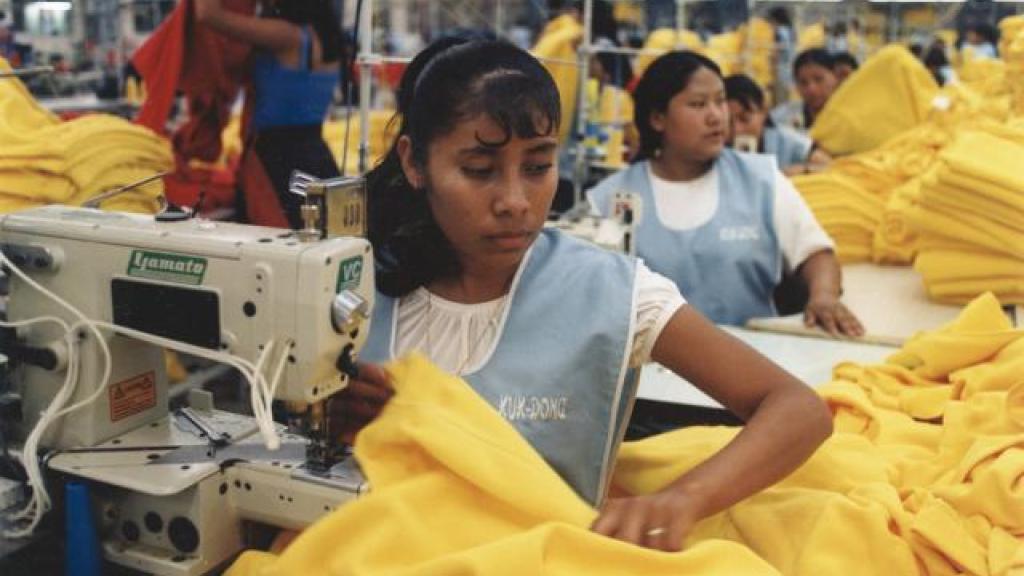
In my earlier article, “Why Marx’s theory of value is of value to workers today: Commodities, fetishism and labour-power,” we saw that under capitalism most things we use to meet our needs, along with the means of producing them, take the form of commodities. Production requires both nature and labour. Resources extracted from nature, as well as labour-power, become commodities. Commodities are then exchanged at their values. If so, then where does profit come from? This is the question discussed here.
General formula for capital
There are two forms of commodity circulation. In C–M–C, people sell commodities for money and use that money to buy commodities. In capitalist circulation, money is advanced to buy commodities that are subsequently sold for money: M–C–M.
The capitalist formula is actually M–C–M′, where M′ = M + Δ.1 The increment Δ is surplus-value. The original value is preserved and expanded; this movement converts money into capital. The formula M–C–M′ applies to merchant, industrial and financial capital. It is therefore the general form of capital in circulation.
Where does surplus-value not come from? Circulation — buying and selling of commodities — itself creates no new value. A seller may gain at a buyer’s expense, but such gains are transfers of existing value. One capitalist can cheat another, but the capitalist class as a whole “cannot defraud [over-reach] itself” (Marx, 1887:114). Mere transfers of assets between capitalists do not increase total value.2
From commodity circulation to the labour process in its capitalist form
Circulation cannot create value, let alone surplus-value. Purchased physical commodities cannot create surplus-value either. The creation of value — or indeed, wealth as use-values — requires that human labour interacts with means of production (raw materials, energy and instruments, directly or indirectly derived from nature) to produce use-values.
This is called the labour process in its general or simple form. It is a necessary condition for the production of wealth and, under commodity-producing conditions, value. But the labour process in its general form does not explain the production of surplus-value. Surplus-value arises under historically specific social relations, when labour-power becomes a commodity and its consumption by capital produces more value than the value of labour-power itself. The production of surplus-value requires a historically specific form of the labour process: the capitalist labour process. It has two distinctive features.
First, “The labourer works under the control of the capitalist to whom his labour belongs” (Marx, 1887:131). The capitalist purchases labour-power and means of production. The capitalist ensures “that the work is done in a proper manner, and that the means of production are used with intelligence, so that there is no unnecessary waste of raw material, and no wear and tear of the implements beyond what is necessarily caused by the work” (Marx, 1887:131). The capitalist is careful to ensure that “his workmen are not idle for a single moment” (Marx, 1887:137).
Second, the product of the labour process produced by the labourer “is the property of the capitalist and not that of the labourer, its immediate producer” (Marx, 1887:131). This is because “From the instant [the labourer] steps into the workshop, the use-value of his labour-power, and therefore also its use, which is labour, belongs to the capitalist” (Marx, 1887:131). Capitalist control over the labour process and ownership of its product distinguish the capitalist labour process from the labour process in general.
Two conditions also govern capitalist production: use-values must be produced because they constitute the material basis of commodities; and production must take no more labour time than is socially necessary under the prevailing conditions. Capitalist control over the labour process is directed, in part, towards meeting this requirement, although individual enterprises may fail to do so. In other words, commodity production under capitalism must obey the principle of socially necessary abstract labour time (SNALT).3
Yet, strictly speaking, these features of the capitalist labour process do not fully explain how surplus-value is produced. The means of production (raw materials, energy, machinery and other material inputs) used in the labour process do not create surplus-value. Science and AI can raise labour productivity, but they do not independently create new value. Means of production transfer their existing value to the products of labour.4
If means of production are bought at their value and merely transfer their existing value to the final product, the capitalist must find another commodity capable of creating new value. This commodity must have a special use-value: its consumption in production creates more value than the commodity itself is worth. It is a commodity
whose use-value possesses the peculiar property of being a source of value, whose actual consumption, therefore, is itself an embodiment of labour, and, consequently, a creation of value. The possessor of money does find on the market such a special commodity in capacity for labour or labour-power (Marx, 1887: 119).
Surplus-value cannot arise from circulation alone, yet the capitalist must purchase something in circulation that makes its production possible. It is the commodity labour power.
By the purchase of labour-power, the capitalist incorporates labour, as a living ferment, with the lifeless constituents of the product (Marx, 1887: 131).
The owner of the money has paid the value of a day’s labour-power; his, therefore, is the use of it for a day; a day’s labour belongs to him (Marx, 1887: 136).
Constant capital (means of production) and variable capital (the capital advanced to purchase labour-power) play different roles. Unlike the means of production, living labour creates new value. Living labour adds more value than the value of labour-power. Means of production serve as material conditions through which living labour produces new value and surplus-value. The capitalist labour process is therefore simultaneously a process of producing use-values, value and surplus-value (valorisation).
[I]n the first place, he wants to produce a use-value that has a value in exchange, that is to say, an article destined to be sold, a commodity…
Secondly, he desires to produce a commodity whose value shall be greater than the sum of the values of the commodities used in its production, that is, of the means of production and the labour-power, that he purchased with his good money in the open market” (Marx, 1887: 131).
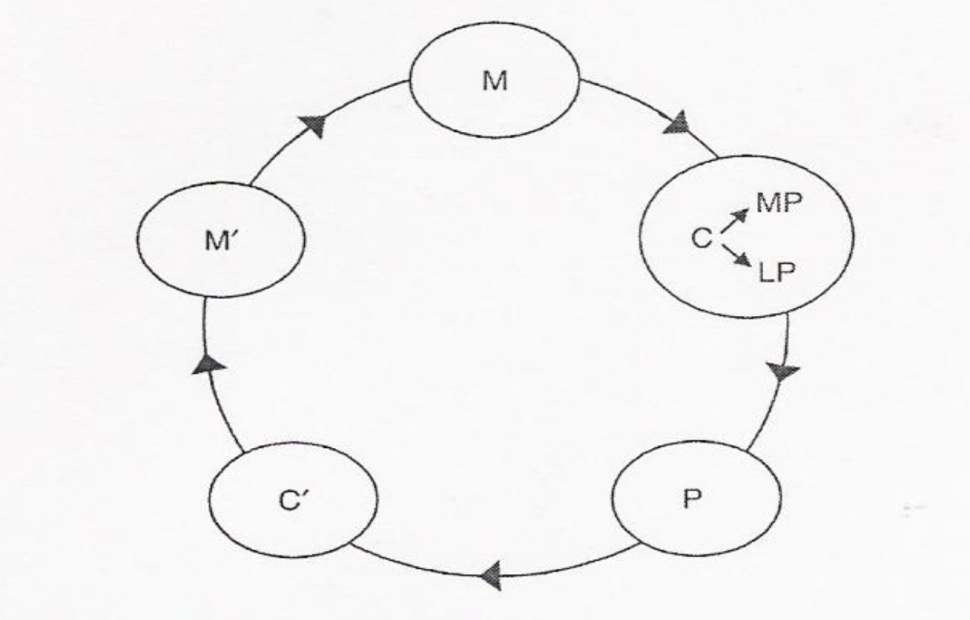
To understand valorisation, we need to enter the hidden abode of production, where surplus-value is produced. Figure 1 extends the general formula M–C–M′ to include capitalist production. Money is advanced to buy labour-power and means of production, which are combined under the control of the capitalist to produce a new commodity that is sold for more money than was originally advanced. The value of the new commodity comprises constant capital (c), variable capital (v) and surplus-value (s).
There is a distinction between “the past labour that is embodied in the labour-power” and “the living labour that it can call into action”; that is, between the value of labour-power and the value created through its expenditure in production. The crux of the matter is quite precisely this:
The fact that half a day’s labour is necessary to keep the labourer alive during 24 hours, does not in any way prevent him from working a whole day. (Marx, 1887: 134; emphasis added).
The circumstance, that on the one hand the daily sustenance of labour-power costs only half a day’s labour, while on the other hand the very same labour-power can work during a whole day, … this circumstance is, without doubt, a piece of good luck for the buyer, but by no means an injury [injustice] to the seller (Marx, 1887: 136).
Therefore, the value of labour-power, and the value which that labour-power creates in the labour-process, are two entirely different magnitudes; and [it is] this difference [that] the capitalist had in view, when he was purchasing the labour-power (Marx, 1887: 135).
At the heart of the capitalist labour process is a fundamental and irresolvable contradiction between capital and labour: workers produce commodities and create value, but capitalists appropriate the products of their labour and the surplus value they generate.
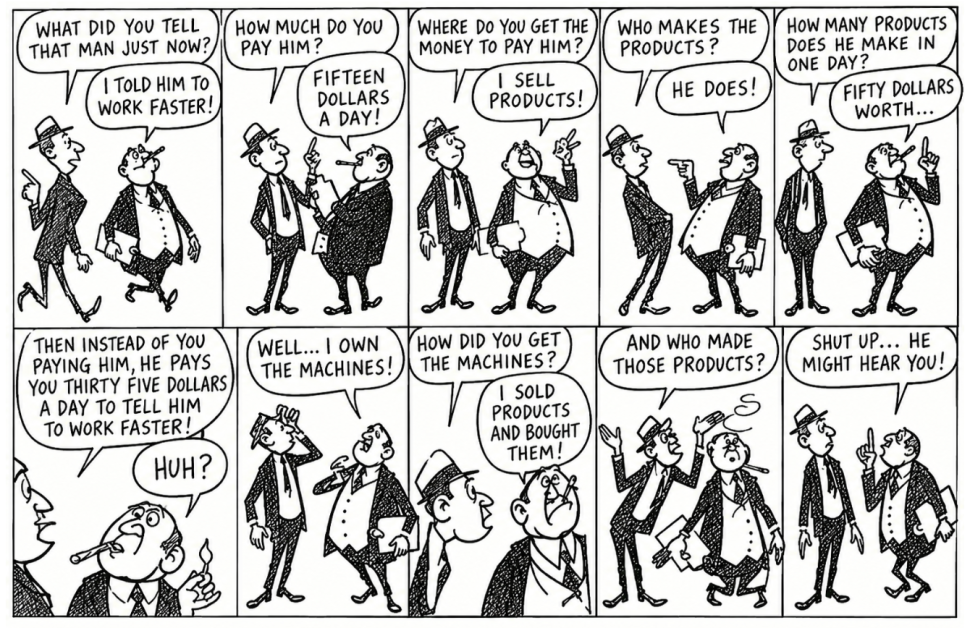
Consider this imaginary conversation between capital and labour (see Figure 2 further below). When a worker asks a capitalist how much he earns, the capitalist replies that he makes fifteen dollars a day, while the worker receives only ten dollars. The capitalist explains that he sells products worth fifty dollars a day. When the worker suggests that he should receive thirty-five dollars instead of ten, the capitalist responds that he must pay for the machinery. But when asked how he acquired the machinery, the capitalist admits that he bought it with money obtained from selling products. And who made those products? The workers themselves.
The cartoon reveals that the capitalist’s ownership of the means of production, including machinery, enables him to appropriate the fruits of workers’ labour. The machinery, which appears as the capitalist’s contribution to production, may itself have been purchased with surplus-value previously appropriated from workers. Capitalist accumulation reproduces and expands capitalist control over both the means of production and the workers who operate them.
A capitalist may pay the full value of labour-power and nevertheless appropriate surplus-value. The rate of surplus-value — or degree of exploitation — can be increased in two ways: through absolute and relative surplus-value.
Assume that a worker works eight hours a day and produces new value equivalent to $200, while the daily value of the worker's labour-power is $100 (see Figure 3). Necessary and surplus labour are analytical divisions of the working day, and not necessarily separate tasks performed at different times.
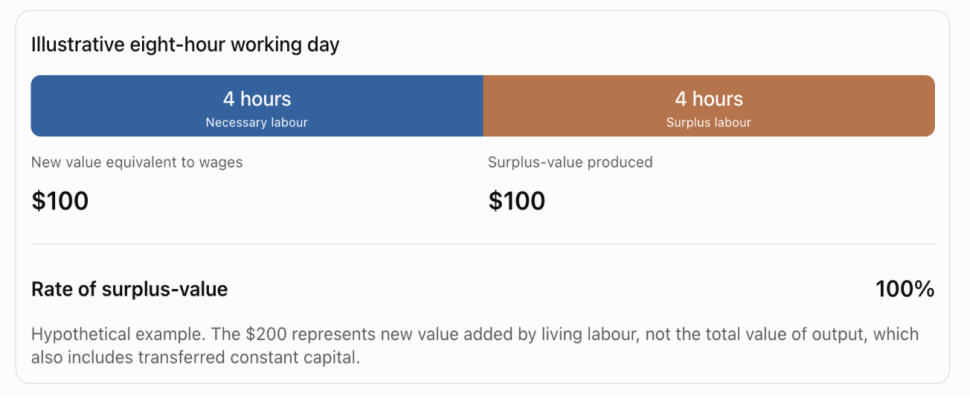
Absolute surplus-value is produced principally by lengthening the working day while necessary labour time remains constant. Intensifying work at a given wage — filling the pores of the labour process — can have a similar effect by increasing the amount of labour expended within a given period.
Relative surplus-value arises when necessary labour time is reduced relative to surplus labour time, generally through productivity increases that reduce the value of labour-power. Machinery, science and AI in sectors producing goods, and the inputs to those goods, can reduce necessary labour time and expand surplus labour time. Workers’ struggle against longer working days puts pressure on capitalists to pursue relative surplus value.
Implications of the theory of exploitation
What are capital, capitalists and workers?
Capital is money in endless motion, directed towards the continuous expansion of value. Marx writes,
The circulation of money as capital is …an end in itself, for the expansion of value takes place only within this constantly renewed movement. The circulation of capital has therefore no limits (Marx, 1887: 107).
The possessor of money can be an individual, a group, a state enterprise or a cooperative.
The expansion of value, which is the objective basis or main-spring of the circulation M-C-M, becomes his subjective aim, and it is only in so far as the appropriation of ever more and more wealth in the abstract becomes the sole motive of his operations, that he functions as a capitalist, that is, as capital personified and endowed with consciousness and a will (Marx, 1887: 107).
Use-value is never the aim of the capitalist:
Use-values must therefore never be looked upon as the real [=immediate] aim…; neither must the profit on any single transaction (Marx, 1887: 107).
The capitalist is one who personifies the logic of capital: accumulation becomes a subjective aim because it is an objective requirement of capital. Capitalism must therefore be examined both through capitalists and the logic of capital; cooperatives, too, can embody this logic even when they are not managed by individual capitalists.
A worker lacks sufficient property to work independently and therefore sells labour-power for a wage. Workers in productive sectors — including farming, mining, manufacturing, construction and transportation — produce new value. Mercantile and financial activities draw on part of the value produced in these sectors, financing wages and profits in those activities.5
Central to the analysis of exploitation is the distinction between the value produced and wages received: workers produce more value than the value of the goods and services necessary to reproduce their labour-power, which they purchase with their wages.
Why cheating or unequal exchange is not essential to exploitation
Exploitation does not require cheating in commodity exchange, wages below the value of labour-power or exceptionally evil capitalists. Formally free and equal exchange can coexist with exploitation: workers own their labour-power and can sell its use, but capitalist ownership of the means of production gives employers authority over labour within production.
If the concept of value is devalued,6 its role in explaining profit is also devalued. This is why the law of value is indispensable to explaining capitalist exploitation. Vladimir Lenin, like Karl Marx, explains profit through the law of value without denying that cheating and fraud occur. He argues:
to explain the profits… we must assume that labour-power is sold at its real value. Similarly, … we must assume that [the merchant capitalist] buys and sells goods in accordance with the general laws of commodity exchange (Lenin, 1899: 362).
To focus only on capitalists’ tricks and disregard the economic nature of profit, Lenin argues, would be to adopt “the viewpoint of vulgar economics” (Lenin, 1899: 362). Wealth must be produced before it can be redistributed, whether or not exchanges conform to the law of equivalents.
Capitalist exploitation, crisis and inequality
It is the relation between capitalists and workers that is the fundamental reason for class inequality. Note that the concept of class inequality should not be seen merely in terms of income. The relation between exploiting and exploited classes cannot be understood simply as a quantitative inequality between otherwise equal social groups. It is a relation of domination and exploitation.
Lenin said:
The exploiter and the exploited cannot be equal (Lenin, 1918).
Elsewhere, Lenin says,
as long as there is exploitation there cannot be equality. The landowner cannot be the equal of the worker, or the hungry man the equal of the full man (Lenin, 1919).
Exploitation is a qualitative relation. Inequality in income is a quantitative relation involving differences in magnitude or degree. The latter is significantly shaped by the former, mediated by historically specific economic, political and institutional processes.
Marx explains the fundamentally exploitative character of the relation between capital and labour:
The laws of appropriation or of private property, laws that are based on the production and circulation of commodities, become by their own inner and inexorable dialectic changed into their very opposite. The exchange of equivalents, the original operation with which we started, has now become turned round in such a way that there is only an apparent exchange. This is owing to the fact, first, that the capital which is exchanged for labour-power is itself but a portion of the product of others’ labour appropriated without an equivalent; and, secondly, that this capital must not only be replaced by its producer, but replaced together with an added surplus (Marx, 1887: 411; emphasis added).
Moreover,
The ever repeated purchase and sale of labour-power is now the mere form; what really takes place is this – the capitalist again and again appropriates, without equivalent, a portion of the previously materialised labour of others, and exchanges it for a greater quantity of living labour” (Marx, 1887: 411; emphasis added).
A worker may enjoy a higher standard of living and nevertheless face a higher rate of exploitation: wages may rise while the value created by living labour rises even faster relative to the value of labour-power. In such circumstances, the relative wage may decline even as the worker's real wage rises.
According to Oxfam Canada (2026), average worker wages in Canada decreased by 0.9% between 2024–25, while CEO pay rose by 9.1% over the same period.
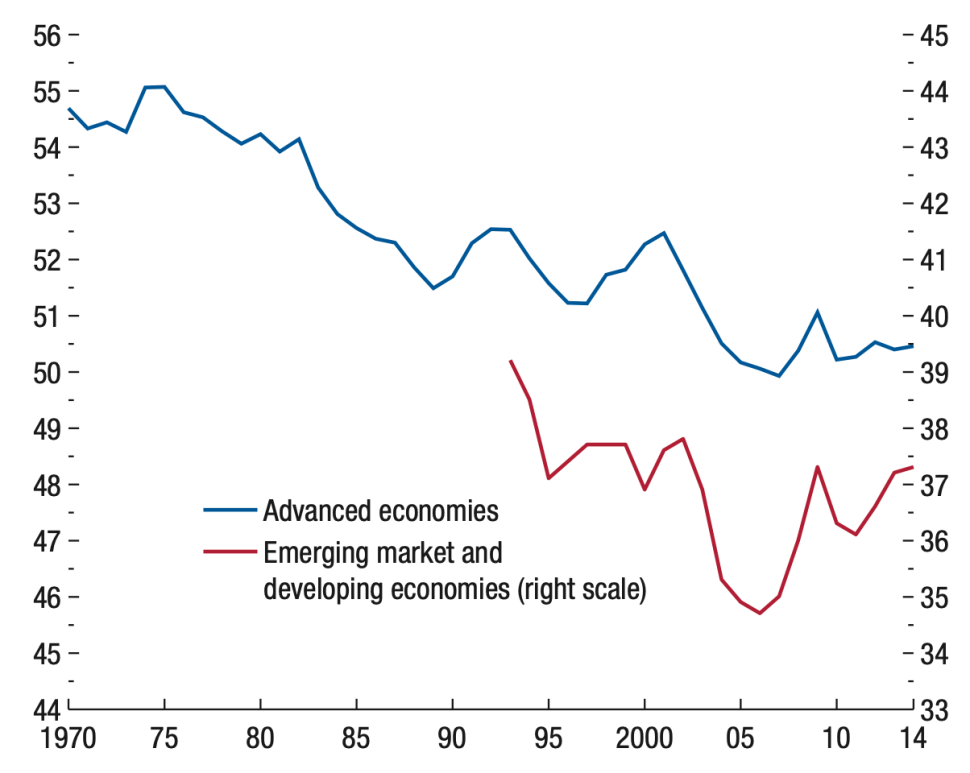
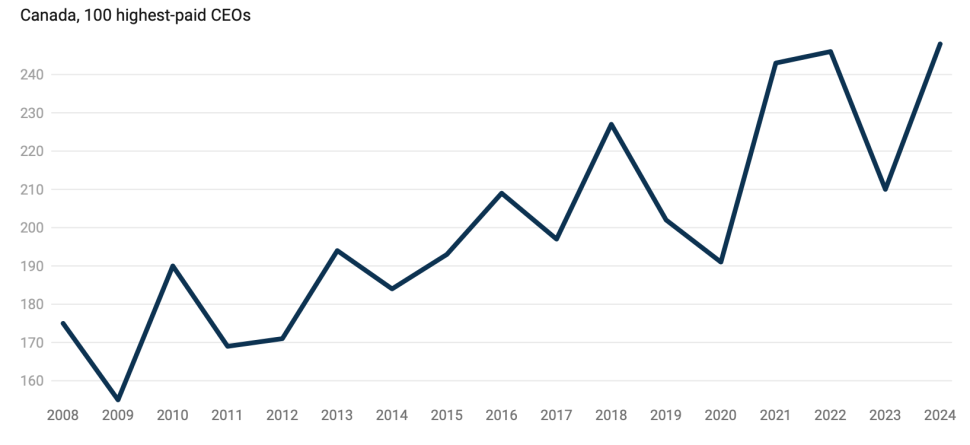
Exploitation under the law of value is connected to capitalism’s crisis tendency. There is pressure on capitalists to obey the principle of SNALT: individual capitalists must seek to keep their production costs at or below those corresponding to socially necessary labour time. Capitalists compete to reduce their cost of production and, in the process, resort to technologies that often displace living labour. As a result, investment in constant capital tends to increase relative to investment in variable capital.
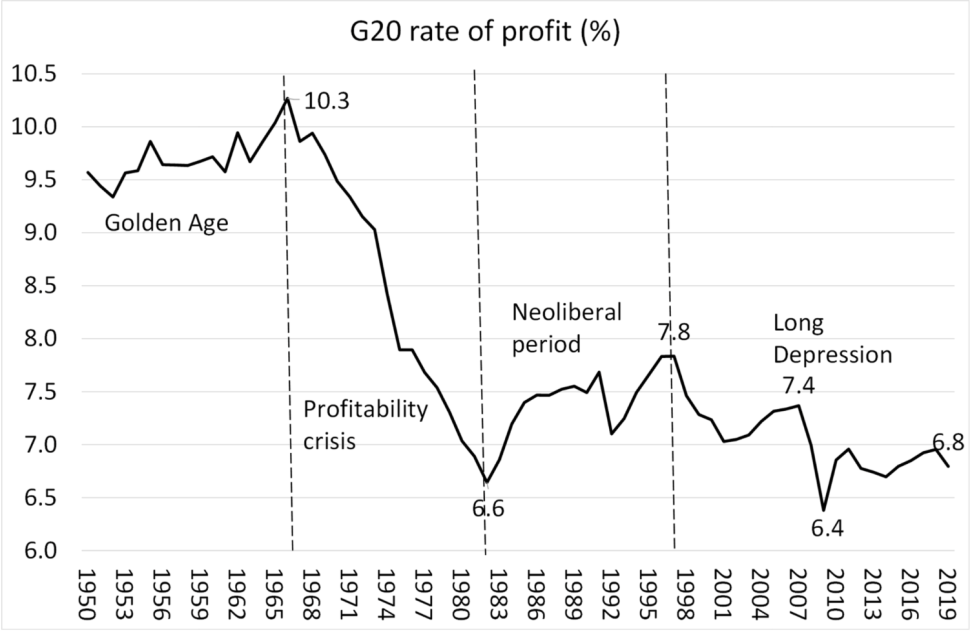
The rate of exploitation differs from the rate of profit. The former is the ratio of surplus-value to variable capital (s/v). The rate of profit is surplus-value divided by total capital advanced (constant capital plus variable capital): s/(c + v), or (s/v)/(1 + c/v). Technological changes tend to increase the ratio of constant to variable capital. Unless a rising rate of surplus-value or other counteracting influences sufficiently offset this increase, the rate of profit tends to fall, creating conditions for crisis (Figure 6).
Politics of exploitation
The antagonism between capital and labour creates the potential for class struggle.7 Without struggles for improvements, the value of labour-power may be reduced or wages pushed below that value. Yet ending exploitation requires more than honest employers, fair exchange or higher wages.
Conversely, wages may rise more slowly than the prices of workers’ needs. Environmental deterioration and privatised welfare can also raise the cost of reproducing labour-power. These conditions underscore the importance of transitional demands8 that workers must make: automatically inflation-adjusted wages, housing and healthcare for all, workers’ control over key industries and immediate climate action.9 Such demands acquire a transitional character insofar as they connect immediate struggles over workers’ living and working conditions — which fight the symptoms of the capitalist system — to the struggle against capitalist control over production and society; that is, against the capitalist class relation itself.
Marx’s theory of exploitation raises some fundamental questions for workers to consider:
- Why must people work under the control of capitalists?
- Why can people not elect a committee to manage and oversee production?
- Why should workers lack control over the products they produce and the conditions under which they produce them?
- Why should workers not collectively control the surplus they produce and decide how to use it for common purposes, including healthcare, education, public transit and environmental protection?
- Why are struggles for higher wages and other concessions important, yet insufficient on their own to eliminate capitalist exploitation?
- Why should decisions about what is produced, how it is produced and for whom it is produced remain under the control of capitalists, who form a tiny minority, rather than the workers and semi-proletarians, who form the vast majority and whose lives depend on those decisions?
Conclusion
The preceding analysis establishes six fundamental aspects of capitalist exploitation. First, circulation cannot create surplus-value for capital as a whole. Second, means of production transfer existing value rather than create new value. Third, labour-power is a special commodity whose use creates new value. Fourth, the value of labour-power is distinct from the value created through its use. Fifth, the difference between the new value created by living labour and the value of labour-power constitutes surplus-value. Sixth, capitalist control over production and ownership of its products enable the appropriation of that surplus-value.
These findings demonstrate that capitalist exploitation is compatible with the exchange of equivalents — a fundamental point often obscured in popular discussions of capitalism. They also connect the production of surplus-value to capitalist accumulation, inequality and crisis, without reducing exploitation to any one of these consequences. Marx’s theory therefore has political implications beyond an abstract economic explanation: exploitation is rooted in capitalist relations of production and its abolition requires transcending those relations, not merely improving the terms on which labour-power is sold.
The pursuit of surplus-value drives capital accumulation, while the antagonism between capitalists and workers over its production and appropriation provides an objective basis for class struggle. Transitional demands that challenge the capitalist class and commodity relations remain important.
Marx’s theory of exploitation rests on three essential conceptual distinctions: between the labour process in general and its capitalist form; between constant and variable capital; and between labour-power and labour, including the distinction between the value of labour-power and the new value created through its expenditure. We must also distinguish value-producing activities from activities financed through the redistribution of value. Finally, immediate economic demands that combat the symptoms of capitalism must be distinguished from the struggle to abolish capitalism itself.
The essence of capitalism is that workers produce surplus-value, which is appropriated by the capitalist class. Even if wages rise or living standards improve, workers cannot escape exploitation under capitalist relations of production: they lack control over the production, appropriation and use of surplus-value.
The fundamental aim of workers throughout the world must therefore be to eliminate the conditions of exploitation. This requires collective control of the means of production and the democratic and ecologically sustainable organisation of production to meet human needs directly.
Raju J Das is a professor at York University, Toronto, Canada. His research interests include political economy, class theory, the capitalist state, climate change and workers’ health, and international development. He is currently working on Capitalist Production in Marx's Capital: Reconstructing Marx's Theory, the third volume of a trilogy published by Taylor & Francis (London), which also includes Marx’s Capital, Capitalism, and Limits to the State (2022) and Marx, the State, and Primitive Accumulation (2026). He serves on the editorial board and manuscript review committee of Science & Society and co-edits the Theory and Class Struggle section of Race, Class and Corporate Power. Further information about his work is available at https://rajudas.info.yorku.ca/.
Bibliography
Lenin, Vladimir (1899). The Development of Capitalism in Russia. In Collected Works, Vol. 3. Moscow: Progress Publishers, https://www.marxists.org/archive/lenin/works/cw/pdf/lenin-cw-vol-03.pdf
--- (1918). The Proletarian Revolution and the Renegade Kautsky. https://www.marxists.org/archive/lenin/works/1918/prrk/equality.htm
--- (1919). The State: A Lecture Delivered at the Sverdlov University. https://www.marxists.org/archive/lenin/works/1919/jul/11.htm
Marx, Karl (1887). Capital, Volume 1. https://www.marxists.org/archive/marx/works/download/pdf/Capital-Volume-I.pdf
Oxfam Canada. (2026). ‘Top CEO pay increased 20 times faster than workers’ pay in 2025.’ Oxfam Canada press release, May 1.
- 1
“More money is withdrawn from circulation at the finish than was thrown into it at the start” (Marx, 1887: 106).
- 2
Marx (1887) explains: “If equivalents are exchanged, no surplus-value results, and if non-equivalents are exchanged, still no surplus-value” (114). Capital, therefore, cannot be produced by circulation alone (116)
- 3
See Raju Das. “Why Marx’s theory of value is of value to workers today: Commodities, fetishism and labour-power” https://links.org.au/why-marxs-theory-value-value-workers-today-commodities-fetishism-and-labour-power.
- 4
If a machinery lasts one year, it transfers its value — the value taken to produce it — to the final product at a rate of 1/365 every day.
- 5
Note that the distinction between productive and unproductive labour does not simply correspond to the distinction between producing goods and providing services.
- 6
And it is devalued, including by some scholars who talk about ‘anti-value’. See David Harvey, 2018. ‘Marx’s Refusal of the Labour Theory of Value.’ https://davidharvey.org/wp-content/uploads/2018/03/MARX%E2%80%99S_REFUSAL_OF_THE_LTV.pdf
- 7
The antagonism between capital and labour provides an objective basis for class struggle, but the development of that struggle depends on political organisation, consciousness and other historical conditions. Das, R. (2019). “Politics of Marx as Non-sectarian Revolutionary Class Politics.” Class, Race and Corporate Power, 7(1). https://www.jstor.org/stable/48644415
- 8
Transitional demands are more radical than immediate demands (e.g. a rise in nominal wages) and are those that stem “from today’s conditions and from today’s consciousness of wide layers of the working class and unalterably leading to one final conclusion: the conquest of power by the proletariat” Leon Trotsky, 1938. The Death Agony of Capitalism and the Tasks of the Fourth International: The Mobilization of the Masses around Transitional Demands to Prepare the Conquest of Power (The Transitional Program). Marxists Internet Archive. https://www.marxists.org/archive/trotsky/1938/tp/transprogram.pdf
- 9
Workers’ control over production and collective ownership of the means of production are related but distinct.