Cuba
Cuba: The legacy of the October 1962 Missile Crisis
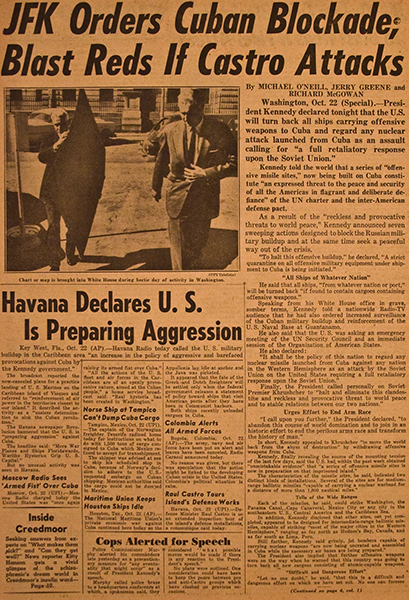
By Ike Nahem
Australia: Cuba's literacy program a success for Aboriginal community (+ photo essay)

Jose Chala Leblanch In Wilcannia, with his local footy jumper. Photo shared by Jose Chala Leblanch.
See also "Los! Hau Bele! -- `Yo! Si Puedo' comes to Timor Leste: Cuba assists the eradication of illiteracy". For more examples of revolutionary Cuba's internationalism, click HERE.
By Fred Fuentes
September 29, 2012 -- Green Left Weekly/Links International Journal of Socialist Renewal -- Sixteen Aboriginal adults in the remote Australian town of Wilcannia, in outback New South Wales, are the first graduates of a groundbreaking trial literacy program that would not have been possible without the help of a tiny Caribbean country — Cuba.
Report to the UN: Cuba and the world versus the US blockade, 2012

September 21, 2012 -- Links International Journal of Socialist Renewal -- For 21 consecutive times a resolution titled “The necessity of ending the financial and commercial embargo imposed by the United States against Cuba” will be voted on by the United Nations General Assembly at the end of October 2012.
"The blockade is a unilateral policy, rejected both inside the United States and by the international community. The United States must lift it, immediately and unconditionally. Once again, Cuba appreciates and requests the support of the international community in order to put an end to this unfair, illegal and inhuman policy”, states the report.
Cuba appreciates the denunciation of the blockade and asks for your solidarity. For more information visit http://www.cubavsbloqueo.cu. For comments and support you can join Twitter #cubavsbloqueo (https://twitter.com/cubavsbloque).
Sincere regards,
Abelardo Cueto Sosa, ambassador, Embassy of the Republic of Cuba in India
* * *
UN General Assembly's adoption of Cuba's resolution against the blockade between 1992 and 2011

Cuba's internationalism: 11,000 doctors graduate; 5315 Cuban and 5694 from 59 other countries

By José A. de la Osa, Havana
July 19, 2012 -- Granma.cu -- This July, 11,000 students are to receive their degrees as doctors of medicine; 5315 Cubans and 5694 students from 59 other countries, the highest total in the history of Cuba and an eloquent example of internationalist solidarity. These young graduates completed their studies free of charge in Medical Science Universities recognised for their high scientific level and social commitment to the poorest in the world.
Countries with the largest number of graduates are Bolivia, with more than 2400; Nicaragua, 429; Peru, 453; Ecuador, 308; Guatemala, 170; and Colombia, 175.
According to information given to Granma by the Advanced Medical Studies Department attached to the Ministry of Public Health (MINSAP), the total of this year’s graduates amounts to 32,171 health professionals, both Cuban and from other countries, including the careers of medicine, dentistry, psychology, nursing and health technology, which has 21 units.
The debate about the nature of the former Soviet Union: Who was right?
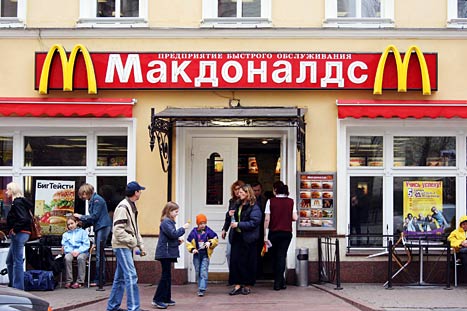
Moscow 2008.
[For more discussion on the nature of the Soviet Union click HERE. See also the related discussion on Stalinism HERE.]
By Chris Slee
July 30, 2012 – Links International Journal of Socialist Renewal -- The nature of the former Soviet Union was an issue which divided the left for many decades. Now that the Soviet Union no longer exists, differing analyses of its class nature should no longer be a reason for maintaining separate socialist organisations.
Nevertheless, this historical debate has relevance to current politics, since the theories developed to explain the nature of the Soviet Union were subsequently applied to other countries, including Cuba. In particular, the theory of state capitalism, of which British Socialist Workers Party leader Tony Cliff was a leading exponent, is applied to Cuba by many groups today, including Solidarity and Socialist Alternative in Australia.
Washington and the Cuban Revolution: Ballad of a never-ending policy -- triumph and reaction

[This is the second in a series of articles by Ike Nahem. The first can be found HERE. For more articles on Cuba, click HERE.]
By Ike Nahem
July 22, 2012 – Links international Journal of Socialist Renewal -- On January 1, 1959, Cuban revolutionaries, led by Fidel Castro, swept into power and established a provisional revolutionary government across the length of the island, overthrowing the exceedingly venal military regime of Fulgencio Batista.
The revolutionaries (including such remarkable figures as Juan Almeida, Raul Castro, Camilo Cienfuegos, Ernesto Che Guevara, Armando Hart, Celia Sanchez and Haydee Santamaria) marched into Havana, culminating a three-year campaign that combined rural guerrilla war with a vast urban revolutionary underground.
Cuba's coming co-operative economy?

Havana billboard: “We are working – and you?”
By Marcelo Vieta

John Riddell on the US SWP: Part 2, causes of a socialist collapse (1976–83)

The Party, The Socialist Workers Part
John Riddell on the US SWP: Part 1, SWP attempts an outward turn (1976–83)


In an invasion approved by US President John F.