[Updated] (Statements) Defend the Rojava revolution against the Syrian regime’s genocidal attacks
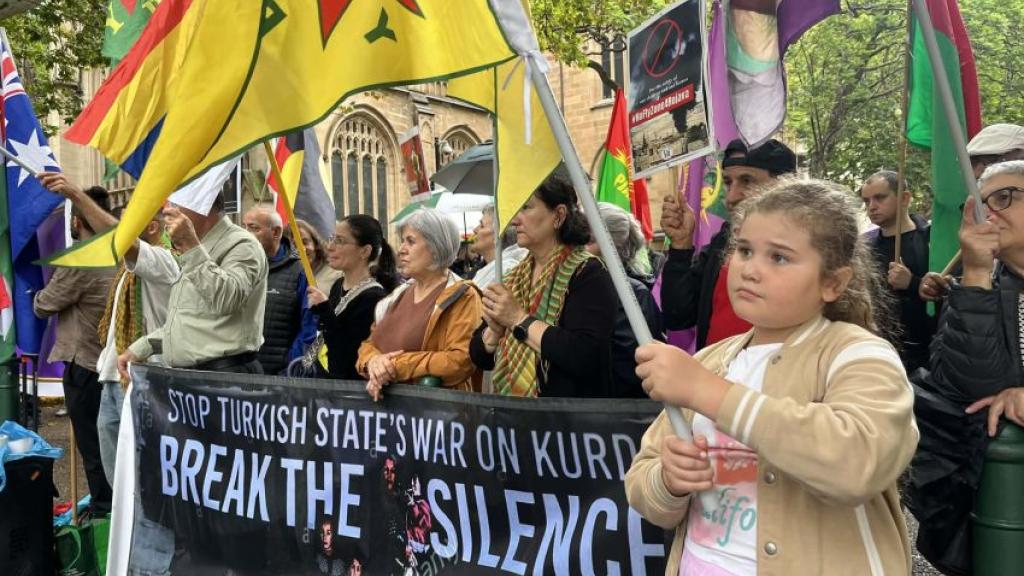
Statements by the Revolutionary Left Party (Syria), Socialist Alliance (Australia), Peoples' Equality and Democracy Party (DEM Party, Turkey), Socialist Party of Malaysia, Sinn Féin National Chairperson Declan Kearney MLA, and Southall Black Sisters (England) opposing the Syrian regime’s genocidal attacks on the Rojava revolution.
Revolutionary Left Party (Syria): In defense of Rojava — For our freedom and yours
In light of the comprehensive genocidal onslaught against our Kurdish people, led by the foreign-dependent Thermidorian authority — the descendant of tyranny, ISIS, and Al-Qaeda, and the guardian of terrorism — which does not hesitate to open prison doors for ISIS fighters and recycle them as filthy tools in its war against the peoples; Syria enters a pivotal stage today that accepts neither ambiguity, neutrality, nor half-measures.
The call for general mobilization issued by the Syrian Democratic Forces (SDF) on January 18, 2026, is not a passing event, but rather an expression of a decisive historical moment: A battle between the last bastions of democracy and liberation in Syria, and the project of fascism, obscurantism, and reactionary regression. It is a struggle between progress and reaction, between good and evil, between existence or annihilation.
We, in the Revolutionary Left Party in Syria, declare clearly and unequivocally: This is not the battle of the Kurds alone; it is the battle of all advocates of freedom, all leftist forces in Syria and the entire world, and everyone who believes that homelands are not built with prisons and massacres, but through social justice, equality, and the right of peoples to self-determination.
Experience has proven that silence in moments of genocide is complicity, that neutrality during a conflict between the executioner and the victim is a bias toward the executioner, and that those who do not stand today with the popular resistance will be crushed tomorrow under the feet of the fascist machine. The attack on the Kurdish people, the Autonomous Administration, and its democratic-liberatory model is an attack on the possibility of collective salvation in Syria. It is an attempt to stifle any liberatory, pluralistic, and socialist horizon outside the logic of the oppressive central authority and outside the hegemony of imperialism and its local proxies.
Accordingly, the Revolutionary Left Party in Syria announces:
- Responding to the call for general mobilization without hesitation or equivocation.
- Placing all its political, media, and organizational capabilities, and all forms of its struggle support, at the service of the Kurdish people's steadfastness and the protection of the Autonomous Administration.
- Standing unconditionally and without narrow calculations alongside the Kurdish popular resistance, as an integral part of the Syrian revolutionary resistance against tyranny, occupation, and reaction.
We say it clearly: From Kobani to Qamishli, from Rojava to every spot of Syrian land, the battle is one, the enemy is one, and the fate is one.
Together until victory. Glory to the popular resistance. Shame to fascism and obscurantism. Victory to the struggling peoples.
- Long live the internationalist brotherhood of peoples! Long live the revolutionary socialist struggle!
- Down with the counter-revolutionary authority in Damascus!
- All power and wealth to the people!
Socialist Alliance (Australia): Defend the Rojava revolution!
The Socialist Alliance stands in full solidarity with the Kurdish-led Rojava Revolution which is now under attack from the Syrian regime, with the backing of the United States and the European Union (EU).
The Kurds liberated North and East Syria from the former Bashar al-Assad dictatorship and then from the terror of the Islamic State (ISIS).
Now, it is fighting off genocidal attacks from the Western-backed Syrian regime of President Ahmed al-Sharaa — a former notorious Al Qaeda commander — and the Turkish armed forces and allied mercenary militias.
This is a battle for the survival of one of the few successful popular revolutions in the 21st century. This revolution sought to make women’s empowerment central to its political practice, as well as having a commitment to multi-ethnic and multi-religious inclusion in its grassroots democracy.
This war rapidly escalated from a campaign of atrocities and ethnic cleansing carried out against Kurds and Yezidi in Aleppo, Syria, earlier this year, even while Al-Sharaa was hosting senior EU and US delegations.
The US and the EU, which have whitewashed al-Sharaa’s international image and supplied his regime with funds for its armed forces, then pressured the Syrian Democratic Forces (SDF) of the Democratic Autonomous Administration of North and East Syria/Rojava to withdraw from Aleppo and several other towns, in return for ceasefire agreements.
However, these have been broken over and over again by the al-Sharaa regime and the US, which brokered the agreements.
The world owes a massive moral debt to the Rojava freedom fighters, who have sacrificed tens of thousands of lives in the fight to defeat ISIS, empower women and promote religious and multi-ethnic unity.
Australia must end its silence on this war. It must call on the US and the EU to end their collusion with the Al-Sharaa regime against Rojava, demand an end to its war crimes and support action to bring the perpetrators to account.
The Socialist Alliance calls on the Australian government to send urgently-needed funds to the Heyva Sor a Kurdistanê/Kurdish Red Crescent, which is helping the thousands who are being wounded and displaced by this genocidal war.
We also call on all progressive and democratic people to join the global solidarity campaign to defend Rojava.
Peoples' Equality and Democracy Party (Turkey): Urgent Call: Prevent further humanitarian crisis in Kobani
Our call to the international community on the urgent humanitarian crisis in Kobani.
To the United Nations, the European Union, the Council of Europe, National Parliaments, Government Leaders, and International Human Rights Organizations;
We are issuing this desperate appeal to stop the deaths in Kobani. Reports from journalists on the ground, now corroborated by the Syrian Observatory for Human Rights (SOHR) , indicate that the situation has escalated from a crisis to a deadly catastrophe. Local sources report that conditions are now more dangerous than even the darkest days of the ISIS era.
The ongoing tragedy
Heartbreaking Loss of Life: The lack of fuel and heating has begun to claim lives. Local sources have confirmed that on January 24 , four children froze to death due to the extreme cold and lack of shelter. This tragedy is a direct result of the blockade that prevents fuel and aid from entering. Siege and Infrastructure Collapse: Approximately 500,000 civilians are trapped. There is a total blackout; water and electricity are cut off. Access to electricity is limited to 1-2 hours via generators for the very few who can find fuel. Surge in Internal Displacement: As confirmed by SOHR, intensified attacks have triggered a rising wave of internal displacement, forcing families into even more precarious conditions. Malnutrition and Health Crisis: Pharmacies are empty, and there is a critical shortage of flour, food, and medicine. SOHR highlights a severe risk of malnutrition, particularly among infants and children. Vulnerability of Women and Children: The collapse of support mechanisms has exacerbated psychological pressures. SOHR specifically warns of increased protection risks for women and girls in this chaotic environment.
SOHR's Assessment: The Syrian Observatory for Human Rights has officially warned that Kobani faces a "humanitarian crisis of catastrophic dimensions," putting thousands of lives at imminent risk. They have called on all parties to adhere to International Humanitarian Law.
Our Urgent Call to Action:
To prevent more children from freezing to death or dying of starvation, we call upon the international community, parliaments, and world leaders to:
Establish an Immediate Humanitarian Corridor: The blockade must be lifted NOW to allow the entry of heating fuel, warm clothing, flour, baby formula, and clean water.
Launch Emergency Air Drops: If a land corridor continues to be blocked, urgent humanitarian aid must be delivered via air drops. The international community must organize an air bridge to supply the nourished population immediately.
Enforce International Humanitarian Law: Exert diplomatic pressure to ensure all parties respect the ceasefire and protect civilians.
Provide Energy for Vital Facilities: Fuel must be urgently supplied to operate hospitals, bakeries, and water stations.
Open the Suruç Border Crossing: To facilitate logistical aid and medical evacuations.
We urge the world to look at Kobani and act before the death toll rises any further. Silence is complicated.
Socialist Party of Malaysia: Defend the Rojava Revolution
The Socialist Party of Malaysia (PSM) is deeply concerned over the recent military offensive by the Damascus regime led by Ahmed al-Sharaa, backed by the imperialist US and in collaboration with the Turkish government, against the Democratic Autonomous Administration of North and East Syria (DAANES). The offensive is a direct threat to the hard-won achievements of the Rojava Revolution and the democratic right of the Syrian people for self-determination.
The Rojava Revolution has significantly advanced many important changes, including women’s liberation, participatory democracy and equal rights for all ethnic and religious communities, for the last 14 years under difficult circumstances. The attack on DAANES is not only an attack on the Kurdish community and their right to self-determination, but also a threat to an emancipatory project across diverse ethnic and religious groups in the region to reimagine a real democratic future for Syria and the Middle East.
The current attacks by the Damascus regime are also accompanied by a new resurgence of ISIS, a notorious terrorist group that was defeated by the Syrian Democratic Forces (SDF) in 2019. The current Damascus regime led by Ahmed al-Sharaa, who shared the same political roots as ISIS, has freed thousands of ISIS fighters and continued to terrorise civil society all over Syria.
Kobanê, the city that historically resisted heroically against ISIS, is now under attack and siege by forces linked to ISIS and collaborating with Turkey.
The PSM stands in full solidarity with the Rojava Revolution and DAANES. We support the call to end the genocidal war waged by the Ahmed al-Sharaa regime in Damascus, backed by the US and Turkish governments, against the Kurdish community and DAANES.
We also call on the international community to support the global solidarity campaign to defend the Rojava Revolution.
Released by
Choo Chon Kai
Central Committee Member
Parti Sosialis Malaysia (PSM)
Sinn Féin (Ireland): Political resolution of the Kurdish question is both possible and essential
Sinn Féin National Chairperson Declan Kearney MLA, January 23
The new year began with the US President once again threatening the sovereignty of Greenland, and the potential for another unilateral military attack in the Middle East.
Then on 3 January American forces entered Venezuela, killing both Venezuelan and Cuban citizens, captured its President, Nicolás Maduro, and his wife, Cilia, and took them to face charges in a New York court.
Regardless to the very real concerns about the credibility of the 2024 presidential elections, this American intervention was a direct assault on Venezuelan national sovereignty. It directly violated the United Nations Charter, and therefore international law.
At the same time, the Trump administration threatened the sovereignty of Colombia, Mexico, and other Central/Latin American countries with left of centre governments.
The US is clearly intent on trying to destabilise Cuba. Parallels are already being drawn with the backdrop to the Bay of Pigs invasion in 1961.
In recent days, the US President has doubled down on his spoken determination to seize Greenland.
Throughout 2025, this administration has unapologetically ripped up the international rule book.
It is attempting to introduce a dangerous new world which is the direct antithesis of multi-lateralism, dialogue, and peaceful co-existence among global opponents and competitors.
America’s intention to dominate over what it describes as the western hemisphere, has already been made explicit in the newly published US National Security Strategy. The President told the New York Times he does not need international law.
This resurgent US neo-imperialism runs in parallel to Russia’s ongoing imperialist war against Ukraine. The Russian administration has shown no indication thus far of a genuine willingness to engage in peace talks to find a negotiated settlement for this protracted conflict.
Meanwhile, the Zionist colonial occupation of Palestine has intensified.
The October 2025 ceasefire has become a proxy to advance Israel’s genocide and ethnic cleansing in Gaza by other means.
The unimaginable suffering of the Palestinian people in both Gaza and the West Bank is unrelenting.
Neo-imperialism and colonialism are ascendant. The chaos and hypocrisy currently defining geo-strategic relations is a modern version of jungle law.
Most global powers are unwilling to challenge America’s hegemonic rampage, by contrast with their approach towards Russia’s aggression in Ukraine.
They choose to be either actively complicit or passively compliant.
However, in the process, the attention of world media has been deflected from the plight of the Palestinians.
US foreign policy has become subordinate to the acquisition of oil, minerals, metals, rare soils, and other natural resources.
The geo-political world order which emerged after WW2 has been irreparably undermined. There is a need for a fundamental reset.
The principles required to bring that about are self-evident. There is no alternative to the UN Charter – international law must be paramount.
Rejection of the right to self-determination and national sovereignty sits at the heart of the crisis in global affairs.
The universal principle for people to determine their own future must be enabled under international law and through diplomacy and negotiation.
Today there are an estimated 30 million ethnic and cultural Kurdish people and a further 10 million within their global diaspora.
In the modern world, the Kurds are the largest stateless nation.
The denial of Kurdish national rights is an historic consequence of European imperialism and colonialism.
Despite a post-WW1 agreement to establish an autonomous Kurdistan, this commitment was dropped by the 1923 Treaty of Lausanne.
As a result, the mountainous regions of Kurdistan were partitioned between modern Türkiye, Syria, Iraq and Iran.
Since then Kurds have repeatedly tried to secure the recognition of their identity, their status and to establish their own state. Political conflict and repression has characterised the experience of the Kurdish people throughout the 20th century.
The current attacks upon and mass displacement of the Kurds in Aleppo and Raqqa in North East Syria is a direct outworking of British and American imperialism and continued influence of ISIS in that region. A humanitarian emergency is now unfolding in the Rojava Territory which is being largely ignored by the international media and world leaders. In a throwback to the battles between Kurdish forces and ISIS, the city of Kobane is again under siege at this time.
In 1984, the Kurdistan Workers Party (PKK) launched an armed struggle against the state of Türkiye. During that campaign, an estimated 60 thousand people including civilians, military personnel and Kurdish fighters have been killed. At present, approximately six thousand Kurdish political prisoners are detained in Turkish prisons.
Throughout the last 45 years, there have been periods of ceasefire talks, moments of opportunity, and more setbacks.
Whilst many Kurds have served lengthy prison sentences, often over 30 years, and serial periods of detention, including the most well-known and iconic Kurdish political prisoner, Abdullah Öcalan, founder of the PKK.
From his place of detention on Imrali Island prison, he has continued to provide an important leadership influence for the Kurdish freedom movement. At the same time, representatives of the Turkish state have kept direct lines of communication open with Öcalan – which reflects his enormous political significance for the Kurdish people.
Following meetings between the Kurdish Peoples’ Equality and Democracy Party (DEM Party) in January/February 2025, and various Iraqi Kurdish leaders to discuss a new peace effort between the Kurdish freedom movement and government of Türkiye, a statement was issued by Öcalan on 27 February. It was a groundbreaking intervention and led directly to the PKK declaring a unilateral ceasefire on 1 March.
All of this led to the PKK officially announcing its dissolution and an end to the four-decades-long armed struggle.
Within weeks, Öcalan issued another public statement urging a paradigm shift in engagement between representatives of Türkiye and the Kurdish people.
However, since then, while some political and security/intelligence representatives engaged privately, no progress has been made in developing a negotiation process regarding Kurdish national and democratic rights.
There has been a worrying lack of momentum.
Those within the Turkish system opposed to negotiations have used the cover of global instability to avoid real engagement.
By refusing to do so, and ignoring the need to create democratic conditions within which a serious peace process can be encouraged, they risk squandering the historic and unique opportunity which exists.
Notwithstanding these impediments the Kurdish freedom movement remains committed to dialogue with Türkiye.
Last December, the DEM Party held a significant ‘Peace and Democratic Society’ conference, which reflected upon the South African, Irish, Basque, and Catalan struggles for national democracy and independence.
It heard how peace was forged in South Africa through strategic empathy, calculated risk, and management of pain: that justice and peace are independent: and, how the durability of South Africa’s peace, grew not only from formal negotiations, but also the active role of civic society, faith based organisations and local communities.
The Basque Country is also a stateless nation, which was divided in the 16th Century.
After a 50-years-long armed struggle the Abertzale Left took decisive initiatives from 2009 onwards to develop a totally peaceful political strategy.
This new direction succeeded despite the attempts of reactionary elements within the Spanish state to undermine the initiatives undertaken by the leadership of the Basque independence movement. As a result of increased popular support for independence EH Bildu has become the largest political force in the Basque Country.
It was pointed out that both setbacks and shortcomings within the Basque struggle have a relevance for the Kurdish independence movement.
The constitutional crisis in Catalonia which culminated in the 2017 independence referendum, held by the pro-independence coalition government, provides the context for both the current challenges and opportunities to achieve Catalan self-determination.
The election of the PSOE Spanish government led by Pedro Sanchez was a pivotal moment which led to negotiations in 2020.
Whilst political prisoners have been released and other progressive agreements achieved, the root of the political conflict – the denial of Catalan national self-determination – remains unresolved.
The Catalan road to independence has not been straightforward. Strong leadership is an essential condition for progress combined with clear, strategic vision and the inclusion of all political opinions within the independence movement.
Even though a peace settlement was secured in Ireland in 1998 with the historic Good Friday Agreement, a political settlement has not been reached.
After 27 years the Agreement has still not been fully implemented. Throughout there has been ongoing political instability in the north of Ireland reflecting the reality that it is a contested state.
There has been a total of seven other successive governments since then arising from nine further phases of negotiations or talks.
It was explained that Sinn Féin see negotiations as a permanent site of struggle from which to advance democratic change.
One key lesson learned by the Sinn Féin leadership is that the most important negotiation is always with its own political base.
Sinn Féin has become the largest party in Ireland and popular support for Irish reunification is unprecedented.
However, no two political struggles or peace processes are ever the same. Differences will always apply, but key experiences, strategies and tactics can be transferable.
The following lessons from an Irish perspective were shared.
- Negotiations processes must be fully inclusive
- All issues must be placed on the talks table for discussion
- All sides must participate in good faith. Confidence among protagonists is essential in order to build trust
- Every decision and agreement must be honoured and implemented
- A coherent and properly managed overall strategy should govern the use of tactical flexibility, political initiatives, and when it is appropriate to make compromises
- Clearly defined objectives are essential
- Unity and cohesion within the national movement is paramount
- Civic society and grassroots participation must be politically mobilised, and involved in any process for democratic change
- Political momentum is necessary to prevent inertia and stasis
- The forces of opposition to change are never monolithic
- Those who seek the maximum progressive change must be prepared to take the greatest risk to advance their objectives
Failure to constructively engage with the opportunity created for a permanent peace and democratic framework by the government of Türkiye risks damaging the existing positive potential.
Despite a commitment from the Kurdish political leadership to jointly move forward with the Turkish side, its government has still to authorise a coherent, agreed negotiation strategy. This lack of political will creates a significant difficulty.
The tentative process which has opened up is fragile. Momentum is needed.
It is also vulnerable to the present instability and conflict in Rojava and North East Syria.
Already the Kurdish freedom movement has taken courageous steps forward in the interests of peace and democracy.
The government of Türkiye should reciprocate with confidence building measures to demonstrate its willingness to make political progress.
Positive, private indications from individual sections of the Turkish state system are welcome but insufficient.
Türkiye is already playing a constructive role in relation to the cause of the Palestinian people. There are compelling geo-strategic reasons for it to secure a political settlement with the Kurds, including future relations with Europe, and as a leader for diplomacy in the Islamic and Arab world.
The release of Abdullah Öcalan would help transform the current political situation and establish a solid foundation for negotiations to begin.
At this time of turbulence the Middle East region and our global community needs peace, stability and security, and unambiguous affirmation of the UN Charter. A resolution to the Kurdish question is not only possible, it is essential. It would prove that national democratic rights do matter.
The government of Türkiye should embrace this moment in the knowledge that the Kurdish freedom movement will be a committed partner for bringing about peace and democracy. Sinn Féin remains available to share our experience and perspective with both the Turkish and Kurdish sides to help achieve that outcome.
Southall Black Sisters (England): Rojava women’s revolution faces existential threat
The Rojava Women’s revolution in North East Syria has been a source of inspiration to feminists worldwide since its inception in 2012, with its project of radical gender equality, genuine grassroots democracy and multi-ethnic inclusivity in a war-torn area. It has not only survived but overcome the ISIS caliphate to make the world a safer place for themselves and for us.
It is currently facing the greatest challenge to its survival from the Islamist forces unleashed by the president of the Syrian Transitional Government (STG), Ahmed al-Sharaa who is using brute force to bring the autonomous administration under his remit with the covert support of the US and Turkey. The conduct of these forces bears striking similarities to the methods used by ISIS, including summary executions, intimidation of civilians, and destruction of civilian infrastructure. This has reinforced widespread concerns that ISIS-style ideology has effectively been re-embedded within the new governance structures.
Furthermore, STG militias have attacked a number of prisons which hold ISIS members and released them despite attempts by the Kurdish forces (SDF) to hold them at bay while the international coalition, consisting of US and European forces, have failed to intervene.
During its 47 years of existence, Southall Black Sisters has recognised and fought against the danger to women’s freedoms posed by religious fundamentalism.
We condemn these assaults and demand that the UK government:
- condemns the attacks against civilians in Rojava too and calls for an enduring ceasefire
- prevents escape of ISIS prisoners from SDF-guarded facilities
- ends all political, military, and logistical ties to the al-Sharaa government
- provides urgent humanitarian assistance for displaced people
- establishes international monitoring and accountability
The Kurdish women’s struggle for a different future is also our struggle. We are all facing a dangerous world in which there is an upward momentum of far-right, supremacist, nationalist, anti-democratic, illiberal forces. The Kurdish people are at the sharp end of it.
Let us recognise our commonality and stand up for the Kurdish people.