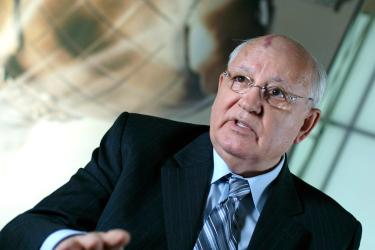
Gorbachev's death and Russia's fate: From Perestroika to the Russian invasion of Ukraine
On 31 August 2022, news of Mikhail Gorbachev's death at age 91 filtered into Japan in the midst of sweltering heat and the spread of COVID-19. The Perestroika and Glasnost that Gorbachev carried out after 1985, when he became general secretary of the Communist Party of the Soviet Union, are still praised as full-scale attempts to break away from Stalinism.
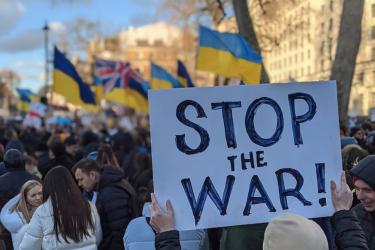
Ukraine war, imperialism and the left: An interview with British socialist Phil Hearse
The war in Ukraine has provoked sharp differences among people on the left and peace activists. Federico Fuentes spoke to veteran British socialist and Anti*Capitalist Resistance member Phil Hearse about how these differences reflect deep underlying controversies about the world crisis.
Six months into Russian President Vladimir Putin’s invasion, where is the Ukrainian resistance at? What is the general mood in Ukraine regarding possible negotiations and NATO? And what has the war meant for progressive forces in the country?
Speaking from Ukraine, Vladyslav Starodubtsev, an activist with democratic socialist organisation Sotsialnyi Rukh (Social Movement), discusses these issues with Federico Fuentes.
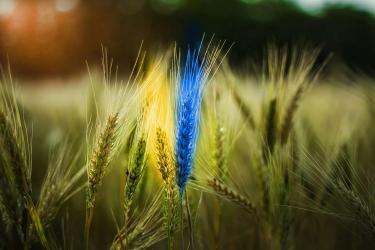
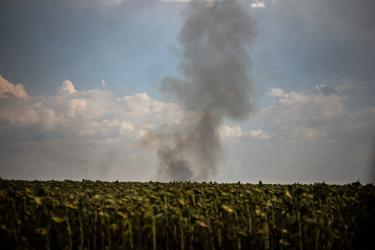
Russia’s invasion of Ukraine has reap untold devastation on the nation’s critical agricultural sector, leading to severe disruptions to the global food market and exacerbating world hunger.
Boris Kagarlitsky: How will the war end?
The war between Russia and Ukraine has not only destroyed the lives of many thousands in both states, but also dealt a heavy blow to left and left-liberal political discourse in the West. Over the course of many years, ideological clichés have developed and worked successfully, allowing a more or less predictable response to any conflict and crisis in the modern world. We knew for sure that the main source of problems is the policy of the conservative elites of the West, aimed at oppressing the peoples of the global South.
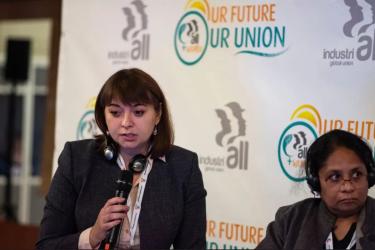
Ukraine: Unions strive to keep Ukraine’s mines running, protect civilians and appeal for solidarity
Interview with Nataliya Levytska Deputy Chairperson of the NGPU (Independent Mineworkers Union of Ukraine), by Christopher Ford, Ukraine Solidarity Campaign. This interview will be appear in the new book UKRAINE Voices of Resistance and Solidarity which will be published shortly. Thanks to Yuliya Ivanova for translation.
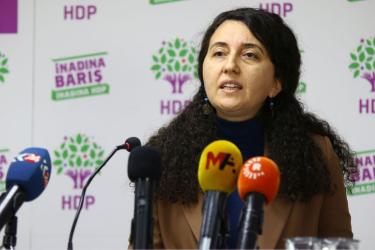
HDP spokesperson Ebru Günay: Turkey’s only goal in Syria is to fight the Kurds
Ebru Günay, spokesperson for the Peoples’ Democratic Party (HDP), spoke at a press conference in Amed (tr. Diyarbakir) about Turkey’s continued attacks on northern Syria and speculation about a rapprochement between Turkish president Tayyip Erdogan and his Syrian counterpart, Bashar al-Assad.
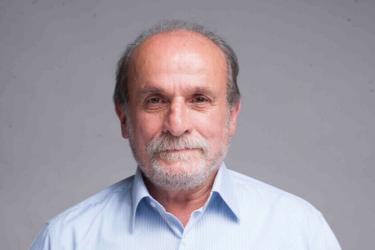
Hints of a meeting between AKP leader and Turkish President Recep Tayyip Erdoğan and his Syrian counterpart Bashar al-Assad, as well as ministerial contacts, have revealed a change in Turkey's Syria policy in recent weeks. But what really changed? Erdoğan continues his attacks and invasion preparations against northern and eastern Syria unabated. The Turkish president sought a "green light" from Russia and Iran. Putin told Erdoğan to clarify this issue with Assad. Erdoğan then changed course. The question now is whether Turkey will be able to reach an anti-Kurdish agreement to invade northern and eastern Syria this way, or whether it will launch an invasion on its own initiative without getting the "green light".
Eastern Europe’s tragedy: How the spheres of influence policy amplifies reaction
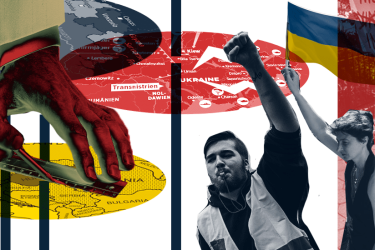
Should the Left support the division of the world into imperialist spheres of influence? A year ago, the very posing of such a question would have surprised me, since the answer seems obvious: of course not. Unfortunately, the apparent sympathy with Russian aggression against Ukraine by many on the Western left has shown that this is not so obvious.
To undermine NATO retrenchment, the left must fight to win the peace
Today’s radical left has long recognised only one foe, that which Ayatollah Khomeini aptly titled “The Great Satan” – namely the USA. Little attention was paid lately to about “The Lesser Satan” – or Russia. For over 30 years after the fall of the USSR, we only imagined a single imperialist actor on the world stage. But 179 days ago we were reminded of the presence of another imperialist contender with full force.
New reality? Europe and the war in Ukraine
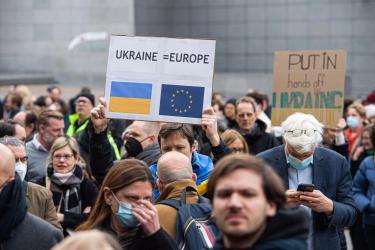
Six months into the conflict, a Russian army incapable of taking Kyiv is presented as a threat to the entire continent. Ukraine has become, according to President Zelensky, ‘a springboard for an attack on other nations of Europe’. For the US Defense Secretary Lloyd Austin, Russia represents nothing less than ‘a challenge to free people everywhere’. Given in the American airbase of Ramstein, Germany, his speech sounded like a script for a historical reenactment of the Cold War.
Taiwan Strait crisis: For the right to peace and security in East Asia
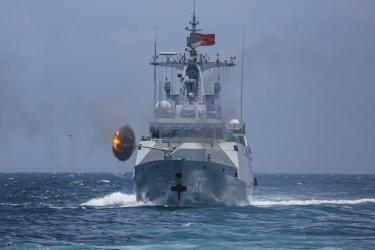
Reposted from Europe Solidaire Sans Frontières, August 18, 2022