How big oil blocked a plastic pollution treaty
[Editor’s note: Ian Angus will be speaking at Ecosocialism 2026, September 11-13, Magan-djin/Brisbane, Australia. For more information on the conference visit ecosocialism.org.au.]
First published at Climate & Capitalism.
When I started writing about the climate crisis in the 1980s, I was in my twenties, and I didn’t fully comprehend that there could be a force on this planet so steeped in greed and power that it would sacrifice the earth and its inhabitants for its own narrow interests. But there is, and it’s Big Oil. (Bill McKibben)1
After years of watching UN climate change negotiations, I’m inclined to be cynical about the whole process. The norm is lots of talk, very little mention of fossil fuels, and no concrete action. When a deal as toothless as the 2015 Paris Accord is hailed as a major achievement, you know that the bar is much too low.
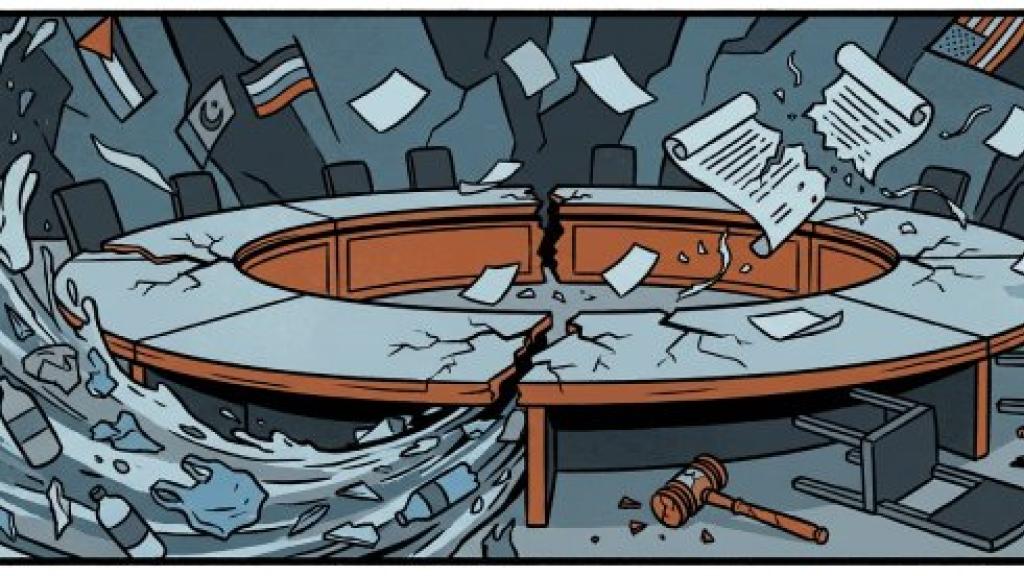
The negotiations for a plastic treaty have not reduced my cynicism. On August 15, 2025, three years after the United Nations called for a treaty to end plastic pollution, international negotiations collapsed. A handful of oil-producing countries and their corporate allies had successfully stalled and ultimately derailed the entire process.
The one encouraging feature of the negotiations was the presence of the High Ambition Coalition to End Plastic Pollution (HAC), a group of 74 nations, co-chaired by Rwanda and Norway, that stood firm in demanding a comprehensive set of binding obligations — and refused to accept anything less.
The measures HAC called for included:
- Reducing production of primary plastic polymers to sustainable levels;
- Phasing out the most harmful plastic products and chemicals, particularly single-use plastics;
- Regulating chemical additives, including mandatory full disclosure of the chemical composition of plastics and plastic products;
- Reducing the chemical complexity of plastic products, ensuring product design that enables reuse and recycling;
- Making plastic producers financially and legally responsible for the recovery, recycling, or proper disposal of the materials they produce and sell;
- Financing for waste management infrastructure, technology transfer, and capacity building;
- Changing treaty negotiation procedures, eliminating the requirement for unanimous agreement;
- Making protection of human health, not merely environmental protection. a central objective of the treaty.
Underpinning the specific measures was the fundamental demand that the treaty address the entire lifecycle of plastics — from extraction of fossil fuel feedstocks through production, design, use, and end-of-life — not merely downstream waste management.
Each of these points would require considerable elaboration to go from “good ideas” to an effective and enforceable treaty. Nevertheless, the High Ambition Group’s proposals provided a solid framework for a serious attack on the global plastic crisis.
Not surprisingly, petrostates and the petrochemical industry did not like that. The “Like-minded Group” (LMG) headed by Saudi Arabia and Russia and informally supported by the United States, opposed any plan that would limit or control plastic production in any way. The only purpose of a treaty, they argued, was to improve waste collection and recycling—and the treaty should be voluntary, not legally binding.
The pro-plastic claim is that in order to reduce energy use, “the world will need to rely on plastic more, not less.”2
The LMG was reinforced by the presence of 234 fossil fuel and chemical industry lobbyists, and another 60 representatives of packaging manufacturers and consumer goods companies like Coca-Cola and Nestlé. Major corporate presences included Dow and the American Chemistry Council, each sending seven lobbyists, and ExxonMobil with six. Most critically, some of the fossil fuel and chemical lobbyists attended as members of the official delegations from half a dozen countries: this allowed them to participate in closed sessions that excluded independent scientists, indigenous activists, and other observers.3
Unable to win, the lobbyists used their numbers and resources to delay and disrupt proceedings, blocking every attempt to reach agreement on the smallest points. Procedural rules that require unanimous agreement, coupled with the intensive backroom pressure mobilized by the US, ensured that the meeting couldn’t draft, let alone pass, even a marginally effective treaty.4 As a participant from the Environmental Investigation Agency reported:
“Our post-mortem examination reveals the precise cause of death—a small but powerful bloc of petrochemical-producing countries plus a small army of Big Oil lobbyists deliberately hampered progress. Their tactics included procedural stalling, diluting ambitions and vetoing consensus, ensuring that negotiations ended without an outcome. Left untreated, the treaty’s vital organs — production caps, chemical control and trade rules — were weakened beyond repair.”5
Industry lobbyists also harassed and threatened scientists who supported a strong treaty. Professor Bethanie Carney Almroth, who represented the Scientists’ Coalition for an Effective Plastics Treaty, told The Guardian that plastics researchers faced “the tobacco playbook: challenge the science, challenge the messenger, try to silence people, try to undermine people’s credibility.”6
After nearly two weeks of pointless debate, the Chair introduced a draft text that he apparently thought reflected the consensus to date. It included nothing on the full life cycle approach, nothing on health, nothing on banning toxic additives, nothing on single-use plastics, nothing on reduced production, nothing on mandatory reporting, nothing on changes to voting procedures. As a Panamanian delegate said, the HAC’s red lines had not just been crossed but “stomped, spat on, and burned.”7
To their credit, the High Ambition Coalition refused to back down. In the words of an NRDC representative, “No treaty is better than a weak treaty that creates an illusion of progress and could discourage stronger action.”8
Even though a large majority of the participating countries supported ambitious measures, the meeting ended without even a preliminary draft as a basis for further discussion.
Negotiations are supposed to restart some time in 2027, but it’s hard to think of any reason why they might be more successful.
Hedging?
It is tempting to view the industry’s coordinated assault on the negotiations as gratuitous bullying and overkill. After all, UN treaties are notoriously weak and hard to enforce, and in any case the petrostates could have refused to sign any agreement they disliked. Why intervene so viciously just to protect plastic?
Oil industry researcher Alice Mah argues convincingly that the fossil fuel giants see investment in petrochemicals as a way of “hedging against climate risk” — not hedging against climate change itself, but against the risk that policies to reduce greenhouse gas emissions will reduce fossil fuel sales and profits.9
They see hope in the fact that, as the International Energy Agency reports, plastics are already “the fastest-growing source of oil consumption,” and will “account for more than a third of the growth in oil demand to 2030, and nearly half to 2050, ahead of trucks, aviation and shipping.”10 That prospect justifies extreme measures to prevent limits on plastic growth.
Many independent observers and NGOs have concluded that UN-sponsored negotiations are a dead-end, that the countries that want a treaty should negotiate separately. That could indeed result to what’s been called a “treaty of the willing”—but how effective could it be if the biggest petroleum and plastic producers stand aside?
The fact that dozens of capitalist governments opposed the fossil fuel industry’s drive for unlimited growth shows how profound and dangerous the plastic crisis is. But the failure of the treaty negotiations shows how very powerful that industry is, and how determined it is to protect its continued growth, no matter how much pollution results.
Unless and until we break the power of fossil capital, the plastic plague will continue to spread.
This is a draft chapter from a book Ian Angus is writing for Monthly Review Press, Social Murder: Capitalism’s Assault on Our Health and Survival.
- 1
Bill McKibben, “Big Oil Breaks Everything,” The Crucial Years (Substack), April 19, 2026
- 2
American Chemistry Council, “ACC Statement on U.S. Position Change on UN Plastics Agreement,” News Release, August 14, 2024.
- 3
CIEL, “Fossil Fuel and Petrochemical Lobbyists Overrun Plastics Treaty Negotiations.”
- 4
Gabriel Enrique De-la-Torre and Tony R. Walker, “Deadlock at INC-5.2: Understanding the blocked progress of the Global Plastics Treaty negotiations,” Cambridge Prisms: Plastics, March 2, 2026.
- 5
Hannah Hughes, “Global Plastics Treaty post-mortem – INC-5.2, petrostate obstruction and the way ahead,” Environmental Investigation Agency, September 5, 2025.
- 6
Damian Carrington, “‘Total infiltration’: How plastics industry swamped vital global treaty talks,” The Guardian, July 23, 2025.
- 7
Felix Nütz, “Why the Global Plastics Treaty Negotiations in Geneva Failed,” Twin Politics, August 20, 2025.
- 8
NRDC, “Global Plastics Treaty Collapse: .No Treaty Is Better than a Weak Treaty’”, News Release, August 15, 2025.
- 9
Alice Mah, Plastic Unlimited: How Corporations Are Fueling the Ecological Crisis and What We Can Do About It (Polity Books, 2022 ), 72.
- 10
IEA Secretariat, The Future of Petrochemicals: Towards more sustainable plastics and fertilizers, International Energy Agency, 2018, 11.