Lula’s historic upset
First published in Portuguese at Esquerda en Movimento. Translation by Federico Fuentes for LINKS International Journal of Socialist Renewal.
The re-election of Luiz Inácio Lula da Silva (Workers Party, PT) on October 25 marks an unprecedented turnaround in Brazilian presidential elections. After finishing the first round behind Flávio Bolsonaro (Liberal Party, PL), the president won 51.78% of the valid votes, against 48.22% for his opponent, according to results published in the Brazilian media. The victory, which guarantees Lula a fourth presidential term, was achieved amid a contest marked by political polarisation, popular mobilisation and intensified social media battles.
The result cannot be explained by a single factor. The progressive camp’s reaction in the final stretch, the higher voter turnout, reorganised campaign strategies, and the ability to mobilise voters concerned about another Bolsonaro family presidency all contributed to reversing the far right’s advantage from the first round.
The victory, however, has not resolved the country's political contradictions. Although Lula gathered enough votes to win, the new Congress continues to be predominantly conservative, and will likely hinder any social, economic and environmental measures or partial implementation of Lula’s program.
Reaction on the streets and social media changed the game
Social mobilisation was key to the turnaround. Lula supporters reacted strongly to the first round result, with part of the left beginning to compete more intensely for votes, combat misinformation, and prevent a Flávio Bolsonaro's victory. The size of the large demonstrations in cities such as São Paulo and Rio de Janeiro surprised even members of the PT campaign.
On social media, the WhatsApp channel “Exército do Lula” (Lula’s Army), coordinated by Minas Gerais federal deputy André Janones (REDE, Sustainability Network), became a symbol of this mobilisation. According to Agência Pública, the initiative brought together almost 11 million participants and relied on circulating messages and content shared directly between users, expanding the campaign’s reach beyond official channels.
Researcher Raquel Recuero, coordinator of the MIDIARS Research Laboratory at the Federal University of Pelotas (UFPel), highlighted the importance of this dynamic. “The painstaking work of individuals for their groups, of individuals for their networks, is very important,” she told Agência Pública.
The researcher also assessed that fear of the PL candidate winning played a significant role in engagement. “What mobilised voters was emotion, the fear of a Flávio Bolsonaro victory. There is no comparison with the first-round campaign. It was a much more comprehensive, digital campaign that reached far more people,” she said.
Digital mobilisation was combined with street presence, public campaigning by political leaders, and engaging activists, young people and sectors of civil society. The campaign also modified its strategy, opening up space for interlocutors such as Camilo Santana (PT Senator) and Rafael Fonteles (PT governor of Piauí), and giving greater importance to directly confronting Flávio Bolsonaro.
In the second round, Lula began to emphasise the risks of his opponent’s economic proposals, especially the potential effects of cutting spending on social rights, as well as exploiting opposition to the Bolsonaro family. This strategy helped transform the contest into a mobilisation that went beyond formal campaign structures.
Fewer abstentions, greater voter participation
Another important piece of data was the significant fall in abstention. The rate fell from 21.08% in the first round to 19.22% in the second, the lowest percentage recorded in a presidential runoff election since 2006. About three million people who had not voted in the first round went to the polls on October 25.
More than 128.1 million Brazilians voted in the second round. Blank and null votes also decreased: they totalled 3.24%, compared to 4.77% in the first round. The simultaneous reduction in abstentions and invalid votes increased effective participation in the presidential decider.
The mobilisation was especially significant in northeastern states. In Bahia, abstention fell from 19.97% to 16.71%; in Pernambuco, it dropped from 18.17% to 15.18%. Lula won in both states with 71.31% and 69.2% of the valid votes, respectively. However, the fall in abstention was not uniform: the rate rose in nine states while falling in 18.
The numbers mean we cannot attribute all the new voters to a single political camp. Even so, the coincidence between the rise in participation, the mobilisation in the final stretch, and Lula’s victory reinforces the importance of convincing voters to go to the polls.
The operation to encourage voter turnout faced concrete difficulties. Problems with public transportation in municipalities across different states, as well as heavy rains in some regions, hampered voters’ travel. Voting hours were even extended until 7pm by court order, following requests related to logistical difficulties.
Lula promises to expand popular participation
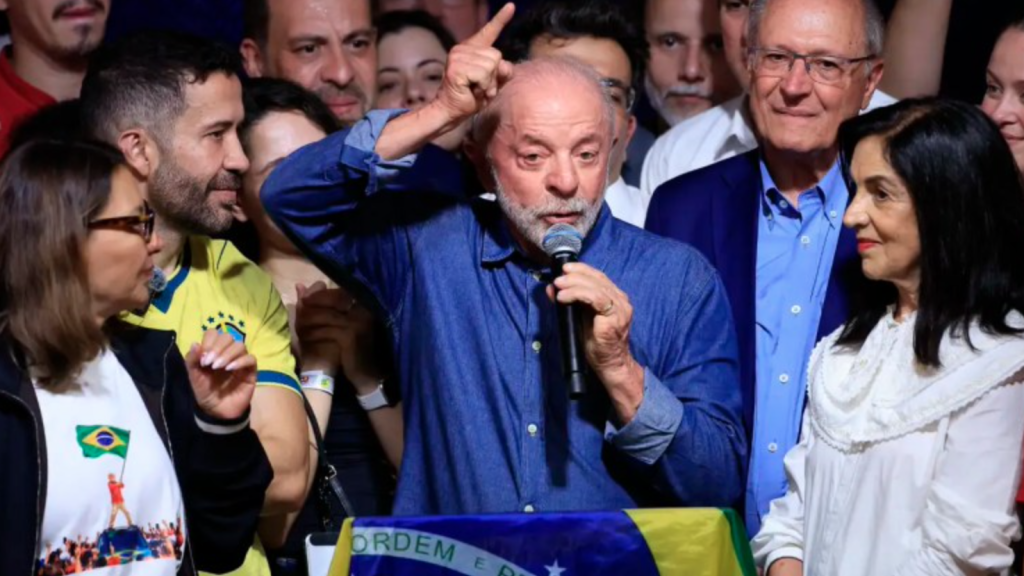
During the victory celebration on Paulista Avenue in São Paulo, Lula acknowledged the importance of social mobilisation and especially thanked young people, women, educators, and labour rights advocates.
“I owe this victory to the rebellious youth who rose up in defence of democracy. I owe this victory to the women who rebelled against femicide. I owe it to the people who believe that ending the 6x1 workweek schedule [six days work, one day off] is a benefit to Brazilian society,” declared the re-elected president.
The speech addressed issues that mobilised progressives, including reducing the workweek, defence of public education and the fight against gender violence. In mentioning the end of the 6x1 workweek, Lula acknowledged the importance of a demand that gained traction on the national agenda due to the actions of social movements and parliamentarians, including those of the Socialism and Liberty Party (PSOL).
The president promised changes in the way his government would be run and greater public participation in decision-making. “I can guarantee you that we are going to change the way we govern this country. We are going to allow people to participate more in our decisions,” he stated. He also announced that digital communication will have a greater role in the relationship between government and society.
Lula also defended regulating digital platforms, arguing that the actions of these companies need to be subject to democratic rules. “This was an election in which we had to overcome interference from the outside via digital platforms, which we will have to regulate,” he declared, according to Agência Brasil.
The statement points to one of the challenges of his next term: tackling the spread of misinformation and discussing the role of Big Tech companies without compromising freedom of expression and public debate.
A fourth term under pressure from a more right-wing Congress
Victory at the polls did not automatically translate into parliamentary strength. Lula will assume his new term facing an even more right-wing Congress, with the PL party expanding its presence in the Chamber of Deputies and the Senate.
PL gained 23 seats in the Chamber of Deputies and 13 in the Senate. The PT, PSOL and Communist Party of Brazil (PCdoB) maintained their seats or registered moderate growth.
The new configuration is likely to make it more difficult to approve proposals to expand social rights, tax the wealthiest, protect the environment, and strengthen public services. The government will also have to deal with disputes over the budget, parliamentary amendments and positions, as well as resistance from conservative sectors to changes in labour legislation and minority rights.
Political scientist Juliano Corbellini, interviewed by Correio do Povo, summarised the problem: “Lula will have difficulty dealing with this Congress and Senate, which seem to have a more pronounced right-wing ideological cohesion.” The expert also highlighted the role of the Centrão (Center bloc), whose position could be decisive for governability.
The electoral victory, therefore, does not end the political contest. To approve its proposals, the government will need to negotiate with forces that do not fully share its program and, at the same time, maintain a social base capable of defending popular measures.
In this context, the second round mobilisation could have importance beyond the election. The challenge will be to transform the engagement obtained in the campaign into continuous political participation, capable of pressuring Congress on social demands.
Political Science and International Relations expert Gabriel Adam, also interviewed by Correio do Povo, emphasised that popular mobilisation can influence parliamentary decisions. “When the population understands the context of the dispute, what is at stake, they are able to exert a great deal of pressure,” he stated.
Victory opens a new stage in the political contest
Lula’s re-election demonstrates that the advantage gained in the first round was not irreversible. The combination of in-person mobilisation, digital organisation, a change in strategy, and greater voter turnout allowed the president to overcome the initial disadvantage and win another term.
The result also highlights the limitations of a presidential contest isolated from the composition of the legislature. The left won the national election, but will have to face a strengthened parliamentary opposition and a society that remains politically divided.
The next term will therefore be marked by a dual requirement: to transform the commitments made during the campaign into concrete policies, and to preserve the mobilisation capacity that helped produce the electoral turnaround. The strength demonstrated in the streets and on social media will be an important political asset, but its influence will depend on the continuity of popular organisation and the ability to convert social support into effective achievements.