Eleven theses on Lenin’s theory of political oppression and the national question
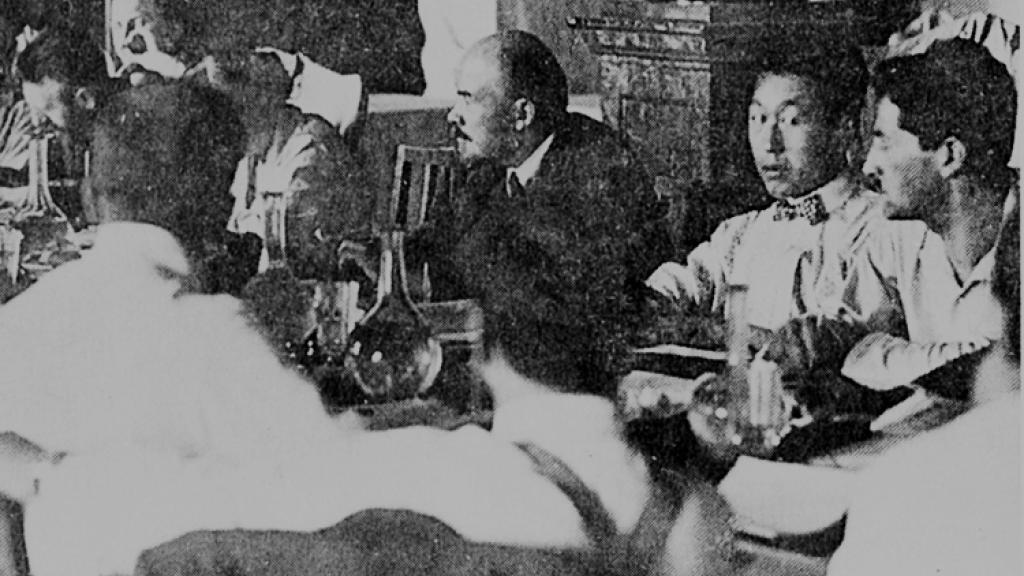
[Ultra-nationalism, annexationism and national chauvinism in less developed and advanced nations] — all this makes it particularly urgent for [Marxists] to devote greater attention than before to the national question and to work out consistently Marxist decisions on this subject in the spirit of consistent internationalism and unity of proletarians of all nations.
— Vladimir Lenin
No other classical Marxist emphasised the importance of national oppression more than Vladimir Lenin did. But Lenin’s theory of national oppression, which is part of his theory of political oppression as an attack on the democratic rights of nations and people, is a lot more than what it is usually thought to be.
There is a need to not only understand what Lenin said on the national question and political oppression, but also study his ideas in light of the current world conjuncture. This conjuncture, from the standpoint of political oppression, has two main attributes.
One is that imperialism is increasingly aggressive and attacking the sovereignty of formally independent nations of the South, including through economic sanctions, regime change operations and direct/proxy military attacks, often targeting heads of states (as in Venezuela recently), all of which are suggestive of a return to the colonial-style oppression that Lenin wrote about.
Another attribute is that right-wing ultra-nationalists (like the Black Hundreds in Lenin’s time) are raising their ugly heads, making the question of political oppression and nationalism in the Global North and South ever more relevant.
This paper articulates Lenin’s ideas on national oppression in the form of short theses. A few implications of these ideas for the contemporary world are discussed in the last section, in which the notion of Lenin’s right to self-determination is broadened. There is no attempt to relate Lenin’s ideas to modern theories of national oppression.
Explanation
- National oppression has a global and a national (or nation-state) dimension. One nation-state oppresses another. Inside a state, one nation oppresses another.
Inside a multi-national country, one nation (“Great Russians” in Lenin’s time) oppresses another nation. Globally, one nation — often a developed nation — oppresses another nation, generally an economically less developed and militarily weak nation.
This means that there are two nationalisms: oppressor nationalism and oppressed nationalism. “A distinction must necessarily be made between the nationalism of an oppressor nation and that of an oppressed nation, the nationalism of a big nation and that of a small nation” (Lenin, 1922).
The nationalism of the oppressor nations is regressive. However, there is something democratic, and therefore, positive about the nationalism of the oppressed nations.
- The class relation, and capitalism as a form of class relation, are responsible for national oppression.
Non-class oppression — “national (or any other political) oppression” (Lenin, 1916a) — exists in all forms of class society. “The policy of national oppression” can be inherited from the past, for example, “from the autocracy and monarchy under tsar” and then “maintained by the landowners, capitalists, and petty bourgeoisie” (Lenin, 1917a).
Inheriting national oppression from pre-capitalist societies, capitalism utilises it for economic and political aims. First, capitalists, along with landlords and the petty bourgeoisie, use and maintain national oppression to “protect their class privileges.”
What every bourgeoisie is out for in the national question is either privileges for its own nation, or exceptional advantages for it (Lenin, 1917a).
Second, capitalists use national oppression to “cause disunity among the workers of the various nationalities” (Lenin, 1917a). It is to be noted that “the capitalists of all the nations in a given state are most closely and intimately united in joint-stock companies, cartels and trusts, in manufacturers’ associations, etc, which are directed against the workers irrespective of their nationality…” (Lenin, 1913b).
- Imperialism, as the advanced form of capitalism, is the main root of national oppression at the global scale.
While capitalism as a form of class relation benefits from and reinforces national oppression, this tendency is further reinforced by imperialism.1 When capitalist societies become highly developed and are dominated by capitalist monopolies, capitalism becomes imperialism (or imperialist capitalism). “Imperialism is the highest stage in the development of capitalism, reached only in the twentieth century” (Lenin, 1915a).
As capitalism has come to be dominated by monopolies, “whole branches of industry have been seized by syndicates, trusts and associations of capitalist billionaires” whose need for markets, raw materials and investment opportunities cannot be met within the geographical boundaries of their own nation-state (ibid).
As a result, “almost the entire globe has been divided up among the ‘lords of capital, either in the form of colonies, or by enmeshing other countries in thousands of threads of financial exploitation…’” (ibid). Thus “Imperialism … means that national oppression has been extended and heightened on a new historical foundation” (Lenin, 1915b).
Under imperialism, “[p]articularly intensified become the yoke of national oppression and the striving for annexations, i.e., the violation of national independence…” (Lenin, 1916b). “Imperialism … [also] means a period of wars between the latter to extend and consolidate the oppression of nations” (Lenin, 1915b).
An attack on the democratic rights of less developed nations, imperialism operates under different political systems of advanced capitalist countries (liberal, right-wing, republican, monarchical, etc). Imperialism does not exist because of wrong state policy. It is a necessary feature — and a necessary stage — of technologically and economically advanced capitalism.2
While capitalism as a form of class relation benefits from and reinforces national oppression, this tendency is further reinforced by imperialism.
While it is true that capitalism, at its highest or most developed stage, turns into imperialist capitalism and deepens national oppression, it is also the case that some countries that do not enjoy the highest level of capitalist development can exhibit imperialist attitudes and engage in imperialistic action.
In Lenin’s time, when Russia was still a backward capitalist country, “Accursed tsarism made the Great Russians executioners of the Ukrainian people, and fomented in them a hatred for those who even forbade Ukrainian children to speak and study in their native tongue” (Lenin, 1917b). That is why “the socialist proletariat … is confronted by an alliance” of two forms of imperialism: “tsarist imperialism and advanced capitalist, European, imperialism” (Lenin, 1916a).
- National oppression is a source of material and symbolic injustice to the oppressed nations, inside a country and globally.
Political oppression by imperialist powers of weaker nations produces, and operates through, symbolic injustice (insults) to the oppressed nation, often unconsciously. Talking about the Russia of his time, Lenin condemns how:
nationals of a big nation … commit violence and insult an infinite number of times without noticing it. It is sufficient to recall … how non-Russians are treated; how the Poles are not called by any other name than Polyachiska, how the Tatar is nicknamed Prince, how the Ukrainians are always Khokhols (Lenin, 1920a)
This symbolic injustice can take a racial form: while the imperialist powers are, say, whites, imperialised nations are non-whites. At a concrete level, imperialism operates through racism, while racism is not the reason for imperialism.
More significantly, national oppression causes material disadvantage to oppressed nations. This occurs globally and within a nation-state3, when an imperialist nation appropriates wealth from a poorer nation through such mechanisms as “the seizure of territory for the investment of capital, for the export of raw materials from them” (Lenin, 1915a;1916b).
Imperialism is a mechanism of economic exploitation of the masses of poorer nations by the monopolies of imperialist nations, assisted by their militarily powerful states:
Capitalism has grown into a world system of colonial [style] oppression and of the financial strangulation of the overwhelming majority of the population of the world by a handful of “advanced” countries. And this “booty” is shared between two or three powerful world plunderers armed to the teeth… who are drawing the whole world into their war over the division of their booty (Lenin, 1916b).
- National oppression impedes struggle against class exploitation.
National oppression globally or inside a country not only causes injustice but also impedes class struggle against capitalism. As “a handful of imperialist ‘Great’ Powers [oppress] other nations”, this oppression becomes “a source for artificially retarding the collapse of capitalism” (Lenin, 1916a). This occurs through various mechanisms.
National oppression creates animosity of workers of the oppressed nations towards those of oppressor nations. National oppression also supports “opportunism and social-chauvinism in the imperialist nations” (ibid). How? As Lenin’s writings on imperialist exploitation show, imperialist nations appropriate “enormous superprofits.”
These are superprofits in the sense that “they are obtained over and above the profits which capitalists squeeze out of the workers of their ‘own’ country.” So, it is possible for imperialist powers “to bribe the labour leaders and the upper stratum of the labour aristocracy” of advanced nations in ways that are “direct and indirect, overt and covert” (Lenin, 1916b).
Social-chauvinism “leads to the abandonment of the class struggle during the war” and to support imperialist wars (Lenin, 1915a). It champions the “right” of “the ‘great’ powers to plunder colonies and to oppress other nations” (ibid.). “The social-chauvinists repeat the bourgeois deception of the people that the [imperialist] war is … waged to protect the freedom and existence of nations” (Lenin, 1915a).
National oppression in its symbolic form too impedes class solidarity:
nothing holds up the development and strengthening of proletarian class solidarity so much as national injustice; “offended” nationals are not sensitive to anything so much as to the feeling of equality and the violation of this equality, if only through negligence or jest- to the violation of that equality by their proletarian comrades (Lenin, 1922).
Then the question is: if national oppression causes injustice and blunts class struggle against exploitation, what is to be done? The next set of theses speaks to this.
What is to be done?
- The national question is a democratic question. The resolution of the democratic question demands the equality of nations and languages and elimination of all privileges of dominant nations and languages.
National oppression means an attack on the democratic rights of the oppressed nations, so it concerns an unresolved democratic question. Given that capitalism and imperialism benefit from national oppression, complete elimination of national oppression requires socialist democratic society.
Indeed, the more democratic the dominant nation within a union of socialist republics becomes, “the more powerful will be the force of voluntary attraction to such a republic on the part of the working people of all nations” (Lenin, 1917c).
All nations and languages must be treated equally. No nation or language is entitled to special privileges, whether it is that of the oppressor nation or the oppressed. Similarly, no nation or individual can be forced to speak a given language.
To throw off … all national oppression, and all privileges enjoyed by any particular nation or language, is the imperative duty of the proletariat as a democratic force, and is certainly in the interests of the proletarian class struggle… (Lenin, 1951: 23-24; 1914a).
- National equality means the absence of national oppression within and across nation-states and requires the right of the oppressed nations to self-determinations. This right must be subordinated to the needs of a united proletarian struggle against capitalism and imperialism.
In the context of imperialist oppression, equality of nations means the right of nations to self-determination. “[D]ivision of nations into oppressor and oppressed … forms the essence of imperialism … It is from this division that our definition of the ‘right of nations to self-determination’ must follow” (Lenin, 1915b). The right of nations to self-determination is “the right to secede and form independent national states” (Lenin, 1914a).
The age of imperialism is marked by “the striving for annexations, i.e., the violation of national independence” (Lenin, 1916b). “To be ‘against the forcible retention of any nation within the frontiers of a given state’ … is the same as being in favour of the self-determination of nations” (Lenin, 1916a).
Marxists champion the democratic rights of national minorities. If in a country, minorities are concentrated in specific areas, these areas must enjoy autonomy, while people of the different cultures should freely mingle with one another.
There must be “elaborate guarantees of the rights of national minorities — this is the programme of the revolutionary proletariat” (Lenin, 1917c). In fact, because minorities have been subjected to oppression, “it is better to over-do rather than under-do the concessions and leniency towards the national minorities” (Lenin, 1922).
The minorities can exist in a central state, where centralism must be understood as democratic centralism:
Far from precluding local self-government, with autonomy for regions having special economic and social conditions, a distinct national composition of the population, and so forth, democratic centralism necessarily demands both [i.e. autonomy/democracy and centralism]... (Lenin, 1951:35).
Language is a key part of culture and politics. Marxists demand not only “broad regional autonomy” but also “the abolition of a compulsory official language” (Lenin, 1917a).
The right to national self-determination is not to be treated as a fetish, however. “In the question of the self-determination of nations, as in every other question, we are interested, first and foremost, in the self-determination of the proletariat within a given nation” (Lenin, 1914c).
The aim of championing the right to self-determination is to eliminate national oppression and, by doing this, to strengthen the unity of the exploited masses across oppressor and oppressed areas within a country and across oppressor and oppressed nations globally. The proletariat must stand for the right of the oppressed nation/s within the state to secede, by “striving to win their friendship by treating them as an equal, as an ally and brother in the struggle for socialism” (ibid).
However, the right of nations to self-determination “must not be confused with the advisability of secession by a given nation at a given moment.” Whether secession by a nation is encouraged will depend on “the interests of social development as a whole and the interests of the class struggle of the proletariat for socialism” (Lenin, 1917a). The right to self-determination is one thing. The necessity of its actual exercise is another.
“The class-conscious workers do not advocate secession. They know the advantages of large states and the amalgamation of large masses of workers” (Lenin, 1914d). So, the right to self-determination does not mean a large number of smaller states is to be created:
We do not favour the existence of small states. We stand for the closest union of the workers of the world against “their own” capitalists and those of all other countries (Lenin, 1917d).
The union of different nations or their fusion can be achieved “not by violence, but exclusively through a free fraternal union of the workers and the working people of all nations” (Lenin, 1917c).
We demand freedom of self-determination, i.e., independence, i.e., freedom of secession for the oppressed nations, not because we have dreamt of splitting up the country economically, or of the ideal of small states, but, on the contrary, because we want large states and the closer unity and even fusion of nations, only on a truly democratic, truly internationalist basis, which is inconceivable without the freedom to secede (Lenin, 1915b).
- Complete elimination of national oppression requires abolition of capitalism. Capitalism and imperialism create conditions for socialist revolution.
Elimination of oppression requires elimination of capitalism. “It is impossible to abolish national (or any other political) oppression under capitalism, since this requires the abolition of classes, i.e., the introduction of socialism” (Lenin, 1916a). Marxists must counter “the petty-bourgeois nationalist illusions that nations can live together in peace and equality under capitalism” (Lenin, 1920a).
Abolition of national oppression in the capitalist form of class society requires socialist economic foundation and socialist democracy, or “the establishment of full democracy in all spheres … This is the Marxist theory” (Lenin, 1916b).
Advanced capitalism has created big monopolies, “thus creating all the objective prerequisites for the achievement of socialism” (Lenin, 1916c). Capitalism causes suffering in advanced countries and everywhere else, prompting people to fight against it.
Imperialist capitalism is worsening the conditions of the people in imperialist countries. Imperialist wars cost money, and this money is spent at the expense of common people. Protests against suffering and wars are making capitalists everywhere turn to reaction or authoritarianism. Thus imperialist capitalism is also driving people towards socialist revolution because of the adverse impacts it creates.
Imperialism is forcing the masses into this struggle by sharpening class antagonisms to an immense degree, by worsening the conditions of the masses both economically — trusts and high cost of living, and politically — growth of militarism, frequent wars, increase of reaction, strengthening and extension of national oppression and colonial plunder (Lenin, 1916c).
Imperialism is responsible for national oppression and exploitation of poorer nations. It makes world socialist revolution an imperative as far as smaller and less developed nations are concerned. Politically independent states are hardly independent. One must expose:
the deception systematically practised by the imperialist powers, which, under the guise of politically independent states, set up states that are wholly dependent upon them economically, financially and militarily. Under present-day international conditions there is no salvation for dependent and weak nations except in a union of [socialist] republics (Lenin, 1920a).
Because imperialism causes national oppression, socialists “must link the revolutionary struggle for socialism with a revolutionary programme on the national question” (Lenin, 1915b).
Capitalism allows more democratic rights than pre-capitalist societies. Yet, capitalism restricts and distorts democratic rights. In capitalism, the democratic demands that the working masses can make “can only be accomplished as an exception, and even then in an incomplete and distorted form” (Lenin, 1915b).
Using the democracy already achieved through struggle, and by “exposing its incompleteness under capitalism”, the proletariat must “demand the overthrow of capitalism, the expropriation of the bourgeoisie, as a necessary basis both for the abolition of the poverty of the masses and for the complete and all-round institution of all democratic reforms” (ibid.).
The oppressed nation must demand democratic reform, including autonomy. But there are limits to this reform.
A reformist national programme does not abolish all the privileges of the ruling nation; it does not establish complete equality; it does not abolish national oppression in all its forms. An “autonomous” nation does not enjoy rights equal to those of the “ruling” nation… (Lenin, 1916a).
- The fight against national oppression, as part of the fight against capitalism and imperialism, must be an internationalist fight.
Imperialism is the world system of capitalist relations. Any successful Marxist struggle against capitalism and national oppression must ultimately be an international struggle. “Marxism cannot be reconciled with nationalism” in any form (Lenin, 1951:23). “In place of all forms of nationalism Marxism advances internationalism” (ibid.).
Capitalism produces conditions for internationalism by contributing to “the amalgamation of all nations in the higher unity, a unity that is being created by capitalist development of means of transportation and communication and capitalist world economy and by workers’ international associations” (ibid).
Internationalism means the defence of the interests of workers against their bourgeoisie across oppressor and oppressed nations, as well as the defence of the right of oppressed nations to self-determination (ibid). Internationalism means:
a closer union of the proletarians and the working masses of all nations and countries for a joint revolutionary struggle to overthrow the landowners and the bourgeoisie. This union alone will guarantee victory over capitalism, without which the abolition of national oppression and inequality is impossible (Lenin, 1920a).
To be an internationalist, a Marxist “must not think only of one’s own nation, but place above it the interests of all nations, their common liberty and equality” (ibid).
The interests of the working class demand that the workers of all nationalities in [the dominant nation within a multi-national state] should have common proletarian organisations: political, trade union, co-operative educational institutions, and so forth. Only the merging of the workers of the various nationalities into such common organisations will make it possible for the proletariat to wage a successful struggle against international Capital and bourgeois nationalism (Lenin, 1917a).
At the same time, Marxists and “the workers of the oppressor countries … must [advocate] freedom for the oppressed countries to secede and their fighting for it. Without this there can be no internationalism” (Lenin, 1916a). Marxists and the workers of the oppressor nation will be bogged down, not only in bourgeois, but also in ultra-nationalism, if they lose sight “of the demand for complete equality for the oppressed nation, or of their right to form an independent state” (Lenin, 1951: 21).
Marxists of “the oppressor nations must demand that the oppressed nations should have the right of secession.” On the other hand, Marxists
of the oppressed nations must attach prime significance to the unity and the merging of the workers of the oppressed nations with those of the oppressor nations; otherwise these [Marxists] will involuntarily become the allies of their own national bourgeoisie, which always betrays the interests of the people and of democracy, and is always ready, in its turn, to annex territory and oppress other nations (Lenin, 1915b).
- An internationalist outlook does not ignore national oppression nor does it accept the idea of “national culture”.
Every country has two main cultures. Every country has the culture of the dominant nation/group and the oppressed nations/groups. Both the dominant and oppressed cultures have democratic and socialist aspects, as well as bourgeois-clerical aspects.
The elements of democratic and socialist culture are present, if only in rudimentary form, in every national culture, since in every nation there are toiling and exploited masses, whose conditions of life inevitably give rise to the ideology of democracy and socialism. (Lenin, 1951:12).
But every nation also possesses a bourgeois culture (and most nations a reactionary and clerical culture as well) in the form, not merely of “elements”, but of the dominant culture. (ibid. 12-13)
Often the concept of national culture simply means “the culture of the landlords, the clergy and the bourgeoisie” (ibid).
The bourgeois (and bourgeois-feudalist) tendency to corrupt workers’ minds through bourgeois nationalism “is all the more dangerous for its being concealed behind the slogan of ‘national culture’” (p. 11). “The most widespread deception of the people perpetrated by the bourgeoisie … is the concealment of its predatory aims with ‘national-liberation’ ideology.” (Lenin, 1915a).
Opposed to the idea of national culture that is “a bourgeois (and ultra-nationalist and religious-sectarian) fraud” is the socialist slogan that advocates “the international culture of democracy and of the world working-class movement” (Lenin, 1951: 12).
Those who seek to serve the proletariat must unite the workers of all nations, and unswervingly fight bourgeois nationalism, domestic and foreign. The place of those who advocate the slogan of national culture is among the nationalist petty bourgeois, not among the Marxists (Lenin, 1951:14).
The Marxist approach to the national question “emphatically rejects what is known as ‘national cultural autonomy’, under which education, etc, is removed from the control of the state and put in the control of some kind of national [legislatures].”
“If the various nations living in a single state are bound by economic ties, then any attempt to divide them permanently in ‘cultural’ and particularly educational matters would be absurd and reactionary” (1913b). In fact, a Marxist cannot “advocate the principle of segregating the schools according to nationality” (ibid).
On the contrary, efforts should be made to unite the nations in educational matters, so that the schools should be a preparation for what is actually done in real life. At the present time we see that the different nations are unequal in the rights they possess and in their level of development. Under these circumstances, segregating the schools according to nationality would actually and inevitably worsen the conditions of the more backward nations (Lenin, 1913b).
From the point of view of the proletarian class struggle we must oppose segregating the schools according to nationality far more emphatically (ibid.).
- The fight against national oppression must be secular.
The fight against national oppression, capitalism and imperialism must not only unite the masses within and across nation-state boundaries. It must also unite the masses across religious groups, while respecting people’s religious freedom.
The fight against national oppression must not mix religion with politics. Marxists demand “the separation of the church from the state” (Lenin, 1916a). It is necessary to “combat the need to combine the liberation movement against European and American imperialism with an attempt to strengthen the positions’ of reactionary religious leaders, landowners, etc” (Lenin, 1920a).
In a letter to Indian revolutionaries, Lenin (1920b) wrote:
We welcome the close alliance of Moslem and non-Moslem elements... Only when the Indian, Chinese, Korean, Japanese, Persian, and Turkish workers and peasants join hands... will decisive victory over the exploiters be ensured.
Some implications of Lenin’s theory for the contemporary world
Lenin’s theory of political oppression has significant implications for the contemporary world.
In the epoch of imperialism, capitalism has developed into a system of global markets and global production. Driven by the need to overcome spatial barriers to reduce circulation costs, capitalism is associated with an increasing scale of human interaction and economic and political processes.
The primary aim of the modern state is to protect capitalist property relations and ensure conditions for accumulation of value in the hands of monopolies based in advanced nations. When capitalist accumulation extends beyond nation-state boundaries, such actions of the state necessarily become global.
This implies that some states — states of economically developed capitalism — must oppress weaker countries to ensure conditions for accumulation on a global scale. Consequently, even after formal decolonisation, the oppression of weaker countries by a small number of advanced states continues.
Imperialist powers receive a booty from the South (Lenin, 1916b). This was true in Lenin’s time and remains true today. As Roberts (2019) says, “there is annual value transfer from [the dominated countries] to the G7 through their international trade of $120bn or more a year … This annual transfer of value to the imperialist countries (G7) is equivalent to about 2–3% of their combined GDP” and constitutes about 10% of the combined GDP of the dominated countries.
Roberts concludes that “there is a substantial transfer out of the South through unequal exchange.” Additional mechanisms include profit repatriation, debt and fees for technology licenses.
As Lenin said, the age of imperialism is marked by “the striving for annexations, i.e., the violation of national independence” (Lenin, 1916b). This threat persists today.
A closely related imperialist process is the establishment of imperialist military bases, which threaten the sovereignty of nations. The fight for the right to self-determination today therefore means a fight to remove these imperialist military bases.
Some of Lenin’s writings appear to indicate that the right to self-determination is merely a political matter. The right to self-determination in a narrowly political sense has lost some of its significance because many Global South nations have gained formal independence from colonialism, although the right to self-determination remains a problem inside many countries as well as in settler-colonial countries that have destroyed indigenous societies and continue to neglect their interests.
In the current post-colonial, new imperialist era, common people and their organic intellectuals must ask whether a country can pass its budget or formulate economic policy without approval from the IMF, DFID (Department of International Development of the British government), or similar organisations; whether it can freely buy and sell in international markets without the threat of economic sanctions or the danger of imperialist powers discovering weapons of mass destruction that do not exist; and whether it can have access to all the surplus its people produce.
The answer to each of these questions is no. Consequently, the right to self-determination takes on a new meaning.
As during Lenin’s time, today there is the nationalism of oppressor nations and the nationalism of oppressed nations. The nationalism of the oppressor nations as indicated by policies such as “America First”, which is chauvinistic and regressive. This applies not only to the nationalism of the super-imperialist power (US) but also to the nationalism of its imperialist rivals.
However, there is something democratic and positive about the nationalism of the oppressed nations.4 To the extent that nationalism in the South has a progressive aspect, it must be extricated from the control of the bourgeoisie.
Marxists are against the nationalism of the oppressor nation as well as the national privileges of the ruling class of the oppressed nation. In each Global South country suffering from imperialism, it is the common people — workers and small-scale producers in rural and urban areas — who constitute the nation. Therefore nationalism stands for the interests of these classes and must be directed against their national exploiting classes as well as against imperialist powers.
In the light of Lenin’s theory, it can be said that maintaining and strengthening the unity of peoples in imperialised nations and today’s transitional societies5 (China) is necessary “for the world communist proletariat in its struggle against the world bourgeoisie and its defence against bourgeois intrigues” (Lenin, 1922).
The class content of nationalism must be kept in mind. The bourgeoisie deceives people by “concealing its predatory aims with its national-liberation ideology” (Lenin, 1915a).
This is especially evident when the imperialist bourgeoisie claims to support a given nation or national minority in the South within a multi-national state to create political divisions and weaken that nation-state. The “support” for Uighurs in China shown by imperialist powers based on stories about forced labour and oppression of that group is a case in point.
Imperialist countries’ economic sanctions against Global South nations treated as hostile to imperialism create huge economic difficulties, which in turn propel people to protest; imperialist powers then cynically use these protests to implement regime-change operations and install puppet governments.6 Such puppet governments are often used to subject their nations to intense imperialist exploitation.
The question of political oppression remains in the South in another sense. In part because of the tendency for capital to be geographically concentrated alongside capital’s mobility across space, capitalist countries exhibit uneven development. There are more developed and less developed areas inside a country, and less developed areas may be those where the majority belong to national minorities.
These areas must enjoy autonomy (Lenin, 1917b). Often national minorities, whether or not they are spatially concentrated inside a country, suffer from economic marginalisation. Because of this, “it is better to over-do rather than under-do the concessions and leniency towards the national minorities” (Lenin, 1922). Such lenience is, of course, opposed by ultra-nationalists, who, for example in India, oppose any such policy as minority appeasement.
The bourgeoisie — and its politicians, and even many trade union leaders of workers and farmers — try to corrupt workers’ minds through bourgeois nationalism, and it “is all the more dangerous for its being concealed behind the slogan of ‘national culture’” (Lenin, 1951:11). It is under the guise of national culture that ultra-nationalists, religious militants, and the bourgeoisie of all nations pursue reactionary political projects. This was true in Lenin’s time and remains true today.
There is absolutely nothing progressive about right-wing nationalism in the South when it takes the form of national supremacism of the majority community. Consider Hindu nationalism (Hindutva). Hindu nationalists claim that Indian culture is the culture of Hindus, and that non-Hindus may live and work only as second-class citizens without equal rights.
This view is reactionary. It ignores the fact that non-Hindu minorities also have cultures, and that the culture of Hindus, like that of non-Hindus, contains bourgeois and landlord elements as well as democratic and socialistic elements. Therefore, there is no such thing as Indian culture as Hindu culture.
Marxists must not pay heed to claims of self-determination based on religion. The affairs of the state must be kept separate from religion, whether of the majority or of minorities.
The Marxist defence of the democratic right of oppressed nationalities to self-determination — and these nationalities have both capitalists as well as workers and peasants — contributes to the unity of the working people by removing national animosity among people of different nationalities. In terms of anti-capitalist strategy, the national question means that people must be organised across nationalities rather than along lines of nationality.
The democratic demand, including the right to secede, must be subordinated to the socialist demand for class unity. Respect for the right to self-determination does not mean that Marxists must support every demand for national-ethnic separatism or for splitting a country into smaller territories. Once again:
We do not favour the existence of small states. We stand for the closest union of the workers of the world against “their own” capitalists and those of all other countries (Lenin, 1917d).
If an aspiring or existing capitalist elite seeks to carve out a small territory in a transitional society to restore capitalism, that demand must be opposed by socialists. Similarly, if capitalists in a bourgeois country seek to carve out a new state to exercise monopoly control over markets and resources and to link up with imperialist business interests, such an exercise of the “right to self-determination” is neither anti-imperialist nor does it necessarily represent the material needs or sentiments of the masses living in that territory.
The right to self-determination is often invoked by the bourgeoisie and its allied politicians to create a separate province or indeed a state that distracts attention from the problems created by capitalism they cannot address. However, if a part of a bourgeois state inhabited by a minority is under military occupation or subjected to violence by the police and right-wing vigilantes, Marxists must agitate against such violence by uniting the masses across the whole country.
Lenin’s theory, and the modest extensions of his theory to the contemporary world, have specific political implications for resolving the national and democratic question in a world marked by mass impoverishment, economic inequality, geographically uneven development and agrarian crisis, as well as the rise of right-wing authoritarianism and religious supremacism.
Marxists must reject both liberal political parties and right-wing reactionary bourgeois ultra-nationalist parties, since both uphold capitalism (including in its neoliberal form) and imperialism.
Workers and petty producers must fight against attacks on democratic rights, including attacks on religious and other minorities; struggle for economic and ecological concessions, including transitional demands such as employment with an automatically inflation-adjusted living wage and housing for all; and oppose new imperialism in the name of national economic self-determination (Das, 2019).7
These struggles must form part of the broader fight against capitalist social relations and must be waged on the basis of intra-national and international unity of exploited classes across oppressor and oppressed nations.
It is useful to recall Lenin’s view that many states are wholly dependent upon imperialist states economically, financially and militarily, and that “under present-day international conditions there is no salvation for dependent and weak nations except in a union of [socialist] republics” (Lenin, 1920a). This was true 100 years ago and remains true today.
Raju J Das is Professor at York University, Canada. His recent books include: Marxist class theory for a skeptical world; Marx’s Capital, Capitalism, and Limits to the State; Contradictions of capitalist society and culture; The challenges of the new social democracy; and Theories for Radical Change. His edited book, The Power of Marxist Thought (with Robert Latham and David Fasenfest) was released in July 2025. Das serves on the editorial board and on the manuscript review committee of Science & Society: A Journal of Marxist Thought and Analysis. More information about his work is available at rajudas.info.yorku.ca
References
Das, R. 2015. Critical Observations on Neo-liberalism and India’s New Economic Policy. Journal of Contemporary Asia, 45(4), 715–726.
Das, R. 2019a. ‘Internal Colonialism.’ In International Encyclopedia of Human Geography (2nd edition), edited by in Audrey Kobayashi. Amsterdam: Elsevier Press.
Das, R. 2019b. Politics of Marx as Non-sectarian Revolutionary Class Politics, Class, Race and Corporate Power, Vol. 7, No. 1. https://www.jstor.org/stable/10.2307/48644415
Das, R. 2025. Theories for Radical Change: Key Texts from the Political Economy of Marx and Lenin. Leiden/Boston: Brill.
Lenin, V. 1913a. Theses on the National Question. https://www.marxists.org/archive/lenin/works/1913/jun/30.htm
Lenin, V. 1913b. “Cultural-National” Autonomy. https://www.marxists.org/archive/lenin/works/1913/nov/28.htm
Lenin, V. 1914a. The Right of Nations to Self-Determination: 4. “PRACTICALITY” IN THE NATIONAL QUESTION https://www.marxists.org/archive/lenin/works/1914/self-det/ch04.htm
Lenin, V. 1914b. The Right of Nations to Self-Determination: Conclusion. https://www.marxists.org/archive/lenin/works/1914/self-det/ch10.htm
Lenin, V. 1914c. The Right of Nations to Self-Determination. https://www.marxists.org/archive/lenin/works/1914/self-det/ch06.htm
Lenin, V. 1914d. More About “Nationalism” https://www.marxists.org/archive/lenin/works/1914/feb/20.htm
Lenin, V. 1915a. Socialism and war. https://www.marxists.org/archive/lenin/works/1915/s-w/ch01.htm
Lenin, V. 1915b. The Revolutionary Proletariat and the Right of Nations to Self-Determination. https://www.marxists.org/archive/lenin/works/1915/oct/16.htm
Lenin, V. 1916a. The Discussion On Self-Determination Summed Up https://www.marxists.org/archive/lenin/works/1916/jul/x01.htm
Lenin, V. 1916b. Imperialism, the Highest Stage of Capitalism: A Popular Outline. https://www.marxists.org/archive/lenin/works/1916/imp-hsc/imperialism.pdf
Lenin, V. 1916c. The Socialist Revolution and the Right of Nations to Self-Determination THESES. https://www.marxists.org/archive/lenin/works/1916/jan/x01.htm
Lenin, V. 1917a. The Seventh (April) All-Russia Conference of the R.S.D.L.P.(B.): Resolution on the National Question. https://www.marxists.org/archive/lenin/works/1917/7thconf/29e.htm
Lenin, V. 1917b. The Ukraine. https://www.marxists.org/archive/lenin/works/1917/jun/28.htm
Lenin, V. 1917c. The Tasks of the Proletariat in Our Revolution: The agrarian and national programmes https://www.marxists.org/archive/lenin/works/1917/tasks/ch08.htm#v24zz99h-071-GUESS
Lenin, V. 1917d. Manifesto To The Ukrainian People. https://www.marxists.org/archive/lenin/works/1917/dec/03.htm
Lenin, V. 1920a. Draft Theses on National and Colonial Questions. https://www.marxists.org/archive/lenin/works/1920/jun/05.htm
Lenin, V. 1920b. To the Indian Revolutionary Association. https://www.marxists.org/archive/lenin/works/1920/may/13b.htm
Lenin, V. 1922. The Question of Nationalities or "Autonomisation" https://www.marxists.org/archive/lenin/works/1922/dec/testamnt/autonomy.htm
Lenin, V. 1951. Critical remarks on the national question. Moscow. Progress publishers.
Roberts, M. 2019. The economics of modern imperialism. https://thenextrecession.wordpress.com/2019/11/14/hm2-the-economics-of-modern-imperialism/
Stavenhagen, R. 1974. The Future of Latin America: Between Underdevelopment and Revolution, Latin American Perspectives, Vol. 1:1, pp. 124-148
Trotsky, L. 1937. Ninety Years of the Communist Manifesto. https://www.marxists.org/archive/trotsky/1937/10/90manifesto.htm
- 1
For a recent discussion on Lenin’s views on capitalism and imperialism, see Das (2025).
- 2
Lenin criticised Karl Kautsky’s view that “imperialism must not be regarded as a ‘phase’ or stage of economy, but as a policy, a definite policy ‘preferred’ by finance capital; [and] that imperialism must not be ‘identified’ with ‘present-day capitalism’” (Lenin, 1916b).
- 3
Internal colonialism is often applied to explain this (Stavenhagen, 1981; Das, 2019a).
- 4
Indeed, “[w]hile the ‘national fatherland’ has become the most baneful historical brake in advanced capitalist countries, it [nationalism] still remains a relatively progressive factor in backward countries compelled to struggle for an independent existence” (Trotsky 1937). The national question today remains very much a part of the broader democratic question.
- 5
By transitional societies, I refer to societies that have experienced an anti-capitalist revolution and that are historically transitional between capitalism and socialism: societies that are not dominantly capitalist in terms of class relations, but in which strong capitalist dynamics are developing under state supervision and regulation. The term is used here descriptively and analytically, not normatively, and does not deny the presence of capitalist relations, markets, or accumulation pressures within such societies.
- 6
This is not to suggest that such protests are entirely driven by imperialist powers, or that protesters lack legitimate grievances against ruling governments, including corruption, discrimination against minorities, and economic mismanagement.
- 7
For a detailed discussion of the perspective on socialist revolution and transitional demands, see Das (2019b).