Stalin’s latter-day defenders
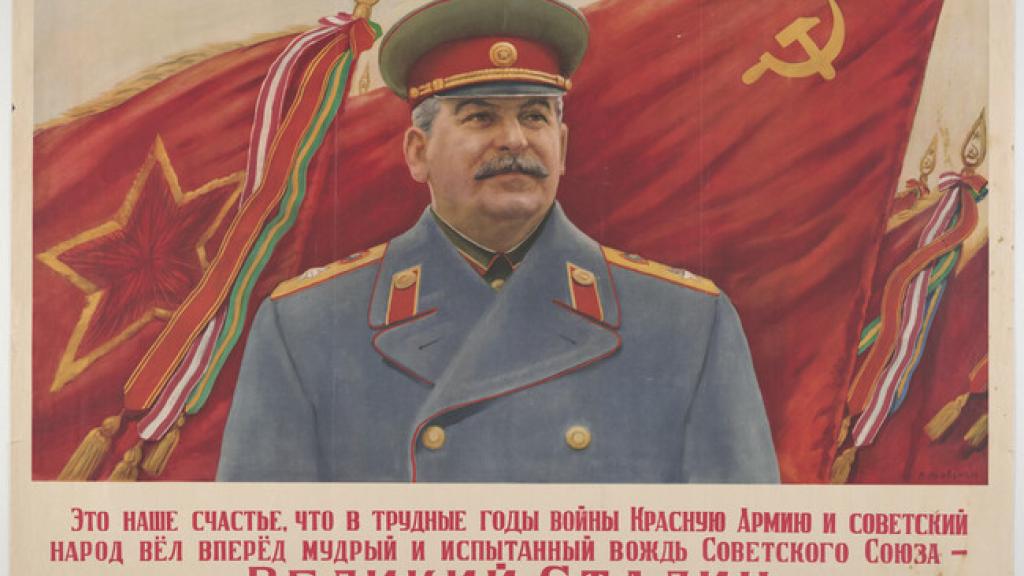
First published at New Politics.
In Stalin’s Shadow: Leon Trotsky and the Legacy of the Moscow Trials
By Douglas Greene
London: Resistance Books, 2025
A serious development on the left — accompanying a flourishing of “campism” (i.e., seeing the world as divided into a U.S.-led “imperialist camp” and a “progressive camp,” which includes dictatorships in Russia and China and elsewhere) — is the rehabilitation of Joseph Stalin, elevating him into the Revolutionary Pantheon, justifying the policies and practices for which he has long been condemned. For many, this smacks of the “revisionist” project advanced by such people as David Irving: seeing Adolf Hitler and the Nazi movement as representing a reasonable German patriotism, denying the reality of a Holocaust destroying millions of Jews and others. While many on the left have effectively challenged Nazi apologists and Holocaust deniers, a systematic left-wing critique of the new wave of Stalinist revisionism has been missing. Until now, thanks to the efforts of Douglas Greene. Grover Furr — one of the authors Greene critiques — describes him as an “incompetent and dishonest Trotskyite.” But this isn’t quite right.
Greene’s identity
I first became aware of Douglas Greene during the Occupy Wall Street movement in 2011, when he organized a series of diverse left-wing speakers (some far more prominent than me) to give informational, agitational, and educational talks for the consideration of the mostly young activists gathered at Boston’s Occupy encampment. From online contributions in one or another Trotskyist or Trotskyist-influenced site, I soon found that he was a writer as well — part of an undefined but vibrant left-wing collectivity discussing left-wing history and theory, sometimes putting forward ideas I disagreed with (far more critical of Jacobin and of DSA [Democratic Socialists of America], for example, than I was inclined to be), but always offering thoughtful comments and to a significant degree going in a positive direction. Then, as “an independent Marxist and historian” with no clear organizational affiliation or academic credentials, he began to publish books.
I’ve recently acquired Greene’s first book, Communist Insurgent: Blanqui’s Politics of Revolution (Haymarket, 2017), but it was his second that I chose to read first, A Failure of Vision: Michael Harrington and the Limits of Democratic Socialism (Zero Books, 2021). It was far better than the ultra-left hit piece I had expected. Despite an occasional gap or inaccuracy, it was seriously researched, packed with useful information and interesting ideas. Whether or not one fully agrees with him, he is someone worth reading.
As already noted, however, there was an urgent need to quite seriously confront the recent works of Stalin’s latter-day defenders — works undermining the democratic and humanistic qualities at socialism’s very core. Greene has moved forward to fill the gap. His third book is a quite interesting but prohibitively priced, 350-page hardback, Stalinism and the Dialectics of Saturn: Anticommunism, Marxism, and the Fate of the Soviet Union (Lexington Books, 2023). His fourth is the volume under review.
Greene’s gallery
Greene presents a gallery of four Stalin defenders.
One is the already-mentioned Grover Furr (1944– ), professor of medieval English literature at Montclair State University in New Jersey, who has from 2011 to 2025 published at least seventeen books defending Stalin—in some cases with a primary focus on demolishing Trotsky. This quantity of publications causes Greene to devote two chapters to Furr; his conclusions are devastating:
The trouble with Furr’s work is not just that he makes up facts.… [H]e can cite genuine data in support of his claims. A cursory look reveals that his work is filled with abundant quotes, facts, and snippets of real information.… It is full of facts and footnotes.… [Yet] his overarching approach is to cherry pick data to fit his pre-existing conclusions. To achieve this, Furr utilizes a two-pronged approach of inflating any facts that he believes support his conclusions, and he either discredits or ignores everything which contradicts his thesis. (131)
While not formally identified with any political group, an examination of Furr’s Montclair State website includes a Politics and Social Issues page that has a link to the homepage of the Progressive Labor Party, with this comment: “Ever since the anti-war and anti-racist movements of the ‘60s I have found this to be the best of the ‘alternative’ sources. Relentlessly anti-capitalist, resolutely pro-worker and pro-employee generally, it’s the best source of class analysis of the world’s events.” Beginning in 1962, as a Maoist-oriented split-off from the Communist Party USA, at moments it played a significant role in U.S. “new left” activities of the 1960s and early 1970s; it then broke “to the left” from Maoism, and shrank into what many perceive as an ultra-left, self-isolating, and irrelevant sect.
Perhaps the most prestigious of Greene’s subjects is the late Italian scholar Dominic Losurdo (1941–2018). At first adhering to the massive but increasingly reformist Italian Communist Party, in the early 1990s Losurdo participated in a substantial break-away, Communist Refoundation. By the end of the decade, this group splintered—and Losurdo joined one of the smaller splinters, which adopted the old name “Italian Communist Party” and was influenced by the late post-Mao Chinese “market socialist” leader (Mao had persecuted him as a “capitalist-roader”), Deng Xiaoping. But Losurdo’s prestige has flowed not from his political history, but from his academic and literary achievements.
As director of the Institute of Philosophical and Pedagogical Sciences at the University of Urbino, Losurdo taught history of philosophy as faculty dean of educational sciences. He was also prominent in professional associations devoted to the study of Marx, Hegel, and Leibniz.
But most important, he produced a number of significant works that combined his revolutionary political commitments with his scholarly expertise, including Liberalism: A Counter-History (Verso, 2014), War and Revolution: Rethinking the Twentieth Century (Verso, 2020), and Democracy or Bonapartism: Two Centuries of War on Democracy (Verso, 2024). His most controversial works, however, have become more generally available (certainly for those reading in English) since his death: Stalin: History and Critique of a Black Legend (Iskra Books, 2023) and Western Marxism: How It Was Born, How It Died, How It Can Be Reborn (Monthly Review, 2024).
There are two lesser-known figures with whom Greene deals. They lack the quantity and quality of output of Furr and Losurdo, but also enjoy a certain influence: Ludo Martens (1946–2011) and Bill Bland (1916–2001). Martens was a prominent figure in the Belgian far-left, a founder and leader of the Maoist-oriented Workers’ Party of Belgium. His key work on this topic, Another View of Stalin, was published in 1994. Bland, originally from Britain, moved to New Zealand in the 1930s, where he became active in the Communist movement, and after returning to Britain, played a prominent role as an educator in the Communist Party of Great Britain. He drifted toward Maoism after the mid-1950s, but by the 1970s had concluded that Albanian Communist leader Enver Hoxha’s represented a preferred alternative to Chinese Communist “revisionism.”
Greene’s achievement
A problem with all-too-many of those responding to what is presented by Stalin’s defenders is an inclination to settle for old clichés and contemptuous dismissal — but Greene’s approach is far more engaged, substantial, interesting, and useful. He gives serious attention to the four defenders of Stalin, each of whom has a different, distinctive approach. He clearly and dispassionately states their actual positions, often with generous quotes, and then frankly explains where he thinks they go wrong. He begins by sketching the social-political context from which they emerge, then gives a sense of some of their major ideas and the deficiencies of those ideas, shifting to the actual “how” and the “why” of the Moscow Trials and of the more extensive purges and repression in the USSR of 1935–39. He concludes with an exploration of “conspiracy theories,” while considering what whirled out of control in the Soviet Union of the late 1930s and also what to make of the resurging attacks on anti-Stalinism by Stalin’s latter-day defenders. The final chapter also has hints of relevance for the irrationalism and conspiracy theories related to today’s right-wing resurgence.
As a bonus, Greene generally includes in each of the chapters an interesting “interlude,” focusing on something related to the general topic, with intriguing subtitles: Vyshinsky’s Tribunal; Leon Trotsky, Georges Danton, Judas Iscariot, and Benedict Arnold; Spanish Inquisition; The River of Blood; The Confession; Wails at a Gangster’s Funeral; Shattered Faith.
Among the strengths of In Stalin’s Shadow is the fact that it isn’t hobbled by an exclusive reliance on Trotsky and Trotskyists in determining what is and isn’t so. His scope is far more interesting than that, and refreshingly wide-ranging. He isn’t afraid to connect with the serious scholarship of such figures as Sheila Fitzpatrick and J. Arch Getty (neither of whom is in any way “Trotskyist” — and both of whom have sometimes been accused of “Stalinist” leanings). He makes good use of their valuable contributions. Getty, for example, notes how impossible it would have been for Stalin to be “all powerful” — dovetailing with Fitzpatrick’s attention to Stalin’s reliance on a somewhat diverse team for the development and implementation of what are seen as “Stalinist” policies.
Another strength of Greene’s work is that he doesn’t simply lump together the four figures in his gallery but emphasizes important differences in the ways they deal with Stalin. Of course, they all unabashedly defend Stalin’s interpretation of Marxism (i.e., his “Marxism-Leninism”). They also embrace the four elements of his basic political orientation: the “socialism in one country” commitment; the “revolution from above” that promoted forced collectivization of land and hyper-industrialization; the extensive and brutal use of repression against political opponents; and the consequent cultural regimentation to mold “correct” attitudes among the population.
And corresponding to the insight of Fitzpatrick and Getty, none of them believe that Stalin somehow did it all. Yet here is the realm in which disagreements unfold among the defenders. There are divergent accusations that the defenders level against Stalin’s comrades:
Some of those claiming to support him were actually working against him (generally to enhance their own power and material privileges) at the expense of Stalin’s good and revolutionary intentions.
The development of a Stalin “cult of personality” (which Stalin allegedly did not support) was used by such double-dealers to cover their tracks.
Some (such as the heads of the secret police) were also in league with foreign powers — imperialists, Nazis, etc. — and used their authority to protect corrupt Communists and repress honest Communists. In making this case, Grover Furr devotes considerable attention to the alleged duplicity of NKVD head Nikolai Yezhov.
Splintering
Not all the defenders are in agreement with each other’s various points. For example, Bill Bland contends that within the Communist International a blatantly reformist “people’s front” line became dominant despite Stalin’s own revolutionary intentions and that Comintern chieftain Georgi Dimitrov was a secret enemy of Communism, serving not Stalin but instead erstwhile Nazi captors and imperialist masters. All of this goes too far for some of Stalin’s defenders.
On the other hand, it seems likely that, despite such divergences, most Stalin defenders would be inclined to agree with Grover Furr’s approach: Stalin never lied and was basically correct in all that he sought to do; the confessions wrung out of the Moscow Trial defendants prove that they and Trotsky were working with imperialists and fascists to destroy the Soviet Union; it is likely that they were guilty of even more criminal activity than what they confessed to.
It is Dominic Losurdo who is not in full agreement with this. He is not reliant on the forced confessions of the Moscow Trials, and for him, Stalin’s hands are far from clean. His line of argument is similar to the classic defense of Stalinism by Maurice Merleau-Ponty in Humanism and Terror (1947), which consciously inverted Arthur Koestler’s anti-Communist novel about the purges, Darkness at Noon (1940). Losurdo argues:
One need not be a Communist to recognize that “Stalinism,” with all of its horror, is a chapter in the liberation movement that defeated the Third Reich and that provided the impetus for anticolonialism and for the struggles against anti-Semitism and racism; every honest historian knows this. (Quoted by Greene, 27–28)
Greene notes that for Losurdo, “Stalinism was a historical necessity for the USSR since it represented political realism” (28). He continues:
Losurdo argued that Trotsky’s “utopianism” needed to surrender to Stalin’s “realism.” However, Trotsky was unable to accept this alleged necessity and accused Stalin of betraying the revolution. Ultimately, the division between radicals and moderates inside the Communist Party resulted in a bloody civil war. (28–29)
In this “Bolshevik Civil War” Trotsky, Zinoviev, Kamenev, Bukharin, and others ended up plotting against Stalin and his policies—leading to their own betrayals, which culminated in bloody purges and the Moscow Trials. Losurdo, while not relying on trial testimony, does cite other bits of evidence, which Greene conscientiously demolishes. But these bits are beside the point. “However tragic Losurdo may consider the Bolshevik Civil War and the purges,” Greene notes, he believed that they were “necessary for the construction of socialism.” Greene sums up that for Losurdo “it does not matter how absurd or stupid the show trials were, what matters is that Stalin was on the right side of history and Trotsky was not” (49).
Conclusions
To get to the bottom of this, one must examine what actually happened in history — which goes beyond what is possible within the confines of the present book review. Provisional thoughts, however, can be offered.
Greene summarizes his own consideration of the evidence with the comment that “the narrative of the Moscow Trials was an irrational worldview expressing itself in Marxist jargon” (250). Such irrationality, and the horror of the consequent policies (following Losurdo’s line of argument) resulted in the construction of a so-called socialism so corrupted that it was incapable of enduring. This raises questions as to whether Stalin was “on the right side of history.”
It seems worthwhile to consider Greene’s proposed alternative: “Based on Marxist reason, not conspiracist mysticism, it is possible to not only understand the world, but to truly liberate people from oppression” (252).
Paul Le Blanc, emeritus professor of history, serves on the editorial board of the Complete Works of Rosa Luxemburg (Verso) and is author of a number of books on labor and socialist movements, most recently Lenin: Responding to Catastrophe, Forging Revolution (Pluto Press, 2023).