‘The war cannot be an excuse’: Social Movement’s Olena Tkalich on labor rights and economic survival in Ukraine
First published at Cross-border Talks.
“The overarching ideology of our government is deregulation — doing everything possible to accommodate business interests and granting employers maximum flexibility. Unfortunately, this freedom is being carved out at the expense of workers’ rights. We simply do not see the government trying to fix the informal labor issue or enforce stricter compliance. There appears to be a calculation that the tax revenues generated from formalizing these specific sectors wouldn’t be high enough to justify the effort, so the prevailing attitude is to just leave things as they are.
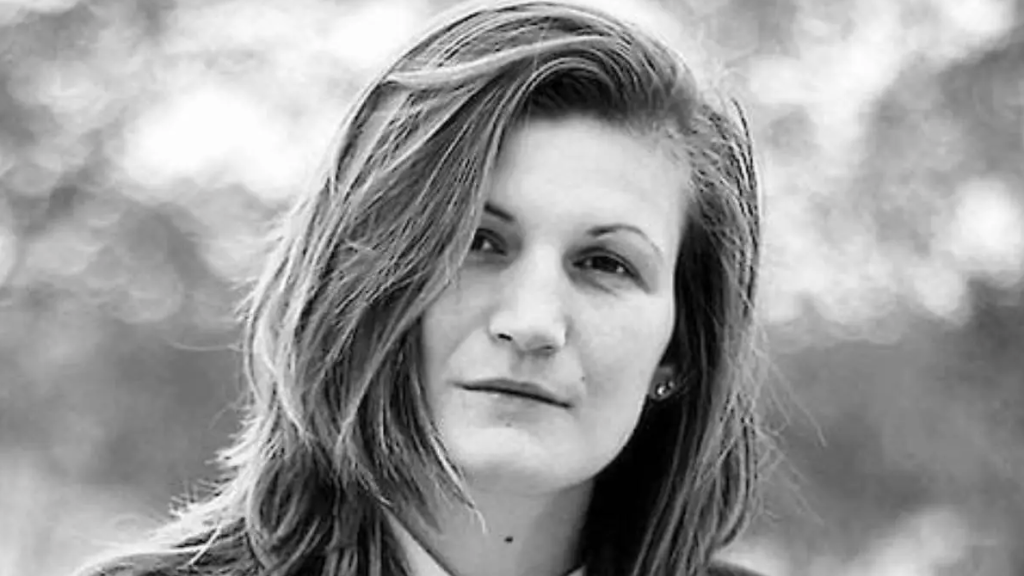
Ironically, international institutions are showing far more interest in this issue than our own leaders. Foreign partners frequently push the Ukrainian government to reform the labor market and curb the grey economy, but the government consistently tries to resist or bypass these recommendations,” says Olena Tkalich, journalist and sociologist. Olena Tkalich is editor of the information agency Soсportal and activist of the NGO Social Movement.
To begin with, I would like to ask how the full-scale invasion of 2022 has impacted socio-economic inequality in Ukraine. Specifically, how has it affected the wealth gap between the richest and the poorest, and what does the structure of Ukrainian society look like today?
I can look at this through the lens of recent statistical data, drawing primarily from World Bank and United Nations reports. According to these figures, the poverty rate in Ukraine hovered around 5% before the 2022 invasion. Today, that number has surged to roughly 25%, with some estimates reaching as high as 35%.
In my view, this spike in poverty is largely driven by displacement and loss. Millions of people have lost their homes and property along the front lines and in the occupied territories, turning them into refugees or internally displaced persons (IDPs).
Another critical factor is the rise in unemployment. The official unemployment rate has grown from roughly 8% before the invasion to about 11% in 2024. However, these official statistics do not capture the full picture.
Why?
Many men avoid registering with government employment services because they fear being mobilized into the military. Consequently, we can assume that actual unemployment is significantly higher. This trend has also fueled a rise in informal, undeclared employment, which carries severe risks. Workers in the informal sector have no guarantee of receiving their wages, and in hazardous fields like agriculture or construction, they have zero labor protection or safety net if an accident occurs.
The conflict has also created a distinct form of inequality tied to migration patterns. Generally speaking, those who managed to leave Ukraine for the European Union largely represent the middle class — people with higher education, foreign language skills, and stronger social mobility. Conversely, members of the working class or those with lower levels of education have tended to stay behind. They are often hesitant to move abroad because they fear they will not find opportunities without language skills or financial reserves. This has created a stark divide between those who had the resources to leave and those who did not.
So when we talk about emigration, are we primarily looking at the more privileged segments of society?
Not necessarily the wealthiest, but certainly the more educated and resourceful. For instance, many of those who left are schoolteachers. In Ukraine, teachers are far from wealthy — in fact, their salaries are notoriously low — but they possess significant cultural and social capital.
Of course, affluent individuals made up part of this wave as well. While the vast majority of refugees are women and children, men still account for roughly 25% of the displaced population abroad. Some managed to cross the border legally, while others did so through informal or unauthorized channels.
That said, the most acute inequality crisis is unfolding within Ukraine among the internally displaced. We are talking about 3.5 million people who fled the front lines and occupied zones. Their single greatest challenge is housing. Ukraine currently lacks a comprehensive, state-funded housing program for IDPs, leaving most people to rent apartments on the open market entirely on their own. While the government provides some financial aid, it is woefully inadequate.
Consider that the average monthly salary in Ukraine is only around 500 euros, which makes market-rate rent nearly unaffordable for a displaced family. To make matters worse, 2024 saw drastic cuts to government assistance for IDPs. Previously, almost all displaced persons qualified for monthly stipends. Now, eligibility has been tightly restricted to only the most vulnerable categories, such as individuals with disabilities or families with very young children.
Returning to the topic of internally displaced persons, most of them now live in Kyiv, correct? I believe there are around half a million IDPs in the capital alone.
Yes, that is accurate. We saw a shift in migration patterns; during the first year or two of the invasion, the vast majority of IDPs moved to western Ukraine. Now, however, most are concentrated in and around Kyiv. This is primarily because the capital offers far better employment opportunities, even though the cost of rent there is exceptionally high.
Given that concentration, is there any government program to utilize vacant apartments? I imagine a significant number of Kyiv residents relocated to Lviv or Warsaw. Has the government introduced any initiatives to manage the housing crisis this way, particularly in Kyiv or other cities with high IDP populations?
No, such a program does not exist. In fact, this option isn’t even being discussed in mainstream media — it only comes up in marginal, left-wing publications. This absence is largely rooted in the post-Soviet transition, during which the vast majority of housing in Ukraine was privatized. As a result, neither the central government nor local municipalities own a meaningful stock of public housing.
The state controls only a minuscule fraction of real estate, mostly consisting of dormitories tied to universities or state-owned factories, but this accounts for a negligible percentage of the total housing stock. Consequently, a vacancy management program is non-existent, and the idea of sharing private property lacks broader social backing.
That mirrors what I observed in Kyiv. I remember looking at large apartment buildings where so many units were completely dark and clearly vacant. Yet, when we visited the Sant’Egidio humanitarian center, they were struggling immensely to find accommodation for the people they were assisting. It seemed like a glaring contradiction.
The only real initiative the government attempted was offering financial compensation to landlords who rented their properties to IDPs. However, the subsidies were too low to serve as an effective incentive, and it certainly wasn’t a rent-free model — the displaced tenants still had to pay out of pocket.
I recently interviewed an expert on this topic, and we compared Ukraine’s situation to the displacement crisis between Armenia and Azerbaijan during the Nagorno-Karabakh conflict in the early 1990s. In that case, displaced people simply squatted on vacant land — which, of course, brought its own set of severe issues.
Has it happened in Ukraine too?
We haven’t seen that happen in Ukraine, but it illustrates how post-Soviet housing crises can play out.
As an activist with the Social Movement organization, our position is that the government must construct new, publicly owned housing managed by local municipalities, which could then be rented to IDPs at affordable rates. While a few minor projects like this have launched, the scale of the program remains far too small to meet the actual demand.
Looking at unemployment among IDPs and the wider population, is there any state-led push toward a full-employment policy? During the Second World War, for instance, governments kept unemployment exceptionally low by mobilizing the entire workforce into military production, industry, and public services. You also mentioned that many who fled abroad carried significant cultural capital. I assume Ukraine is facing severe shortages of essential professionals like nurses and teachers. What is the government doing to address this?
I have written extensively on this, specifically analyzing modern initiatives aimed at integrating women into the workforce and drawing comparisons to the post-war mobilizations of the 20th century. During both World Wars, states created massive programs to transition women into traditionally male-dominated sectors of the economy.
The Ukrainian government is attempting something similar today because a vast portion of the male workforce is either serving in the military or staying off the grid to avoid conscription. However, the data shows that these state programs are operating on a minimal scale. We are talking about retraining thousands of women, whereas the actual structural deficit in the economy requires millions of workers.
What is their significance when it comes to the economic reality?
Ultimately, these initiatives have a very low impact relative to the scale of the crisis. You cannot instantly reshape a workforce or easily retrain large numbers of women to enter heavy construction or military-tech manufacturing. While the government is pushing in this direction, the process is inherently slow and cannot yield immediate, macro-level results.
When it comes to teachers and nurses — and nursing is a topic very close to my heart, as I am deeply involved in advocating for a grassroots movement of Ukrainian nurses fighting for better working conditions — the situation is critical.
What do you mean by that?
Historically, wages in these fields have been abysmally low. While we are seeing some shifts this year because the teachers’ union has become highly active, official statistics still show that healthcare and education offer the lowest salaries of any sector in the Ukrainian economy.
These wages are simply not enough to survive on. Today, you can only afford to work in these fields if you are driven by pure passion, if you already own your apartment and don’t have to pay rent, or if you have a family member who can support you financially. It is impossible to sustain yourself independently on this income.
As a direct result, Ukraine is facing a severe shortage of teachers, nurses, and even doctors; people simply refuse to work for these wages. Because the vast majority of professionals in these sectors are women, many choose to leave Ukraine and seek employment in the European Union.
For this specific demographic, migrating is, I imagine, somewhat easier because the EU has a massive shortage of labor in the care sector.
European countries actively need these skills, making it relatively easy for Ukrainian women to find employment in elderly care, schools, and similar fields.
I can give you a few concrete examples from my own circle. I know two women who worked as journalists in Ukraine for about twenty years. Today, one is in the Czech Republic and the other is in Poland, and both are working in elderly care. They decided to take this path because it offers a decent salary and strong social guarantees.
Another fascinating example involves two women who used to be municipal bus drivers in Kyiv. They left Ukraine at the beginning of the full-scale invasion and ended up in Germany. One of them managed to continue working as a bus driver there. Her salary is incomparable to what she earned in Ukraine, and she is absolutely thriving. Interestingly, both of these drivers were active members of an independent trade union in Kyiv and faced significant pushback for their activism. Now, they are experiencing firsthand how labor relations function in Germany, observing the strikes that take place every few months. It has been an eye-opening comparison for them. As for the second bus driver, she eventually transitioned into the German care sector as well.
You mentioned the informal economy earlier. Where exactly are people working when they enter this grey market without contracts? Which sectors are the most notorious for this?
It is heavily concentrated in three main areas: construction, agriculture, and the service sector — particularly among baristas, waiters, and restaurant staff. The service sector is heavily populated by young people, who are frequently exploited. Employers often give them bogus contracts or withhold their wages entirely. So, if you look at where informal labor thrives, it is overwhelmingly in agriculture, construction, and hospitality.
Is the government taking any steps to curb this? I recall from previous interviews with members of the Social Movement that the state actually relaxed labor regulations. Are they doing anything to address the grey market, especially since the state is losing out on tax revenue that could fund the military?
The overarching ideology of our government is deregulation — doing everything possible to accommodate business interests and granting employers maximum flexibility. Unfortunately, this freedom is being carved out at the expense of workers’ rights. We simply do not see the government trying to fix the informal labor issue or enforce stricter compliance. There appears to be a calculation that the tax revenues generated from formalizing these specific sectors wouldn’t be high enough to justify the effort, so the prevailing attitude is to just leave things as they are.
Ironically, international institutions are showing far more interest in this issue than our own leaders. Foreign partners frequently push the Ukrainian government to reform the labor market and curb the grey economy, but the government consistently tries to resist or bypass these recommendations.
What about the trade unions? Are they attempting to lobby the government on these issues? Historically, we know how societies react when a conflict ends or a ceasefire is reached. Right now, the ongoing war serves as an excuse to maintain the status quo, but once it is over, I suspect there will be an immense wave of public frustration regarding the economic situation.
This is a critical turning point in the history of Ukrainian trade unions. If they fail to act now, they will simply cease to exist. Historically, there has been plenty of valid criticism leveled against them — that they are passive, corrupt, or act merely as an extension of the state apparatus.
Right now, however, we are seeing a shift. A segment of the union movement is becoming significantly more active, largely due to solidarity and support from European Union trade unions. By integrating into the broader European labor movement, Ukrainian unions are being pushed to adopt a more active stance and engage in political discourse. In the past, the major established unions did everything they could to avoid politics and stay compliant within the system. Today, some union leaders are explicitly incorporating left-wing rhetoric into their platforms.
This environment will create a natural separation: the unions that choose to fight will adapt and emerge as militant organizations capable of defending workers’ rights, while the passive ones will fade into irrelevance because workers will no longer see a reason to support them. In the past, the situation wasn’t as dire, but today, the public explicitly demands active representation.
Do you have any examples?
We can already see this revitalization in major sectors. The education union has become highly active, as have branches within the nuclear energy and railway sectors. My own work focuses primarily on the healthcare sector, where the dynamic is relatively different. Here, mobilization is driven less by the traditional structures and more by smaller, highly active independent unions and NGOs, such as the grassroots nurses’ movement. They are trying to formalize themselves as an official trade union, though navigating the legal bureaucracy remains a challenge.
Consequently, healthcare is deeply fragmented. On one side, you have the large, official union that remains passive and protects its ties to the state; on the other, you have an array of small, highly motivated independent groups. My goal is to bridge these gaps and bring these active factions together into a unified front, which is difficult but necessary work.
The stakes are incredibly high because Ukraine is facing a catastrophic shortage of nurses. Interestingly, when you look at the data, the number of doctors per capita in Ukraine is roughly on par with the EU average. However, the deficit in nursing is far more dramatic, precisely because their wages are substantially lower and their working conditions are significantly worse than those of physicians.
When I spoke with a territorial defense chaplain who has been fighting since 2014, he was remarkably positive about how veterans are being treated. He is no longer on the front lines himself; instead, he organizes charitable initiatives for soldiers and IDPs. From his perspective, the support system seems to be working well.
I actually agree with that assessment. The government is dedicating immense attention and resources to veteran affairs and policy, and the results are quite positive. Consider the employment data: prior to the full-scale invasion, only about 10 to 15 percent of people with disabilities in Ukraine were employed. Yet, among disabled veterans today, more than half are successfully integrated into the workforce. In this specific arena, government initiatives are performing far better than in any other social sector.
My colleague, sociologist Oksana Dutchak, who researches social care for people with disabilities, noted a revealing trend. When international funds flooded into Ukraine to support veterans, they initially tried to integrate their resources into the existing national social care infrastructure. However, they found the general system so degraded that they decided it was far more efficient to build entirely separate, parallel structures dedicated exclusively to veterans.
As a consequence, we now see a stark inequality between the robust support available to veterans and the abysmally low level of social protection afforded to the civilian population.
That makes sense. The chaplain actually showed me the Diia app on his phone to demonstrate how easily he could request a care worker. The digital accessibility was incredibly impressive. He also completely contradicted what you mentioned earlier regarding the healthcare system, claiming that medical services here are faster and better than in Poland, particularly when it comes to getting operations done quickly. It sounds like his experience is entirely a reflection of his veteran status.
Precisely. It is a parallel reality. To some extent, medical care in Ukraine can always be a lottery—you can still end up in an underfunded facility with inadequate care. But as a rule, veterans are placed in vastly superior conditions compared to the rest of the population.
Our government receives extensive financial backing from international partners, and the bulk of that aid is deliberately funneled into veteran care. Meanwhile, the rest of society is left behind. This disparity has sparked a profound debate over whether such a hierarchy of care is fair. It is an emotionally charged issue because these individuals genuinely sacrificed their health and lives for the country. Ultimately, the vast majority of Ukrainian society accepts this imbalance; people agree that those who fought deserve the absolute best treatment available, and they are glad to see them receive it.
What about the non-governmental sector? When I looked into social trust data for Ukraine, the results were striking: the highest levels of public trust are concentrated in the military, the church, and NGOs. Some people have told me that the NGO sector was minimal before 2022 and essentially reinvented and expanded itself in response to the full-scale invasion. How do you view the role of NGOs today?
The high level of trust in NGOs stems directly from the public’s deep-rooted distrust of state institutions. In practice, NGOs are stepping in to perform duties that should fundamentally be handled by the government. This reflects a classic neoliberal approach, where the state abdicates its social responsibilities and offloads them to the civil sector.
The core issue with this model is its extreme volatility. NGOs rely entirely on grants and external funding; if that money dries up, the services instantly vanish. Take the example of displaced women who are caring for children or elderly relatives. They now have to dedicate a massive portion of their daily lives just to navigating this fragmented humanitarian market. There are hundreds of different NGOs out there, and families must constantly research and figure out which organization can provide what specific type of aid.
What kind of services are these NGOs primarily providing?
It varies wildly. Some distribute basic survival supplies like food and hygiene products. Others offer specialized medical assistance, free psychological counseling, or childcare workshops.
However, the systemic flaw is that this aid is entirely ad hoc rather than structural. It is a day-by-day survival mechanism. For instance, a displaced mother cannot secure a stable job if she doesn’t have access to reliable, permanent childcare — and an NGO offering a children’s workshop once a week does nothing to solve that. The same goes for mental health support: millions of people are traumatized and need long-term therapy, but an NGO might only have the funding to provide one or two free sessions before the recipient is forced to pay market rates. Receiving a food basket once a month or a batch of goods once every six months does not provide long-term stability. While people are incredibly grateful for the immediate relief, this NGO-driven safety net is inherently fragile and cannot solve the deeper structural crises of our society.
If we look into the future, given the current state of Ukrainian society, how do you envision the post-war reconstruction of the economy and society? I am thinking specifically about three key elements. First, the question of inequalities, which ties into the role of the oligarchs and the taxation of the wealthy. Second, the issue of immigration; when I was in Kyiv, even people who identify as left-wingers told me that Ukraine will need to bring in massive numbers of immigrants to fill low-paid jobs; otherwise, the demographic crisis will completely cripple the peacetime economy. And third, the issue of social services, which, as you noted, are currently distributed in a deeply uneven way. How do you see the reconstruction addressing these challenges?
I will answer that from my perspective as an activist with the Social Movement, drawing directly from our organization’s program.
First, when it comes to inequality, we fundamentally need to overhaul our tax system. We advocate for the introduction of progressive taxation, similar to models used in countries like Germany or Austria, where the wealthy pay a higher percentage of their income. Currently, Ukraine relies on a flat tax structure where everyone pays roughly the same rate, alongside massive loopholes that allow the ultra-rich to evade taxation almost entirely.
Furthermore, state enforcement against undeclared work needs to be significantly strengthened; we often point to Poland as a good model for labor inspection. Unfortunately, our government is currently pushing for a new labor code.
What is its outlook?
While it is framed as a modern update, the details reveal a highly neoliberal agenda. It actively undermines trade unions, weakens collective bargaining, and does very little to curb the informal economy. The current legislative direction is moving us further away from fair taxation and proper labor regulations.
Regarding immigration, which is a topic I research alongside the issues of racism and integration in Ukraine, I am highly skeptical about the idea of mass influxes. Ukraine’s current wage levels are the lowest in Europe. Even for workers from impoverished regions in Africa or South Asia, Ukraine is simply not an economically attractive destination.
We do see small exceptions right now — for instance, Turkish construction companies bringing in their own crews to repair roads and infrastructure—but that involves a few thousand people. It is hard to imagine millions of migrants moving here when the domestic economy offers so little. Estimates suggest our economy will need at least four million additional workers, but I think it is actually more realistic to expect a return of displaced Ukrainians rather than mass foreign immigration.
Do you think it is more likely that people will return? To be honest, a common sentiment I encountered in Kyiv was the opposite: many fear that once the borders open, even more people — especially men joining their families — will leave for places like Poland. Even though the Ukrainian government has taken steps that feel almost self-defeating by restricting consular services for citizens abroad, the economic reality in Poland will still be vastly more attractive.
That is a major debate right now. In fact, there are active discussions within Ukraine about potentially keeping the borders closed to men for up to a year after the war officially ends to prevent a massive wave of emigration.
Whether people return or stay in the EU permanently depends on a few critical factors, with housing being the most decisive. If a family’s apartment or house in Ukraine survived the conflict and is located in a relatively safe region, they are much more likely to return. Renting in the EU is incredibly expensive, so having secure, rent-free property back home is a powerful incentive.
The second major factor is family cohesion. Many displaced women with children find it incredibly difficult to build a life abroad entirely on their own. If their husbands, parents, or extended families remained in Ukraine, that pull factor is strong. However, if an entire family has managed to relocate to the EU, and their original home in Ukraine was destroyed or remains under occupation, they will likely stay abroad forever.
That ties into another major question: what will happen to the state budget and the continuity of European Union subsidies for Ukraine?
Exactly. It all depends on how those frameworks evolve. Take my own family, for instance — they are currently in Austria. Over the past year, the support structures changed drastically, particularly regarding healthcare insurance and integration. I am now self-employed in Austria and pay taxes. For a middle-class professional, the current conditions are more or less manageable, but for many other displaced Ukrainians, surviving abroad has become exceptionally difficult.
Many face a tough choice: they either have to accept low-skilled, low-paid work or struggle to get by. While some people are willing to take those survival jobs for two or three years, they aren’t prepared to do them for the rest of their lives. For a significant portion of the displaced population, this is the trigger that will prompt them to return to Ukraine once the security situation stabilizes, because back home they can actually secure employment that matches their education and professional qualifications.
This brings me to my final question. If meaningful alternatives were presented, do you believe the Ukrainian electorate would actually vote for a major economic and social shift, or will the political landscape largely remain the same? There is intense discussion right now surrounding potential wartime or post-war elections, focusing on figures like Volodymyr Zelenskyy, Valerii Zaluzhnyi, or Kyrylo Budanov, but there seems to be very little ideological deviation from mainstream politics.
Our dominant political discourse is overwhelmingly right-liberal, and the mainstream competition is really just between different shades of that same ideology. There is no genuine diversity of political ideas. Organizations like our Social Movement try to build a viable left-wing political party—akin to the path Razem took in Poland—but in Ukraine, this is still viewed as a highly exotic project. This resistance is mostly because left-wing concepts are immediately associated with Russia and the Soviet legacy. Ironically, modern Russia is completely detached from any leftist ideals, but the historical trauma still creates a powerful negative association in the public mind.
What I observe broadly is that the vast majority of the population is deeply exhausted; people just want the war to end. To be obvious, no one is willing to accept Russian occupation or capitulation. However, a significant number of people are privately prepared to freeze the issue of the currently occupied territories, at least temporarily, simply because the human and social exhaustion is so acute.
At the same time, we still maintain our messy, resilient democracy. Ukraine is not Russia; we still have a vibrant civil society, the freedom to debate critical issues on the street, and the capacity to organize protests. While the current political friction is mostly a tug-of-war between Euro-liberal reformers and more traditional conservatives rather than a debate over socialist ideas, the democratic space is very much alive.
Our main hope for long-term change rests with the younger generation. We are seeing a steady stream of young Ukrainians who spent time in the European Union, received an education there, and are now returning home. They are bringing back a familiarity with the European social-democratic tradition. We see this firsthand in our own organization — returning youth are becoming active with us because they’ve learned to think within a progressive, European framework.
So, while our political mainstream will likely remain anchored in a right-liberal paradigm for the foreseeable future, the potential for grassroots mobilization and incremental change is real. If you compare our situation to Russia, where any dissent is completely impossible, Ukraine has a genuine fighting chance for a better future — even if navigating that path will be anything but simple.