Why Marx’s theory of value is of value to workers today: Commodities, fetishism and labour-power
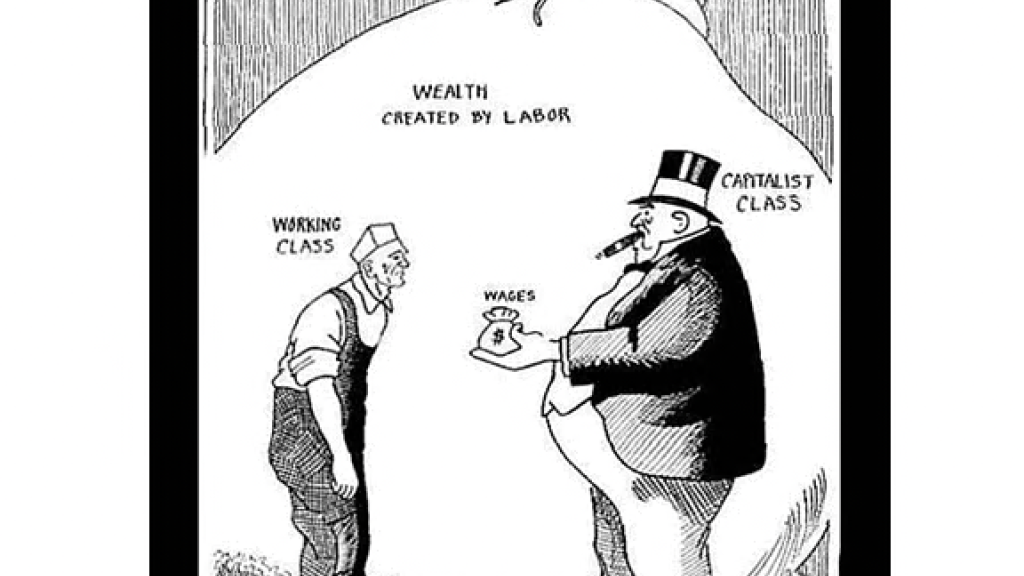
Karl Marx’s (1887: 6) discussion of the commodity can be difficult for many people.1 He begins by warning his readers that “Every beginning is difficult” and that “to understand … the section that contains the analysis of commodities, will … present the greatest difficulty”. Yet, if people read his discussion carefully, most will understand it, and their labour will be compensated in the form of a better understanding of capitalism. “There is no royal road to science, and only those who do not dread the fatiguing climb of its steep paths have a chance of gaining its luminous summits” (ibid: 9).
Marx’s analysis of commodities belongs to his wider critique of political economy, which develops interconnected concepts, including capital, circulation, labour-power, the labour process, surplus-value, exploitation, the working day, machinery, class struggle, accumulation, the reserve army of labour and primitive accumulation. Marx understood this critique not simply as an intellectual undertaking but as a weapon workers could use in their struggle against capitalists.2
This paper, therefore, does not treat Marx’s value theory as an abstract economic doctrine. Instead, it connects the theory of commodities, abstract labour, commodity fetishism and labour-power to questions that matter directly to workers. It demonstrates that Marx’s theory of value is relevant not only to understanding commodity exchange and labour time but also to understanding why workers are subordinated to market forces, why formal freedom coexists with economic compulsion, and why production for profit conflicts with human needs.
Two fundamental aspects of commodities: use-value and value
Wealth consists of use-values, the things that people need to satisfy their needs. “The wealth of societies in which the capitalist mode of production prevails appears as an ‘immense collection of commodities’” (Marx, 1887: 27).
Use-value
The usefulness of a commodity makes it a use-value. This usefulness is conditioned by the physical properties of the object (matter and energy). It is the physical body of the commodity that makes it useful.
Commodities satisfy material wants and mental or cultural wants. Things that satisfy material needs (food, housing, etc) are relatively more important than those that meet cultural needs (painting, movies). Some use-values satisfy immediate needs, such as food and housing. Other things, such as tractors, serve as means of production. Some commodities — including seeds and certain applications of artificial intelligence — can serve both purposes.
Most use-values must be produced. They are produced through the interaction of human labour and nature. Both nature and labour contribute to material wealth.
Value (or labour/social value)
Assume the following commodities exchange as equivalents: one kilogram of corn = half a kilogram of iron = a massage or a piece of computer code = $10. This illustrates an exchange relation that abstracts from the use-values of commodities. A kilogram of corn has many exchange-values (half a kilogram of iron, a massage or a piece of computer code). This means that a common element exists in all these commodities: they are all equal to something that is neither corn, iron, computer code or any other particular commodity. This common element cannot be geometrical, physical, chemical or any other natural property of commodities, since such properties account for their usefulness.
This common element is human labour, considered as homogeneous, or abstract labour. Commodities are congealed quantities of abstract labour. In this sense, they are values. Thus, abstract or homogeneous labour is the substance of value, while socially necessary labour time determines its magnitude; exchange-value is the form in which value is expressed and money-price is its monetary expression.
Value is created in production but is socially realised, validated and made observable through exchange relations. Price (the monetary expression of exchange-value) fluctuates around value at the level of abstraction adopted here under the influence of supply and demand, and other conjunctural circumstances (for example, a perception on the part of a person that an 18th-century painting is very useful). Value cannot be seen, touched or felt (it is a “phantom”). It is “immaterial”, but it is social and objective.
Exchange relations — the proportion in which one commodity is exchanged for another — constitute a mode of expression of value. If a cup is exchanged for five pens, and both are worth $10, assuming that commodities exchange at their values, this means that the same amount of socially necessary abstract labour time is embodied in the cup and the five pens. The phrase “socially necessary” is significant: “The labour time socially necessary is that required to produce an article under the normal conditions of production, and with the average degree of skill and intensity prevalent at the time” (Marx, 1887: 29).
The magnitude of a commodity’s value is determined by socially necessary labour time. If a commodity normally takes six hours to produce, a worker who takes twelve hours — the twelve hours representing the individual labour time required to produce the commodity in that enterprise — does not thereby create twice its social value. Conversely, commodities produced in the same amount of socially necessary labour time have equal values, even if their use-values differ.
Socially necessary labour time changes with scientific and technological advances, skill, social organisation and environmental conditions. For example, favourable growing conditions may allow eight kilograms of corn to be produced with the labour previously needed for four, reducing the value per kilogram. Climate change can alter productivity and destroy use-values. If harvests are destroyed by unpredictable and unseasonal heavy rainfall associated with climate change, and if such conditions affect many producers, the socially necessary labour time required to produce rice may increase, raising its value, other things being equal.
The dual character of the labour embodied in commodities
Just as commodities have use-value and value, the labour producing them has two aspects. One is concrete labour, which produces use-values. The other is abstract labour, which constitutes value. Abstract labour refers to the “productive expenditure of human brains, nerves, and muscles” (Marx, 1887: 31). Tailoring and writing computer code are qualitatively different forms of concrete labour because they produce different use-values: clothes and software. Yet, as values, these commodities have the same substance: abstract human labour. They represent “two different modes of expending human labour power [in the abstract]” (ibid: 31).
Concrete, or useful, labour, an eternal necessity, mediates the metabolism between people and nature. If clothes-making labour were the same as software-making labour, then clothes would not be different from software. They would not confront each other as different commodities in the market. As values, a coat and software have the same substance: they are objective expressions of abstract human labour. But tailoring and writing computer code are different kinds of useful labour. In a nutshell, here is the distinction between the two aspects of labour:
On the one hand all labour is, speaking physiologically, an expenditure of human labour power, and in its character of identical abstract human labour, it creates and forms the value of commodities. On the other hand, all labour is the expenditure of human labour power in a special form and with a definite aim, and in this, its character of concrete useful labour, it produces use values (Marx, 1887: 33).
There is also a distinction between simple average labour and more complex labour. Simple average labour refers to the expenditure of labour-power possessed, on average, by ordinary individuals without specialised development.3 This simple average labour serves as the basic unit for expressing the magnitude of value. However, the character of simple average labour varies between countries and across historical periods, even though it is socially given within a particular society at a particular time.
More complex labour counts as multiplied simple labour: a commodity produced through highly complex labour is therefore treated as equivalent, in value terms, to a definite quantity of simple labour. This reduction of complex labour to simple labour takes place through social processes operating behind the backs of producers, rather than through their conscious decisions.
Thus, concrete labour — such as making toys or writing computer code — produces use-values, while abstract labour constitutes value, whose magnitude is determined by socially necessary labour time. Under generalised commodity production, this socially necessary labour time regulates exchange relations and prices through processes operating independently of the conscious decisions of individual producers. This brings us to Marx’s concept of commodity fetishism.
Commodity fetishism
Fetishism involves attributing supernatural powers to things and treating the powers of things in isolation from historically specific social relations. Commodity fetishism refers to a social condition in which social relations between producers take the form of relations between things. If one computer = ten calculators = $10, this exchange relation appears to be an inherent property of useful things themselves.
But in reality, value is not a natural property of things in the way that weight or colour is. In a commodity-producing society, it seems as if things that people need automatically possess value, which is expressed through exchange-value, and follow objective laws to which people must submit. Commodities are products of human labour, yet they appear to possess value independently of their producers. The movement of commodity prices — including those of everyday necessities — can profoundly affect people’s lives. Marx challenges this naturalistic view of commodities.
Commodity fetishism does not arise merely from a mistaken belief. It does not arise simply because producers in different parts of the world are unaware of one another’s conditions of production owing to geographical distance. Rather, commodity fetishism expresses an objective social relation. It arises because private producers work independently and establish the social connections among their labour activities indirectly, through the exchange of their products. This is the case even if all the producers work in the Greater Toronto Area or in Sydney. The social character of their labour becomes apparent only through this exchange.
In a consciously coordinated division of labour, producers could directly decide what to produce, how to produce, how much labour to devote to different needs, and how to distribute the results. Under commodity production, however, these relationships are mediated by things: social relations between producers appear as relations between commodities, and production confronts people as a process beyond their collective control.
Consider an eggplant producer and a pen producer. If one kilogram of eggplants or five pens sells for $10, each producer tries to obtain as much as possible in exchange. Their connection is mediated by prices rather than by a conscious assessment of each other’s working conditions or social needs. The absence of direct collective regulation of production is central to commodity fetishism, which has two aspects: commodity production and exchange mystify the social relations between producers, and the products of their labour, together with the market forces governing their exchange, come to dominate their lives.
Labour power as a peculiar commodity
Under capitalism, not only the means of subsistence and production but also labour-power — the human capacity to work — become a commodity. Understanding this peculiar commodity is essential to explaining the dependence of wage workers on capital.
Labour vs labour-power
Labour-power is the capacity for labour. It is “the aggregate of those mental and physical capabilities existing in a human being, which he exercises whenever he produces a use-value of any description” (Marx 1887: 117). It is the power to produce useful things. Labour-power has become a commodity under capitalism, just as salt and sugar are commodities. Wage labour is the dominant form of labour outside the sphere of reproduction in the family.4 Labour-power was not always a commodity. It became a commodity when workers were separated from the means of production and subsistence by proto-capitalists and capitalists, with the help of the state.
Labour is the actual exercise of the capacity for labour. Wage workers own their labour-power. They sell not the corn or computers that they produce, but the power to produce corn or computers. Because they do not own the means of production, once they have sold the use of their labour-power for a specified period, they lose control over its exercise during that period and lack control over the things they produce. These things are owned by the buyer of labour-power and sold by that buyer.
Double freedom of labour
Workers possess a contradictory “double freedom”. They are legally free to dispose of their labour-power, unlike slaves or serfs. But they are also “free” from ownership of sufficient means of production and subsistence, and so must sell their labour-power to survive. This dependence on the sale of labour-power generally operates through what Marx calls the dull compulsion of economic relations, without direct extra-economic coercion. Employers do not ordinarily force a person to sell their labour-power to them through direct coercion.
Because workers own their labour-power, they can, in principle, choose to whom they sell it and for what limited period. Selling themselves permanently would negate their status as owners of the commodity. This formal equality between buyers and sellers of labour-power is a historical achievement compared with slavery and serfdom, but it coexists with economic dependence on the buyer of labour power. The freedom to move and seek employment, including across borders, is therefore a fundamental working-class concern.
Value of labour-power
Like all commodities, labour-power has a use-value: its capacity to produce useful things. It has an exchange-value, expressed in money as wages. It also has value, like salt and sugar. The value of labour-power is determined by the value of the means of subsistence necessary for the reproduction of labour-power at a given time and in a given geographical area. It has physical, generational, environmental and historical-moral dimensions.
Workers must obtain the means of subsistence required to maintain their physical and mental capacities and to reproduce the working class across generations. These needs vary with climate, historically established living standards, social expectations and class struggle between buyers and sellers of labour power; they are not reducible to a bare biological minimum. If the socially necessary labour embodied in a worker’s daily means of subsistence is three hours, the daily value of labour-power is represented by three hours of social labour.
To live a normal life (in which their labour-power is not reproduced in its crippled state), people need to consume things on a daily, weekly, monthly and annual basis. The daily cost of reproducing labour-power can be represented as (365D + 52W + 12M + A)/365, where D = daily needs; W = weekly needs; M = monthly needs, and A = annual needs. In other words, when these requirements are expressed in money, the total annual cost of daily, weekly, monthly and annual necessities, divided by 365, represents the daily monetary cost of reproducing labour-power.
Like other commodities, labour-power is assumed to be sold at its value, although actual wages may fall below it. As with other commodities, the price of labour-power (wages) tends to fluctuate around its value.
The value of labour-power must permit its normal reproduction: a worker employed today must be capable of returning to work tomorrow in adequate health and strength, allowing for normal wear and tear. Education and training may also raise the value of particular kinds of labour-power, while supply and demand affect their wages.
Wages — the price of labour-power — can be understood as nominal wages and real wages (nominal wages adjusted for inflation). Wages are also relative: the wages workers receive can be compared with the income received by capitalists (profits) or with the remuneration of corporate executives (CEO salaries).5 Wages may be paid by time (hour or day) or by output (piece wages). Even when piece wages are paid, workers still do not sell their labour, but their labour-power.
Theoretical and political implications of the theory of the commodity
Definition of capitalism
Capitalism is a society in which an enormous range of useful things is produced for sale. What is produced depends primarily on expected sales and profitability rather than on whether production directly meets human needs. Useful things become means of making money — but people cannot live on money itself. As Marx emphasises, bourgeois production is not consciously regulated in advance by associated producers (people working together).
This definition of capitalism is refined once we consider labour-power as a commodity. Capitalism is more than a system of buying and selling commodities: it is a system in which most people, lacking sufficient independent means of production and subsistence, must sell their labour-power to the capitalist class.
Such views on capitalism implicitly point to what a communist society will be. In a communist society, production will be democratically controlled by the associated producers. People will not be selling their labour-power.
Equality and inequality
Equivalents are (assumed to be) exchanged: 10 kilos of potatoes and 100 pens are both worth $10, so their owners are equal as commodity owners in this exchange. Commodity exchange assumes a degree of equality. “Equality, because each enters into relation with the other, as with a simple owner of commodities, and they exchange equivalent for equivalent” (Marx, 1887: 123). Capitalists and workers are both buyers and sellers of commodities.
Yet the formal equality of commodity owners coexists with profound inequalities in property ownership, income, social power and control over production. In particular, the capitalist owns the means of production, while the worker owns only labour-power, which must be sold to obtain the means of subsistence. Those performing certain kinds of concrete labour (for example scavenging) are looked down upon in some countries. Their labour may be socially “devalued”, and such devaluation may be used to justify payment of wages below the value of their labour-power. Not all people, countries or regions have equal quantities of useful commodities or equal quantities of money, the universal equivalent. People performing the same kind of work may also have different living standards because their hourly wages and working hours differ.
Impersonal market forces and freedom/unfreedom
Commodity exchange can be a condition for a degree of freedom. “Freedom, because both buyer and seller of a commodity, say of labour power, are constrained only by their own free will. They contract as free agents, and the agreement they come to, is but the form in which they give legal expression to their common will” (Marx, 1887: 123). Exchange of equivalents can exclude some forms of direct coercion in economic transactions.
Yet the logic of the commodity expressed in commodity fetishism — the fact that it appears as if the things we need must necessarily be bought and sold — has contradictory consequences. Commodity fetishism, both as a veil and as a constraint on human activity, exists under capitalism, where associated producers do not consciously control production and its products.
Urgent needs may remain unmet when meeting them is unprofitable, while commodities that damage health or the environment may be produced because they can be sold. If more resources are spent on environmental protection in a city or country, other things being equal, production costs may rise, making its producers less competitive in national and global markets. Impersonal competitive pressure to reduce costs — including pressure to reduce individual labour time below socially necessary abstract labour time — to capture a larger share of the market can undermine workers’ living standards, safety and environmental conditions.
The production of material wealth depends on both labour and nature. The magnitude of value, however, is determined by socially necessary labour time, which can itself be affected by environmental conditions. Since exchange abstracts from use-value, profitability rather than human need can govern the allocation of social labour. Thus, capital may flow toward weapons instead of urgently needed food.
The domination of commodities over our lives — commodity fetishism — is connected to the power of money, the universal equivalent for which other commodities can be exchanged. Marx’s discussion of money in the Economic and Philosophic Manuscripts emphasises how possession of money can appear to transform a person’s capacities and social power.6 “I am brainless, but money is the real brain of all things…” and “one … can buy clever people.” Or, “I ... am lame, but money furnishes me with twenty-four feet. Therefore I am not lame.” “The extent of the power of money is the extent of my power…” and money can “transform all my incapacities into their contrary” (Marx: 1844).
Money has immense powers and can help one enjoy considerable freedom. But we live in a society where the majority (the “poor”) are less than what they can be, while a small minority (the “rich”) can be more than what they are. It is not just that not everyone has an equal amount of particular commodities and therefore not everyone has an equal amount of the universal commodity (money). It is also true that human freedom itself is often equated with the freedom to buy and sell particular commodities.7 The market — including commodities and money — is seen only as an opportunity, not as a constraint.
The power of money and commodities, however, does not remain uncontested. Many people object to education being a commodity. “Free education for all children in public schools,” as proposed by Marx and Friedrich Engels in the Communist Manifesto, goes against the neoliberal principle of commodifying education. The same goes for healthcare. The fact that healthcare and education are not universally commodified, and that the extent of their commodification varies — including where the state subsidises or directly provides them — demonstrates that commodification is contested through ongoing struggles for decommodification.8 But such struggles face severe limits as long as the social relations that produce commodity fetishism persist.9
Most workers have the legal freedom to sell their labour-power as a commodity. But even then, they can sell it only when they are needed, so whether they succeed in selling it is not under their control. Millions do not even have the freedom to sell their labour-power on terms of their choosing. They include those who have taken a loan and are tied to their employers, child workers, people subjected to forced or slave labour, and many immigrant workers with precarious legal status. They also include those who have signed non-compete agreements, as in the United States.10
To discipline workers and extract more labour from them, capital, often acting through the state, imposes additional restrictions on their freedom.11 People are formally free to sell their labour-power to whomever they choose, but they are not free, as a class, to refuse to sell it: lacking sufficient independent means of subsistence, they must generally work under the control of an employer to survive.
In the market, the products of different forms of labour are socially equated through commodity exchange. We sell our labour-power for money, which we exchange for the commodities we need. Our daily lives are governed by commodity exchange largely beyond our control. At the supermarket, we want as many eggplants as possible for the money earned from each hour of labour. Such a process of commodity exchange tends to obscure the conditions under which the eggplants are produced.
Commodity production increasingly operates through the world market. International competition limits the effectiveness of purely provincial or national regulation and connects workers and producers across borders. The law of value at a higher spatial scale sets limits on human activities at a lower scale: operating through the world market as a powerful force beyond the control of individual producers, it constrains what enterprises and individuals can do at national and subnational scales. If the value of pens at the global scale is represented by five minutes of socially necessary labour time, enterprises producing pens in seven minutes are subject to competitive pressure and possible losses.
It is utopian to imagine that capitalism can simply be managed so that resources and labour are used to produce things that directly meet human needs. For the same reason (international competitive pressure, or the law of value operating at the international scale), it is untenable to assume that socialism can exist within the borders of a single nation, without becoming an international phenomenon. The capitalist law of value, and not just capitalist military power, would threaten any experiment in “socialism in one country”, as Vladimir Lenin’s and Leon Trotsky’s arguments suggest.
This does not mean that socialist revolution cannot begin in one country and establish workers’ power there. Rather, socialism cannot be consolidated and reproduced indefinitely within one country, independently of international revolutionary developments.
Workers’ living conditions and the reproduction of labour-power
There are further implications of the commodification of labour-power. Workers typically perform labour before receiving the price of their commodity (labour-power). In this sense, they extend credit to capital. Delayed payment may force workers to borrow to meet immediate needs, sometimes at high cost.
For related reasons, many people experience unpaid wages and other forms of economic insecurity. Delayed wages and economic insecurity can also force workers to compromise on the quality of food and other necessities. Moreover, workers with illnesses or disabilities, whether arising from genetic or other causes, may find that employers do not regard their labour-power as meeting prevailing requirements, making it difficult or impossible for them to sell it.
Furthermore, consider the peculiarity of the commodity labour-power. It is not like lassi: the commodity is inseparable from its owner. It cannot be put in the fridge to prevent it from spoiling. One may not get hired for two days, that is, one may not sell one’s commodity for two days, but one cannot skip meals for two days. When workers go on a strike and do not get paid by their employers; employers often know that they can outlast the workers. This is why workers must set up strike funds to increase their bargaining power. For the same reason, community kitchens and such other forms of working-class institutions of social reproduction are necessary.
The commodity labour-power is reproduced partly outside the direct control of capital. A lot of labour is spent on the reproduction of labour-power in the family or similar social contexts, and capitalists make use of the resulting capacity to labour in the sphere of production. The reproduction of labour-power has a public component (the purchase of commodities using wages received from capitalists) and a private component (all the work done in the family and similar social contexts).
Conclusion
Under generalised commodity production, private producers carry out their labour independently of one another, and their labour becomes socially connected through the exchange of their products. Consequently, social relations between producers appear as relations between commodities — a phenomenon Marx calls commodity fetishism. The products of human labour therefore appear to possess value independently of the social relations that produce them. This appearance expresses a real social relation: the products of human labour, along with the market forces governing their exchange, confront producers as independent powers beyond their conscious control.
Instead of people consciously regulating the production and distribution of useful things according to human needs, their economic activities are governed by seemingly impersonal market forces. Overcoming commodity fetishism therefore requires overcoming the social conditions that produce it and establishing communism: the associated producers must collectively control the means of production and consciously regulate their social labour and its products in accordance with collectively determined needs and priorities. We must ask: why must food, healthcare, transit, housing, and other necessities of life be produced as commodities for sale at a profit?
Under capitalism, labour-power — the aggregate of the mental and physical capacities that human beings exercise in producing use-values — becomes a commodity. Workers do not sell labour itself or the products they make, but their capacity to labour for a definite period. They are doubly free: legally free to sell their labour-power to an employer of their choice, unlike slaves or serfs; but also free from ownership of sufficient means of production and subsistence, which economically compels them to work for wages.
The value of labour-power, like that of other commodities, is determined by the socially necessary labour time required for its production and reproduction, as represented by the value of the means of subsistence necessary to maintain workers and reproduce the working class across generations. These requirements have physical, historical, cultural and geographical dimensions, and may include the costs of education and training. Wages express the price of labour-power, which may fall below its value.
Labour-power is nevertheless a peculiar commodity: it is inseparable from the living human being who possesses it, cannot be stored indefinitely, and must be continuously reproduced, partly through unpaid household labour outside capital’s direct control. Moreover, workers generally provide their labour-power before receiving wages, effectively extending credit to capitalists.
Although workers are formally free and legally equal to employers as commodity owners, economic compulsion and various forms of coercion restrict their actual freedom. The commodification of labour-power exposes the contradiction between formal market freedom and workers’ economic dependence, while also revealing how the domination of social life by market forces is rooted in capitalist relations of production.
The commodification of labour-power raises two fundamental political questions concerning human freedom. Why must workers sell their labour-power and work under the control of capitalists to obtain food, clothing, and other necessities? And why should capitalists’ profitability determine what society produces when urgent human needs remain unmet?
The most important question is not simply whether people get paid less than the cost of the things they need to maintain a normal life, although that is important. The more fundamental question is: what if they receive wages sufficient to purchase the food and other necessities required to reproduce their labour-power? Let us assume that this is the case. Could there still be a difference between the value of the things workers produce in a day or a month on the one hand and the value of the goods and services they need to live a normal life over the same period on the other? The answer to this question takes us from the theory of commodities and labour-power to Marx’s theory of surplus-value, which will be examined in the next article.
Raju J Das is a professor at York University, Toronto, Canada. His research interests include political economy, class theory, the capitalist state, climate change and workers’ health, and international development. He is currently working on Capitalist Production in Marx's Capital: Reconstructing Marx's Theory, the third volume of a trilogy published by Taylor & Francis (London), which also includes Marx’s Capital, Capitalism, and Limits to the State (2022) and Marx, the State, and Primitive Accumulation (2026). He serves on the editorial board and manuscript review committee of Science & Society and co-edits the Theory and Class Struggle section of Race, Class and Corporate Power. Further information about his work is available at https://rajudas.info.yorku.ca/.
Selected Bibliography on Marx’s Political Economy
Athreya, V. (2013). Marxian political economy: An introduction to Capital I. Tulika Books.
Basu, D. (2021). The logic of capital: An introduction to Marxist economic theory. Cambridge University Press.
Bidet, J. (2006). Exploring Marx’s Capital: Philosophical, economic and political dimensions. Brill.
Brewer, A. (1984). A guide to Marx’s Capital. Cambridge University Press.
Callinicos, A. (2014). Deciphering Capital: Marx’s Capital and its destiny. Bookmarks Publications.
Cleaver, H. (2000). Reading Capital politically (2nd ed.). AK Press. (Original work published 1979)
Engels, F. (1868). Synopsis of Capital, Volume I. Marxists Internet Archive. https://www.marxists.org/archive/marx/works/1867-c1/1868-syn/index.htm
Fine, B., & Saad-Filho, A. (2026). Marx’s Capital (7th ed., forthcoming). Pluto Press.
Foley, D. K. (1986). Understanding Capital: Marx’s economic theory. Harvard University Press.
Harvey, D. (1982). The limits to capital. Basil Blackwell.
Harvey, D. (2010). A companion to Marx’s Capital. Verso.
Heinrich, M. (2012). An introduction to the three volumes of Karl Marx’s Capital. Monthly Review Press. (Original German edition published 2004)
Lebowitz, M. (2003). Beyond Capital: Marx’s political economy of the working class (2nd ed.). Palgrave Macmillan. (Original work published 1992)
Lenin, V. (1914). Marx’s economic doctrine. In Karl Marx: A brief biographical sketch with an exposition of Marxism. Marxists Internet Archive. https://www.marxists.org/archive/lenin/works/1914/granat/ch03.htm
Lenin, V. (1964). The development of capitalism in Russia: The process of the formation of a home market for large-scale industry. In Collected works (4th ed., Vol. 3). Progress Publishers. (Original work published 1899).
Mandel, E. (1968). Marxist economic theory (B. Pearce, Trans.; 2 vols.). Merlin Press.
Moseley, F. (2023). Marx’s theory of value in Chapter 1 of Capital: A critique of Heinrich’s value-form interpretation. Palgrave Macmillan. https://doi.org/10.1007/978-3-031-13210-0
Musto, M. (Ed.). (2023). Marx and Le Capital: Evaluation, history, reception. Routledge.
Prashad, V. (Ed.). (2011). Marx’s Capital: An introductory reader. LeftWord Books.
Roberts, M. (2018). Marx 200: A review of Marx’s economics 200 years after his birth. Lulu Press.
Rubin, I. (1972). Essays on Marx’s theory of value (M. Samardzija & F. Perlman, Trans.). Black & Red. (Original Russian edition published 1928)
Saad-Filho, A. (2002). The Value of Marx: Political Economy for Contemporary Capitalism. Routledge.
Shaikh, A. (2016). Capitalism: Competition, conflict, crises. Oxford University Press. https://doi.org/10.1093/acprof:oso/9780199390632.001.0001
Smith, M. (2018). Invisible Leviathan: Marx’s law of value in the twilight of capitalism (2nd, revised and expanded ed.). Brill.
Smith, T. (1990). The logic of Marx’s Capital: Replies to Hegelian criticisms. State University of New York Press.
van der Linden, M., & Hubmann, G. (Eds.). (2018). Marx’s Capital: An unfinishable project? Brill. https://doi.org/10.1163/9789004367159
Weeks, J. (1981). Capital and exploitation. Princeton University Press.
- 1
This article is based on part of a three-hour online lecture delivered to members and supporters of the Alliance of Workers and Students (AWAS). I am grateful to Sabine Fernandes and Mahyar Mohaghegh for inviting me to deliver the lecture on October 25, 2026. In this article, I draw primarily on Volume I of Karl Marx’s Capital, without engaging with the extensive secondary literature on value theory. The bibliography includes a selected list of works on Marx’s political economy.
- 2
Marx (1867) described Volume I of Capital as “the most terrible missile that has yet been hurled at the heads of the bourgeoisie (landowners included).” Marx, K. (1867). Letter to Johann Philipp Becker In Geneva, April 17, 1867. https://dhspriory.org/kenny/PhilTexts/Marx/www.marxists.org/archive/marx/works/1867/letters/67_04_17.htm
- 3
So, one hour of the labour of an engineer may be equivalent, in value terms, to several hours of the labour of a person mowing lawns.
- 4
In pre-capitalist societies, labour power was a commodity sporadically.
- 5
In Canada, the 100 highest-paid CEOs received, on average, 248 times the annual pay of the average worker in 2024 (MacDonald, 2026). In the United States, CEOs of S&P 500 companies received, on average, 312 times the pay of the median worker in 2025 (AFL-CIO, 2026). These enormous disparities illustrate the unequal distribution of income between workers and those occupying the highest positions in capitalist enterprises. Macdonald, M. (2026). Living the High Life: A Record-Breaking Year for CEO Pay in Canada, Canadian Centre for Policy Alternatives (2025/2026). https://www.policyalternatives.ca/news-research/living-the-high-life-a-record-breaking-year-for-ceo-pay-in-canada/. AFL-CIO Staff. (2026). Executive Paywatch 2026. https://aflcio.org/2026/8/13/12-things-you-need-know-afl-cios-2026-executive-paywatch-report?utm
- 6
Das, R. J. (2020, July 7). “The social power of money and the neoliberal capitalist model of development.” LINKS International Journal of Socialist Renewal. https://links.org.au/social-power-money-and-neoliberal-capitalist-model-development
- 7
A few years ago, I met someone in Toronto who said he loved New York City because one could buy cigarettes and such stuff at any point in the night.
- 8
Marx generally does not talk about this as he assumes that wealth takes the form of commodities.
- 9
On the relation between value theory and the role of the state, see Das, R. (2022). Marx’s Capital, Capitalism and Limits to the State: Theoretical Considerations. Routledge, chapter 5.
- 10
Krugman, P. 2017. The unfreezing of American workers. New York Times. https://www.nytimes.com/2017/05/22/opinion/american-workers-noncompete-agreements.html
- 11
Brass, Tom (2011) Labour Regime Change in the Twenty-First Century: Unfreedom, Capitalism and Primitive Accumulation, Leiden: Brill. Das, R. (2013). Capitalism and Regime Change in the (Globalising) World of Labour. Journal of Contemporary Asia, 43(4), 709–723. https://doi.org/10.1080/00472336.2013.801163