The left and ecology: An increasingly necessary relationship
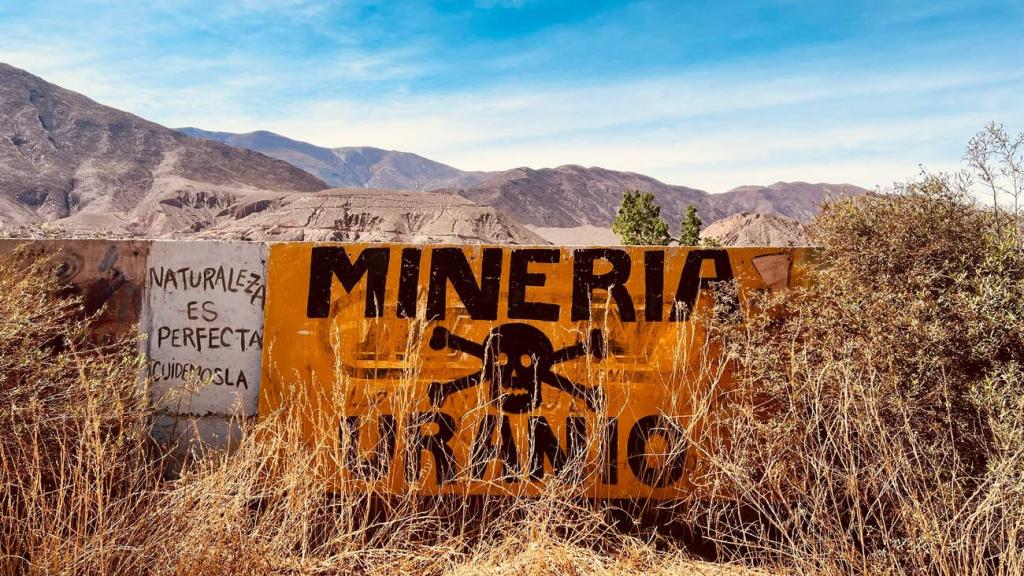
First published in Spanish at Nueva Sociedad. Translation by Richard Fidler for LINKS International Journal of Socialist Renewal.
Historically, the different lefts have been resistant to the ecological currents that have emerged since 1970 amid the first signs of the environmental crisis and varying criticisms of the developmentalist paradigm. This rejection arose because the left privileged a reading of modernity and the social system based on the conflict between capital and labour, while minimising or ignoring conflicts between capital and nature, and with it the environmental and territorial impacts of the hegemonic development model. Consequently, although they questioned the capitalist system’s relations of exploitation, in general they continued to support the development paradigm.
In Latin America, the lefts — whether Marxist or reformist — share this set of beliefs about accumulation and development. Structuralists at the Economic Commission for Latin America and the Caribbean (ECLAC) and key authors of dependency theory both focused on questioning social inequality and structural dependence, rather than the ideology of development. The incipient environmental issue remained outside their conceptual horizon. Decades later, this developmentalist consensus was reproduced by progressive lefts that from the 2000s governed various Latin American countries, during the so-called “commodities boom”.
Environmentalism emerged as a political-social perspective towards the end of the 1950s, alongside mounting spheres of conflict and the growing importance of environmental problems and planetary boundaries. From the start, environmental organisations criticised productivism as well as the ideology of progress and infinite growth promoted by both Western capitalism and Soviet-type socialism (at the time hegemonic on the left). Likewise, as with other new social movements, environmentalism appeared as the bearer of new organisational practices, linked more to autonomism and countercultural left-wing currents that opted for more flexible and democratic organisational forms, as opposed to the vertical styles of political construction typical of left-wing parties and trade unions.
Although environmental organisations of a conservationist nature have existed in Latin America since the 1950s, they have had little impact. Their weakness was linked to the conviction permeating both the left and political elites in Latin America that the incipient ecological problem was a secondary concern imported from the agenda of rich countries, if not an ideological gimmick aimed at hindering development in the poorest countries.
In fact, it was in the late 1990s, and mainly in the 2000s, when faced with neo-extractivism’s growing environmental and territorial impacts and the concurrent entry of the climate crisis into the public agenda, that environmentalism expanded as a social force from below in various countries in the region, closely linked to the Indigenous peoples’ cosmovision. A result of this process was heightened socio-environmental conflict, and the emergence of new areas of protest in which diverse actors converged — peasant and Indigenous organisations, new eco-territorial collectives, various NGOs and a multidisciplinary and anti-colonial activist and academic space — built around political ecology.
In this article I intend to address the encounters, tensions and disconnects between the left and environmentalisms in three parts. In the first, I summarise some concepts contributed by ecosocialism and ecological Marxism, two academic currents that have traversed contemporary Marxism and opened the door to connecting class struggles and ecological struggles. In the second, I analyse the categories elaborated from within Latin American ecosocial thinking to rethink the bridges and links between the Global North and South, while dwelling very briefly on the dismissal of environmental problems by progressives in government during the so-called progressive cycle. And in the third I reflect on the concepts bridging the North and the South and arising challenges.
Marxism, ecological crisis and updates
The Marxist lefts had some difficulty incorporating environmentalism’s arrival on the political agenda, as well as the advance of environmental movements, both in theory and practice. On the one hand, as children of modernity, Karl Marx and the workers’ movement sought to eradicate inequality by revolutionary means, but not progress as it was understood in its association with the expansion of the productive forces. On the other hand, the environmental movements were of a cultural character with a multi-class social base, aimed at placing problems on the public agenda but without social revolution as their horizon.
However, following this initial misencounter, beginning in the 1970s and, with greater force throughout the 1980s and 1990s, numerous authors from the Global North set out to reconcile Marxism and ecology, slightly shifting the axis of concern. Prior to taking a substantial interest in the evolution of environmental movements and their characteristics, they set out to analyse the scope of the environmental problem in the context of the capitalist crisis.
It is impossible to summarise the contributions made in the field of Western Marxism towards incorporating the ecological crisis as inherent to capitalism. Authors such as Frenchmen André Gorz and Henri Lefebvre, the French-Brazilian Michael Löwy, the Spaniard Manuel Sacristán, the German Elmar Altvater, as well as the Americans James O’Connor and John Bellamy Foster, were no doubt among the first to point out the incompatibility between capitalism and environmental sustainability, and thus to raise the possibility of connecting class struggles with ecological struggles.
In political terms, it was the Trotskyist left of the Fourth International (led by Ernest Mandel) that through ecosocialism (and principally through Michael Löwy) first promoted the articulation of ecology and the left. In 2001, Löwy co-authored An Ecosocialist Manifesto with Joel Kovel, which states that ecosocialism is conceived not as a negation of the socialisms of the twentieth century but as an extension that preserves their emancipatory objectives, while “insist[ing] … upon redefining both the path and the goal of socialist production in an ecological framework.”1
Löwy’s main conceptual contribution is in the book Ecosocialism: A Radical Alternative to Capitalist Catastrophe, in which he characterises capitalism as a system not only of exploitation but destruction of the living conditions of the planet, and criticises both the dominant “market ecology,” which does not question the capitalist system, and “productivist socialism,” which ignores natural limits. Löwy proposes an alliance between “reds” and “greens” — in a broad sense, between the workers’ movement and the environmental movements.
Ecosocialism appears as a radical proposal that implies a paradigm shift, “through democratic, local and national (and sooner or later, international) planning.”2 Beyond the fact that Löwy criticises the degrowth currents (as a quantitativist vision that points to an “enlightened ecological dictatorship”), ecosocialism entails a reorientation of consumption and production in accordance with basic needs.
Contributions by so-called ecological Marxism, which began at the end of the 1980s and placed new categories such as “second contradiction,” “metabolic rift” and “Capitalocene” on the agenda, are more theoretical and academic than political and programmatic in nature. For example, James O’Connor introduced the “second contradiction” of capitalism, namely the contradiction between capital and nature.3 Capitalism degrades its own resources (pollution, depletion, social attrition) and generates a huge externalisation of social and ecological costs of production.
Another of the central contributions is by John Bellamy Foster, who took up the concept of metabolic rift, based on Marx’s work on the metabolism between society and nature, especially in Capital.4 For Foster, the metabolic rift is inherent to capitalism and compromises the sustainability of the conditions of life and production. Although for some this analysis of metabolism is more dualistic than dialectical, it is clear that the concept reveals a disconnect between nature and society, from which capitalism prioritises the accumulation of capital over sustainability and the preservation of the environment, something that Marx had already observed through the depletion of soil nutrients in England.
In another line of analysis, the Swede Andreas Malm proposed to think of the current socio-ecological crisis in terms of the Capitalocene rather than the Anthropocene, arguing such a crisis is not the work of humanity as a homogeneous species, but of a specific social system — capitalism — for which responsibility is unequal in terms of social classes and countries. Likewise, Malm argues capitalism is a socioeconomic system that emerged in the 15th century, while fossil capitalism is a particular period that began in the early 19th century and in the framework of which a series of metabolic gaps were formed: soil degradation, and changes in the nitrogen and carbon cycles.5
For his part, the American Jason Moore took up the thesis of the Capitalocene to investigate the origins of capitalism and the expansion of the frontiers of the commodity in the long medieval period. The cycles of capital generated a historical-geographical model based on rapid appropriation and geographical expansion and diversification, once the resource was exhausted. “Is the land running out? We move to the border. This was the motto displayed on the coat of arms of early capitalism.”6 So the Capitalocene as a current crisis must be read as a long-term process in which new ways of ordering the relationship between humans and the rest of nature are taking shape. Capitalism not only develops within nature, but transforms it and transforms itself through it, creating what is called “world-ecology.”
From a position associated with heterodox Marxism, Frenchmen Pierre Dardot and Christian Laval propose to refound a theory of the commons. The authors show how the principle of the commons is imposed today as the central term of the political alternative for the 21st century: “The term ‘common’ designates not the resurgence of an eternal communist idea, but the emergence of a new way of opposing capitalism, even of considering its supersession.”7
From anti-globalisation and ecological struggles to theories of the commons — from Michael Hardt and Toni Negri to Pierre Dardot and Christian Laval — “the commons” has become the name of a regime of practices, struggles, institutions and research that point to a non-capitalist future. The commons is not a good or resource, but a political activity; a principle of action that consists of democratically instituting what must be managed collectively. The work ranges from the system of norms or law as a field of struggle to the programmatic draft of the “politics of the commons.”
In their most recent work, Instituer les mondes. Pour une cosmopolitique des communs [Instituting the worlds. For a cosmopolitics of the commons], Dardot and Laval proceed to think about the commons as a form of self-government of livelihoods, based on a relational paradigm, which points to a cosmopolitics. Thus, they argue, if we accept reasoning in terms of the commons as forms of self-government of living environments, the prefix “self” must be understood as referring not to a human collective in charge of directing a living environment from the outside, but to the different components, human and non-human, of that same environment. Collective self-government presupposes, then, that the human collective belongs to the living environment that it co-governs from within and on which it depends: taking the example of the forest, the self-government of a forest is not the government of the forest by human beings alone, but the government of the forest by all those who live in it, both humans and other non-human living things.8
Finally, from 2008 onwards we have witnessed new debates on degrowth, a concept that draws on diverse contributions from André Gorz in the 1970s (criticism of consumption), the Catalan Joan Martínez Alier (ecological economics) and the Movement for Degrowth founded around the year 2000 by the Frenchman Serge Latouche. From the neo-Marxist camp, Japanese philosopher Kohei Saito has been the most radical supporter of this position, arguing that in his late writings Marx, when studying the crisis of the soil and the depletion of nutrients, pointed to a socialism that returns to old forms of production, using some of the latest technologies. Saito synthesises this reading in the formula of a “degrowth communism.”
Likewise, in line with degrowth, German political scientist and activist Ulrich Brand’s contributions are notable for his concept of the “imperial way of life,” defined as “a dominant social, cultural and economic pattern in the countries of the Global North (and adopted by the elites of the South), normalized and hegemonic, which cannot avoid externalizing its conditions or negative consequences without exploiting other people and without destroying its own foundations, which are deeply rooted in the political, economic and cultural structures and practices in the daily lives of the population of the Global North and increasingly also of the emerging countries of the Global South.”9 Brand’s theoretical contributions take up the theory of the state and the ecological and gender issue, while maintaining a constant dialogue with Latin America, to which I will return later.
In short, to what extent these concepts are found in Marx, whether they are minor dimensions or significant aspects in his work, are questions that may be of interest to academic Marxology. Marx’s work is undoubtedly an inexhaustible quarry, provided that we do not believe it can explain everything, which, in addition to being untenable, would place those who adopt such a vision in a kind of position of epistemic superiority. It is clearly understood that the effort of theoretical updating responds to the need to expand a Marxist rereading of socio-ecological crisis. The objective is to strengthen and articulate class struggles with ecological struggles, from an anti-capitalist perspective, in a scenario of systemic polycrisis that is increasingly asymmetrical and unequal.
Latin America: Epistemic decolonisation and ecosocial perspective
The first critical contributions by Latin American emancipatory thought touched at the heart of development theory, from a decolonial vision. It was in the ’90s when the first critical perspectives on development began to circulate; in Latin America’s case, analysed as a discourse of power. Among them, the contribution of the Mexican Gustavo Esteva in the Diccionario del Desarrollo [Dictionary of Development], coordinated by Wolfgang Sachs (1992), stands out. He underscored the colonial matrix of the idea of development and the invention, in the post-war period, by the United States and other Western powers, of development and its counterpart, underdevelopment.10
Another important contribution was that of Colombian thinker Arturo Escobar, who proposed the notion of “post-development,” from which he deconstructs the modern concept of development as an instrument of domination, revealing its main mechanisms of operation. These include the professionalisation of development “problems” and their institutionalisation through a network of national, regional and international organisations. Escobar also highlighted the ways in which development made local experiences and knowledge invisible and suggested a change of approach, moving from thinking of “alternative development” to thinking of “alternatives to development.”
In the first decade of the 21st century, this anti-colonial and post-structuralist critique of development was tied to the category of “neo-extractivism,” a notion coined in Latin America by academic activism and quickly adopted by the entire range of socio-environmental collectives and organisations in the region. It currently has a wide international circulation.11 This critique had a great theoretical and political productivity, which illustrates once again the great porosity between social struggles and critical thinking.
First, it marked the convergence of the resistances of indigenous peoples and eco-socio-territorial struggles within the field of political ecology, an expanding space in which converge contributions from the sociology of social movements, indigenous thought, critical geography, environmental history, feminisms, the new Latin American constitutionalisms and ecological economics, among others. This academic-militant space benefited from the previous contributions of prominent thinkers such as Mexican Enrique Leff and Escobar, as well as the pioneering work of the Political Ecology Group of the Latin American Council of Social Sciences (Clacso), coordinated by researcher Héctor Alimonda.
Second, the critique of neo-extractivism was also the starting point for proposals for the intersection between ecology and anti-colonial lefts, its aim being to dispute the hegemonic vision (developmentalist paradigm) and overcome limitations of actually existing progressivisms.
Along these lines, debates on alternatives to extractivism have been nourished by indigenous community thinking, ecological struggles and eco-territorial feminisms. These perspectives that sought to articulate the plebeian left with the ecological struggle are based on a relational paradigm, featuring horizon-concepts such as buen vivir, rights of nature, common goods, post-extractivism, care systems and, more recently, in the context of discussions on the energy transition, just and popular ecosocial transition and the ecosocial state.
Two key concepts were buen vivir and the rights of nature. While buen vivir builds bridges between past and future, between community matrix, indigenous relational cosmovisions and ecological perspective, the rights of nature postulates new forms of relationship between humans and nature and their fellow beings, and therefore calls for the passage from an anthropocentric paradigm to a socio-biocentric nature. Adopted in 2008, Ecuador’s Constitution was at the forefront of this recognition of the rights of nature. Bolivia then followed, with the legal recognition of the rights of Mother Earth, in 2010.
As is well known, the environmental problem was a blind spot for Latin American progressivism. There were many who, from their positions in government, directly confronted the criticism of neo-extractivism.12 It should be added that among the most fervent defenders of the extractivist consensus are heterodox economists, who thus converge with their orthodox peers. In the Latin American left, the Clacso authorities’ unconditional support for the pro-government progressivisms was also relevant — at least until 2019 — in terms of networks for the dissemination and circulation of the dominant mindset.
At the same time, certain propositional concepts that had been initially accepted ended up being instrumentalised in a developmentalist key (buen vivir) or discarded (the rights of nature) from the hegemonic progressive language. Thus, the divorce between progressive neo-developmentalist discourse embodied in ruling parties and eco-territorial discourse associated with indigenous movements and environmental collectives reached differing depths. Environmentalism was accused of lacking “social realism” or of “playing into the hands of the right,” and more than a few opted to cover up the socio-environmental problem by stigmatising protests, denying the legitimacy of claims and attributing it, as the case might be. to “infantile environmentalism” (Ecuador), the actions of foreign NGOs (Brazil), “colonial environmentalism” (Bolivia) or, in more recent times (Argentina, 2019-2023), to a “silly” and “prohibitionist” environmentalism.
The only case of official socio-environmental progressivism was Colombia under President Gustavo Petro (2022-2026), who had an environmentalist discourse during his time as Mayor of Bogotá. Petro’s government had limitations of all kinds, but it brought together the different aspects of struggles against extractivism: peasant organisations fighting for food sovereignty, environmental committees that won impressive victories against large-scale mining, organisations such as the Colombian Alliance Against Fracking. The very idea of a Colombia “power of life,” expressed in a comprehensive government program, and not only as a watertight compartment, made its appearance in public discussions about fracking or the energy transition.
Without pretending to settle an issue on which much has been written, the discord between progressive lefts and ecologist lefts in Latin America continues to be a constant to this day. Beyond the fact that some adopt a moderately environmentalist rhetoric, a large number of progressive forces remain convinced that extractivist neo-developmentalism is the key to overcoming neoliberalism, while a large number of environmentalist forces remain convinced that progressivisms will continue to rely on neo-developmentalist policies that end up converging with neoliberalism.
Returning to the field of producing bridge-concepts between lefts and environmentalisms, in Latin America there are discussions about “the commons” that have its own roots, distinct from the aforementioned European debate. It is not part of a general theory, but of concrete practices and struggles of indigenous peoples, peasants and social movements; that is, of the defense of the commons. But this more empirical reflection is articulated with other concepts, such as “communality” and, above all, “post-extractivism,” elaborated in the wake of the concept of “post-development.”
Post-extractivism is conceived as a gateway to overcoming dependence on the intensive extraction of natural resources (mining, hydrocarbons, agribusiness) in Latin America. For some authors, post-extractivism is an alternative to the development model based on buen vivir, which abandons classic (predatory and exporting) extractivism and moves towards a just and sustainable transition, based on diversified economies, with territorial sovereignty, environmental justice, deliberative democracy and appreciation of common goods.13
For others, it is a political horizon that connects with the need for just ecosocial transitions that articulate a new paradigm of social justice with environmental justice.14 All these positions reject neo-extractivism as a pattern of accumulation and propose moratoriums on extractive projects. They defend the sovereignty of peoples over their territories and propose an ecological and social solution that combines selective degrowth of rich countries, deliberative democracy, local and agroecological economies and rights of nature.
In short, despite the political setbacks, the notion of post-extractivism continues to be a hub for thinking about an ecosocial transition agenda on a multi-scale level. A recent proposal is the one that we launched, together with other activists and intellectuals from the Ecosocial and Intercultural Pact of the South, a Latin American collective created in 2020. It seeks to debate what is meant by an ecosocial transition in a scenario of civilisational polycrisis, through different inflections and agendas, on a global, regional and national scale.15
As an ecosocial, economic and intercultural commitment designed from the South, it rejects the idea that Latin America continues to be spoken and thought about only from the North, especially when it comes to ecosocial transition proposals, which generally do not place the issue of ecological debt or post-extractivism at the centre, and in some instances do not go beyond the decarbonisation of societies or question the productive model linked to agribusiness. It is a collective platform that invites us to build hopeful social imaginaries, to agree on a shared course of transformation and to create a basis for spaces of struggle in the most diverse areas of our societies.16
In line with this regional platform, in 2023 the Transitions Team was created in Argentina, conceived as a “team of teams,” which takes on the challenge of developing ecosocial transition proposals that go hand in hand with concepts such as “fair and popular energy transition,” “ecological debt,” “comprehensive care system” and “eco-social state,” among others.17 The proposal to create an eco-social state that assumes social and environmental risks directly confronts ultra-neoliberal policies, but also distances itself from the vision of the European welfare state and Latin American populism. Reflection on the ecosocial state have benefitted from the contributions of economist Rubén Lo Vuolo, of the Transitions Team, who defines it as a
new form of social organisation whose objective is to satisfy the human needs of people, within the limits imposed by planetary borders. An institutional system and public policies whose function is to guarantee that all people have access to the necessary elements to continue with the reproduction of their lives in our societies, on an egalitarian basis and under two simultaneous criteria: equity/justice and sustainability/sufficiency.18
Far from being abstract proposals, both the Ecosocial Pact and the Transitions Team relate their thinking to the eco-territorial struggles, the processes of re-existence and the horizon-concepts already mentioned, forged in recent decades in the Global South and in Latin America in particular. They also aim to generate a decolonising dialogue with other left proposals such as degrowth and other systemic alternatives.
Bridge-concepts and challenges
In the Global North, the Marxist left broadened its horizon of reflection, both in terms of concepts for understanding the socio-ecological crisis and in the search for an alternative ecosocialist program. At present, the multiple dimensions of the crisis reveal the consolidation of an “imperial way of life,” which drives the acceleration of the social metabolism of capital (the demand for raw materials and energy) and, therefore, further pushes towards ecological collapse. It is not coincidental, therefore, that within the Marxist ranks there is an increasingly open debate on a topic as controversial as degrowth, which previously seemed to be a kind of taboo.
In Latin America, on the other hand, the need to coordinate left thinking with ecology originated with the criticism of development, but expanded first with the great anti-neoliberal mobilisations of the early 21st century, and later the consolidation of neo-extractivism. New categories appeared at this crossroads that seeks to hybridise an indigenous communitarian cosmovision with the practice of care and defence of territories, from an ecofeminist paradigm that accentuates the relationality and interdependence of life.
It should be noted, however, that there is little dialogue between eco-Marxist perspectives and proposals for alternatives to extractivism. Epistemic asymmetries are prevalent; beyond the fact that certain categories — such as Capitalocene or metabolic rift — traverse the language of Latin American political ecology, the same is not true of the political-conceptual lexicon of the region, which is rarely invoked in the Global North. Of course, there are exceptions, bridges and intersections that lead to common paths. Thus, in 2008, Michael Löwy published the Ecosocialist Declaration of Belém and promoted the creation of a Global Ecosocialist Network, both internationally and in Brazil, his country of origin, seeking articulation with movements such as the Landless Movement (MST) and left-wing parties.
But as the Brazilian sociologist and ecosocialist activist Sabrina Fernandes argues, to advance in the generation of a new ecosocialist paradigm, we must stop separating “red” and “green” demands, and integrate them into the same struggle and a single paradigm.19 Undoubtedly, one of the great challenges of ecosocialism is the elaboration of a new theory of the state consistent with democratic planning prepared to confront the technocratic narratives of “green capitalism” without falling into the mistakes of the past (whether the old European welfare state or Soviet collectivism). Along these lines, it would be interesting to connect these proposals with the reflection on the ecosocial state.
As it happens, the dialogue between post-extractivism and degrowth began years ago, as illustrated in the book published jointly in 2017 by Alberto Acosta (former president of the Constituent Assembly of Ecuador and a current member of the Ecosocial Pact) and Ulrich Brand.20 In it, they sought to go deeper into the characteristics of the divergent contexts that gave rise to these concepts. However, concerns also arose about the ambivalences and limitations of the concept of degrowth, in its questioning of the logic of domination or even in the persistence of an anthropocentric vision that does not necessarily question the division between society and nature.
In the same vein, it was recognised that in Latin America the proposals for buen vivir were not accompanied by degrowth (in the sense of dematerialisation, decommodification and decentralisation). This questioning has continued in the dialogue established between the Ecosocial and Intercultural Pact of the South and the degrowth networks in the region of Catalonia and the Transitions Forum promoted, among others, by the Ecologists in Action network of Spain.
As Breno Bringel and I have pointed out, degrowth in the countries of the North is a demand for global justice, in the context of an already damaged planet.21 Several authors (Giorgos Kallis, Federico Demaria, Jason Hickel, among others) argue that degrowth is also a requirement of decolonisation: “Southern countries should be free to organize their resources and labor around meeting human needs rather than around servicing Northern growth.”22 Reducing pressure on natural assets could open up “conceptual space”23 in the Global South and would enhance the process of cognitive liberation, necessary to move towards post-extractivism, in countries so criss-crossed by an El Doradist imaginary and an extractivist economy.
This does not imply that the South should claim its “right to development,” because it is indeed development that is currently pushing us towards collapse. Consequently, any left that is committed to thinking about alternatives to development from an integral perspective must do so from the bases of a new critical political economy, which is only possible if planetary boundaries are accepted. Or, to put it another way, it is crucial that the political economy connects and converges with the ecological economy, which is highly developed in both the Global North and South. This appears all the more challenging and necessary in the current scenario of inter-imperialist competition, in which the countries of the Global North and emerging countries are struggling to obtain rapid access to critical minerals, in the name of the energy and digital transition and, above all, to supply the growing demand of the military industry, in times of increasing armed conflicts and destruction of the old international order.
At a time when the forces of inequality are being unleashed and legitimised in the hands of techno-tycoons and radical right-wingers who openly push for a change of political regime incompatible with respect for human rights and democracy, the left needs to leave its comfort zone and open up to the radical imagination. We need new concepts and political articulations between the Global North and South that open the space for a true connection of narratives of the future, egalitarian and wishful, with multi-scale transformative proposals at the level of social, environmental, ethnic and gender justice. Faced with the radical right’s accelerated politics of destruction and dehumanisation, it is impossible to remain anchored in resignation and passivity. The left must once and for all assume the ecosocial paradigm as a starting point and at the same time as a utopian horizon, without epistemic selectivities or nostalgia for the past.
- 1
Joel Kovel and Michael Löwy, An Ecosocialist Manifesto - Capitalism Nature Socialism. See also Sigifredo Romero Tovar, “La alternativa ecosocialista. Una entrevista con Michael Löwy” in Análisis. Revista Colombiana de Humanidades vol. 52 No 97, 2020.
- 2
Michael Löwy, Ecosocialism: A Radical Alternative to Capitalist Catastrophe (Chicago, Haymarket Books, 2015).
- 3
James O’Connor, “On the two contradictions of capitalism,” Capitalism Nature Socialism, (1991) Vol. 2, No. 3.
- 4
John Bellamy Foster, Marx’s Ecology (Monthly Review Press, (2000).
- 5
Andreas Malm, Fossil Capital: The Rise of Steam Power and the Roots of Global Warming (2016), Verso
- 6
Jason W. Moore: “El auge de la ecología-mundo capitalista (II). Las fronteras mercantiles en el auge y decadencia de la apropiación máxima” en Filosofía, Política y Economía en el Laberinto No 39, 2013.
- 7
Christian Laval and Pierre Dardot: Común. Ensayo sobre la revolución en el siglo XXI, Barcelona, Gedisa, 2015, p. 21.
- 8
Pierre Dardot and Christian Laval: Instituer le monde, París, La Découverte, 2025. In relation to this part of the article, I thank Dardot for his comments.
- 9
Ulrich Brand and Markus Wissen: Modo de vida imperial. Vida cotidiana y crisis ecológica del capitalismo, Buenos Aires, Tinta Limón, 2021, pp. 74-75.
- 10
On this see Maristella Svampa, Debates latinoamericanos. Indianismo, desarrollo, dependencia y populismo (Buenos Aires, Edhasa, 2016, ch. 2, part 1).
- 11
Notable here are the pioneering contributions of Eduardo Gudynas, Alberto Acosta, Edgardo Lander, Horacio Machado Aráoz, Emiliano Terán Mantovani, Tatiana Rosa Avendaño and the author of this article, in addition to the publications of the Permanent Group of Alternatives to Development, promoted by the Andean headquarters of the Rosa Luxemburg Foundation since 2011.
- 12
Among them was the then vice-president of Bolivia, the sociologist Álvaro García Linera, author of Geopolítica de la Amazonía. Poder hacendal-patrimonial y acumulación capitalista (La Paz, Vicepresidencia del Estado, Presidencia de la Asamblea Legislativa Plurinacional, 2012). [English translation here]
- 13
Eduardo Gudynas: “Más allá del nuevo extractivismo: transiciones sostenibles y alternativas al desarrollo” in Fernanda Wanderley (coord.): El desarrollo en cuestión. Reflexiones desde América Latina, La Paz, Oxfam / CIDES-UMSA, 2011; Alberto Acosta and Ulrich Brand: Decrecimiento y posextractivismo, Buenos Aires, Tinta Limón, 2017.
- 14
Maristella Svampa and Enrique Viale: El colapso ecológico ya llegó, Buenos Aires, Siglo XXI Editores, 2020, and Transição ecossocial justa: uma perspectiva do Sul Global, San Pablo, Elefante, 2025.
- 15
“Presentación del Pacto Ecosocial del Sur. Por un Pacto Social, Ecológico, Económico e Intercultural para América Latina” on Clacso TV, 24/6/2020, available at www.youtube.com/watch?v=3jedqtgef7s.
- 16
Pacto EcoSocial e Intercultural del Sur – and Hacia un gran Pacto Ecosocial y Económico en Argentina.
- 17
The Equipo Transiciones brings together about 30 persons in Argentina involved in federal research, academic and activist groups with the goal of proposing a road map for just ecosocial transition, in dialogue with social and political organizations. Equipo Transiciones. See also Maristella Svampa et al.: ¿Cómo reconstruir el país que nos queda? Propuestas para una agenda de transformación justa y popular, Buenos Aires, Fundación Rosa Luxemburgo, 2026.
- 18
Rubén Lo Vuolo: Por un Estado ecosocial. Ideas para proteger la sociedad en un mundo catastrófico, Buenos Aires, Siglo XXI Editores, 2026.
- 19
Sabrina Fernandes, “Environmental Contradictions: The Need for an Ecosocialist Paradigm on the Brazilian Left,” in Robert Latham, A.T. Kingsmith, Julian von Bargen and Niko Block (eds.), Challenging the Right, Augmenting the Left, Halifax, Fernwood, 2020.
- 20
Alberto Acosta y Ulrich Brand, op. cit., note 13.
- 21
Breno Bringel and Maristella Svampa, Del “Consenso de los Commodities” al “Consenso de la Descarbonización” | Nueva Sociedad, No. 306. July-August 2023.
- 22
- 23
Giorgos Kallis:, “La alternativa del decrecimiento” [2015] en Climaterra.org, 24/4/2020.