Goodbye to Lenin and Leninism
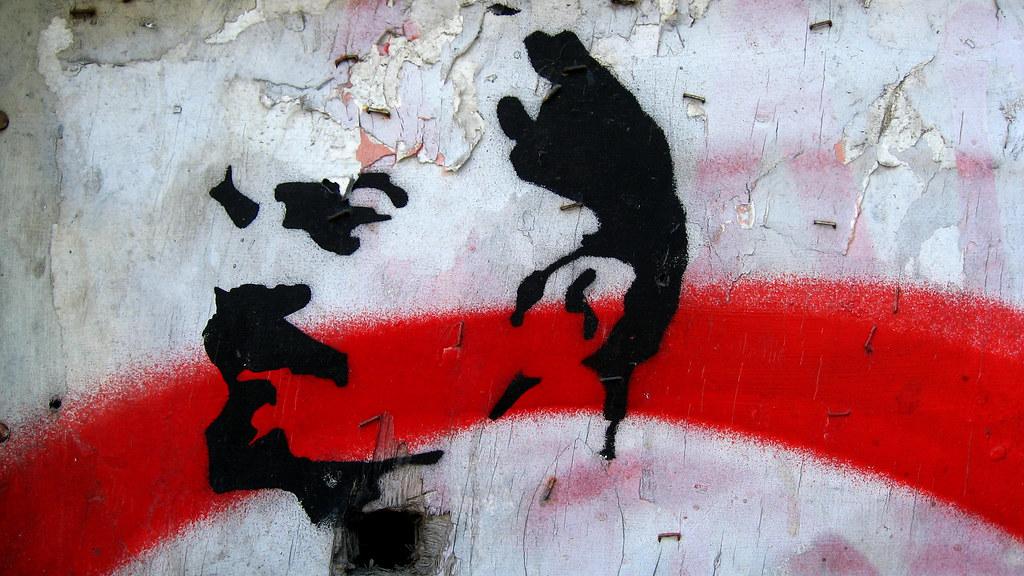
You can read contributions to the discussion sparked by Dan La Botz’s “Goodbye to Lenin and Leninism” here.
Though he has been dead for more than 100 years, Vladimir Lenin continues to stand at the centre of debates about modern Marxism for his leading role in the Russian Revolution, for his reputed strategic and tactical acumen, and for his vaunted political theories. Evaluating Lenin, however, is a complex task, because of the turbulent and complicated times in which he lived and all that followed. Exalted in the Soviet Union, vilified elsewhere, we must be discerning to discover the significance of Lenin’s thought and work.
Consider this: after his death in 1924, at the age of 53, he was virtually canonised, his embalmed body in its open casket in his tomb in Red Square became a place of pilgrimage for tens of millions of the Communist faithful. His ideas received similar treatment. The Soviet state published his most important books — virtually sacred texts — in myriad languages in hundreds of thousands of copies, distributing them for free or at little cost in many countries. In Joseph Stalin’s era, Communists created the term “Marxism-Leninism” as the name for their ideology. Everywhere in the Soviet Union, and later in Eastern Europe and countries around the world, reading Lenin’s work became the heart of the Communists’ catechism. Even dissident or rival Communists, such as the Maoists and some Trotskyists, adopted the Marxist-Leninist sobriquet, and Lenin formed part of their dogma as well. I said Lenin was canonised, but I should have said deified: the god of a state religion in Communist countries.
Marxism-Leninism, of course, was not only imposed by the Communist states on their peoples, but enthusiastically and voluntarily adopted by would-be revolutionaries in capitalist and developing countries. I remember when I first hung out in leftist circles in the 1960s, every group of young people on the left that I met was organising study groups to read and discuss Lenin, usually in a very passive manner, accepting uncritically the teachings of the father of modern revolutionary thought and organisation. We were, after all, young activists reading Lenin because he had constructed the revolutionary party, the Bolsheviks, that led the Russian Revolution. And we wanted to build a revolutionary party in our own country, whatever country that was, to lead our nation’s revolution and contribute to the international revolution. In those days radical groups were doing the same thing all over the world, reading Lenin and becoming Leninists. That experience is being recapitulated today, if on a smaller scale, among young leftists in many countries, including the United States. This essay is intended to be a caveat for them.
During the 1960s and ’70s, we leftist students of Lenin usually read just a few of his books: What Is To Be Done?, his book on how to organise a socialist party; “Left-Wing” Communism: an Infantile Disorder, his essay on the need to work in labour unions and political parties; Imperialism, the Highest Stage of Capitalism, his analysis of modern capitalism, imperialism and colonialism; and The State and Revolution, his utopian vision of socialist revolution and the creation of a socialist state. Having read and discussed those books, we set out to organise, propagandise and build whatever party we believed would lead the revolution.
But young Leninists seldom asked themselves: if Lenin was always right, why did things go so wrong? Of course, some true believers say nothing went wrong, ever. At that time, Communist Party members believed the Soviet Union had always been a success: it made the first socialist revolution; it won World War II; and its system expanded to Eastern Europe, China, Vietnam, North Korea and, later, Cuba. True, Maoists believed that Nikita Khrushchev had broken with Marxism-Leninism and put the Soviet Union on “the capitalist road,” but they believed Mao Zedong’s Chinese Revolution had stayed the Marxist-Leninist path and was a success, as demonstrated by the “Great Proletarian Cultural Revolution” then taking place. Trotskyists believe the Soviet Union remained fundamentally sound, though argued that after Stalin took over, there was the need for a political revolution — a change of leadership — but not a social revolution, as the economy remained nationalised. So, they all stuck by Lenin.
Fortunately, I ran into the International Socialists (IS), then led by Hal Draper. While we too read Lenin, we did not do so with the same reverence as other leftists. The IS was full of genuine radicals, heretics and iconoclasts. So, while we read Karl Marx, Lenin, Leon Trotsky and Rosa Luxemburg, we also read others, including some of their critics and some from other socialist and anarchist traditions. For a few years in the late 1970s, however, a British Socialist Workers Party comrade became our leader and, under his influence, we adopted a full-fledged democratic centralist form of organisation, with no representation in the leadership for political minority factions. Most of us briefly bought that approach, but then returned to our senses and restored minority representation. I confess that I too was overly deferential, too uncritical of Lenin back then. Today, while I recognise — as anyone must — that he was an extraordinary political leader, I no longer consider myself a Leninist. In this essay I explain why.
A number of authors have written wonderful books that show the energy, excitement, creativity and genuine democratic spirit that existed in the early days of the Russian Revolution. Among those authors and books are Marcel Lieberman’s Leninism under Lenin; Alexander Rabinowitch’s books, Prelude to Revolution and The Bolsheviks Come to Power: The Revolution of 1917 in Petrograd; Sam Farber’s Before Stalinism: The Rise and Fall of Soviet Democracy; Carmen Sirianni’s Workers' Control and Socialist Democracy: The Soviet Experience; and S.A. Smith’s, Russia in Revolution: An Empire in Crisis 1890-1928. These excellent books give vibrant accounts of Russia’s heroic revolutionary and democratic years. The question is: what extinguished that democratic spirit and led to the rise of a one-party dictatorship within a decade? There is no single answer, but a series of particular decisions led to the transformation of the Russian socialists and their revolution.
Lenin’s life and work represented a series of decisions about ideas, political struggle, revolution and internationalism that radically transformed the socialist movement. In politics, as in life, one thing leads to another, and one day we find ourselves in a situation we never foresaw. Early decisions about party organisation, the struggle for power, the Russian Civil War and the measures needed to win that were sometimes taken in desperation, each influenced and, as we will see, often determined the next decision and eventual outcome. Diplomats and sociologists have a name for this. The French call it “L’effet cliquet” or “the click effect.” In English we call it the “ratchet effect.” A ratchet allows you to turn forward in one direction, but after each click it becomes impossible to go back. Decisions are made that become irreversible. Lenin’s conception of the party was reversible at the start, but the Bolshevik seizure of power, the Constituent Assembly’s dispersal and thrusting power to the Soviets were not. Several of Lenin’s political and strategic decisions became irreversible: the ratchet effect. There was no turning back. I believe Lenin’s key political decision were:
- The organisation of the Bolshevik faction, which later became the Bolshevik Party and then the Communist Party;
- The organisation and execution of the Bolshevik coup, which detonated the October 1917 Russian Revolution;
- The shutting down and dispersal of the democratically-elected Constituent Assembly in January 1918;
- The establishment of the Bolshevik-led coalition Soviet government, which soon became simply a Bolshevik government;
- The establishment of “one-man management” in Soviet industry;
- The establishment of a political police, the Cheka, and the unleashing of the Red Terror;
- The establishment of War Communism and militarisation of society to win the Civil War;
- The Russian war on Poland, which led to defeat;
- The crushing of the Kronstadt Rebellion;
- The banning of factions in the Russian Communist Party; and
- Lenin’s empowerment of Stalin.
These decisions — all but the first irreversible — were decisions made by a small, elite political leadership that one after another extinguished democracy and made impossible a democratic socialism in Soviet Russia. One can grant that many of these decisions were forced on Lenin and the Bolsheviks without conceding that there was no alternative. Let us now examine each of them, beginning at the start.
Lenin’s concept of the party criticised
Lenin’s experience, his life and his work, both intellectual and practical, brought him into conflict with the underlying principles of Marxism and democratic socialism. Most importantly, they broke with the idea that a socialist revolution and the creation of a socialist society would have to be democratic. While many of the undemocratic characteristics of the Bolshevik Party and the Soviet state he led derived from the objective situation at the time, others represented conscious political decisions. Lenin, with his confidence and strong will, believed he always knew what was right, what was best, and what should be done — we have all known people like this. This was the personal psychological basis for his tendency toward authoritarianism.
We might as well start with the essay that is generally the first that activists take up, What Is to Be Done?, which was written in 1902 for the organisation that published Iskra (the Spark), the illegal newspaper that played a central role in the organisation of the Russian Social Democratic Labour Party (RSDLP). Lenin had begun to be active in the Russian socialist labour movement in the late 1880s, in student study groups, then in worker groups, before becoming a leader in the movement. He was among the delegates to the RSDLP’s Second Congress in 1903, which assembled in Belgium, before being forced to leave by the police and reconvening in London. With the congress decision to form one centralised party rather than adopt a federalist approach, Lenin’s supporter essentially excluded the Russian socialists of the General Jewish Labour Bund, an organisation they viewed as nationalist and separatist. The Bund’s exclusion meant that Lenin’s followers were now the majority, or Bolsheviks, while Julius Martov’s adherents were the minority, the Mensheviks. With the Bundists out of the way, Lenin presented his plan for party organisation, What Is To Be Done?, leading to the debate with Martov and his followers.
Martov had not written a single comprehensive document such as Lenin’s, but he made arguments and wrote amendments advocating for a party of movement activists who accepted the party’s program, supported the party financially, and worked under the “guidance of one of its organisations.” Lenin, on the other hand, taking as his model the German Social Democratic Party, argued for a highly centralised organisation exercising control over a dedicated and disciplined membership of “professional revolutionaries.” Two of the terms frequently associated with the Leninist party, “democratic centralism” and “vanguard party” do not appear in What Is To Be Done?. The term “democratic centralism” was originally coined by the Mensheviks and used by both groups. Lenin called for an open debate on issues within the party to be followed by a democratic decision and then, the decision having been made, by unity in action.
Later at that congress, there were two proposals for the Iskra editorial board — to include six comrades (Georgi Plekhanov, Pavel Axelrod, Vera Zasulich, Lenin, Martov, and Alexander Potresov) or three (Plekhanov, Lenin and Martov). This led to a split after Lenin’s proposed 3-person board won the vote and Martov refused to accept the decision. But underlying the split was the issue of party discipline. Martov and his followers rejected what they saw as Lenin’s authoritarianism. So, the RSDLP divided into two organisations in 1903 and definitively broke into two rival parties in 1912. The two groups soon diverged in practice: the Bolsheviks becoming highly centralised, the Mensheviks somewhat looser. Bolshevism became defined on the questions of centralisation and party discipline.
Several leading socialists were fiercely critical of Lenin based on their reading of Lenin’s What Is To Be Done? and other writings such as his pamphlet, Two Tactics of Social-Democracy in the Democratic Revolution, their personal familiarity with Lenin, and their observations of his leadership of the Bolsheviks. David B Riazanov, Luxemburg, Trotsky and Maxim Gorky all wrote scathing attacks on Lenin’s views. Riazanov, a long-time labour union organiser, socialist activist and Marxist scholar, was a member of Bor’ba, a Russian socialist group that had been excluded from the RSDLP convention. His intellectual biographer writes:
Riazanov believed that Bor’ba had been excluded from the Congress, not for the reasons given, but because the Iskra group had been unwilling to confront differences of opinion. He deplored the fact that both Lenin and Martov favored a party organization in which the leadership was not elected by and answerable to the membership. Without the democratic principle, without the elimination of all traces of personality cult, he considered, one could have at best a sect, but not a party. In subsequent years, Riazanov did not join either the Bolshevik or Menshevik fractions, but remained an unaligned member of the RSDLP, which he still hoped would re-unite.
He later become a Bolshevik, though he was critical of many Bolshevik policies, such as the seizure of power, the Constituent Assembly’s dispersal, and the failure to establish a government that included all socialist parties.
Luxemburg, in her 1904 article “Organizational Questions of the Russian Social Democracy”, sometimes published under the title “Marxism or Leninism,” wrote:
Lenin’s thesis is that the party Central Committee should have the privilege of naming all the local committees of the party. It should have the right to appoint the effective organs of all local bodies from Geneva to Liege, from Tomsk to Irkutsk. It should also have the right to impose on all of them its own ready-made rules of party conduct. It should have the right to rule without appeal on such questions as the dissolution and reconstitution of local organizations. This way, the Central Committee could determine, to suit itself, the composition of the highest party organs. The Central Committee would be the only thinking element in the party. All other groupings would be its executive limbs.
She concluded:
The ultra-centralism asked by Lenin is full of the sterile spirit of the overseer. It is not a positive and creative spirit. Lenin’s concern is not so much to make the activity of the party more fruitful as to control the party — to narrow the movement rather than to develop it, to bind rather than to unify it. (RL’s italics)
Even after the Bolsheviks had led the revolution and taken power — a revolution she fully supported — Luxemburg continued to criticise the authoritarianism of Lenin and the Bolsheviks. In her 1918 book The Russian Revolution, she wrote:
In place of the representative bodies created by general, popular elections, Lenin and Trotsky have laid down the soviets as the only true representation of political life in the land as a whole, life in the soviets must also become more and more crippled. Without general elections, without unrestricted freedom of press and assembly, without a free struggle of opinion, life dies out in every public institution, becomes a mere semblance of life, in which only the bureaucracy remains as the active element. Public life gradually falls asleep, a few dozen party leaders of inexhaustible energy and boundless experience direct and rule. Among them, in reality only a dozen outstanding heads do the leading and an elite of the working class is invited from time to time to meetings where they are to applaud the speeches of the leaders, and to approve proposed resolutions unanimously — at bottom, then, a clique affair — a dictatorship, to be sure, not the dictatorship of the proletariat but only the dictatorship of a handful of politicians, that is a dictatorship in the bourgeois sense, in the sense of the rule of the Jacobins (the postponement of the Soviet Congress from three-month periods to six-month periods!). Yes, we can go even further: such conditions must inevitably cause a brutalization of public life: attempted assassinations, shooting of hostages, etc.
She also wrote:
Freedom only for the supporters of the government, only for the members of one party — however numerous they may be — is no freedom at all. Freedom is always and exclusively freedom for the one who thinks differently.
Trotsky shared similar concerns. In his 1904 pamphlet, Our Political Tasks, he gave this opinion of Lenin’s views:
In the internal politics of the Party these methods lead, as we shall see below, to the Party organization “substituting” itself for the Party, the Central Committee substituting itself for the Party organization, and finally the dictator substituting himself for the Central Committee.
After Trotsky joined the Bolsheviks in August 1917, he repudiated his essay and it was seldom reprinted. (New Park Publications published an English translation in the 1970s that is now online at Marxists.org.) After Lenin’s death in 1924, followed by the Bolshevik leadership succession struggle and the rise of Stalinism, Trotsky — viewed as a latecomer to the true church — became an ardent Leninist. More Catholic than the Pope, one might say. Yet, though Trotsky himself recanted his 1904 remarks, in light of subsequent developments under Lenin, Stalin and their successors and imitators, his earlier views seem remarkably prescient.
Gorky, an erstwhile Bolshevik, wrote more caustically:
Lenin, Trotsky and their cohorts are already intoxicated with the poison of power, as is proved by their shameful attitude toward freedom of speech, personal liberty and that group of rights for which democracy has struggled ... Lenin and his acolytes believe themselves entitled to commit every crime ... Lenin is not an all-powerful magician, but a cynical sleight-of-hand performer who cares neither for honor nor for the life of the proletariat ... (Quoted in Serge, From Lenin to Stalin.)
Bolshevism affected the life of the broader movement and society. Lenin and the Bolsheviks expected party members to attempt to take control of any organisation in which they worked: labour unions, peasant organisations, social movements, etc. In a collection of his writings, Lenin and the Trade Unions, Lenin demanded, before and after the revolution, that the party take charge of every workers’ organisation and every union in every workplace. No workers’ group or labour union was to exercise any independence. The party — which is to say the Central Committee — would advise the union and its members of their tasks. The party in the 1920s and ’30s took control of student organisations, women’s organisations, sports and recreation. Not even a chess club could be independent. No organisation could be independent because it might oppose the party. All of what we call “civil society” was swept away.
There was also from the start a rejection of independent thought, even if it did not manifest itself in organised opposition. In 1922, Lenin’s government rounded up about 220 intellectuals and put them on the famous “philosophers ships,” expelling them from Russia to the convenient ports of Stettin, Germany, Riga, Latvia, and Istanbul, Turkey. They were theologians, philosophers, economists, journalists, poets, etc and while most of them were certainly conservative, and some downright reactionary, most were not political activists. What they had in common was that they did not subscribe to the ruling Bolshevik party’s views; they thought and wrote independently, and that was the problem. In the area of literature and culture, Lenin introduced, and his followers adopted and hardened into a dogma, the idea of partinost, or party-mindedness. This meant intellectuals and artists should follow the party’s line in their work. Later in the area of literature this developed into the concept of “socialist realism,” which dictated Communist aesthetic criteria: positive heroes and revolutionary optimism.
Lenin’s conception of the party was from the beginning authoritarian, and as the man who dominated the party’s leadership, he was the ultimate authority. That tendency would only be strengthened by the challenges of the series of changing objective conditions in which the party found itself.
The objective conditions: Autocracy
One of the objective conditions facing Russian socialists was that they lived under an autocracy. The Tsar (the emperor) was a monarch. The Duma (the parliament) was only created as a reform in 1906 after the failed 1905 Revolution. Even then, the Tsar remained in charge of foreign policy and the military, appointed cabinet ministers and had the power to dissolve the Duma, which he did in 1906 and 1907. The Tsar could also veto laws and issue decrees.
While the Fundamental Laws adopted after the 1905 Revolution created the Duma and, theoretically, granted civil liberties such as assembly and speech, the exercise of those rights could lead to arrest. The Tsar ruled through his control of the army, the police and the Okhrana, the Russian secret police made up of scores of security bureaus and several thousand agents in Russia and European cities such as Paris. The Okhrana, created to stop anti-government terrorism and quash the anarchists and socialists, spied on, arrested, jailed and sometimes assassinated them. Notoriously, revolutionaries were condemned to internal exile in Siberia. Neither democracy nor civil liberties existed in tsarist Russia.
The tsarist autocracy was a justification for Lenin’s strict centralism and discipline, seen as necessary to prevent the party’s suppression. Tsarist repression made it impossible for any leftist party to hold conventions or public meetings, except during periods of revolutionary upheaval such as those in 1905 and 1917. So, where there could be no conventions or representative meetings, there could be centralism but no democratic centralism. It was the party leadership that imposed decisions and a course of action. While it was absolutely true that there was a need for secrecy and clandestine operations given tsarist repression, those conditions in turn tended to make the Bolsheviks more authoritarian in practice. The underground party took on the character of a quasi-military organisation, following orders handed down from above and from abroad, where Lenin lived in exile in Switzerland.
In February 1917, a popular revolution prompted by the war overthrew the Tsar and created a bourgeois democratic Provisional Government headed by the moderate Alexander Kerensky. Democratic opportunities developed, but the party had more than a decade of authoritarian leadership that made change difficult. And it faced another great objective condition.
Another objective condition: The peasantry
The most obdurate problematic objective condition was Russia’s demography: its enormous peasantry. At the base of Marx’s thinking was, first, the notion that socialism would arise in a capitalist society where industrial production made possible an abundance of goods and services. Second, he believed that a large industrial working class, organised and disciplined by factory life and educated and made more sophisticated by urban life, would have the knowledge and power to democratically and collectively organise production and social life for the benefit of the entire society. Workers’ labour unions and their socialist parties would make it possible for them to overthrow capitalist rule and democratically organise the economy and political system; that is, create socialism. Germany was generally seen in the late 19th and early-20th centuries as the most likely candidate for socialist revolution because of its high level of industrial development, large working class, strong unions and socialist party. Neither Marx and Engels, nor Lenin, Luxemburg or Trotsky believed peasants could lead a revolution or that a socialist revolution was possible in a predominantly peasant society. They saw the peasantry as a conservative social class that would act as a drag on any revolutionary change.
Lenin and all other Russian socialists were well aware that their country’s working class represented only a small portion of the society. At most only 10% of the population was working class, that is wage workers; 85% were peasants; and the other 5% were capitalists, large and small, and landowners. Though there had been an emancipation of the peasants from feudalism in the 1860s, most peasants in Russia were still involved in the collective obshchina or mir, the peasant commune. I should add that following World War I, the Civil War, a series of famines, and the foreign invasion of Soviet Russia (by Germany, Austria-Hungary, Britain, France, the United States, Japan, Italy, Canada and others), Russia’s level of industrial employment further declined, as did the size of its working class.
Everyone was aware that the working class would find it very difficult to lead a revolution and that, if it did, it could not be a democratic revolution because the peasants constituted the great majority and their demands did not necessarily coincide with those of workers. Peasants were extremely poor, largely illiterate and uneducated, unworldly, religious and superstitious, and spread across the enormous country in hundreds of thousands of villages, with a very primitive highway system and a railroad network without the density necessary to serve the country’s needs. How could Lenin, wanting his socialist party to lead a revolution, get around this fundamental objective situation of the peasant majority?
Lenin attempted to overcome this issue by arguing, beginning in 1905, that the rising of the tolling masses would bring about a “workers and peasants revolution,” not a socialist revolution. This would be, in Marxist terms, a bourgeois-democratic revolution. The workers and peasants, Lenin believed, would form a temporary alliance to overthrow the tsarist regime and create a republic. The demand for a republic stood at the centre of the RSDLP program until shortly before the October 1917 Russian Revolution. Lenin’s formulation of a “workers and peasants revolution” did not solve the problem, but only postponed it to the moment after the revolution’s victory, where the tiny Russian working class, in its fight for socialism, would theoretically confront the peasantry and the bourgeoisie in the republic’s parliament and in society at large.
The April Theses and the Bolshevik seizure of power
On April 3, 1917, Lenin returned to Russia. The next day, he presented his new position on the Russian Revolution, first to the Bolsheviks, then to the Bolsheviks and Mensheviks, and then to the public. Lenin’s theses, though they did not contain these phrases, were summed up in the Bolsheviks’ revolutionary slogans of that moment: “All power to the Soviets!” and “Peace, land, and bread!” The slogans spoke to the desires of the country for peace, to the peasants’ demand for land, and to the hunger of the workers. At the same time, Lenin’s ringing demand, “All power to the Soviets,” spoke to the workers and peasants who, disappointed in the Provisional Government, had come to see the soviets as a possible alternative government. Lenin did not call for socialism, but rather, as he said, for the social organisation of production and distribution.
In July, spontaneous protests, supported by the Bolsheviks, against the Provisional Government for its failure to end the war, distribute land to the peasants, and feed the hungry, led to widespread government repression. In response to the July Days protests the right decided it was time to crush the left. A few months later, in September 1917, General Lavr Kornilov, the Commander-in-Chief of the Russian Army, launched a coup to overthrow the Provisional Government headed by Kerensky and destroy the soviets. The Bolsheviks initiated a united front to oppose Kornilov’s coup, an alliance that included the Mensheviks, the Social Revolutionaries (SRs) and others. Within a week Kornilov was defeated, but there was now a period of dual power — the Provisional Government and the soviets — which raised the question, which would rule?
While both the Bolsheviks and Mensheviks wanted to overthrow the Provisional Government and establish a new regime, most were prepared to wait to make a decision about that government until the assembly of the Second All-Russia Congress of Soviets that was soon to take place. Lenin, however, feared that the political winds might shift and insisted the Bolsheviks organise the overthrow of the Provisional Government at once. Lenin, again in hiding in Finland, wrote to the Central Committee: “The Bolsheviks, having obtained a majority in the Soviets of Workers’ and Soldiers’ Deputies in both capitals [Petrograd and Moscow], can and must take state power into their own hands … The majority of the people are on our side.” He insisted that the Central Committee organise the seizure of power. On October 23, the Bolsheviks Central Committee voted 10 to 2 in favour of organising a coup to overthrow the Provisional Government. Two leading Bolsheviks, Georgi Zinoviev and Lev Kamenev, opposed the plan and even made their opposition public, though the coup still went forward. Riazanov also opposed the action, which he saw as a “putsch.”
The Bolsheviks created a Military Revolutionary Committee to organise the coup, seizing the Winter Palace and other important buildings in Petrograd, which had been the capital of the Russian Empire and the Provisional Government. In Petrograd, the Bolsheviks’ seizure of power was virtually bloodless; in Moscow it was quite bloody. On October 25, Lenin and the Bolsheviks presented the Second All-Russia Congress of Soviets with a fait accompli, transferring power from the now defunct Provisional Government into the hand of the Soviets, which became Russia’s new government. The Bolshevik coup detonated the enormous 1917 Russian Revolution as peasants seized land and workers seized factories.
Dispersal of the Constituent Assembly
In November and December 1917, people throughout Russia voted in elections organised by the Provisional Government to elect the Constituent Assembly. The Provisional Government had in March granted women the right to run for office and vote, so there was truly universal suffrage. Some 47 million votes were cast, with many women voting. In the Constituent Assembly election, the SRs, historically the party of the peasantry and based on peasant organisations, won about 40% of the vote, principally in rural areas; the Bolsheviks received about 24%, mainly in urban areas. The Mensheviks got 2–3%, and the Cadets, the liberal capitalist party, about 5%. Other smaller parties garnered the rest.
The Constituent Assembly, dominated by the Right SRs, represented the continuity of the bourgeois revolution of February. It opposed turning over power to the soviets. So, Lenin had his Bolshevik Red Guards, together with Left SRs and anarchist allies, shut it down on January 19, 1918, throwing away the party’s historic demand for the creation of a republic. Between the October 24-25 coup and the Constituent Assembly’s dispersal on January 19, the Bolsheviks carried out the next step of the revolution and took power. Riazanov, again, argued against the Constituent Assembly’s dissolution.
Leninists argue this was a brilliant strategic decision because it put power in the hands of the working class; that is, in the hands of the soviets. The soviets, they argue, were the republic, a workers’ republic, a higher form of democracy. The soviets’ delegates, though they had a Bolshevik majority, were not however given the opportunity to vote on the coup that thrust power into their hands. The Constituent Assembly, chosen in a national election that had elected delegates with an SR plurality, was destroyed. Had the Constituent Assembly met a couple of days later, Lenin’s party would not have had a majority or probably the ability to form a government. Leninists argue the Constituent Assembly could not have defended the revolution and that counterrevolution would have ensued. In any case, it seems clear Lenin wanted to ensure that his Bolsheviks seized power, giving it control over the government, whatever else might happen.
The Bolshevik Party was transformed by the tremendous events between April and October, both through recruitment and because some Left Mensheviks, Left SRs, Trotsky’s Mezhrayontsy (Inter-District Group) and other leftists joined it. While this initially meant more political diversity in the Bolsheviks, Lenin and his closest circle remained dominant. The party’s prestige, organisational coherence and working-class social base meant other groups were assimilated into the Bolsheviks, rather than making it more democratic.
The Soviet government
On October 25, 1917, the Bolsheviks established the first leadership body of the soviets, called the Council of People’s Commissars, which at first was made up entirely of Bolsheviks. Lenin refused to negotiate a new government with the Mensheviks and the Right SRs because they refused to accept the principle of the superiority of the soviets over a parliamentary government. Lenin recognised, however, that the government needed peasant support. So, the Bolsheviks formed a coalition government with the Left SRs in December 1917. The Left SRs had helped to expand the soviets into the countryside and organised the redistribution of big landowners’ property to the peasantry, thus helping to stabilise the country.
The coalition only survived until March 1918, when the Bolsheviks and the Left SRs fell out over the issue of the Treaty of Brest-Litovsk. Lenin strongly supported the negotiation of a separate Russian treaty with the Central Powers (Germany, Austria-Hungary and the Ottoman Empire). Victor Serge writes in Lenin to Stalin: “William II put an end to the controversy by ordering an advance, whereupon Lenin forced through the Central Committee the decision to sign a less favorable peace, which sacrificed the revolution in Finland and Ukraine.” The treaty made enormous concessions in terms of territory and population, but took Russia out of the war. The Left SRs believed the treaty made too many concessions and that it would interrupt the spread of the international socialist revolution. The Left SRs believed, like Trotsky, that Russia should simply leave the war without signing the treaty. The Left SRs were so opposed to the treaty that they assassinated a German diplomat in an attempt to sabotage it and then led an uprising against the Soviet government. The revolt failed and the Left SRs, having engaged in violent opposition to the Soviet state, were excluded by Lenin and the Bolsheviks from the soviet leadership, leaving the Bolsheviks as the sole party in the government. Soviet Russia was transformed into a one-party state, which it would remain for the rest of its history.
In practice, to deal with the demographic problem of the enormous peasantry, Lenin and the Bolsheviks favoured the working class. With the Soviets of workers, soldiers, and peasants becoming the government in 1917, the Bolsheviks worked to mechanically strengthen the workers. In the soviet’s indirect, multi-tiered electoral system, there was one delegate for every 1000 workers or soldiers at the local soviet level, but only one delegate for every 5000 peasants. The 1918 Constitution established a system where urban voters had more weight than rural ones (1 delegate per 25,000 urban voters versus 1 for every 125,000 rural voters). Local delegates voted for regional soviet leaders who in turn voted for the Supreme Soviet, the national legislature, so the workers’ advantage was multiplied. While this may have established working-class electoral dominance, it could not in any way be considered fully democratic. It was Lenin’s Bolsheviks, who controlled the government, that also created the electoral system and oversaw it.
That same year of 1918, Lenin and the Bolsheviks convened the first congress of the Communist International, a new international to replace the Socialist International that collapsed in disgrace in August 1914 after its most important member parties in Germany and France supported their respective governments at the outbreak of World War I, violating their own anti-war resolutions. The war, and then the 1917 Russian Revolution, split the world’s socialist parties as new Communist parties emerged, now united in the new international and taking as their model Lenin’s Bolshevism.
One-man management
The Soviet government began to nationalise industry in November 1917, initially under workers’ control. By mid-1918, the process of nationalisation was complete for both industry and transportation. In his April 1918 essay, “The Immediate Tasks of the Soviet Government,” Lenin argued for the individual control of managers or specialists in factories or other facilities, and declared employees should give them “unquestioning obedience.” He said this was necessary at the time in the system that he called “state capitalism.”
Some plants had boards made up of managers, specialists and union members or other workers. In September 1919, Lenin called instead for reducing the size of the boards and instituting “one-man management” (edinonachalie). In January 1920, he argued “individual management” was the most effective way to ensure efficiency. During the Tenth Party Congress in 1921, the Workers Opposition faction called for elected industrial boards and a producers’ congress to establish democratic control of the economy. Lenin strenuously opposed that position, arguing the party and state should control industry, operating through the plant managers and their workplace supervisors. Lenin and his Bolsheviks won the debate. So, the model of centralised control from above that now dominated politics also applied to industry.
The Cheka and the Red Terror
On August 30, 1918, SR member Fanny Kaplan shot Lenin in an attempted assassination, severely wounding him. Shortly after that, the newly-created soviet leadership body, the Council of Commissars, created the All-Russian Extraordinary Commission, or Cheka, the secret police organisation to fight “class enemies” and “counterrevolutionaries.” While other parties participated in the Cheka, the Bolsheviks — renamed the Russian Communist Party in March 1918 — controlled the Council, which in turn controlled the Cheka, which had thousands of agents and later 200,000 troops as well. The Cheka could arrest people, take away their rights and property, and carry out executions without trials. Threatened with political rebellion, riots and uprisings taking place throughout Russia, head of the Cheka Felix Dzerzhinsky unleashed the Red Terror on September 5, 1918, carrying out mass arrests and mass executions of rightists, anarchists and other political enemies. The Cheka killed tens of thousands in its short history. In 1922 it became the GPU, then the OGPU, then in the mid-30s the NKVD, which continued with many of the same sorts of powers and, especially under Stalin, many more victims.
Victor Serge, a former anarchist who had become a Bolshevik, wrote in his Memoirs of a Revolutionary:
I believe that the formation of the Cheka was one of the gravest and most impermissible errors that the Bolshevik leaders committed in 1918 when plots, blockades, and interventions made them lose their heads. All evidence indicates that revolutionary tribunals, functioning in the light of day and admitting the right of defense, would have attained the same efficiency with far less abuse and depravity. Was it necessary to revert to the procedures of the Inquisition?
War Communism
The Russian Civil War, which lasted between June 1918 and March 1921, was principally a conflict between the Soviet government’s Red Army and the counterrevolutionary White Army, made up of right-wing officers of the former tsarist Imperial Army under general Alexander Kolchak. Other forces, however, were also involved in the Civil War, including the anarchist army under Nestor Makhno (the Makhnovshchina), and the Green armies aligned with the SRs. There were also local forces, such as the Army of Islam in the Caucasus. Fourteen foreign states also intervened against the Reds. Everywhere, various peoples of the former empire took advantage of the Civil War to attempt to create independent states. Ultimately, 7–12 million people died as casualties of the war or from starvation or disease.
Amid this complicated conflict that threatened to thwart the revolution, Lenin and the Bolsheviks established the economic and political regime of War Communism in June 1918 and began requisitioning food from peasants with the goal of keeping the cities’ working class and the Red Army fed. But War Communism went far beyond requisitioning and rationing. The government nationalised all industry under its administration, banned private enterprise and took control of all foreign trade. The government not only took control of railroads but created a quasi-military management of them. Strikes were forbidden everywhere and those not already in the working class were assigned labour duty. The one-party Communist state now controlled the entire economy.
The war against the church
In 1921, Lenin’s Bolshevik Party launched a war against the Orthodox Church, which was a powerful and influential organisation in tsarist Russia. There were tens of thousands of priests, nuns and monks in Russia, a religious caste with great wealth that was loyal to the Tsar and tied to the noble landlords. The war against the church operated at two levels: against church property and against the Orthodox religions. The Bolshevik government demanded all of the church’s gold, silver and jewels because of the terrible famine taking place. The church attempted to compromise by offering to pay the equivalent of the value, but the government refused. The confiscations at local chapels led to violent confrontations between government authorities and Orthodox Christians.
The Communist state seized church land, buildings and wealth. Lenin, as head of government, wrote:
The greater the number of representatives of the reactionary clergy and the reactionary bourgeoisie that we succeed in shooting [execute] on this occasion, the better because this “audience” must precisely now be taught a lesson in such a way that they will not dare to think about any resistance whatsoever for several decades.
The Communists killed 8000 priests to break their ideological, economic and political power. After Lenin’s death, the League of Militant Atheists continued to work to eradicate Orthodox Christianity, Judaism and Islam, closing thousands of churches, synagogues and mosques. Article 124 of the 1936 Soviet Constitution theoretically guaranteed freedom of religion, but this was denied in practice. The persecution of religion continued under Stalin and Khrushchev and into the 1960s and beyond.
Russian backwardness
As discussed earlier, Marxist revolutionaries in Russia faced the problem of the country’s small working class and enormous peasantry. The Bolsheviks, who controlled the Soviets, had given the working class disproportionate representation in the soviets in an attempt to correct the balance. Still, that was not enough to overcome the problem of a country with little industry and a small proportion of workers. How could this problem be rectified? Lenin believed the imbalance in Russia would be rectified by a successful workers’ revolution in Germany, a country with high industrial development, a large working class, powerful labour unions and a mighty socialist party. Communist Germany would come to the aid of Communist Russia. He was convinced that a socialist revolution in Germany was essential to saving the Russian Revolution, or as he put it in March 1918, “without a German Revolution we are doomed.”
Working-class internationalism, of course, had been a key value of socialists since Marx wrote in the Communist Manifesto, “Workers of the world unite!” And one could certainly see the possibility of a chain reaction of socialist revolutions in Europe in 1918. But Lenin’s argument that only a victory for the German socialist revolution could allow the Russian Revolution to be successful represented a new wrinkle in discussions about the possibilities of socialist revolution in their country. How would such a German-Russian relationship arise and function?
By March 1919, Lenin and the Bolsheviks believed that the old Socialist International, most of whose member parties had supported their nation’s participation in the world war, had betrayed the socialist movement. So, they founded a new Communist International. The Communist International, based on Bolshevik organisational and political principles, was intended to extend the world socialist revolution. In Europe, its work would centre on Germany. Still, even if there was a German revolution, how could the Russian and German revolutions be united? After all, between Soviet Russia and Germany stood Ukraine, Lithuania, and Poland.
The answer Lenin thought was by carrying the Russian Revolution to Poland then to Germany. Already in 1919, Russian troops were fighting the Polish army in Vilnius, Lithuania, which Poland had taken over when the Tsarist Empire disintegrated. Lenin believed a Russian invasion of Poland would spark revolution there and that would provide a “bridge” to Germany for the international socialist revolution. So, he advocated a war with Poland, believing the Red Army would be welcomed in Poland.
The Polish people, subjugated by the German, Austrian-Hungarian and Russian empires, had been erased from the maps of Europe from 1795 to 1918. There was a tremendous Polish nationalist sentiment and popular movement, and Józef Piłsudski was capturing it. While Piłsudski remained a leader of the Polish Socialist Party, he had in 1918 become Poland’s head of state and commander in chief, and was committed to building a strong Polish state. With his own expansionist aims, he led Poland in an attack on Kyiv, Ukraine, then still seen as part of Russia. Soviet Russia, with the support of the new Communist International, then declared war on Poland in March 1918.
Lenin foresaw the Red Army and the Polish workers and peasants uniting and fighting shoulder to shoulder against the Polish bourgeoisie and the landlords. In his “Speech to the Men of the Red Army Leaving for the Polish Front,” Lenin said: “Let your attitude to the Poles there prove that you are soldiers of a workers’ and peasants’ republic, that you are coming to them, not as aggressors but as liberators.” But the Poles saw Soviet Russia’s Red Army as conquerors and fought them. Clouded by his desire to spread the revolution, Lenin’s judgement failed. He could not have been more wrong.
After the Battle of Warsaw in 1920, the Poles won a decisive victory over Soviet Russia, followed by a ceasefire in October 1920 and the negotiation of the Treaty of Riga in March, 1921. Soviet Russia made significant territorial concessions of land that is now in Belarus or Ukraine. Serge wrote in From Lenin to Stalin: “The workers and peasants of Poland failed to rise, and this once again proves that the revolution cannot be brought into a foreign country at the point of a gun.” Soviet Russia was not only defeated, but the dream of a Russian-Polish-German socialist region had to be given up for the time being.
Kronstadt Rebellion
The Russian Revolution and Civil War brought great hardship to the Russian people. In some areas, workers and peasants began to rebel. In Tambov in 1921, just 300 miles southeast of Moscow, peasants revolted against the confiscation of grain. The Tambov rebels formed a guerrilla army of 80,000 and fought the Cheka and the Red Army. That was the largest such uprising, but the Cheka reported 118 such revolts at that time. How could things be kept under control?
The small Bolshevik Party, with only about 23,000 members in 1917, grew to 100,000 by 1918, but that was only 0.1% of a nation of 100 million. As we have seen, the Bolsheviks used the Cheka’s Red Terror and War Communism — that is, rigid restrictions, force and violence — to prevent Russia from coming apart and slipping out of their hands. The Bolshevik experienced great anxiety and apprehension, fearing a counterrevolution at any moment. When workers, soldiers and sailors in the city of Kronstadt on Kotlin Island, just 30 miles from Petrograd, revolted, the Bolsheviks put out the word: “The Whites have taken Kronstadt.” The suggestion was that the White counterrevolutionaries, soon to be joined by foreign invaders, would attack the Russian capital. In fact, what had happened was a revolt by the very soldiers, sailors and workers who had until then been the pride and joy of the revolution. Now, however, in Bolshevik eyes, they had become traitors. Why had they suddenly revolted? What was it they wanted?
On February 23, 1921, just before the Kronstadt rebellion, strikes broke out at factories in Petrograd. The workers were demanding improvement in food supplies and the reestablishment of local markets, but they also wanted freedom of speech and press. In response, the Bolsheviks declared martial law and arrested strike leaders. On February 26, the General Assembly of the Fleet sent a group of Kronstadt sailors to Petrograd to see what was going on, returning two days later. The sailors, having heard the reports of their representatives about what was happening in the old capital, drew up their own demands.
1. Immediate new elections to the Soviets. The present Soviets no longer express the wishes of the workers and peasants. The new elections should be by secret ballot, and should be preceded by free electoral propaganda.
2. Freedom of speech and of the press for workers and peasants, for the Anarchists, and for the Left Socialist parties.
3. The right of assembly, and freedom for trade union and peasant organizations.
4. The organization, at the latest on 10th March 1921, of a Conference of non-Party workers, soldiers and sailors of Petrograd, Kronstadt and the Petrograd District.
5. The liberation of all political prisoners of the Socialist parties, and of all imprisoned workers and peasants, soldiers and sailors belonging to working class and peasant organizations.
6. The election of a commission to look into the dossiers of all those detained in prisons and concentration camps.
7. The abolition of all political sections in the armed forces. No political party should have privileges for the propagation of its ideas, or receive State subsidies to this end. In the place of the political sections various cultural groups should be set up, deriving resources from the State
8. The immediate abolition of the militia detachments set up between towns and countryside.
9. The equalization of rations for all workers, except those engaged in dangerous or unhealthy jobs.
10. The abolition of Party combat detachments in all military groups. The abolition of Party guards in factories and enterprises. If guards are required, they should be nominated, taking into account the views of the workers.
11. The granting to the peasants of freedom of action on their own soil, and of the right to own cattle, provided they look after them themselves and do not employ hired labour.
12. We request that all military units and officer trainee groups associate themselves with this resolution.
13. We demand that the Press give proper publicity to this resolution.
14. We demand the institution of mobile workers’ control groups.
15. We demand that handicraft production be authorized provided it does not utilize wage labour.
As one can see, this was not a counterrevolutionary platform but rather a democratic socialist program. The Kronstadt Rebellion began on March 1. The Bolsheviks continued to argue in the party press that what was happening in Petrograd was a counterrevolutionary movement. Lenin, Trotsky and other Central Committee members decided to crush the rebellion. Trotsky signed the order to do so and Dzerzhinsky organised the assault. The Bolsheviks published an ultimatum demanding unconditional surrender by March 5.
Victor Serge wrote in his Memoir:
Little by little, the truth broke through the smoke screen laid down by the press, whose mendacity now knew no bounds. And that was our press, the press of our revolution, the first socialist press in history, therefore the first incorruptible, unbiased press in history. Even in the past, to be sure, it had now and then laid itself open, to some extent, to the charge of demagogy (of a warm, sincere kind, however) and had used violent language about its opponents. But in doing so it had stayed within the rules of the game, and had, in any case, acted understandably. Now, however, lying was its settled policy.
Serge describes the assault:
The rebellion had to be liquidated before the thaw. The final assault was launched by [General Mikhail] Tukachevsky on March 17 and resulted in an audaciously-won victory. The Kronstadt sailors, fighting without competent officers … made poor use of their artillery. Some escaped to Finland; some fought a savage defensive battle, from fort to fort and street to street, and died shouting. “Long live the World Revolution! Some even died with the cry: “Long Live the Communist International!” Several hundred were taken into Petrograd and turned over to the Cheka, which months later — criminally, stupidly — was still shooting little groups of them. These prisoners belonged body and soul to the revolution; they had given expression to the sufferings and will of the Russian people; and there was the NEP [New Economic Policy] to show that they had been right! Furthermore, they had been taken prisoner in a civil war, and by a government which for a long while had been promising an amnesty to those of its adversaries who were willing to become its supporters. Dzerzhinski presided over this endless massacre — or at least let it happen.
Kronstadt was the result of the ratchet effect — a series of earlier decisions about party organisation, the Constituent Assembly’s dispersal, War Communism, the Cheka and the Red Terror, and the war on Poland — that made the events of March 1921 practically inevitable. At Kronstadt, thousands of Red Army soldiers and sailors on both sides died, both believing they were defending the revolution — though only one side, the rebels, were.
Banning of factions
As Dzerzhinsky was overseeing the crushing of Kronstadt, the Tenth Congress of the Russian Communist Party (Bolshevik) met in Moscow, forced now to take other measures to deal with the political crisis — one might say, the carrot and the stick. Lenin proposed the New Economic Policy (NEP), ending the period of War Communism. NEP ended requisitioning, allowing peasants to sell their crops and taxing them. State control of the entire economy ended, allowing small businesses and retail sales. This was a mixed economy and a free market alongside the state-run industries and trade. That was the carrot.
At the same time, Lenin introduced a resolution, “On Party Unity,” that banned factions within the party. That was the stick. He motivated it within the party with reference to the Kronstadt Rebellion, which he asserted had been caused by bourgeois counterrevolutionaries disguised as ultra radical left-wing Communists. Most important among the factions that were banned were the Workers’ Opposition and Democratic Centralism groups, which called for workers’ power in industry and society and for democracy in what had become a bureaucratic state-party. But all factions were to dissolve or be expelled. So, democracy within the ruling party ended. The democratic life of the soviets and labour unions withered. The Bolsheviks now had complete control of the Communist Party, which in turn controlled the government, the new mixed economy and society.
Lenin gives Stalin power to run the one-party state
Lenin approved of Stalin becoming the General Secretary of the Communist Party in 1922, a position that gave him control over party administration. The position gave Stalin power to vet and approve new members, as well as to assign members to their party posts. He appointed his followers to important positions, and with them built a network of loyalists that would eventually give him effective control of the party when Lenin died in 1924.
Lenin was well aware of the danger posed by Stalin, writing on December 25, 1922: “Comrade Stalin, having become General Secretary, has concentrated an enormous power in his hands; and I am not sure that he always knows how to use that power with sufficient caution.” On January 4, 1923, he added:
Stalin is too rude, and this fault, entirely supportable in relations among us Communists, becomes unsupportable in the office of General Secretary. Therefore, I propose to the comrades to find a way to remove Stalin from that position and appoint to it another man who in all respects differs from Stalin only in superiority — namely, more patient, more loyal, more polite and more attentive to comrades, less capricious, etc.
Serge reports in From Lenin to Stalin that, “Shortly before his death, Lenin proposed to Trotsky — who was hostile to the bureaucratic system — an action in common for the democratization of the party.” That may be so. But it was too late. Lenin’s strokes left him increasingly incapacitated and a year later, on January 21, 1924, he was dead.
The succession struggle then ensued between Zinoviev, Kamenev, Trotsky and Stalin. Stalin, however, had the wiles and held all the cards, in particular the membership cards. By 1929, Stalin had mobilised his followers and eliminated any threat from his rivals. Still holding the title of General Secretary, he became the leader of the party and the state, the dictator of the Soviet Union. Stalin also soon exercised effective control over the Communist International and the world’s Communist Parties. Lenin had been responsible for turning the party over to Stalin, even if he had belated reservations.
Did Leninism lead to Stalinism?
Of course, Serge is correct when he writes in From Lenin to Stalin:
No one thought of fighting for a totalitarian state; men fought and died for a new kind of freedom. Bolshevism triumphed by proclaiming to the masses and to the world a democracy of free workers, such as had never before been seen. The first Soviet Constitution drawn up by Sverdlov guaranteed every liberty to the toilers. No one, for example, thought of abolishing the freedom of the press the day after the victorious insurrection.
Yet the revolution led to totalitarianism.
Serge rejected the idea that Leninism led to Stalinism, writing:
It is often said that “the germ of all Stalinism was in Bolshevism at its beginning.” Well, I have no objection. Only, Bolshevism also contained many other germs, a mass of other germs, and those who lived through the enthusiasm of the first years of the first victorious socialist revolution ought not to forget it. To judge the living man by the death germs which the autopsy reveals in the corpse — and which he may have carried in him since his birth — is that very sensible?
I find this to be a non-answer. The question in an autopsy is not how vibrant was the patient in his youth but rather what killed him? Yes, Soviet Russia was beleaguered, threatened with counterrevolution, suffering millions of deaths from civil war and starvation, and was invaded by foreign powers. But within that context — and even granting that perhaps for those reasons certain decisions were forced on Lenin and the Bolsheviks — bad decisions were made, decisions that eliminated democracy. Lenin, and what became Leninism, played a very large role, a decisive role, in extinguishing socialist democracy.
The Bolsheviks, who eventually controlled the party, the soviets, the management of industry and labour unions, and all government departments, followed the orders of the Central Committee and its chief, Lenin. The party was imbued with a culture of obedience to those above initially based on respect for those leaders, then on necessity of winning and defending the revolution, then on a hesitation to criticise much less disobey for fear of compromising the revolution, and then, after the Cheka’s creation, based on the fear of being punished for independence of thought or action. The ratchet effect again. In such a party, democracy was dead, and authoritarianism took its place.
The Leninist ideal and organisational structure was later carried by the Soviet Union’s tanks to Eastern Europe, exported to China, Vietnam and North Korea, and later adopted by Cuba. The Communist camp was made up of states with class societies based on exploitation and oppression, and the bigger ones were imperialist. In Western Europe, the Communists gradually became like the social democrats, part of the capitalist political system, helping to oversee the system.
Those who later and in other places followed or imitated the Communists, too often created small authoritarian parties, dogmatic sects or sometimes even cults around charismatic leaders. While they called themselves democratic centralists, few of these groups were genuinely democratic. The leaders led, the followers followed. The internal life of these groups might be stultifying or led by cheerleaders and kept artificially exciting and frenetic. The members of these groups worked hard to distribute their literature, recruit, and carry out their projects in the labour or social movements, but more often than not their work was sterile. Most remained small, marginal and, sometimes, otherworldly, as if they did not know where they lived.
Alternative possibilities
When we look at Lenin’s career and at the Bolsheviks’ history, we can see certain moments where there was a possible alternative trajectory. The Bolsheviks, rather than carrying out out a coup and seizing power, might have allowed the parliament that the people had elected to convene, take power as a Constituent Assembly and create a republic, or perhaps create a republic together with the soviet, a kind of bicameral government. The Bolsheviks had 25% of the delegates to the parliament, and with other left parties a majority in the Soviets. They could have attempted to create the “social organisation” of society that Lenin then talked about. That is, to create a social democratic government.
We find another such moment when, in the first days of the soviets, there was a multi-party government that the Bolsheviks might have worked to preserve and even expand. In either of those cases, the Bolsheviks, needing the support of Germany, might have reached out to the Weimar Republic in an attempt to find support for a Russian social democracy. And at the time of the Kronstadt Rebellion, the Bolshevik government might have negotiated with the rebels and granted their demands for more democracy in exchange for their continued defence of Russia against potential foreign invaders.
To such arguments, Leninists always reply: “But then the counterrevolution would have overthrown the Bolsheviks’ fledgling socialist government.” Perhaps, but we know for a fact that the rise of Stalin and his Communist Party overthrew the incipient socialist government and by the 1930s had replaced it with a new ruling class — a bureaucratic collectivist ruling class that oppressed and exploited the workers and presided over an imperial power.
All of this makes clear that it is time to say goodbye to Lenin and Leninism. One does not need Lenin to be a socialist or a revolutionary. One does not need Lenin to create a socialist organisation. One needs only socialist principles, democratic discussion and members’ commitment and self-discipline. Our socialist organisations must be genuinely and thoroughly democratic, including in their relations with the labour and social movements. Democracy is at the heart of our socialism. Luxemburg was right: there is no socialism without democracy, and no democracy without socialism.
Dan La Botz is editor of New Politics. You can find out more about La Botz and his writings at danlabotzwritings.com.