Africa
Zimbabwe: How Morgan Tsvangirai saved the Mugabe regime

By Tendai Dumbutshena
February 2, 2009 -- After the June 27, 2008, putsch by Zimbabwe ruler Robert Mugabe signs were always there that the Movement for Democratic Change (MDC) was headed for surrender. It officially happened on January 30, 2009, when the party hoisted a white flag on top of its Harvest House headquarters. What followed was a pathetic attempt by MDC leader Morgan Tsvangirai to portray this decision to join the unity government without any of the MDC's conditions being met as some sort of victory.[Tsvangirai was sworn in as prime minister on February 11, 2009.]
Equally pathetic was a plea to Mugabe to be treated as an equal partner. There is a fat chance of that happening. The old tyrant must have chuckled when he heard this.
South Africa's new opposition party: Face to face with `Terror'
The following was presented by social movement activist Ashwin Desai as part of t
By Kevin Funk and Steven Fake
Few humanitarian crises have occasioned as much media and activist attention in the US as the conflict in the Darfur region of western Sudan.
* * *
Click HERE for an exclusive free excerpt from Kevin Funk and Steven Fake's latest book, Scramble for Africa.
* * *
Major politicians routinely pay homage to suffering Darfurians in their speeches, well-heeled Darfur advocacy groups take out full-page ads in the New York Times, and commentators regularly fill op-ed ledgers around the country with righteous, indignant calls for the West to act to end the suffering. Yet for all the rhetorical attention and concern afforded to Darfur in the US, what is actually understood about the US role in addressing the conflict? Further, what do we know about the historical and current nature of Washington’s relations with Sudan, and how does this relate to our understanding of the Darfur crisis, and what we can do to address it?
Lessons of Zimbabwe: An exchange between Patrick Bond and Mahmood Mamdani

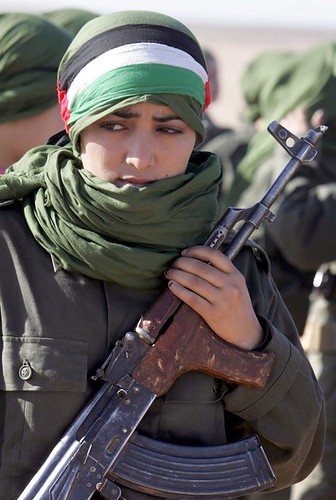
Western Saharan minister: `Only one solution -- our return to our sovereign homeland'

27 February refugee camp, south-west Algeria
November 29, 2008 -- In October, a three-member delegation of Australian trade unionists visited the Saharawi (Western Saharan) refugee camps in the Hamada desert, south-west Algeria. Western Sahara has been illegally occupied by Morocco since 1975.Green Left Weekly/Links’ Margarita Windisch spoke with Sid’Ahmed Tayeb, the minister of public health for the exiled Saharawi Arab Democratic Republic, when she visited the 27 February refugee camp.
The Saharawi refugee camps have now existed for close to 33 years in extremely inhumane surroundings. What has led to the Saharawis becoming refugees and what are the challenges facing the Saharawi people?
First, I would like to thank you very much for your visit. It shows us that we are not alone. This is important support that international community can give us.
A brief history of the Western Saharan people’s struggle for freedom
Team Obama: Channelling Clinton, extending Bush

By Patrick Bond
December 4, 2008 -- Barack Obama was elected on a platform of change. Yet, his actions are pointing to more and more of the same. The question of whether Obama can possibly replace Bush as a danger to world peace is worth considering.
The president-elect’s turn to the Zionist, militarist wing of the US ruling class in recent weeks negates the interest and support he showed for the Palestinian cause while a Chicago community organiser during the 1990s and to the anti-war movement when Bush attacked Iraq five and a half years ago.
To counteract ongoing their economic and cultural decline, it appears that US imperialist managers have adopted two strategies: political revitalisation via Obama’s carefully crafted image as a non-imperialist politician with roots in African-American, Kenyan and even Indonesian traditions; and the activism anticipated through his secretary of state, Hillary Clinton, a firm supporter of the US war against Iraq.
In reaction to election campaign allegations that he is a peacenik, Obama himself uttered that the ``surge'' of US troops in Iraq ``succeeded beyond our wildest dreams''.
Zimbabwe: First signs of united front mass action against elite settlement

By the National Co-Ordinating Committee, International Socialist Organisation Zimbabwe
December 2, 2008 -- The situation in Zimbabwe has reached unprecedented levels of crisis. As we have been saying for the last few years, such a crisis was climaxing and with a number of possibilities arising. First and most likely was the likelihood of the bourgeois elite politicians in [President Robert Mugabe's] Zimbabwe African National Union-Patriotic Front (ZANU-PF) and the opposition Movement for Democratic Change (MDC) uniting together in an elitist government of national unity in which ZANU-PF would be the senior partner around a Western- and capitalist-supported neoliberal economic agenda. The MDC's popularity would be used to pacify the urban working people from rising up.
Making the world's poor pay: The economic crisis and the Global South
[This article is available in Spanish: ‘Que pagu
Trade unionists call for solidarity with Western Sahara

UGTSARIO congress delegates
By Margarita Windisch